AstraZeneca–Insitro AI Deal Reshapes Drug Discovery
AstraZeneca Signs $40M AI Drug Discovery Deal With Insitro for MASH and Heart Disease
LONDON, United Kingdom October 15, 2026 AstraZeneca has entered into a multi-year collaboration with California-based artificial intelligence biotechnology company insitro to discover and develop novel treatments for metabolic dysfunction-associated steatohepatitis (MASH) and cardiomyopathies two disease areas that have historically lacked effective therapies. The agreement underscores the accelerating convergence of AI and pharmaceutical research within the broader In-Silico Drug Discovery Market, which was valued at USD 3.61 billion in 2024 and is projected to reach USD 7.22 billion by 2030, expanding at a CAGR of 12.2%.
Under the terms of the agreement, AstraZeneca will pay insitro $40 million upfront. The California-based biotech is eligible to receive up to approximately $1.46 billion in potential development and commercial milestone payments, in addition to a single-digit percentage royalty on future product sales.
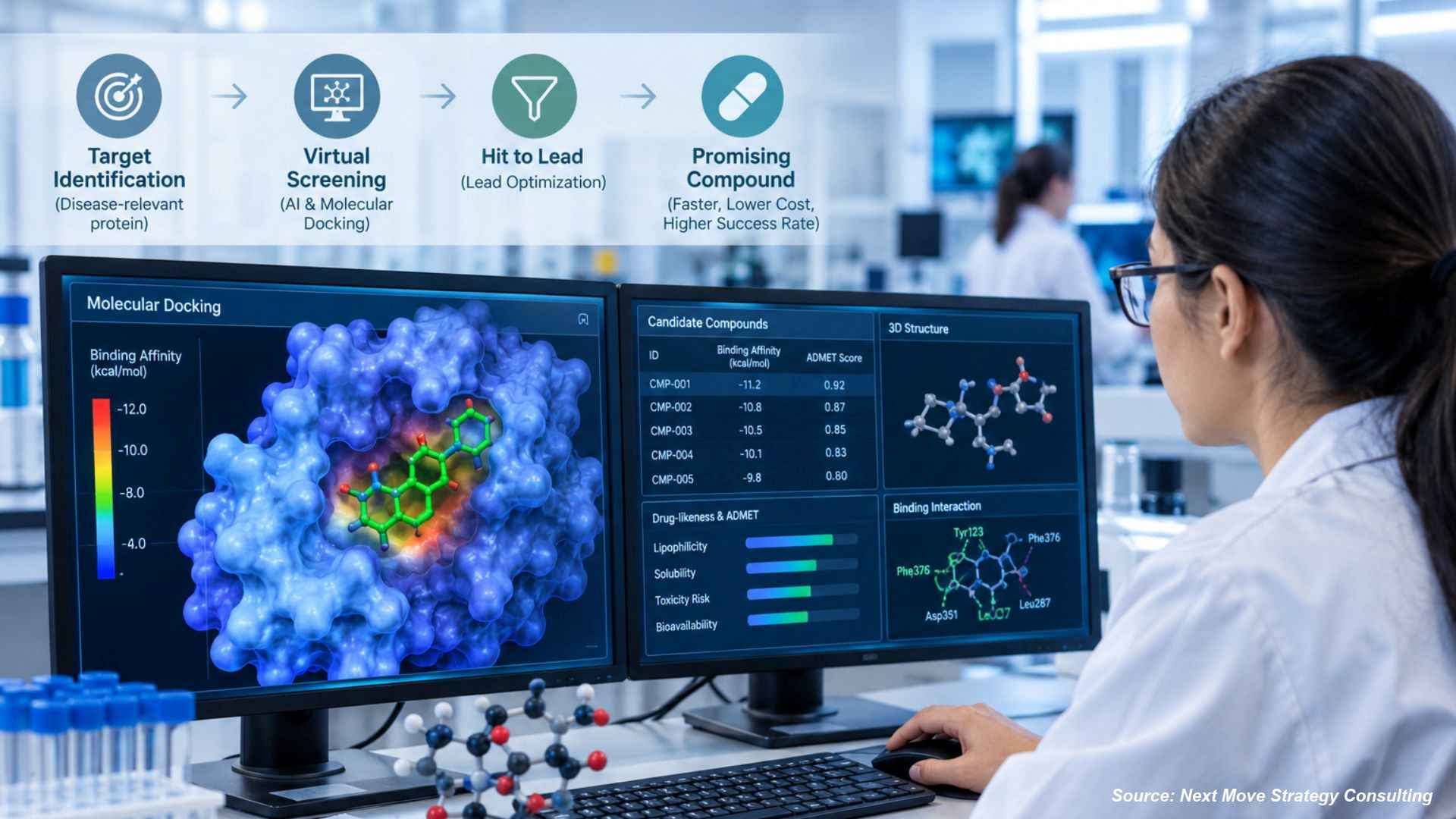
The collaboration will leverage insitro's proprietary "Virtual Human" AI platform, which integrates lab-grown cell models with machine learning to identify causal disease biology. Insitro will advance AstraZeneca-nominated targets from the discovery phase through to development-candidate stage, after which AstraZeneca will assume responsibility for running and funding future clinical trials.
Both MASH and cardiomyopathies have presented persistent challenges for drug developers, as researchers have struggled to identify the root biological drivers of these conditions. The application of AI-enabled platforms to such complex disease areas reflects a broader industry shift toward computational methods that can reduce experimental guesswork and compress development timelines.
Key Highlights:
-
Upfront and milestone structure: AstraZeneca will pay $40 million upfront, with insitro eligible for up to ~$1.46 billion in development and commercial milestones, plus royalties on future sales.
-
AI-driven platform: Insitro's "Virtual Human" platform combines lab-grown cellular models with machine learning to map causal disease biology and accelerate target identification.
-
Therapeutic focus: The partnership targets MASH and cardiomyopathies conditions with significant unmet medical need and limited existing treatment options.
-
Expanded industry footprint: The deal follows insitro's recent partnership expansions with Bristol Myers Squibb for ALS targets and with Eli Lilly for AI-based pharmacological modeling of small molecules.
Analyst Insight:
According to analysts at Next Move Strategy Consulting, the AstraZeneca–insitro agreement is consistent with a structural shift in pharmaceutical R&D strategy, where AI-enabled target identification is increasingly being embedded at the earliest stages of the drug discovery pipeline. NMSC analysts note that as the in-silico drug discovery sector advances toward a projected market size of USD 7.22 billion by 2030, high-value licensing and collaboration agreements of this nature are likely to become a defining commercial model enabling large pharmaceutical companies to access proprietary AI capabilities without bearing the full cost of platform development in-house. The deal's milestone-heavy structure further reflects growing industry confidence in AI-driven discovery outcomes, with financial commitments contingent on verifiable clinical and commercial progress.
Industry Outlook:
The AstraZeneca–insitro collaboration signals a maturing phase in the application of artificial intelligence to pharmaceutical research, moving beyond proof-of-concept deployments toward structured, milestone-driven partnerships with significant capital commitments. For the in-silico drug discovery sector, such agreements validate the commercial viability of AI platforms in addressing complex, historically intractable disease areas.
As regulatory frameworks continue to evolve to accommodate computational methods and as pharmaceutical companies seek to reduce the time and cost associated with early-stage R&D demand for AI-integrated discovery platforms is expected to intensify. The focus on MASH and cardiomyopathies also highlights a growing recognition that AI tools may be particularly well-suited to diseases where conventional biological research has failed to yield actionable targets, potentially opening new therapeutic avenues across multiple high-burden conditions.
Source: Reuters
For More Information: Download FREE Sample on In-Silico Drug Discovery Market Report
Prepared By: Sanyukta Deb
About the Author
 Sanyukta Deb
— Sanyukta Deb is Digital Marketing Team Lead at Next Move Strategy Consulting, where she has led content strategy and technical SEO for the firm's B2B market research publications for over 2 years. Her editorial process translates NextMSC's primary and secondary research — spanning technology, industrial, and consumer sectors — into commercial narratives, backed by search-intent, keyword, and competitive analysis. She brings 5 years of overall experience in digital marketing and content strategy.
Sanyukta Deb
— Sanyukta Deb is Digital Marketing Team Lead at Next Move Strategy Consulting, where she has led content strategy and technical SEO for the firm's B2B market research publications for over 2 years. Her editorial process translates NextMSC's primary and secondary research — spanning technology, industrial, and consumer sectors — into commercial narratives, backed by search-intent, keyword, and competitive analysis. She brings 5 years of overall experience in digital marketing and content strategy.
About the Reviewer
 Debashree Dey
— Debashree Dey is Assistant Manager at Next Move Strategy Consulting, where she supports cross-vertical market content and communications across diverse industries for 6 years. Her professional background includes senior content writing, communications, and published manuscript authorship, with experience developing audience-focused business narratives and maintaining clear, consistent messaging. Her role supports research-led content development and editorial quality across NextMSC publications.
Debashree Dey
— Debashree Dey is Assistant Manager at Next Move Strategy Consulting, where she supports cross-vertical market content and communications across diverse industries for 6 years. Her professional background includes senior content writing, communications, and published manuscript authorship, with experience developing audience-focused business narratives and maintaining clear, consistent messaging. Her role supports research-led content development and editorial quality across NextMSC publications.















Add Comment