FDA Validation and Pharma Deals Push AI Drug Discovery Into the Mainstream
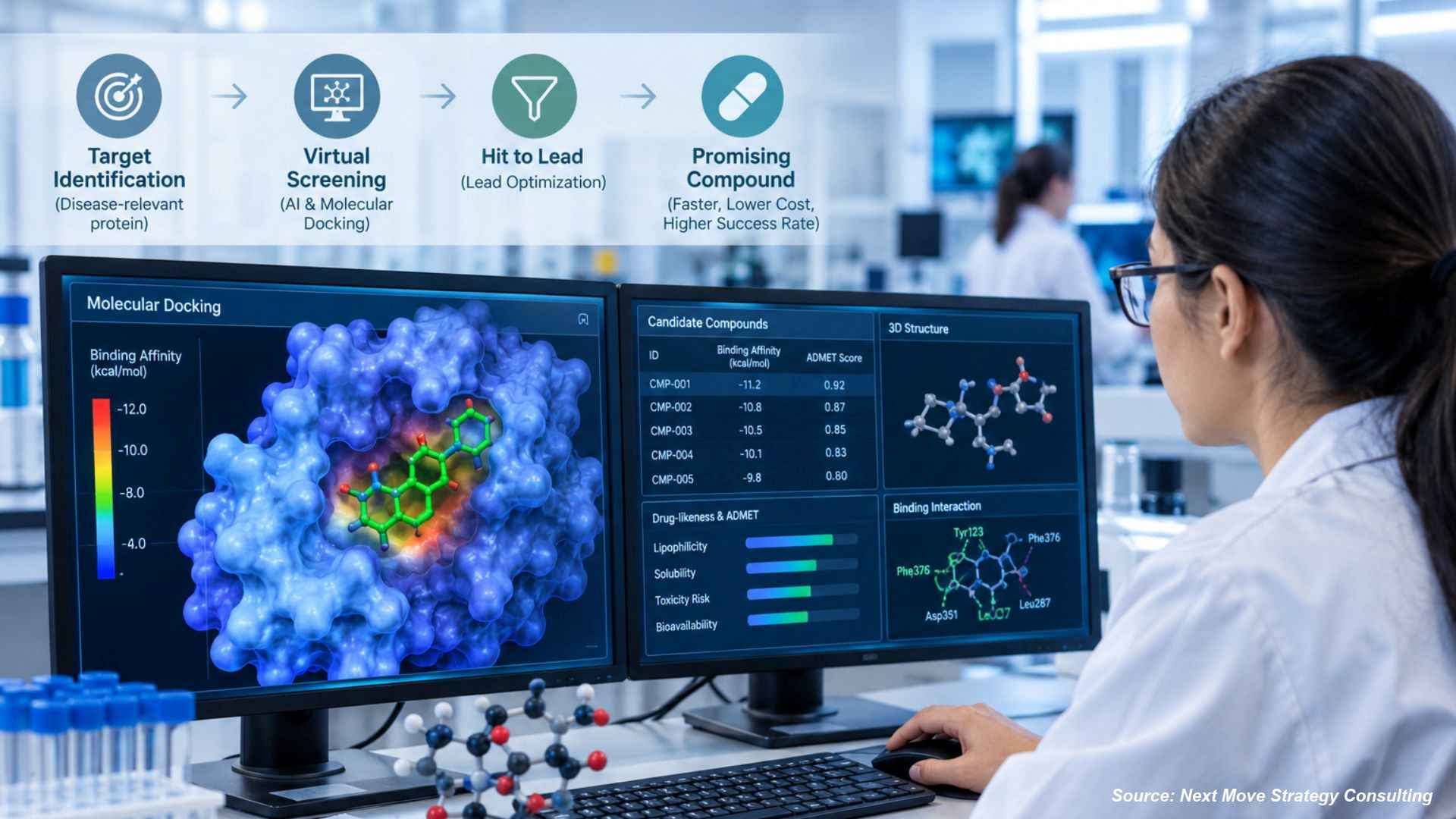
FDA's In Silico Validation Mandate and Insilico Medicine's $7.3B Deal Surge Signal a Structural Shift in Computational Drug Discovery
In the span of eight months, two events have fundamentally altered the commercial and regulatory architecture of computational drug development. On March 18, 2026, the U.S. Food and Drug Administration issued a landmark draft guidance formally establishing a validation framework for New Approach Methodologies (NAMs) — including in silico modeling — as acceptable nonclinical evidence in drug development submissions, a regulatory shift that removes one of the most persistent structural barriers to the sector's mainstream adoption. Then, on August 26, 2026, Insilico Medicine (HKEX: 3696) reported H1 2026 total revenue of USD 106.3 million — a 287.2% year-over-year increase — anchored by USD 7.3 billion in total contract value from business development deals signed in 2026 alone, including a USD 2.75 billion collaboration with Eli Lilly announced in March. Together, these developments confirm that in silico drug discovery has crossed from a promising research methodology into a commercially validated, institutionally endorsed platform for pharmaceutical R&D.
According to Next Move Strategy Consulting's In-Silico Drug Discovery Market report, the global in-silico drug discovery market was valued at USD 3.61 billion in 2024 and is projected to reach USD 7.22 billion by 2030, growing at a CAGR of 12.2% from 2025 to 2030. NMSC's proprietary model — which applies bottom-up segment analysis across offering type, technology method, use-case workflow, end-user category, and deployment mode across 28 countries — reflects a market whose growth is now being driven not by speculative investment cycles, but by measurable clinical outcomes, regulatory codification, and multi-billion-dollar commercial contracts between AI-native biotechs and the world's largest pharmaceutical companies.
For More Information: Download FREE Sample on In-Silico Drug Discovery Market Report
The FDA's NAMs Guidance: Regulatory Codification of In Silico Methods
The FDA's March 18, 2026 draft guidance — "General Considerations for the Use of New Approach Methodologies in Drug Development" — represents the most consequential regulatory action for the in silico drug discovery sector in over a decade. Published in the Federal Register on March 19, 2026 (91 FR 13313, Docket No. FDA-2025-D-6131), the guidance establishes four core validation principles for NAMs submitted in support of drug applications: Context of Use, Human Biological Relevance, Technical Characterization, and Fit-for-Purpose demonstration.
The guidance explicitly names computer simulations and in silico modeling as qualifying NAMs, alongside organoids, organs-on-chips, and cell-based assays. This is not a marginal clarification — it is a formal invitation for pharmaceutical sponsors to substitute or supplement animal toxicology studies with validated computational models in investigational new drug (IND) applications.
"This draft guidance advances our commitment to replace animal testing with human-relevant, scientifically rigorous methods," said HHS Secretary Robert F. Kennedy Jr. in the FDA's March 18, 2026 press announcement. "Clear validation expectations will help modern tools earn regulatory confidence and speed safer, more effective therapies to patients."
FDA Commissioner Marty Makary, M.D., M.P.H. reinforced the directional shift: "Technological advances are allowing us to move beyond animal testing in drug development, which has a poor track record of predicting safety and efficacy in humans. This guidance will facilitate the adoption of modern alternatives to animal testing in regulatory submissions."
Acting CDER Director Tracy Beth Hoeg, M.D., Ph.D. was equally direct: "It is time for the FDA to shift the drug development paradigm away from the current default of using animals to predict human responses to one where these data are obtained through human-centric models which can more reliably, efficiently and ethically predict human drug reactions prior to clinical trials."
The FDA's regulatory momentum did not stop at the March guidance. In September 2026, the agency issued a direct final rule updating terminology in regulations governing human drug and biological product development, formally recognizing that nonclinical tests may include NAMs — such as cell-based assays, organs-on-chips, and computer models — alongside nonhuman in vivo testing. In April 2026, the FDA had also released its Year One Progress report on reducing animal testing, confirming that the agency had successfully launched several key initiatives to replace animal testing with validated alternatives since publishing its roadmap in April 2025.
The practical implication for the in silico drug discovery market is significant: pharmaceutical companies that have invested in computational toxicology, ADMET prediction platforms, and molecular simulation software now have a clear regulatory pathway to deploy those tools in formal submissions — reducing the cost and timeline of nonclinical development programs while generating data that the FDA has explicitly stated it will review.
Insilico Medicine's H1 2026 Results: The Commercial Proof-of-Concept the Market Needed
If the FDA's NAMs guidance provided the regulatory foundation, Insilico Medicine's H1 2026 interim results provided the commercial validation. The company's August 26, 2026 report confirmed that AI-driven drug discovery has crossed the profitability threshold — a milestone that carries outsized significance for the broader in silico sector.
Revenue from drug discovery and pipeline development reached USD 103.1 million in H1 2026, representing a greater than 300% year-over-year increase, driven by large upfront payments from a series of business development deals and milestone payments from existing collaborations. The company's gross profit margin of 90.3% and net profit of USD 35.54 million in a single half-year period demonstrate that the unit economics of generative AI-powered drug discovery — where the marginal cost of screening an additional compound is near-zero once the platform is trained — are fundamentally different from those of traditional wet-lab discovery.
The deal architecture underpinning this revenue surge is equally instructive. In March 2026, Insilico Medicine signed a global out-licensing and R&D collaboration agreement with Eli Lilly valued at up to USD 2.75 billion, including an upfront payment of USD 115 million — a transaction that Reuters reported on March 29, 2026, and which grants Lilly an exclusive worldwide license to a portfolio of preclinical oral therapeutics. This was not an isolated transaction. In June 2026, Insilico announced a USD 2.5 billion AI drug discovery collaboration with SK Biopharmaceuticals focused on the neuroimmune disease area, and in July 2026, a strategic collaboration with Takeda Pharmaceutical totaling approximately USD 600 million.
Insilico Medicine — Key Business Development Transactions, H1 2026
|
Partner |
Deal Value (Up To) |
Upfront / Near-Term Payment |
Therapeutic Focus |
|
Eli Lilly |
USD 2.75 billion |
USD 115 million |
Multiple therapeutic areas (oral preclinical portfolio) |
|
SK Biopharmaceuticals |
USD 2.5 billion |
Not disclosed |
Neuroimmune diseases |
|
Servier |
USD 888 million |
USD 32 million |
Oncology |
|
Takeda Pharmaceutical |
~USD 600 million |
~USD 60 million (initiation + near-term) |
Multi-domain drug discovery |
|
Hygtia Therapeutics |
USD 66 million |
Not disclosed |
CNS (NLRP3 inhibitor ISM8969) |
|
Qilu Pharmaceutical |
~USD 120 million |
Not disclosed |
Joint R&D (platform + pipeline) |
Beyond deal volume, Insilico Medicine's pipeline productivity in H1 2026 illustrates the throughput advantage of generative AI platforms. The company nominated 9 pre-clinical candidates (PCCs) and achieved 8 clinical advancements in the first half of the year alone. Among these, the UAE-based team nominated ISM0387, an MTA-cooperative PRMT5 inhibitor, less than 12 months after launching local AI drug R&D — achieving hit compound generation within 30 days and lead optimization within 6 months. This timeline — from target identification to preclinical candidate in under a year — is structurally impossible under conventional high-throughput screening paradigms, where the same process typically requires three to five years.
Phase I Success Rates: AI-Designed Compounds Rewrite Clinical Attrition Benchmarks
The commercial momentum at the deal-making level is being reinforced by clinical outcome data that challenges the pharmaceutical industry's most entrenched assumptions about drug attrition. As reported by 2 Minute Medicine on September 4, 2026, AI-native biotechnology firms are reporting Phase I success rates between 80% and 90%, nearly doubling the historical industry average of approximately 50%. Computational platforms are also compressing the discovery-to-clinic timeline, with some candidates reaching human trials in under 18 months.
The mechanism behind this improvement is specific: in silico ADMET (Absorption, Distribution, Metabolism, Excretion, and Toxicity) prediction allows researchers to computationally eliminate reactive or toxic molecular groups before any physical synthesis occurs. Generative adversarial networks and deep learning models simultaneously optimize binding affinity and safety properties during the design phase — a capability that traditional high-throughput screening, which tests compounds sequentially after synthesis, cannot replicate.
Insilico Medicine's own pipeline provides a concrete illustration. Its lead asset Rentosertib (ISM001-055) initiated a large-scale Phase III clinical trial in China for idiopathic pulmonary fibrosis in H1 2026, while ISM8969/HT-001 — a brain-penetrant NLRP3 inhibitor — received IND approval from the U.S. FDA in January 2026 and completed first-in-human dosing in a Phase I clinical trial in June 2026.
Schrödinger's Dual-Engine Model: Software Licensing Meets Drug Discovery Revenue
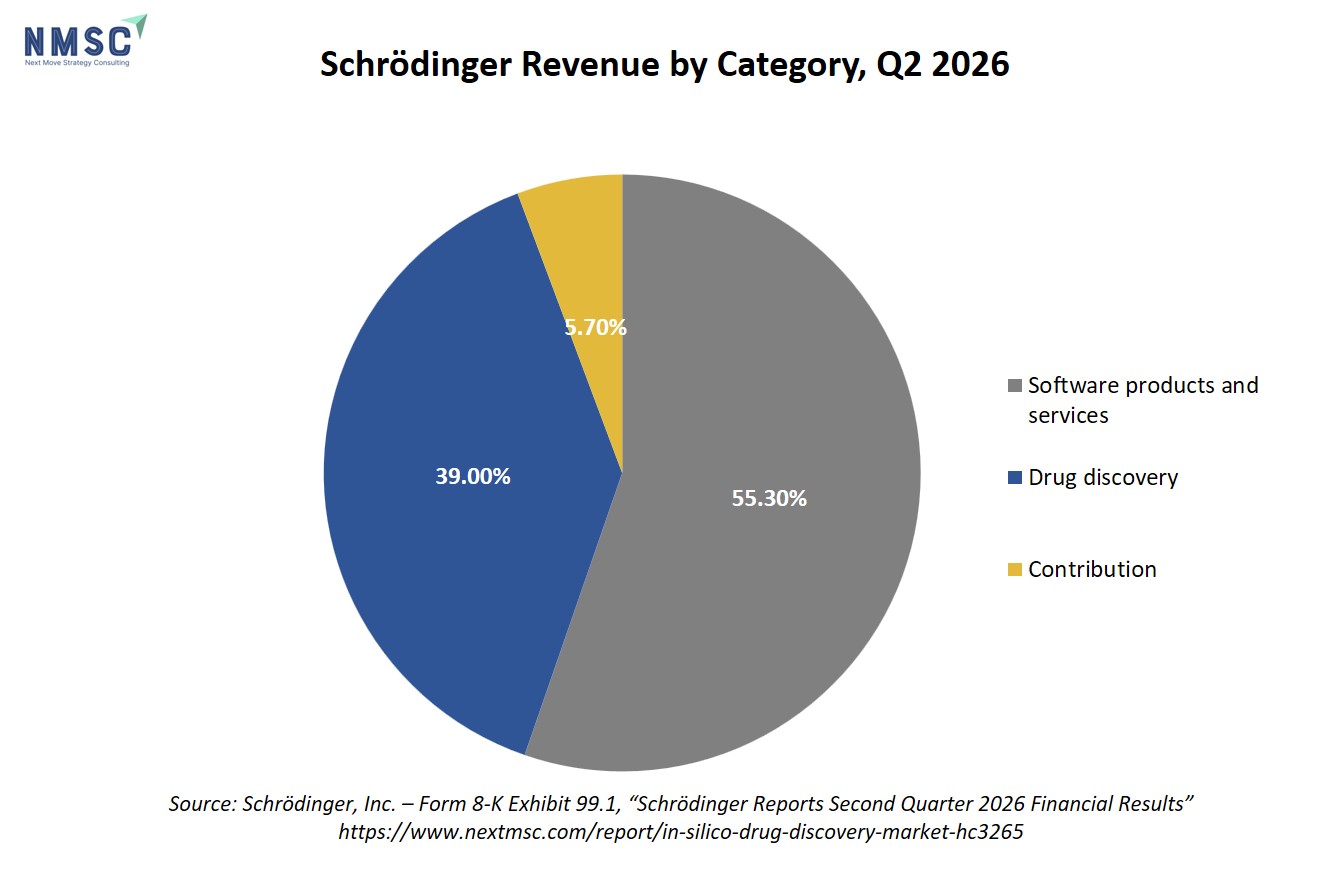
Schrödinger, Inc. (NASDAQ: SDGR) offers a complementary data point on the sector's commercial maturation. The company's Q1 2026 financial results showed drug discovery revenue of USD 22.9 million, compared to USD 10.2 million in Q1 2025 — a year-over-year increase of approximately 124%. For full-year 2026, Schrödinger guided for drug discovery revenue of USD 55–65 million and Annual Contract Value (ACV) of USD 218–228 million, representing 10–15% growth in its software licensing business. Schrödinger's physics-based molecular simulation platform — which layers AI on top of quantum mechanical calculations to predict how drug candidates will behave at the atomic level — represents a distinct but complementary segment of the in silico market from the generative AI platforms operated by companies such as Insilico Medicine.
Regulatory Timeline: From Roadmap to Rule — FDA's Systematic Dismantling of the Animal-Testing Default
The FDA's 2026 regulatory actions did not emerge in isolation. They represent the culmination of a multi-year institutional strategy that is now accelerating with measurable policy outputs. The following table summarizes the key regulatory milestones that have progressively expanded the formal role of in silico methods in drug development.
FDA Regulatory Milestones Expanding In Silico and NAMs Acceptance in Drug Development
|
Date |
Regulatory Action |
Significance for In Silico Drug Discovery |
|
April 2025 |
FDA publishes Roadmap to Reducing Animal Testing in Preclinical Safety Studies |
Establishes agency-wide strategy to phase down animal testing; explicitly promotes AI models and in silico methods |
|
December 2025 |
FDA releases draft guidance on reducing non-human primate testing for monoclonal antibodies |
Accepts computational models and human-relevant systems as weight-of-evidence alternatives |
|
March 18–19, 2026 |
FDA issues draft guidance: "General Considerations for the Use of New Approach Methodologies in Drug Development" (91 FR 13313) |
Formally establishes validation framework for in silico modeling in IND and NDA submissions |
|
April 2026 |
FDA releases Year One Progress Report on reducing animal testing |
Confirms successful launch of NAMs initiatives; signals continued regulatory commitment |
|
September 2026 |
FDA issues direct final rule updating nonclinical testing terminology |
Legally recognizes computer models as qualifying nonclinical tests under federal drug law |
The FDA's own data underscores why this shift is scientifically justified: over 90% of drugs that are safe in animals fail in humans, yet some human-safe medications — including aspirin — might never have passed animal tests. This fundamental predictive failure of animal models is the scientific rationale that makes in silico methods — which can be calibrated against human biological data — a structurally superior alternative for early-stage safety assessment.
NMSC Strategic Perspective: What the Convergence of Regulatory Codification and Commercial Proof Points Means for Market Trajectory
NextMSC primary research and analysis identifies the concurrent emergence of regulatory codification and commercial proof-of-concept as the defining inflection point for the in silico drug discovery market's growth trajectory through 2030.
Prior to 2026, the market's 12.2% CAGR was supported primarily by cost-efficiency arguments and early-stage platform investments. The FDA's March 2026 NAMs guidance and September 2026 direct final rule have now converted those arguments into regulatory entitlements — pharmaceutical sponsors can formally submit in silico data in IND applications with a defined validation framework, removing the compliance uncertainty that had previously constrained adoption among risk-averse large pharma R&D organizations.
Simultaneously, Insilico Medicine's H1 2026 results — USD 106.3 million in revenue, USD 7.3 billion in total 2026 contract value, and a 90.3% gross margin — have demonstrated that the business model of AI-native drug discovery is not only viable but structurally superior to traditional CRO-dependent discovery models in terms of capital efficiency. The USD 2.75 billion Lilly deal, in particular, signals that multinational pharmaceutical companies are no longer treating AI drug discovery platforms as experimental tools but as core R&D infrastructure worthy of multi-billion-dollar, multi-year commitments.
NMSC's analysis identifies three specific market dynamics that will shape the sector's path to USD 7.22 billion by 2030:
1. SaaS/Cloud and Integrated Platform Offerings Will Capture Disproportionate Revenue Share. As large pharma organizations internalize AI drug discovery workflows, demand will shift from project-based service agreements toward enterprise software licensing and cloud-based platform subscriptions. Schrödinger's ACV growth guidance of 10–15% for 2026 and Insilico Medicine's USD 2.70 million software solutions revenue — described as a "second growth engine" — both confirm this transition is already underway.
2. The AI/ML & Generative Technology Segment Will Sustain the Highest Growth Rate Within the Market. Generative AI's ability to design novel molecular structures de novo — rather than merely screening existing compound libraries — expands the addressable chemical space by orders of magnitude. The nomination of ISM6166, an anti-cancer drug candidate targeting pan-KRAS (a traditionally "undruggable" target), within H1 2026 illustrates how generative AI is opening therapeutic areas that were previously inaccessible to conventional discovery methods.
3. North America Will Retain Market Leadership, but Asia-Pacific Will Narrow the Gap Faster Than Previously Modeled. Insilico Medicine's USD 2.5 billion SK Biopharmaceuticals deal and its expanding collaborations with Chinese pharmaceutical companies — including a RMB 1.2 billion deepened agreement with China Medical System in June 2026 — demonstrate that Asia-Pacific is no longer merely a manufacturing hub for drug development but an origination center for AI-driven discovery partnerships. NMSC's regional analysis identifies China, Japan, South Korea, and India as the primary growth engines within the Asia-Pacific segment through 2030.
The Phase I success rate data — 80–90% for AI-native biotechs versus the historical industry average of approximately 50% — is the metric that will ultimately determine whether the market's 12.2% CAGR is sustained or exceeded. If AI-designed compounds continue to demonstrate superior clinical transition rates through Phase II and Phase III, the addressable market for in silico platforms will expand beyond early discovery into clinical simulation and trial design — a use-case workflow that NMSC's segmentation identifies as a distinct and growing revenue category.
Key Market Participants and Competitive Positioning
The in silico drug discovery competitive landscape is bifurcating into two distinct business models: AI-native biotechs that generate revenue from both platform licensing and proprietary pipeline assets (Insilico Medicine, Recursion Pharmaceuticals), and pure-play computational software providers that generate revenue primarily from enterprise software licensing and drug discovery collaborations (Schrödinger, Certara, Simulations Plus). NMSC's competitive analysis covers 20 key players, including Schrödinger, Inc., Certara, L.P., Dassault Systèmes (BIOVIA), Recursion Pharmaceuticals, Insilico Medicine, Simulations Plus, Inc., Atomwise, Inc., XtalPi Inc., BenevolentAI Ltd., and Genesis Therapeutics, among others.
Recursion Pharmaceuticals' earlier collaboration and USD 50 million investment from NVIDIA — which provided GPU infrastructure to accelerate foundation model training for biological systems — established a precedent for technology-pharma-compute partnerships that Insilico Medicine subsequently replicated through its May 2026 alliance with Google Cloud. These compute infrastructure partnerships are not peripheral to the in silico market — they are the enabling layer that determines the throughput and accuracy of generative AI platforms, and their proliferation signals that the sector's leading players are investing in durable competitive moats rather than short-term capability demonstrations.
Bottom Line
The in silico drug discovery market is undergoing a structural transition that NMSC's proprietary research — projecting growth from USD 3.61 billion in 2024 to USD 7.22 billion by 2030 at a 12.2% CAGR — was designed to capture. The convergence of three simultaneous developments in 2026 has materially de-risked the sector's growth trajectory: the FDA's formal codification of in silico modeling as a validated nonclinical testing method, Insilico Medicine's demonstration that AI-driven drug discovery can generate USD 106.3 million in half-year revenue with a 90.3% gross margin, and clinical outcome data showing AI-designed compounds achieving Phase I success rates of 80–90% against a historical industry benchmark of approximately 50%. The USD 7.3 billion in total contract value that Insilico Medicine accumulated in 2026 alone — anchored by the USD 2.75 billion Lilly deal — confirms that multinational pharmaceutical companies have moved from evaluating AI drug discovery platforms to institutionalizing them as core R&D infrastructure. For market participants, the critical strategic question is no longer whether in silico methods will achieve mainstream adoption, but which platform architectures, deployment models, and therapeutic area specializations will capture the largest share of a market that NMSC projects will more than double in value by 2030.
About Next Move Strategy Consulting
Next Move Strategy Consulting is a premier market research and management consulting firm that has been committed to provide strategically analysed well documented latest research reports to its clients. The research industry is flooded with many firms to choose from, what makes NMSC different from the rest is its top-quality research and the obsession of turning data into knowledge by dissecting every bit of it and providing fact-based research recommendation that is supported by information collected from over 500 million websites, paid databases, industry journals and one on one consultations with industry experts across a diverse range of industry sectors. The high-quality customized research reports with actionable insights and excellent end-to-end customer service help our clients to take critical business decisions that enables them to move beyond time and have competitive edge in the industry.
We have been servicing over 1000 customers globally that includes 90% of the Fortune 500 companies over a decade. Our analysts are constantly tracking various high growth markets and identifying hidden opportunities in each sector or the industry. We provide one of the industry's best quality syndicate as well as custom research reports across 10 different industry verticals. We are committed to deliver high quality research solutions in accordance to your business needs. Our industry standard delivery solutions that ranges from the pre consultation to after-sales services, provide an excellent client experience and ensure right strategic decision making for businesses.
For more information, please contact:
Next Move Strategy Consulting
5th Floor 867 Boylston St, STE 500,
Boston, MA 02116, U.S.
E-Mail: [email protected]
Direct: +1-217-650-7991
Website: www.nextmsc.com
About the Author
 Sanyukta Deb
— Sanyukta Deb is Digital Marketing Team Lead at Next Move Strategy Consulting, where she has led content strategy and technical SEO for the firm's B2B market research publications for over 2 years. Her editorial process translates NextMSC's primary and secondary research — spanning technology, industrial, and consumer sectors — into commercial narratives, backed by search-intent, keyword, and competitive analysis. She brings 5 years of overall experience in digital marketing and content strategy.
Sanyukta Deb
— Sanyukta Deb is Digital Marketing Team Lead at Next Move Strategy Consulting, where she has led content strategy and technical SEO for the firm's B2B market research publications for over 2 years. Her editorial process translates NextMSC's primary and secondary research — spanning technology, industrial, and consumer sectors — into commercial narratives, backed by search-intent, keyword, and competitive analysis. She brings 5 years of overall experience in digital marketing and content strategy.
About the Reviewer
 Debashree Dey
— Debashree Dey is Assistant Manager at Next Move Strategy Consulting, where she supports cross-vertical market content and communications across diverse industries for 6 years. Her professional background includes senior content writing, communications, and published manuscript authorship, with experience developing audience-focused business narratives and maintaining clear, consistent messaging. Her role supports research-led content development and editorial quality across NextMSC publications.
Debashree Dey
— Debashree Dey is Assistant Manager at Next Move Strategy Consulting, where she supports cross-vertical market content and communications across diverse industries for 6 years. Her professional background includes senior content writing, communications, and published manuscript authorship, with experience developing audience-focused business narratives and maintaining clear, consistent messaging. Her role supports research-led content development and editorial quality across NextMSC publications.















Add Comment