Autonomous Robotic Surgery and AI Imaging Transform Laparoscopic Devices Industry
Laparoscopic Devices Market Size to Hit USD 63.41 Billion by 2030 as Autonomous Robotic Surgery and AI Imaging Advance Precision Care
The global laparoscopic devices industry is witnessing a major technological shift after researchers at Johns Hopkins University successfully demonstrated autonomous laparoscopic surgery using a robot capable of operating without direct human guidance, while FUJIFILM Healthcare Europe simultaneously unveiled a next-generation laparoscopic ultrasound transducer aimed at improving precision imaging during minimally invasive procedures.
The twin developments are accelerating investment momentum across robotic surgery and advanced visualization technologies, with latest industry estimates projecting the global Laparoscopic Devices Market to grow from USD 12.88 billion in 2020 to USD 63.41 billion by 2030, registering a CAGR of 17.3% from 2021 to 2030.
According to research published in Science Robotics and detailed by Hospital News, the Smart Tissue Autonomous Robot (STAR), developed by Johns Hopkins University researchers, successfully performed intestinal anastomosis on pig tissue with minimal human intervention. The procedure is considered one of the most technically demanding tasks in abdominal surgery due to the precision required in reconnecting intestinal tissue.
Researchers stated that the robot delivered more consistent outcomes than human surgeons during the experimental procedures, highlighting the growing viability of autonomous and semi-autonomous surgical systems in future operating rooms.

“Our findings show that we can automate one of the most intricate and delicate tasks in surgery,” Axel Krieger, assistant professor of mechanical engineering at Johns Hopkins University, stated during the research announcement.
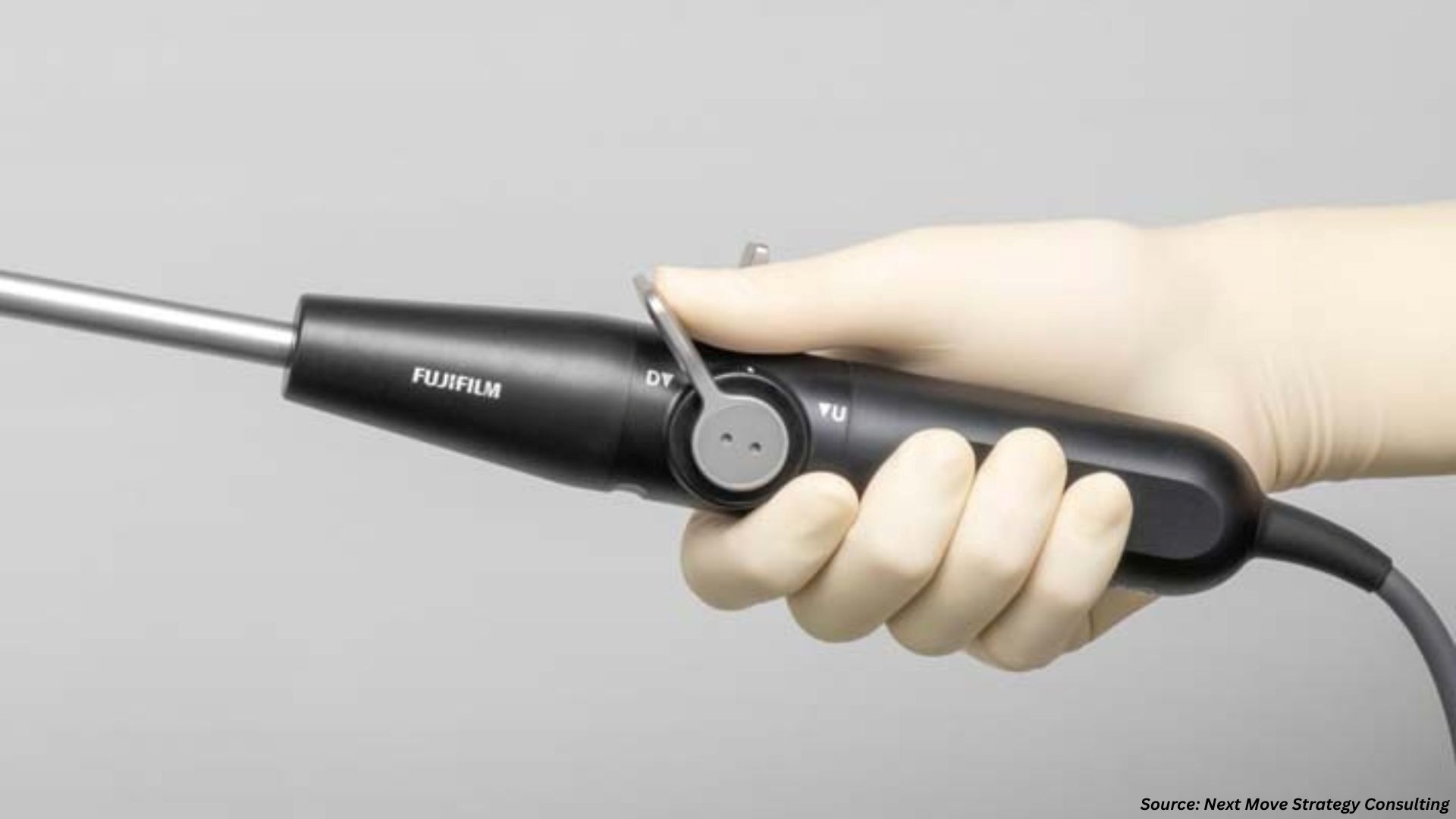
In parallel, FUJIFILM Healthcare Europe announced the launch of the L43LAP Advanced Laparoscopic Linear Transducer, designed to improve intraoperative imaging and surgical flexibility across hepatobiliary, gynecological, urological, and general surgery applications.
The newly introduced transducer incorporates enhanced imaging sensitivity, a wider ultrasound field of view, improved one-handed operability, and advanced blood-flow visualization technology aimed at improving precision during minimally invasive procedures.
Jayanta Das, Senior Research Analyst at Next Move Strategy Consulting, noted that the latest breakthroughs indicate a significant transition toward AI-assisted and imaging-centric surgical ecosystems.
“Healthcare systems are increasingly prioritizing intelligent laparoscopic platforms capable of combining robotics, imaging analytics, and precision navigation. Over the last two quarters, NMSC researchers observed accelerated procurement activity surrounding integrated minimally invasive surgical systems,” Das said.
Autonomous Surgical Robotics Redefine Competitive Dynamics
The STAR robotic surgery breakthrough has intensified global competition among surgical robotics manufacturers seeking to commercialize autonomous and semi-autonomous laparoscopic platforms.
Soft tissue surgery has traditionally represented one of the most difficult environments for robotic automation due to tissue variability and unpredictable anatomical movement. The STAR system addressed these challenges using machine-learning-assisted tracking, three-dimensional visualization systems, and real-time surgical adaptation capabilities.
According to NMSC proprietary analysis, hospitals and academic medical centers are increasingly allocating capital toward robotic-assisted operating rooms capable of improving procedural consistency and reducing surgeon fatigue.
Industry analysts believe the next phase of growth will focus on AI-guided suturing systems, intelligent visualization software, and interoperable surgical robotics platforms capable of real-time procedural adjustments.
Fujifilm Expands Precision Imaging Capabilities
FUJIFILM’s launch of the L43LAP laparoscopic transducer reflects the growing importance of high-resolution intraoperative imaging in minimally invasive surgery.
The device features enhanced maneuverability with 110-degree multidirectional bending capability, improved puncture compatibility, and Detective Flow Imaging (DFI) technology for better low-speed blood flow visualization.
The development is expected to support increasing demand for precision-guided surgical procedures where real-time imaging accuracy is critical for decision-making.

Jayanta Das added that imaging technologies are rapidly becoming strategic differentiators within the laparoscopic devices sector.
“Healthcare providers are moving beyond standalone instruments toward integrated visualization-driven surgical ecosystems. Real-time imaging precision is becoming a core requirement in modern operating room procurement strategies,” he noted.
Rising Demand for Minimally Invasive Procedures Fuels Growth
The market is also benefiting from growing preference for minimally invasive surgery among both healthcare providers and patients due to reduced recovery times, shorter hospital stays, and lower postoperative complications.
Healthcare systems in the United States, Germany, Japan, South Korea, and China are increasing investments in smart operating rooms equipped with robotic-assisted and AI-supported laparoscopic technologies.
NMSC researchers identified a substantial rise in hospital procurement activity over the last six months involving AI-enabled surgical imaging systems, robotic suturing technologies, and advanced ultrasound-assisted laparoscopic tools.

Medical education institutions are also increasingly integrating robotic laparoscopic simulation training into surgical curricula as healthcare systems prepare for wider adoption of automation-assisted procedures.
Strategic Recommendations for CEOs and Investors
-
Increase investment in AI-integrated laparoscopic robotics and imaging platforms.
-
Prioritize partnerships between surgical robotics developers and visualization technology providers.
-
Expand clinical validation programs supporting autonomous soft tissue surgery.
-
Target Asia-Pacific expansion opportunities where minimally invasive surgery adoption is accelerating rapidly.
-
Strengthen surgeon training ecosystems to support next-generation robotic-assisted procedures.
Market Outlook
The convergence of autonomous robotics, machine-learning-assisted surgical planning, and advanced laparoscopic imaging is reshaping the future of minimally invasive surgery. Industry analysts believe the next decade will see rapid transformation from surgeon-dependent operating environments toward intelligent collaborative surgical ecosystems.
As hospitals prioritize efficiency, imaging accuracy, and workflow automation, competition among laparoscopic device manufacturers is expected to intensify significantly through 2030, particularly in robotic-assisted gastrointestinal, gynecological, and urological procedures.
About Next Move Strategy Consulting:
Next Move Strategy Consulting is a premier market research and management consulting firm that has been committed to provide strategically analysed well documented latest research reports to its clients. The research industry is flooded with many firms to choose from, what makes NMSC different from the rest is its top-quality research and the obsession of turning data into knowledge by dissecting every bit of it and providing fact-based research recommendation that is supported by information collected from over 500 million websites, paid databases, industry journals and one on one consultations with industry experts across a diverse range of industry sectors. The high-quality customized research reports with actionable insights and excellent end-to-end customer service help our clients to take critical business decisions that enables them to move beyond time and have competitive edge in the industry.
We have been servicing over 1000 customers globally that includes 90% of the Fortune 500 companies over a decade. Our analysts are constantly tracking various high growth markets and identifying hidden opportunities in each sector or the industry. We provide one of the industry’s best quality syndicate as well as custom research reports across 10 different industry verticals. We are committed to deliver high quality research solutions in accordance to your business needs. Our industry standard delivery solutions that ranges from the pre consultation to after-sales services, provide an excellent client experience and ensure right strategic decision making for businesses.
For more information, please contact:
Next Move Strategy Consulting
5th Floor 867
Boylston St, STE 500,
Boston, MA 02116, U.S.
E-Mail: [email protected]
Direct: +1-217-650-7991
Website: www.nextmsc.com
About the Author
 Sanyukta Deb
— Sanyukta Deb is Digital Marketing Team Lead at Next Move Strategy Consulting, where she has led content strategy and technical SEO for the firm's B2B market research publications for over 2 years. Her editorial process translates NextMSC's primary and secondary research — spanning technology, industrial, and consumer sectors — into commercial narratives, backed by search-intent, keyword, and competitive analysis. She brings 5 years of overall experience in digital marketing and content strategy.
Sanyukta Deb
— Sanyukta Deb is Digital Marketing Team Lead at Next Move Strategy Consulting, where she has led content strategy and technical SEO for the firm's B2B market research publications for over 2 years. Her editorial process translates NextMSC's primary and secondary research — spanning technology, industrial, and consumer sectors — into commercial narratives, backed by search-intent, keyword, and competitive analysis. She brings 5 years of overall experience in digital marketing and content strategy.
About the Reviewer
 Debashree Dey
— Debashree Dey is Assistant Manager at Next Move Strategy Consulting, where she supports cross-vertical market content and communications across diverse industries for 6 years. Her professional background includes senior content writing, communications, and published manuscript authorship, with experience developing audience-focused business narratives and maintaining clear, consistent messaging. Her role supports research-led content development and editorial quality across NextMSC publications.
Debashree Dey
— Debashree Dey is Assistant Manager at Next Move Strategy Consulting, where she supports cross-vertical market content and communications across diverse industries for 6 years. Her professional background includes senior content writing, communications, and published manuscript authorship, with experience developing audience-focused business narratives and maintaining clear, consistent messaging. Her role supports research-led content development and editorial quality across NextMSC publications.
















Add Comment