Ophthalmic Equipment Market: Precision Eye Care Advances
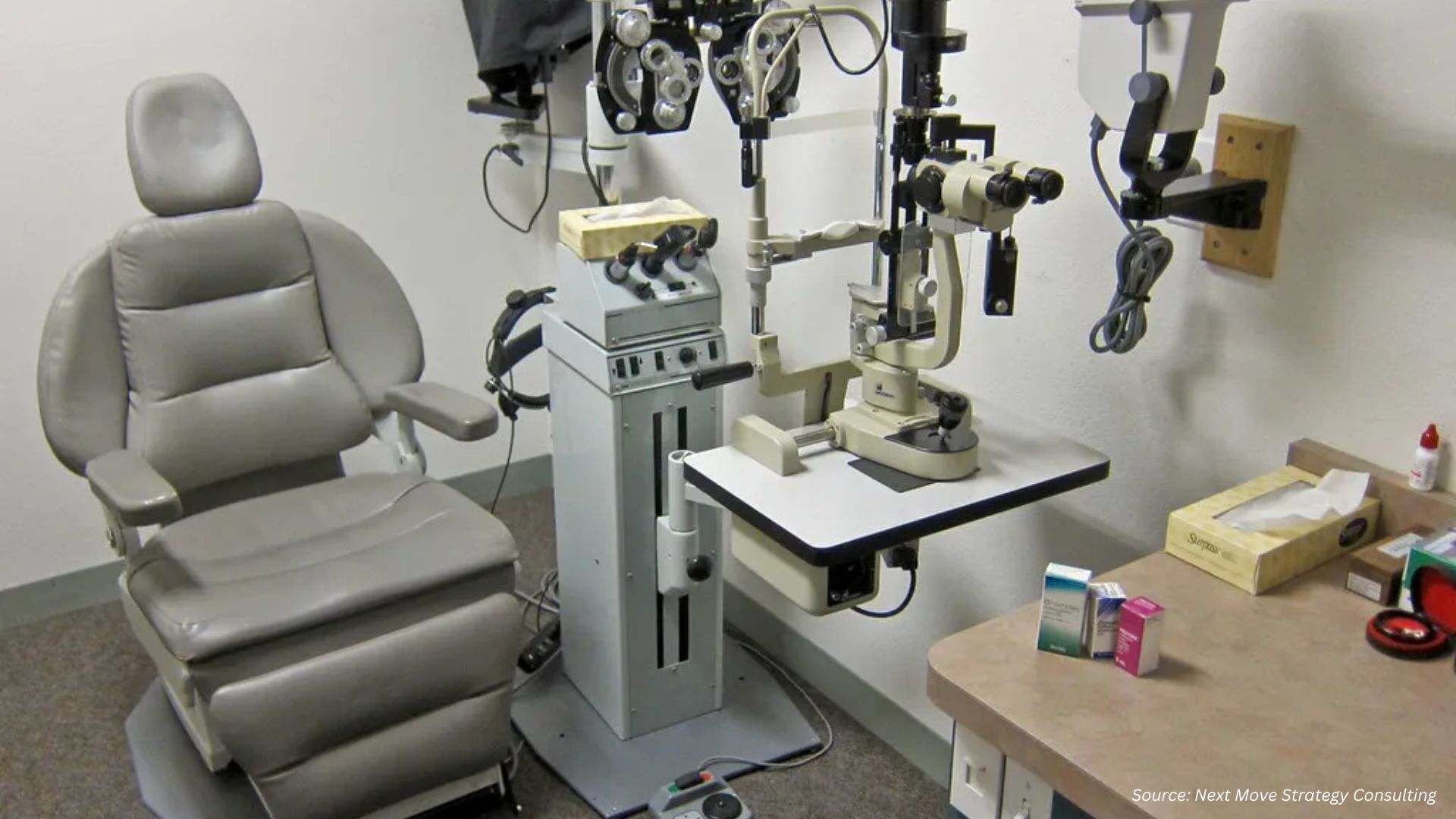
FDA Clears Three Ophthalmic Devices in June 2026 as Alcon Posts 10% Revenue Growth, Reinforcing Global Demand for Advanced Eye Care Technology
FDA Regulatory Activity Signals Accelerating Innovation Pipeline
The United States Food and Drug Administration's ophthalmic device division granted regulatory clearance to three distinct devices through the 510(k) premarket notification pathway in June 2026, according to the agency's official database and industry publication Market Scope. Among the cleared devices, Topcon received authorization for its Harmony Referral System with the Harmony OCT Viewer (Octave) module — a software enhancement enabling clinicians to review optical coherence tomography (OCT) images directly within the Harmony platform to aid in diagnosis and monitoring. RxSight simultaneously obtained clearance for its intraocular lens (IOL) insertion device, further expanding the company's light-adjustable lens ecosystem.
The June 2026 clearance activity arrives against a backdrop of sustained regulatory momentum. According to MedTech Dive, the FDA authorized more medical devices in the first half of 2026 compared to the same period in the prior year, though average time to clearance increased by approximately seven to eight days, reaching roughly 156 days to decision. This regulatory cadence reflects the depth of the innovation pipeline across diagnostic imaging, surgical instrumentation, and AI-assisted screening platforms — all of which are reshaping the competitive landscape of the global Ophthalmic Equipment Market.
For More Information – Download FREE Sample on Ophthalmic Equipment Market Report
Alcon Reports 10% Revenue Growth in Q1 2026, Equipment Segment Surges 27%
Concurrent with the FDA's June clearance activity, Alcon Inc. — the world's largest dedicated eye care company — reported first-quarter 2026 net sales of $2.685 billion, representing a 10% increase on a reported basis and 6% growth on a constant currency basis compared to the same period in 2025.
The company's Equipment/Other sub-segment within its Surgical division delivered the most pronounced growth, recording net sales of $253 million — a 27% increase on a reported basis and 23% on a constant currency basis — driven by the commercial launch of the Unity vitreoretinal visualization and cataract surgery platform. Total Surgical segment net sales reached $1.46 billion, while Vision Care net sales were $1.225 billion, with the Ocular Health sub-segment growing 13% on a reported basis, led by dry eye products including Tryptyr and Systane.
"2026 is off to a solid start, driven by strong performance from our new product launches, including Unity VCS and CS, PanOptix Pro, Tryptyr and Precision7," said David J. Endicott, Alcon's Chief Executive Officer. "Our innovation remains a key growth engine, delivering differentiated technologies that reinforce our leadership in eye care and support sustained revenue growth and margin expansion."
Alcon also announced a new $1.5 billion share repurchase authorization over three years, signaling strong management confidence in the company's long-term cash generation capacity. The company maintained its full-year 2026 net sales growth guidance of 5% to 7% on a constant currency basis.
The Global Vision Crisis: A Structural Demand Driver
The commercial momentum observed at Alcon and across the broader ophthalmic equipment sector is underpinned by a public health emergency of considerable scale. According to the World Health Organization's updated fact sheet published on February 10, 2026, at least 2.2 billion people globally have a near or distance vision impairment, and for at least 1 billion of these individuals, vision impairment could have been prevented or has yet to be addressed.
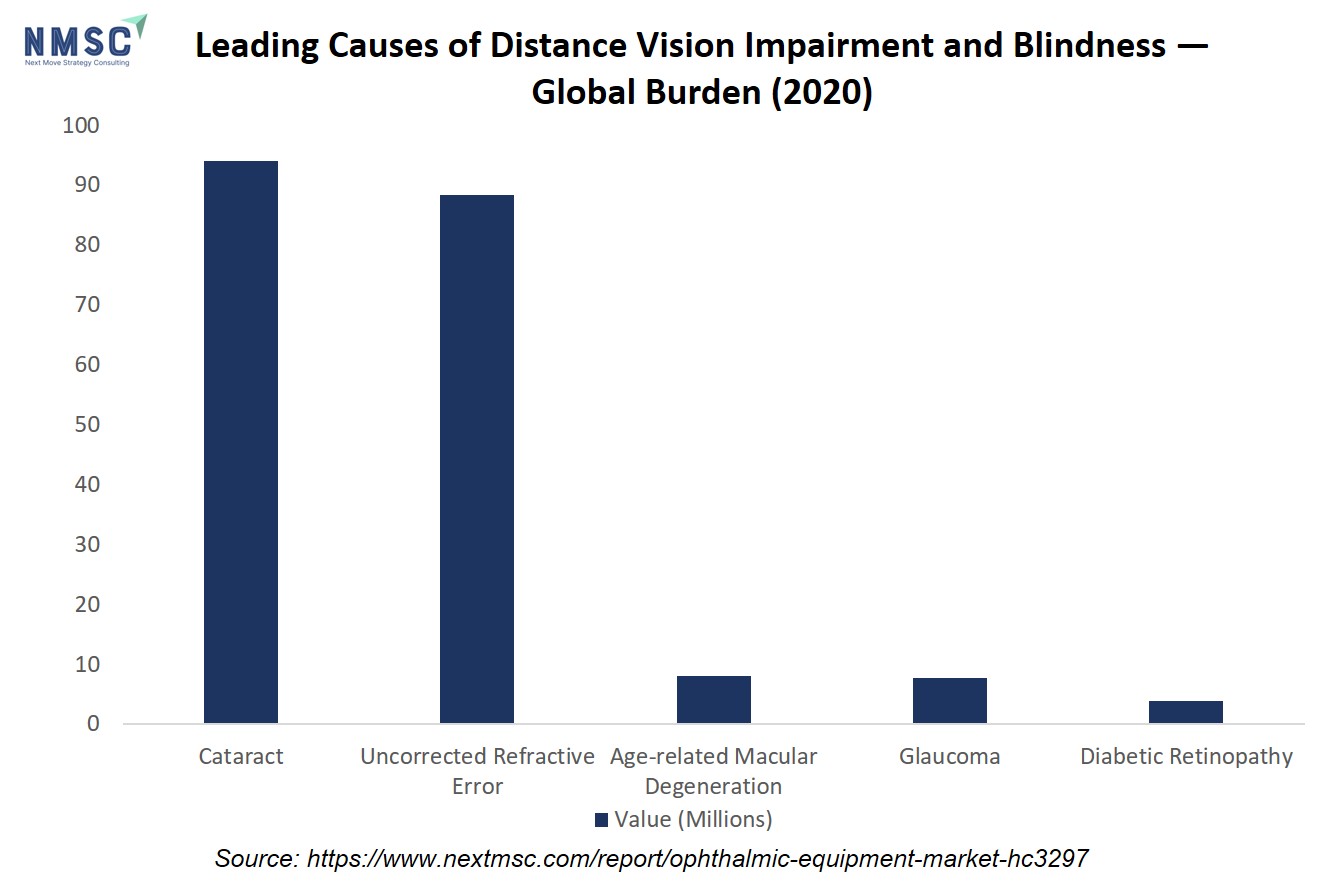
The leading causes of distance vision impairment and blindness globally are refractive errors and cataracts, followed by diabetic retinopathy, glaucoma, and age-related macular degeneration. Among the 1 billion people with preventable or unaddressed vision impairment, cataract accounts for 94 million cases, uncorrected refractive error for 88.4 million, age-related macular degeneration for 8 million, glaucoma for 7.7 million, and diabetic retinopathy for 3.9 million.
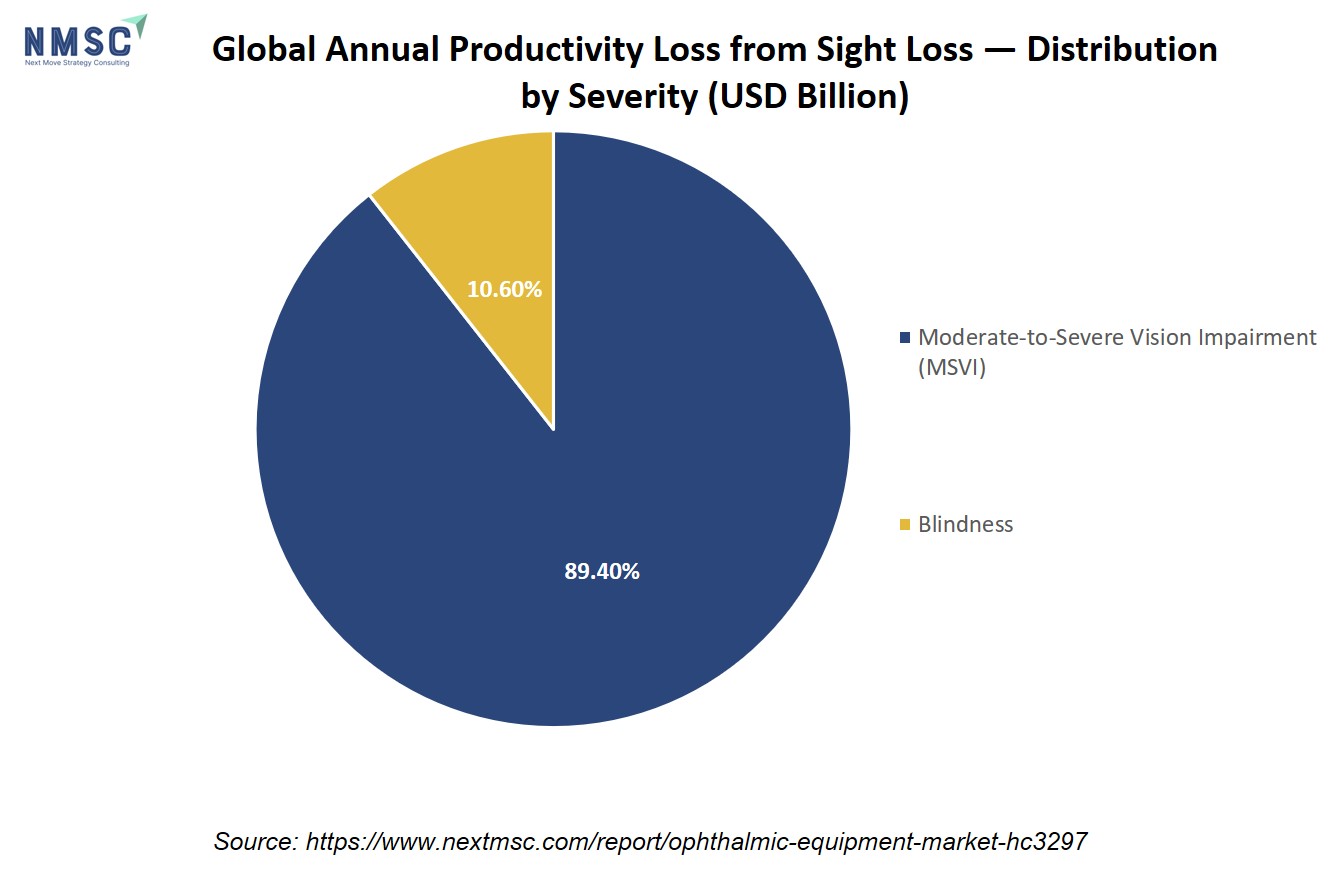
The economic consequences are equally significant. Vision impairment poses an estimated annual global productivity loss of approximately US$411 billion in purchasing power parity terms — a figure that substantially exceeds the estimated US$25 billion cost gap required to address the unmet need for vision care globally. The International Agency for the Prevention of Blindness (IAPB) Vision Atlas further disaggregates this burden, estimating that $43.6 billion of the total productivity loss is attributable to blindness and $367.1 billion to moderate-to-severe vision impairment (MSVI).
The WHO also notes that the prevalence of distance vision impairment in low- and middle-income regions is estimated to be four times higher than in high-income regions, creating a substantial unmet demand base across emerging markets — particularly in South Asia and sub-Saharan Africa. Population growth and ageing are further amplifying this burden, with the IAPB projecting that the number of people living with sight loss will increase to over 1.7 billion by 2050.
Market Outlook: Sustained Growth Trajectory
According to analysis by Next Move Strategy Consulting, the global ophthalmic equipment market is positioned for sustained expansion through the forecast period, driven by the convergence of demographic pressures, technological innovation, and expanding healthcare infrastructure across emerging economies. The market encompasses a broad product spectrum including diagnostic imaging systems, surgical equipment, vision care products, and monitoring devices — each segment benefiting from distinct demand catalysts.
The diagnostic equipment segment remains the largest by revenue contribution, while the surgical equipment segment is experiencing accelerated growth driven by innovations in cataract surgery platforms, laser systems, and minimally invasive glaucoma surgery (MIGS) devices. The integration of artificial intelligence into diagnostic workflows — including AI-assisted retinal screening, automated refraction, and OCT image analysis — represents a structural shift in how ophthalmic equipment is deployed across both hospital and ambulatory care settings.
From a regional perspective, North America retains the largest share of the global ophthalmic devices market, supported by advanced healthcare infrastructure, high per-capita healthcare expenditure, and a robust regulatory framework that incentivizes innovation. Asia-Pacific represents the second-largest and fastest-growing regional market, with Fortune Business Insights reporting that the Asia-Pacific ophthalmic devices market reached $8.47 billion in 2025, representing approximately 26.93% of total global market revenue. China, India, Japan, and South Korea are the primary growth engines within the region, driven by rising diabetic populations, expanding middle-class healthcare access, and government-led vision care initiatives.
Alcon Inc. — Net Sales by Segment, Q1 2026 vs. Q1 2025
|
Segment / Sub-Segment |
Q1 2026 (USD Millions) |
Q1 2025 (USD Millions) |
Reported Change (%) |
Constant Currency Change (%) |
|
Surgical — Implantables |
438 |
420 |
+4% |
+1% |
|
Surgical — Consumables |
769 |
712 |
+8% |
+4% |
|
Surgical — Equipment/Other |
253 |
199 |
+27% |
+23% |
|
Total Surgical |
1,460 |
1,331 |
+10% |
+6% |
|
Vision Care — Contact Lenses |
738 |
688 |
+7% |
+4% |
|
Vision Care — Ocular Health |
487 |
432 |
+13% |
+10% |
|
Total Vision Care |
1,225 |
1,120 |
+9% |
+6% |
|
Total Net Sales |
2,685 |
2,451 |
+10% |
+6% |
AI Integration and Regulatory Convergence: Reshaping the Competitive Landscape
The intersection of artificial intelligence and ophthalmic diagnostics is emerging as one of the most consequential structural trends in the sector. Ophthalmology Times reported in July 2026 that June delivered a busy slate of regulatory and pipeline milestones, including the FDA clearance of veligrotug-vvze (Lumvoa) for thyroid eye disease across both active and chronic stages, delivering rapid proptosis and diplopia improvements.
A peer-reviewed study published in 2026 in a scientific journal examined the global approval and certification landscape for AI-based ophthalmic devices, noting that regulatory bodies across multiple jurisdictions — including the FDA, the European Medicines Agency, and Australia's Therapeutic Goods Administration — are actively developing frameworks to evaluate AI-assisted diagnostic tools. The American Academy of Ophthalmology has acknowledged FDA-cleared AI screening tools as a significant development in expanding access to diabetic retinopathy screening, particularly in underserved communities.
The EU AI Act's high-risk obligations, effective from August 2026 through 2027, will impose an additional regulatory layer for companies marketing AI-enabled ophthalmic devices in European markets, requiring enhanced transparency, clinical validation, and post-market surveillance protocols. This regulatory evolution is expected to raise barriers to entry for smaller device manufacturers while simultaneously creating competitive advantages for established players with the resources to navigate complex multi-jurisdictional compliance requirements.
Investor interest in the ophthalmology sector remains robust. Market Scope reported that the ophthalmic industry raised $620 million across 13 transactions in the first half of 2025, reflecting sustained institutional confidence in the sector's long-term growth fundamentals.
Global Vision Impairment Burden by Leading Cause — Distance Vision Impairment and Blindness (2020)
|
Cause of Vision Impairment |
People Affected (Millions) |
Category |
Preventability |
|
Cataract |
94.0 |
Distance Vision Impairment / Blindness |
Highly Preventable / Treatable |
|
Uncorrected Refractive Error |
88.4 |
Distance Vision Impairment / Blindness |
Highly Preventable / Treatable |
|
Age-related Macular Degeneration (AMD) |
8.0 |
Distance Vision Impairment / Blindness |
Partially Manageable |
|
Glaucoma |
7.7 |
Distance Vision Impairment / Blindness |
Partially Preventable |
|
Diabetic Retinopathy |
3.9 |
Distance Vision Impairment / Blindness |
Preventable with Early Detection |
|
Presbyopia (Near Vision) |
826.0 |
Near Vision Impairment |
Highly Correctable |
Supply Chain, Tariff Pressures, and Strategic Responses
Alcon's Q1 2026 results also shed light on a key operational headwind facing the broader ophthalmic equipment sector: tariff exposure. The company disclosed a full-year 2026 tariff impact, net of mitigating actions, of approximately $100 to $150 million, which is expected to pressure cost of net sales. The company noted that any reduction in tariff expense versus its February 2026 outlook is expected to be reinvested in the business, reflecting a strategic posture of sustained R&D and commercial investment despite macroeconomic headwinds.
This dynamic is broadly representative of the challenges facing multinational ophthalmic equipment manufacturers, many of which operate globally distributed supply chains spanning precision optics manufacturing in Germany and Japan, semiconductor components from East Asia, and final assembly operations across multiple jurisdictions. The increasingly challenging economic and political environment in China — a critical manufacturing hub and growth market simultaneously — adds further complexity to supply chain planning for companies with significant exposure to the Asia-Pacific region.
Bausch + Lomb, another major industry participant, reported Vision Care segment revenue of $778 million for the fourth quarter of 2025, compared to $723 million in the same period of the prior year, reflecting continued demand resilience across its contact lens and ocular health portfolios.
Strategic Implications for Market Participants
The convergence of regulatory activity, corporate earnings performance, and the WHO's updated epidemiological data collectively reinforce several strategic imperatives for participants in the ophthalmic equipment sector:
-
Innovation-led differentiation remains the primary competitive lever, as evidenced by Alcon's 27% equipment segment growth driven by new platform launches. Companies that can demonstrate measurable clinical outcomes and workflow integration advantages will command premium pricing and accelerated adoption.
-
Emerging market penetration represents the most significant long-term growth opportunity. The WHO's finding that vision impairment prevalence in low- and middle-income regions is four times higher than in high-income regions, combined with the IAPB's projection of 1.7 billion people with sight loss by 2050, creates a structural demand base that remains substantially underserved by current ophthalmic infrastructure.
-
AI and digital integration is transitioning from a differentiating feature to a baseline expectation across diagnostic platforms. The IAPB notes that eye health interventions deliver an estimated $28 return for every dollar invested — a compelling economic argument for healthcare systems and payers to expand coverage of advanced diagnostic and surgical equipment.
-
Regulatory compliance infrastructure is becoming a strategic asset, particularly as the EU AI Act and evolving FDA guidance frameworks impose more rigorous requirements on AI-enabled devices. Companies with established regulatory affairs capabilities and clinical evidence generation programs will be better positioned to navigate these requirements efficiently.
Bottom Line
The global ophthalmic equipment sector is entering a period of structurally reinforced growth, supported by three converging forces: an accelerating regulatory approval environment, demonstrated commercial momentum from leading industry participants, and an unresolved global vision health crisis of extraordinary scale. The FDA's June 2026 clearances for Topcon and RxSight devices, combined with Alcon's 10% first-quarter revenue growth and 27% equipment segment surge, provide concrete evidence that innovation investment is translating into market traction. The WHO's confirmation that 2.2 billion people globally live with vision impairment — with at least 1 billion cases preventable or unaddressed — establishes a durable demand foundation that extends well beyond cyclical economic conditions.
For investors and strategic decision-makers, the primary opportunities lie in AI-integrated diagnostic platforms, surgical equipment for cataract and retinal conditions, and market expansion across Asia-Pacific and sub-Saharan Africa. Key risks include tariff-related cost pressures, extended regulatory timelines for AI-enabled devices, and intensifying competition in the premium surgical segment. Companies that combine clinical innovation with regulatory agility and emerging market distribution capabilities are best positioned to capture disproportionate value in this expanding sector over the medium to long term.
About Next Move Strategy Consulting
Next Move Strategy Consulting is a premier market research and management consulting firm that has been committed to provide strategically analysed well documented latest research reports to its clients. The research industry is flooded with many firms to choose from, what makes NMSC different from the rest is its top-quality research and the obsession of turning data into knowledge by dissecting every bit of it and providing fact-based research recommendation that is supported by information collected from over 500 million websites, paid databases, industry journals and one on one consultations with industry experts across a diverse range of industry sectors. The high-quality customized research reports with actionable insights and excellent end-to-end customer service help our clients to take critical business decisions that enables them to move beyond time and have competitive edge in the industry.
We have been servicing over 1000 customers globally that includes 90% of the Fortune 500 companies over a decade. Our analysts are constantly tracking various high growth markets and identifying hidden opportunities in each sector or the industry. We provide one of the industry's best quality syndicate as well as custom research reports across 10 different industry verticals. We are committed to deliver high quality research solutions in accordance to your business needs. Our industry standard delivery solutions that ranges from the pre consultation to after-sales services, provide an excellent client experience and ensure right strategic decision making for businesses.
For more information, please contact:
Next Move Strategy Consulting
5th Floor 867
Boylston St, STE 500,
Boston, MA 02116, U.S.
E-Mail: [email protected]
Direct: +1-217-650-7991
Website: www.nextmsc.com
About the Author
 Sanyukta Deb
— Sanyukta Deb is Digital Marketing Team Lead at Next Move Strategy Consulting, where she has led content strategy and technical SEO for the firm's B2B market research publications for over 2 years. Her editorial process translates NextMSC's primary and secondary research — spanning technology, industrial, and consumer sectors — into commercial narratives, backed by search-intent, keyword, and competitive analysis. She brings 5 years of overall experience in digital marketing and content strategy.
Sanyukta Deb
— Sanyukta Deb is Digital Marketing Team Lead at Next Move Strategy Consulting, where she has led content strategy and technical SEO for the firm's B2B market research publications for over 2 years. Her editorial process translates NextMSC's primary and secondary research — spanning technology, industrial, and consumer sectors — into commercial narratives, backed by search-intent, keyword, and competitive analysis. She brings 5 years of overall experience in digital marketing and content strategy.
About the Reviewer
 Debashree Dey
— Debashree Dey is Assistant Manager at Next Move Strategy Consulting, where she supports cross-vertical market content and communications across diverse industries for 6 years. Her professional background includes senior content writing, communications, and published manuscript authorship, with experience developing audience-focused business narratives and maintaining clear, consistent messaging. Her role supports research-led content development and editorial quality across NextMSC publications.
Debashree Dey
— Debashree Dey is Assistant Manager at Next Move Strategy Consulting, where she supports cross-vertical market content and communications across diverse industries for 6 years. Her professional background includes senior content writing, communications, and published manuscript authorship, with experience developing audience-focused business narratives and maintaining clear, consistent messaging. Her role supports research-led content development and editorial quality across NextMSC publications.
















Add Comment