Bunker Fuel Market Shifts Amid Hormuz Disruptions
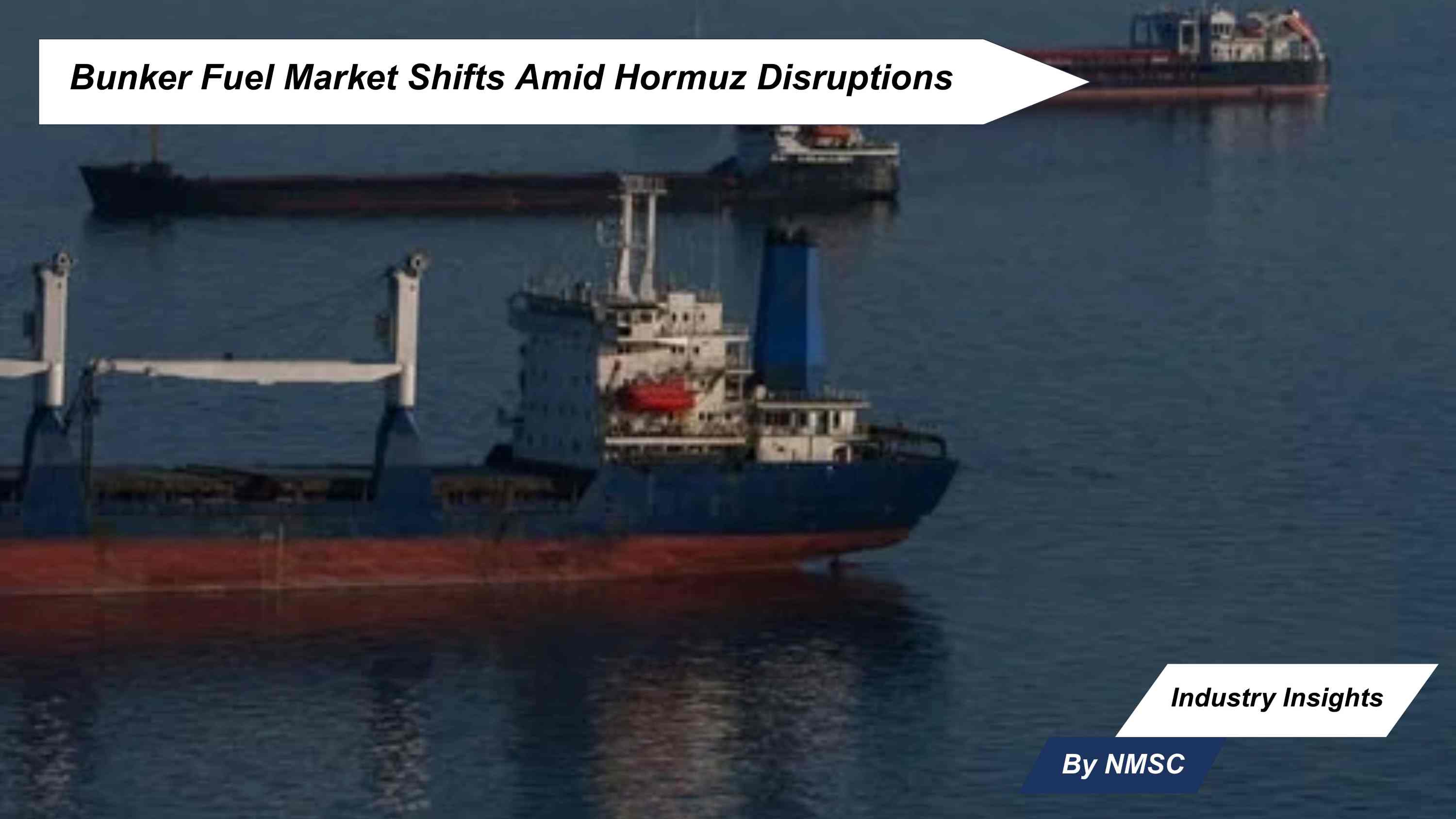
Shipping Disruptions Drive Spot Market Surge in Global Marine Fuel Purchasing Strategies
HOUSTON, United States — October 16, 2026 — Escalating geopolitical disruptions around the Strait of Hormuz are fundamentally reshaping how shipping companies procure marine fuels, with operators increasingly turning to spot markets and shortening supply contract durations to manage price volatility. The developments are exerting significant structural pressure on the Bunker Fuel Market, which is valued at USD 201.57 billion in 2026 and projected to reach USD 248.35 billion by 2035, advancing at a CAGR of 2.3%.
Freight costs for oil shipments transiting the Strait of Hormuz and the Red Sea have surged to record levels, with rates to move crude from the Middle East to Asia reaching approximately USD 34 per barrel a figure that has compelled vessel operators to reassess long-term procurement commitments. According to Reuters, freight costs now account for more than 40% of the price of U.S. oil, compared with approximately 7% on average in 2025, based on LSEG shipping and oil price data.
The disruption has also altered vessel chartering behavior. While some shippers maintain three-to-five-year contracts, a growing proportion are opting to charter vessels on the spot market approximately one month prior to loading, reflecting a broader industry shift toward shorter-horizon procurement strategies. Alternative bunkering locations and ship-to-ship transfer operations in the Gulf of Oman have gained strategic importance as operators seek to reduce exposure to individual vessel attack risk.
Key Highlights:
-
Freight rates for supertanker voyages from the United States to Japan have risen to approximately USD 40.50 per barrel roughly nine times the 2025 average rate as Hormuz-related disruptions tighten vessel availability.
-
Tanker owners have recorded earnings of up to USD 1.3 million per ship per day for Persian Gulf-to-Asia round trips, compared with an average of USD 55,000 per day in 2025, according to Signal Ocean data cited by Reuters.
-
Freight rates for Suezmax and Aframax vessels have quadrupled since the onset of the U.S.-Iran conflict in February 2026, with longer rerouted voyages further constraining fleet availability.
-
Ship-to-ship transfer operations in the Gulf of Oman have expanded as a risk-mitigation strategy, reducing individual vessel exposure while simultaneously tightening overall tanker supply and amplifying rate spikes.
Analyst Insight:
According to analysts at Next Move Strategy Consulting, the accelerating shift toward spot market procurement in marine fuel purchasing reflects a structural response to sustained geopolitical uncertainty rather than a temporary tactical adjustment. NMSC analysts note that as freight cost volatility compresses ship operator margins, the preference for shorter-duration contracts and flexible bunkering arrangements is likely to persist, particularly among mid-size operators lacking the purchasing scale to secure favorable long-term supply terms. The firm's analysis further indicates that the growing importance of alternative bunkering hubs including locations outside the traditional Fujairah and Singapore corridors signals a durable reconfiguration of global marine fuel supply chain logistics that will influence procurement strategy well beyond the current conflict period.
Industry Outlook:
The sustained disruption to Strait of Hormuz shipping lanes is accelerating structural changes in the global bunker fuel procurement landscape that are likely to outlast the immediate geopolitical crisis. As shipping companies adapt to elevated freight costs, constrained vessel availability, and heightened supply chain uncertainty, the industry is expected to see continued growth in spot market activity, expanded use of alternative bunkering locations, and increased investment in supply chain resilience. The Bunker Fuel Market's long-term trajectory underpinned by global seaborne trade growth, progressive alternative fuel adoption, and tightening IMO decarbonization mandates remains intact, though near-term procurement patterns will continue to reflect the operational realities imposed by ongoing regional instability.
Source: Reuters
For More Information: Download FREE Sample on Bunker Fuel Market Report
Prepared By: Sanyukta Deb
About the Author
 Sanyukta Deb
— Sanyukta Deb is Digital Marketing Team Lead at Next Move Strategy Consulting, where she has led content strategy and technical SEO for the firm's B2B market research publications for over 2 years. Her editorial process translates NextMSC's primary and secondary research — spanning technology, industrial, and consumer sectors — into commercial narratives, backed by search-intent, keyword, and competitive analysis. She brings 5 years of overall experience in digital marketing and content strategy.
Sanyukta Deb
— Sanyukta Deb is Digital Marketing Team Lead at Next Move Strategy Consulting, where she has led content strategy and technical SEO for the firm's B2B market research publications for over 2 years. Her editorial process translates NextMSC's primary and secondary research — spanning technology, industrial, and consumer sectors — into commercial narratives, backed by search-intent, keyword, and competitive analysis. She brings 5 years of overall experience in digital marketing and content strategy.
About the Reviewer
 Debashree Dey
— Debashree Dey is Assistant Manager at Next Move Strategy Consulting, where she supports cross-vertical market content and communications across diverse industries for 6 years. Her professional background includes senior content writing, communications, and published manuscript authorship, with experience developing audience-focused business narratives and maintaining clear, consistent messaging. Her role supports research-led content development and editorial quality across NextMSC publications.
Debashree Dey
— Debashree Dey is Assistant Manager at Next Move Strategy Consulting, where she supports cross-vertical market content and communications across diverse industries for 6 years. Her professional background includes senior content writing, communications, and published manuscript authorship, with experience developing audience-focused business narratives and maintaining clear, consistent messaging. Her role supports research-led content development and editorial quality across NextMSC publications.















Add Comment