Calibration Pump Market Targets $2.14 Billion by 2030
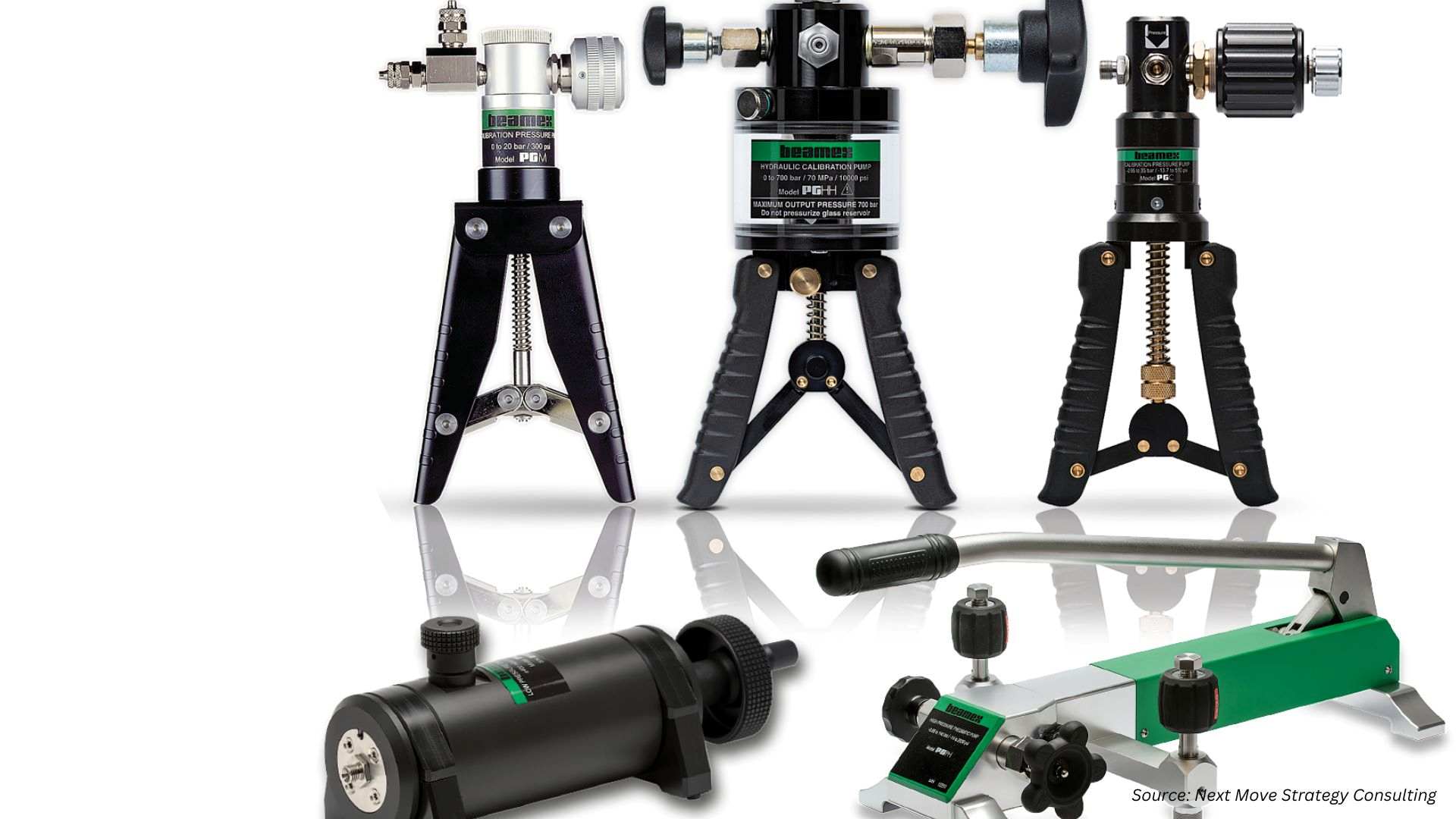
Fluke's 6270A Modular Pressure Calibrator Webinar Signals Structural Realignment in Industrial Metrology as Automation Proliferation and Regulatory Compliance Drive Sustained Global Demand
On July 24, 2026, Fluke Metrology and Calibration Department convened a live industry webinar presenting the Fluke 6270A Wide Range Modular Pressure Controller/Calibrator as a comprehensive solution to persistent structural challenges in industrial pressure calibration. The event, featuring Zhou Yibing, Pressure Product Manager at Fluke Metrology, addressed three critical operational pain points confronting calibration laboratories and manufacturing enterprises worldwide: the contradiction between pressure range coverage and repeated capital investment in single-unit instruments; the expansion inflexibility of fixed-configuration equipment unable to accommodate evolving business demands; and efficiency losses caused by mandatory calibration downtime, where disassembly and inspection cycles risk instrument joint damage, medium leakage, and potential production line shutdowns.
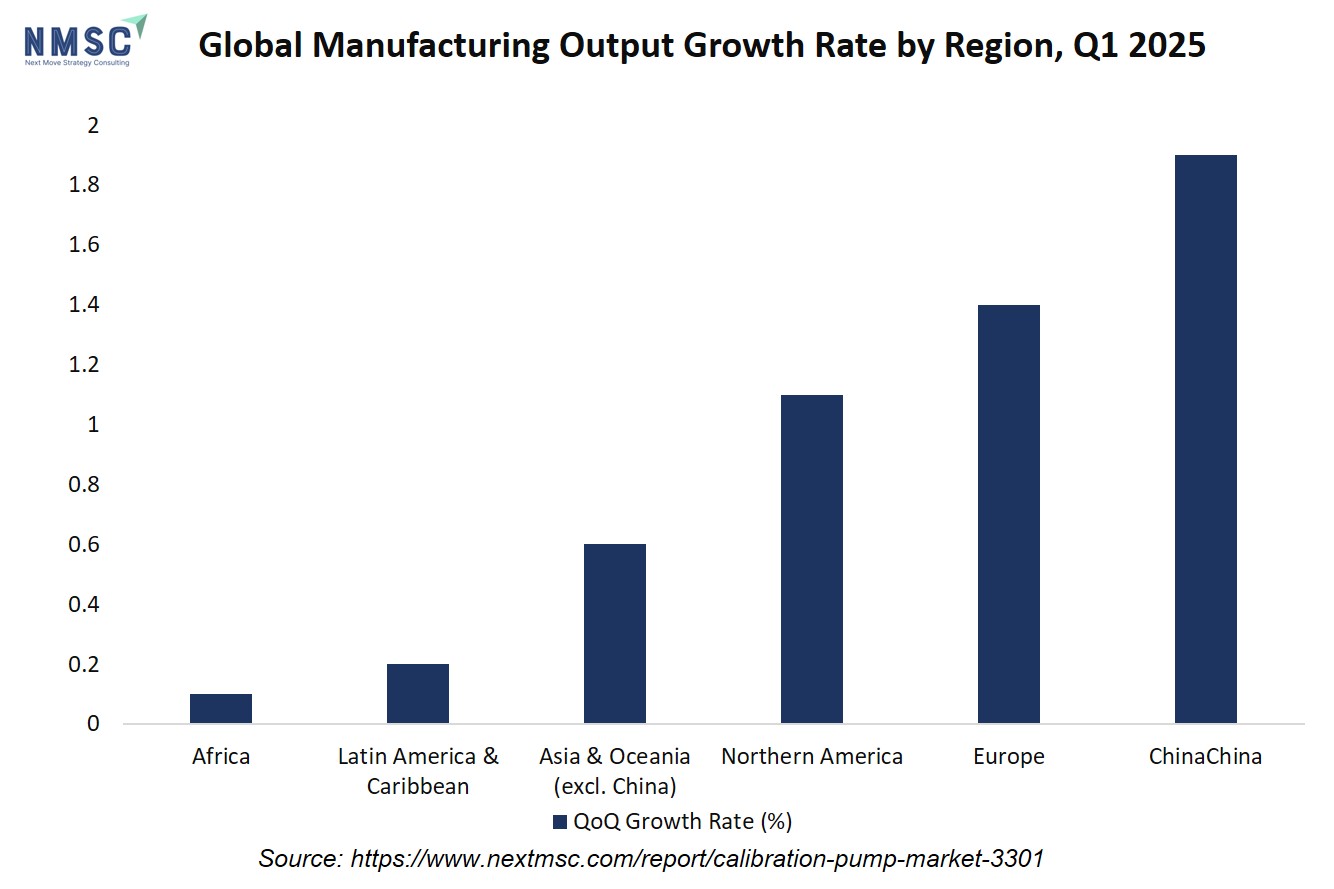
The webinar's timing is strategically significant. Global manufacturing output grew by a robust 1.3% quarter-over-quarter in Q1 2025 — extending one of the strongest periods of manufacturing expansion since the COVID-19 pandemic — according to UNIDO's World Manufacturing Production Quarterly Report. As industrial production scales across all major regions, the installed base of pressure sensors, transmitters, and measurement instruments expands proportionally, generating a structurally reinforced demand pipeline for precision calibration equipment.
The global Calibration Pump Market is projected to reach USD 2.14 billion by 2030, advancing at a compound annual growth rate (CAGR) of 4.8% over the 2025–2030 forecast period, according to Next Move Strategy Consulting (NMSC).
For More Information – Download FREE Sample on Calibration Pump Market Report
Regulatory Compliance as a Structural Growth Driver
Stringent regulatory frameworks across pharmaceuticals, oil and gas, aerospace, and food and beverage sectors constitute the primary structural driver of calibration pump demand. These industries operate under rigorous international standards — including ISO/IEC 17025, FDA 21 CFR Part 11, and API standards for the oil and gas sector — that mandate regular, documented, and traceable calibration of pressure measurement instruments. Ensuring the accuracy of pressure sensors in the oil and gas industry is critical for safety and operational efficiency, while precise measurement in pharmaceuticals is essential for maintaining product quality and meeting health regulations.
The pharmaceutical manufacturing sector represents one of the most compliance-intensive end-use verticals for calibration equipment. The global pharmaceutical manufacturing market was valued at USD 616.2 billion in 2025, according to Grand View Research, with calibration compliance representing a non-negotiable operational requirement across production facilities worldwide.
In the energy sector, the International Energy Agency (IEA) projects upstream oil and gas capital expenditure at approximately USD 535 billion in 2025 — a 6% decline from the prior year — yet operational safety and regulatory compliance spending, including instrument calibration, remains structurally embedded in operational budgets. Total global energy investment is set to reach a record USD 3.3 trillion in 2025, according to the IEA's World Energy Investment 2025 report, with process safety instrumentation representing a critical component of upstream and midstream operations.
Global Energy Investment by Category, 2025
|
Investment Category |
Estimated Value (USD Billion) |
Year-over-Year Change |
Notes |
|
Total Global Energy Investment |
3,300 |
Record high |
All energy categories combined |
|
Oil, Gas & Coal Combined |
~1,100 |
Declining share of total |
Fossil fuel investment |
|
Upstream Oil & Gas (Capex) |
~535 |
-6% |
Lowest since post-pandemic recovery |
|
Clean Energy Technologies |
~2,200 |
Increasing |
Renewables, grids, efficiency, EVs |
Modular Architecture and the Shift Toward Operational Efficiency
The Fluke 6270A webinar crystallized a broader industry trend: the migration from single-function, fixed-configuration calibration instruments toward modular, wide-range platforms capable of calibrating multiple instrument types within a single integrated system. The 6270A platform is designed to calibrate micro differential gauges, pressure and differential pressure transmitters, digital pressure meters, precision pressure gauges, and pressure/differential pressure airtight leak detectors — consolidating what previously required multiple discrete instruments into a single modular system. This architectural shift directly addresses the capital cost optimization imperative facing calibration laboratories and manufacturing enterprises.
This development aligns with a broader market trend identified by NMSC analysts: the growing preference for automated, user-friendly calibration solutions that minimize manual intervention, reduce technician dependency, and improve operational efficiency. A notable precedent was established in 2024 with Quantex's launch of the Q-Drive Alpha, which represented a significant shift toward smarter calibration technologies incorporating automated data logging and report generation capabilities. Beamex's deployment of its calibration ecosystem at a major water and wastewater facility in the southeastern United States in March 2024 further demonstrated the operational effectiveness of automated calibration solutions in regulated infrastructure environments.
Industrial Automation as a Demand Multiplier
The proliferation of industrial automation across global manufacturing sectors is functioning as a structural demand multiplier for calibration pump equipment. As automated production lines incorporate increasing densities of pressure sensors, transmitters, and measurement instruments, the volume of instruments requiring periodic calibration expands proportionally.
The global industrial automation and control systems market was valued at USD 226.8 billion in 2025, according to Grand View Research, with projections indicating growth to USD 504.4 billion by 2033. European companies hold over half of the global market share for industrial automation solutions, according to the IEA's Energy and AI report, underscoring the region's strategic importance as both a producer and consumer of calibration infrastructure.
Regional Market Dynamics
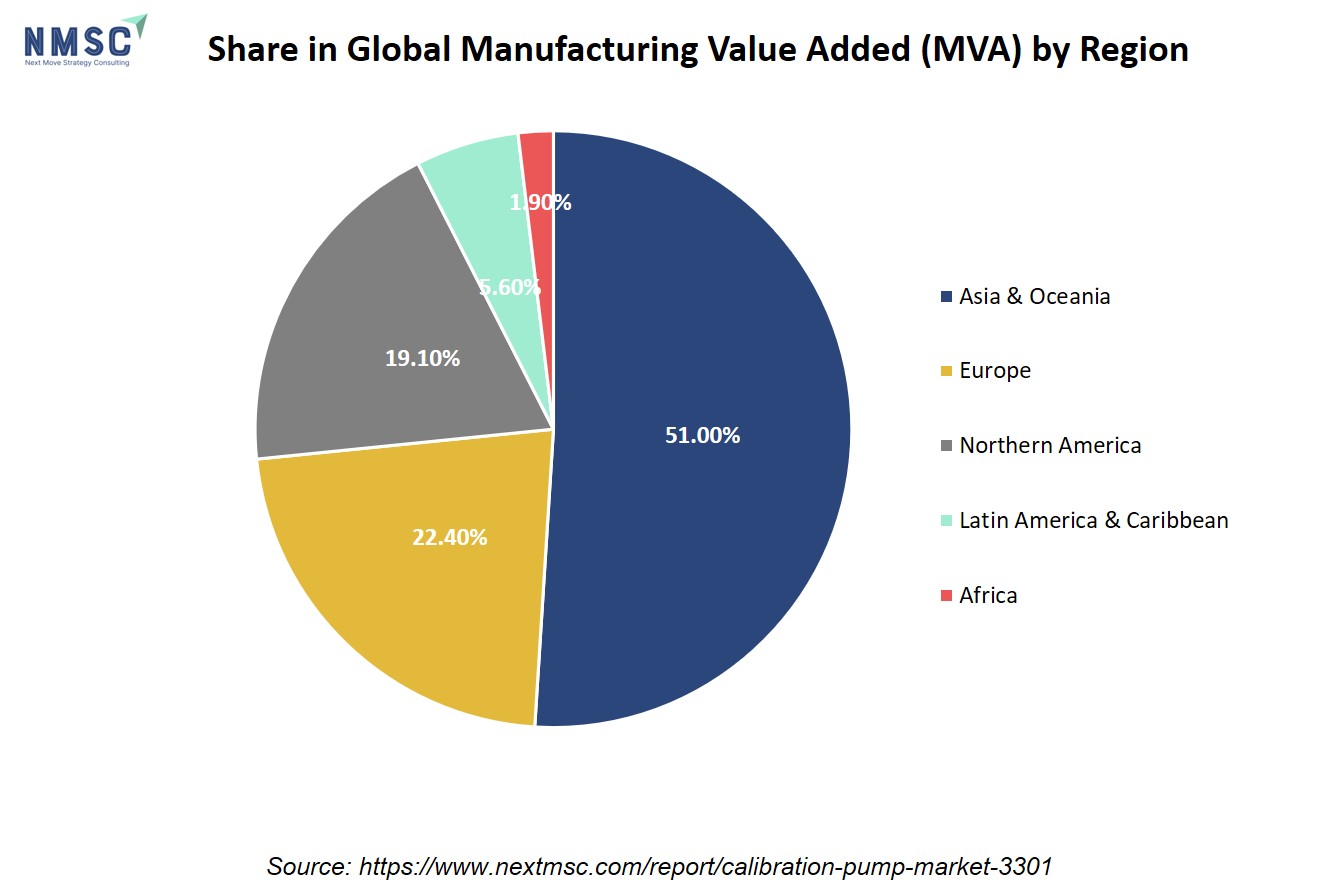
North America maintains its position as the dominant regional market for calibration pumps, driven by stringent regulatory standards and concentrated demand from aerospace, healthcare, and oil and gas sectors. The United States leads the regional landscape, with Fluke Corporation and Omega Engineering among the key players investing in next-generation digital calibration platforms. UNIDO data confirms that Northern America recorded a 1.1% quarter-over-quarter manufacturing output growth in Q1 2025, with a year-over-year expansion of 0.8%, reflecting sustained industrial activity that underpins calibration equipment demand. Fluke's introduction of its next-generation pressure calibrator series in 2024, designed to deliver higher accuracy and improved field usability, reflects the region's continued investment in advanced metrology infrastructure.
Europe's calibration pump market is characterized by strong alignment with sustainability objectives and advanced engineering practices. Germany, the United Kingdom, and France are prioritizing eco-efficient calibration systems consistent with the European Green Deal and region-wide climate commitments. WIKA's introduction of a compact pneumatic calibration pump for on-site applications and Beamex's expanding portfolio of digitally enhanced calibration systems reflect the region's continued investment in sustainable industrial modernization. UNIDO data shows Europe recorded 1.4% quarter-over-quarter manufacturing growth in Q1 2025, driven primarily by Germany (1.8%) and the United Kingdom (0.9%).
Asia-Pacific continues to register accelerated growth in calibration pump demand, supported by large-scale industrial development in China, India, and South Korea. China's manufacturing sector expanded by 1.9% quarter-over-quarter in Q1 2025 — the strongest performance among all major manufacturing economies globally — according to UNIDO, with a year-over-year growth rate of 7.2%. The region's growing preference for compact, field-versatile calibration solutions is driving regional manufacturers to introduce competitively priced, locally optimized products tailored to diverse environmental conditions and usage demands.
Global Manufacturing Output by Region — Key Indicators, Q1 2025
|
Region |
Share in World MVA (2015, %) |
Production Index (2015=100) |
QoQ Growth Q1 2025 (%) |
YoY Growth Q1 2025 (%) |
|
World |
100.0 |
128.9 |
1.3 |
4.0 |
|
Asia & Oceania |
51.0 |
149.7 |
1.4 |
5.9 |
|
Europe |
22.4 |
112.9 |
1.4 |
1.7 |
|
Northern America |
19.1 |
100.4 |
1.1 |
0.8 |
|
Latin America & Caribbean |
5.6 |
106.7 |
0.2 |
1.9 |
|
Africa |
1.9 |
114.5 |
0.1 |
4.0 |
|
China (standalone) |
26.7 |
177.2 |
1.9 |
7.2 |
Competitive Landscape and Strategic Developments
The global calibration pump market is characterized by a moderately concentrated competitive landscape, with established metrology specialists competing on the basis of technological innovation, product range breadth, and service ecosystem depth. Key players profiled in the NMSC report include Fluke Corporation, Beamex Oy AB, AMETEK Inc., Additel Corporation, Omega Engineering, Ashcroft Inc., Mensor LP, Dwyer Instruments Inc., and Baker Hughes Company.
Strategic differentiation is increasingly centered on IoT integration and Industry 4.0 compatibility. Companies such as Fluke Corporation and Beamex have integrated advanced automation features and IoT capabilities into their calibration systems, enabling real-time monitoring, automated data logging, and predictive maintenance functionality. This shift toward automation is driven by the growing need for user-friendly, precise calibration solutions that reduce manual intervention and the dependency on highly skilled technicians.
A notable structural challenge facing market leaders is the high initial investment required for high-precision calibration equipment. Advanced hydraulic pressure calibration pumps and automated systems carry significant upfront costs that can represent a barrier for smaller enterprises and cost-sensitive end-users, potentially driving adoption of lower-cost alternatives that may compromise measurement accuracy or extend calibration intervals beyond recommended thresholds.
Emerging Applications and Technology Trends
Beyond traditional industrial applications, the calibration pump market is benefiting from expanding demand in medical device manufacturing, environmental monitoring, and advanced research and development environments. The development of sophisticated medical devices requires strict calibration standards, while the growing emphasis on environmental monitoring is generating demand for precisely calibrated sensors and measurement instruments. As industries across research and development, manufacturing, and maintenance increasingly adopt sophisticated instrumentation, the need for pressure calibration pumps, test pumps, and related accessories continues to rise.
Emerging technology trends include the rise of compact, portable handheld pumps; integration of digital interfaces and automation software; and advancements in user safety and operational simplicity. The shift toward smart calibration pumps — incorporating digital connectivity, automated diagnostics, and cloud-based data management — represents the most significant technological evolution in the sector, enabling end-users to transition from periodic manual calibration cycles to continuous, data-driven metrology management. Medium-high and high-technology manufacturing industries globally recorded 1.8% quarter-over-quarter growth in Q1 2025, outpacing lower-technology sectors, according to UNIDO — a trend that directly correlates with rising demand for precision calibration infrastructure.
Bottom Line
The global calibration pump market is positioned for sustained, structurally supported growth through 2030, underpinned by converging macroeconomic, regulatory, and technological forces. The Fluke 6270A webinar of July 2026 exemplifies the industry's directional shift toward modular, wide-range calibration architectures that simultaneously address capital cost optimization and operational efficiency imperatives. With global manufacturing output maintaining positive growth across all major regions — as confirmed by UNIDO's Q1 2025 data — and industrial automation investment continuing to expand the installed base of pressure measurement instruments, the demand pipeline for calibration equipment remains structurally robust.
Key risks include cost sensitivity among smaller end-users, potential capital expenditure compression in the oil and gas sector, and the technical complexity of deploying advanced calibration systems in field environments. However, the structural imperative of regulatory compliance across pharmaceuticals, aerospace, and energy sectors provides a durable demand floor that insulates the market from cyclical downturns. For investors and strategic planners, the Asia-Pacific region — particularly China and India — represents the highest-growth opportunity, while North America and Europe offer stable, high-value demand anchored in regulatory compliance and technological sophistication. Vendors capable of delivering scalable, IoT-enabled, modular calibration platforms are best positioned to capture disproportionate market share as the industry consolidates around precision, efficiency, and digital integration.
About Next Move Strategy Consulting
Next Move Strategy Consulting is a premier market research and management consulting firm that has been committed to provide strategically analysed well documented latest research reports to its clients. The research industry is flooded with many firms to choose from, what makes NMSC different from the rest is its top-quality research and the obsession of turning data into knowledge by dissecting every bit of it and providing fact-based research recommendation that is supported by information collected from over 500 million websites, paid databases, industry journals and one on one consultations with industry experts across a diverse range of industry sectors. The high-quality customized research reports with actionable insights and excellent end-to-end customer service help our clients to take critical business decisions that enables them to move beyond time and have competitive edge in the industry.
We have been servicing over 1000 customers globally that includes 90% of the Fortune 500 companies over a decade. Our analysts are constantly tracking various high growth markets and identifying hidden opportunities in each sector or the industry. We provide one of the industry's best quality syndicate as well as custom research reports across 10 different industry verticals. We are committed to deliver high quality research solutions in accordance to your business needs. Our industry standard delivery solutions that ranges from the pre consultation to after-sales services, provide an excellent client experience and ensure right strategic decision making for businesses.
For more information, please contact:
Next Move Strategy Consulting
5th Floor 867
Boylston St, STE 500,
Boston, MA 02116, U.S.
E-Mail: [email protected]
Direct: +1-217-650-7991
Website: www.nextmsc.com
About the Author
 Sanyukta Deb
— Sanyukta Deb is Digital Marketing Team Lead at Next Move Strategy Consulting, where she has led content strategy and technical SEO for the firm's B2B market research publications for over 2 years. Her editorial process translates NextMSC's primary and secondary research — spanning technology, industrial, and consumer sectors — into commercial narratives, backed by search-intent, keyword, and competitive analysis. She brings 5 years of overall experience in digital marketing and content strategy.
Sanyukta Deb
— Sanyukta Deb is Digital Marketing Team Lead at Next Move Strategy Consulting, where she has led content strategy and technical SEO for the firm's B2B market research publications for over 2 years. Her editorial process translates NextMSC's primary and secondary research — spanning technology, industrial, and consumer sectors — into commercial narratives, backed by search-intent, keyword, and competitive analysis. She brings 5 years of overall experience in digital marketing and content strategy.
About the Reviewer
 Debashree Dey
— Debashree Dey is Assistant Manager at Next Move Strategy Consulting, where she supports cross-vertical market content and communications across diverse industries for 6 years. Her professional background includes senior content writing, communications, and published manuscript authorship, with experience developing audience-focused business narratives and maintaining clear, consistent messaging. Her role supports research-led content development and editorial quality across NextMSC publications.
Debashree Dey
— Debashree Dey is Assistant Manager at Next Move Strategy Consulting, where she supports cross-vertical market content and communications across diverse industries for 6 years. Her professional background includes senior content writing, communications, and published manuscript authorship, with experience developing audience-focused business narratives and maintaining clear, consistent messaging. Her role supports research-led content development and editorial quality across NextMSC publications.
















Add Comment