Ceramide Market Expands with Beauty and Kidney Research Breakthroughs
Lede
Three recent stories – the launch of a climate-adaptive bio-fermented ceramide ingredient by Croda Beauty Actives, breakthrough findings from University of Utah Health on ceramide-targeting therapies for acute kidney injury, and translational drug discovery insights published by Genetic Engineering & Biotechnology News – together map a Ceramide Market that is expanding well beyond traditional skincare applications.
Collectively, they point to scientific deepening (lipid metabolism and mitochondrial signaling), cross-sector relevance (beauty, diagnostics, and pharmaceuticals), and a shifting commercial landscape where ceramides are no longer just barrier-repair ingredients but biologically active molecules with systemic implications.
1. Climate-Adaptive Ceramides in Advanced Skincare
Croda Beauty Actives recently introduced DS-Ceramide Y3S, a fermentation-derived Ceramide NP designed to strengthen the skin barrier under diverse environmental conditions including heat, humidity, and cold stress. Unlike conventional synthetic ceramides, this next-generation active is positioned as a climate-resilient solution aligned with the rising “geo-skincare” trend — where formulations adapt to regional weather stressors and pollution exposure.
Clinical data shared around the launch indicate improved hydration retention, barrier reinforcement, and visible skin smoothness across different climate simulations. The use of bio-fermentation also reflects a growing industry preference for biotechnological production routes that enhance purity, consistency, and sustainability.
This development underscores a broader evolution within the Ceramide Market: from basic moisturizing claims to science-backed, environment-responsive dermocosmetic positioning. As climate variability becomes a global consumer concern, adaptive barrier technologies are likely to command premium positioning in personal care portfolios.
2. Ceramide-Targeting Drugs and Acute Kidney Injury (AKI)
Beyond beauty, researchers at University of Utah Health have identified ceramides as central drivers in acute kidney injury (AKI), a serious medical condition with limited therapeutic options. Their findings demonstrate that excess ceramide accumulation disrupts mitochondrial function in kidney tubular cells, triggering cellular damage.
In preclinical mouse models, reducing ceramide production, either genetically or with pharmacological inhibitors, preserved mitochondrial health and significantly reduced kidney injury severity. The research further suggests that urinary ceramide levels may serve as early biomarkers for AKI risk, particularly in patients undergoing high-risk cardiac surgery.
Parallel coverage and analysis by Genetic Engineering & Biotechnology News emphasized the translational implications of targeting lipid metabolism pathways in organ protection. While human trials remain a future step, the findings elevate ceramides from passive structural lipids to active mediators in systemic disease pathways.
For the Ceramide Market, this signals an important pivot: ceramides are increasingly viewed not only as cosmetic ingredients but as therapeutic targets and potential diagnostic indicators.
3. Translational Momentum: From Lipid Biology to Drug Discovery
The broader scientific narrative emerging from these studies is that ceramides sit at the intersection of metabolism, inflammation, and cellular stress signaling. Drug discovery programs are now investigating selective enzyme inhibitors, sphingolipid pathway modulators, and lipidomic profiling tools to manage ceramide-related pathologies.
While commercialization timelines in pharmaceuticals are long and regulatory pathways complex, early-stage translational signals often reshape long-term investment priorities. The Ceramide Market could therefore experience structural diversification — expanding into lipidomics services, biomarker testing kits, and specialty research reagents.
4. Next Move Strategy Consulting – Opinion, Impact and Near-Term Prospects
Next Move Strategy Consulting interprets these developments as evidence of a Ceramide Market entering a multidimensional growth phase, where cosmetic leadership is being complemented by biomedical exploration.
-
Scientific repositioning: Ceramides are shifting from functional excipients to biologically strategic molecules influencing mitochondrial health and metabolic signaling.
-
Dual-industry convergence: The intersection of dermatology and systemic medicine may encourage collaborations between cosmetic formulators and biotech firms specializing in lipid pathways.
-
Diagnostics potential: If ceramide biomarkers gain clinical validation, diagnostic platforms and hospital laboratories could emerge as new demand centers.
-
Biotech-driven supply chains: Fermentation-based production, as demonstrated by Croda’s approach, may become the preferred route for high-purity, scalable ceramide manufacturing.
-
Investment outlook: Companies integrating ceramide science with validated clinical research or sustainable biotech manufacturing are likely to attract strategic partnerships and R&D funding over the coming years.
Rather than a volume-driven ingredient category, the Ceramide Market is gradually transitioning toward a knowledge-driven ecosystem, where intellectual property, pathway expertise, and translational capability shape competitive advantage.
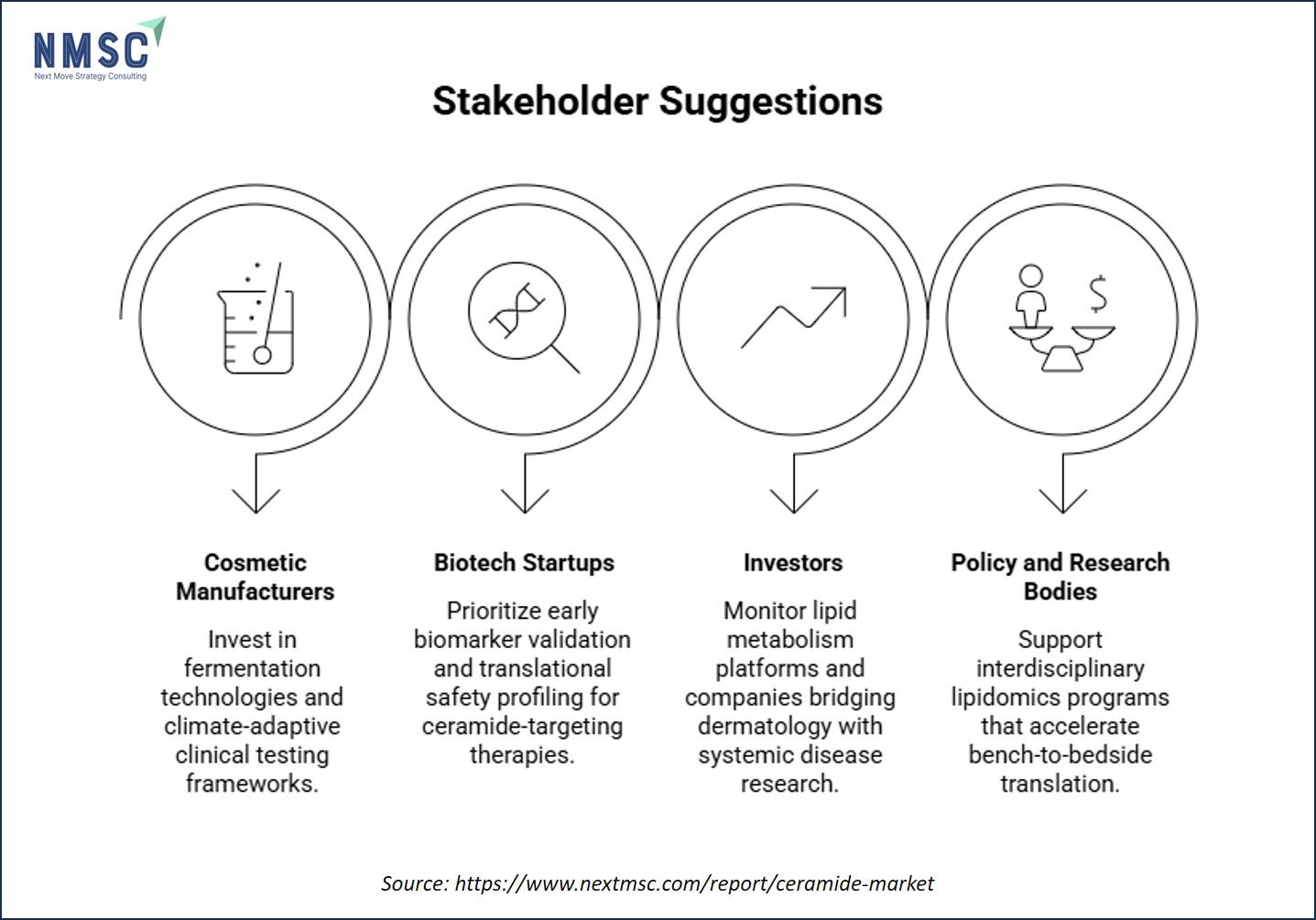
5. Practical Suggestions for Stakeholders
-
Cosmetic manufacturers should invest in fermentation technologies and climate-adaptive clinical testing frameworks.
-
Biotech startups exploring ceramide-targeting therapies should prioritize early biomarker validation and translational safety profiling.
-
Investors should monitor lipid metabolism platforms and companies bridging dermatology with systemic disease research.
-
Policy and research bodies should support interdisciplinary lipidomics programs that accelerate bench-to-bedside translation.
Conclusion
The recent advances in climate-resilient cosmetic ceramides and ceramide-targeting kidney therapies highlight a category undergoing strategic transformation. The Ceramide Market is evolving from a skincare-focused segment into a cross-disciplinary innovation space linking beauty science, metabolic research, and therapeutic discovery.
As lipid biology continues to unlock new clinical insights, companies that align formulation expertise with translational research and sustainable production methods will be best positioned to capture long-term value in this expanding market landscape.
About Next Move Strategy Consulting:
Next Move Strategy Consulting is a premier market research and management consulting firm that has been committed to providing strategically analysed well documented latest research reports to its clients. The research industry is flooded with many firms to choose from, what makes Next Move different from the rest is its top-quality research and the obsession of turning data into knowledge by dissecting every bit of it and providing fact-based research recommendation that is supported by information collected from over 500 million websites, paid databases, industry journals and one on one consultations with industry experts across a diverse range of industry sectors. The high-quality customized research reports with actionable insights and excellent end-to-end customer service help our clients to take critical business decisions that enables them to move beyond time and have competitive edge in the industry.
We have been servicing over 1000 customers globally that includes 90% of the Fortune 500 companies over a decade. Our analysts are constantly tracking various high growth markets and identifying hidden opportunities in each sector or the industry. We provide one of the industry’s best quality syndicate as well as custom research reports across 10 different industry verticals. We are committed to deliver high quality research solutions in accordance to your business needs. Our industry standard delivery solutions that ranges from the pre consultation to after-sales services, provide an excellent client experience and ensure right strategic decision making for businesses.
For more information please contact:
Next Move Strategy Consulting
5th Floor 867
Boylston St, STE 500,
Boston, MA 02116, U.S.
E-Mail: [email protected]
Direct: +1-857-758-5017
Website: www.nextmsc.com
About the Author
 Sanyukta Deb
— Sanyukta Deb is Digital Marketing Team Lead at Next Move Strategy Consulting, where she has led content strategy and technical SEO for the firm's B2B market research publications for over 2 years. Her editorial process translates NextMSC's primary and secondary research — spanning technology, industrial, and consumer sectors — into commercial narratives, backed by search-intent, keyword, and competitive analysis. She brings 5 years of overall experience in digital marketing and content strategy.
Sanyukta Deb
— Sanyukta Deb is Digital Marketing Team Lead at Next Move Strategy Consulting, where she has led content strategy and technical SEO for the firm's B2B market research publications for over 2 years. Her editorial process translates NextMSC's primary and secondary research — spanning technology, industrial, and consumer sectors — into commercial narratives, backed by search-intent, keyword, and competitive analysis. She brings 5 years of overall experience in digital marketing and content strategy.
About the Reviewer
 Debashree Dey
— Debashree Dey is Assistant Manager at Next Move Strategy Consulting, where she supports cross-vertical market content and communications across diverse industries for 6 years. Her professional background includes senior content writing, communications, and published manuscript authorship, with experience developing audience-focused business narratives and maintaining clear, consistent messaging. Her role supports research-led content development and editorial quality across NextMSC publications.
Debashree Dey
— Debashree Dey is Assistant Manager at Next Move Strategy Consulting, where she supports cross-vertical market content and communications across diverse industries for 6 years. Her professional background includes senior content writing, communications, and published manuscript authorship, with experience developing audience-focused business narratives and maintaining clear, consistent messaging. Her role supports research-led content development and editorial quality across NextMSC publications.


















Add Comment