China’s AI Robots Drive High-Risk Industrial Shift
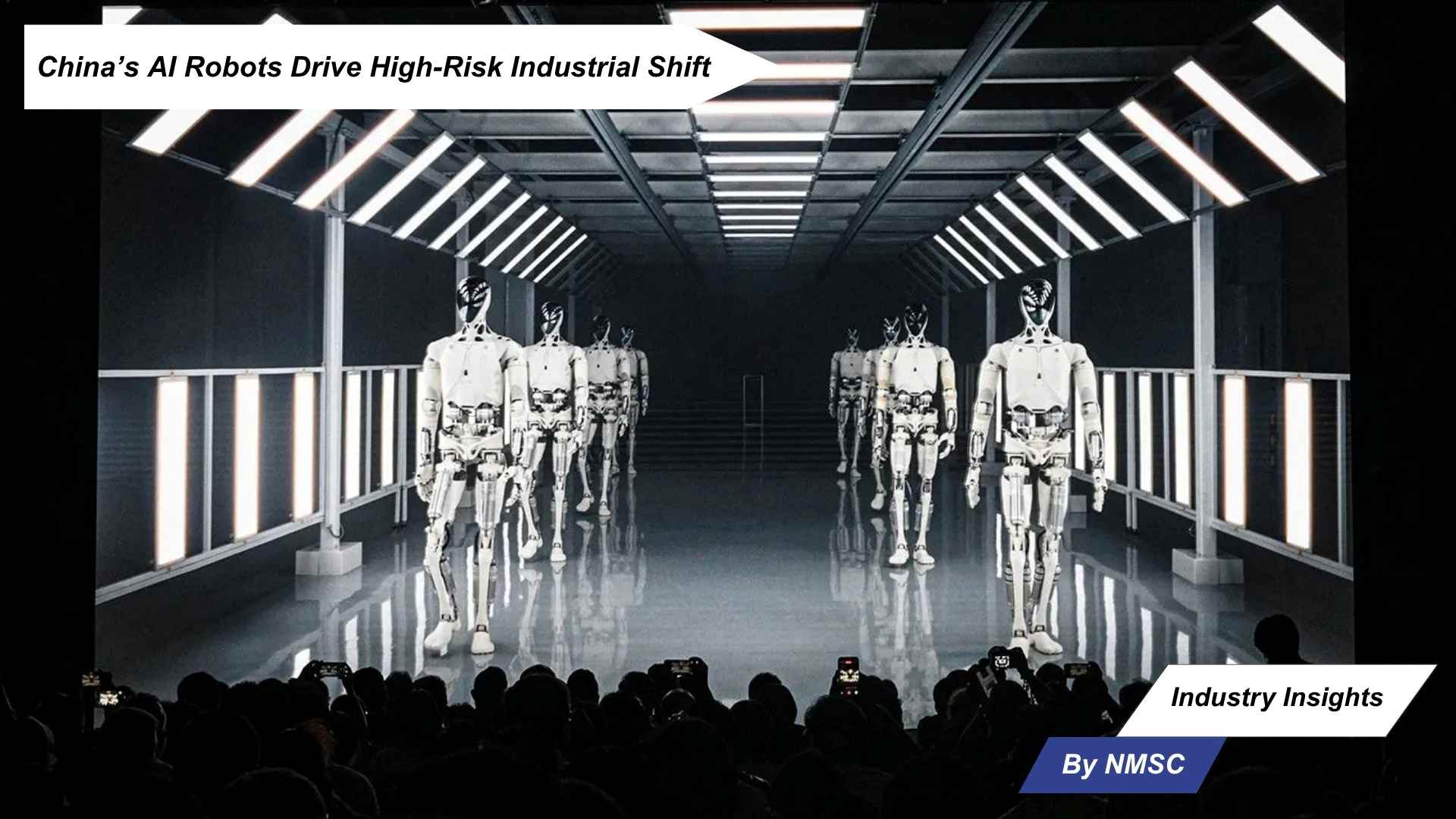
China Deploys Embodied AI Robots in High-Risk Industries, Accelerating Industrial Automation Shift
BEIJING, China — May 5, 2026 — China is accelerating the deployment of embodied artificial intelligence (AI) robots across hazardous industrial environments, marking a significant milestone in the evolution of intelligent automation and reshaping the global robotics market landscape.
The latest developments highlight how embodied AI—robots integrated with advanced perception, decision-making, and physical interaction capabilities—is being deployed in sectors such as mining, power grid maintenance, and emergency response. These environments, often deemed too dangerous for human workers, are becoming testing grounds for next-generation robotics.
A Strategic Leap into High-Risk Automation
China’s push into embodied AI reflects a broader national strategy to enhance industrial safety while improving operational efficiency. Unlike traditional automation systems, these robots combine real-time sensory input with adaptive intelligence, enabling them to operate autonomously in unpredictable conditions.
Recent deployments demonstrate the ability of these robots to navigate complex terrains, conduct inspections, and execute precision tasks without direct human intervention.
Key Capabilities Driving Adoption:
-
Autonomous Navigation: Real-time path planning in hazardous and unstructured environments
-
Advanced Perception Systems: Integration of vision, tactile, and spatial sensors
-
Adaptive Decision-Making: AI models capable of learning and responding dynamically
-
Human-Robot Collaboration: Seamless coordination with remote operators
Industry Implications and Market Momentum
The adoption of embodied AI robots is expected to significantly influence global industrial automation trends. As labor shortages and workplace safety regulations intensify, industries are increasingly turning toward intelligent robotics solutions.
According to NMSC analysts, the shift toward embodied AI represents a pivotal transformation in the robotics market, moving beyond static automation toward dynamic, environment-aware systems.
"Embodied AI is redefining the scope of industrial robotics by enabling machines to interact with the physical world in a more human-like manner," notes an analyst at Next Move Strategy Consulting. "This evolution is expected to unlock new market opportunities, particularly in high-risk and precision-driven sectors."
Redefining Industrial Safety and Efficiency
China’s initiative underscores a growing global emphasis on deploying AI-driven solutions to mitigate operational risks while enhancing productivity. By integrating robotics into dangerous workflows, companies can reduce human exposure to hazardous conditions while maintaining continuity in critical operations.
The move also positions China as a key innovator in the embodied AI space, with implications for global competition and technology standards in robotics.
A New Frontier for the AI Robots Market
As embodied AI continues to mature, its applications are expected to expand beyond industrial settings into healthcare, logistics, and disaster management. The current wave of deployments signals the beginning of a broader transformation where intelligent machines play a central role in shaping the future of work.
With high-risk industries leading early adoption, the AI Robots Market is entering a phase of rapid evolution—driven by innovation, necessity, and the demand for safer, smarter operations.
Source: Xinhua News
Prepared By: Prakhyat Chowdhury
About the Author
 Sanyukta Deb
— Sanyukta Deb is Digital Marketing Team Lead at Next Move Strategy Consulting, where she has led content strategy and technical SEO for the firm's B2B market research publications for over 2 years. Her editorial process translates NextMSC's primary and secondary research — spanning technology, industrial, and consumer sectors — into commercial narratives, backed by search-intent, keyword, and competitive analysis. She brings 5 years of overall experience in digital marketing and content strategy.
Sanyukta Deb
— Sanyukta Deb is Digital Marketing Team Lead at Next Move Strategy Consulting, where she has led content strategy and technical SEO for the firm's B2B market research publications for over 2 years. Her editorial process translates NextMSC's primary and secondary research — spanning technology, industrial, and consumer sectors — into commercial narratives, backed by search-intent, keyword, and competitive analysis. She brings 5 years of overall experience in digital marketing and content strategy.
About the Reviewer
 Debashree Dey
— Debashree Dey is Assistant Manager at Next Move Strategy Consulting, where she supports cross-vertical market content and communications across diverse industries for 6 years. Her professional background includes senior content writing, communications, and published manuscript authorship, with experience developing audience-focused business narratives and maintaining clear, consistent messaging. Her role supports research-led content development and editorial quality across NextMSC publications.
Debashree Dey
— Debashree Dey is Assistant Manager at Next Move Strategy Consulting, where she supports cross-vertical market content and communications across diverse industries for 6 years. Her professional background includes senior content writing, communications, and published manuscript authorship, with experience developing audience-focused business narratives and maintaining clear, consistent messaging. Her role supports research-led content development and editorial quality across NextMSC publications.















Add Comment