China’s Energy Transition Balances Coal and Renewables
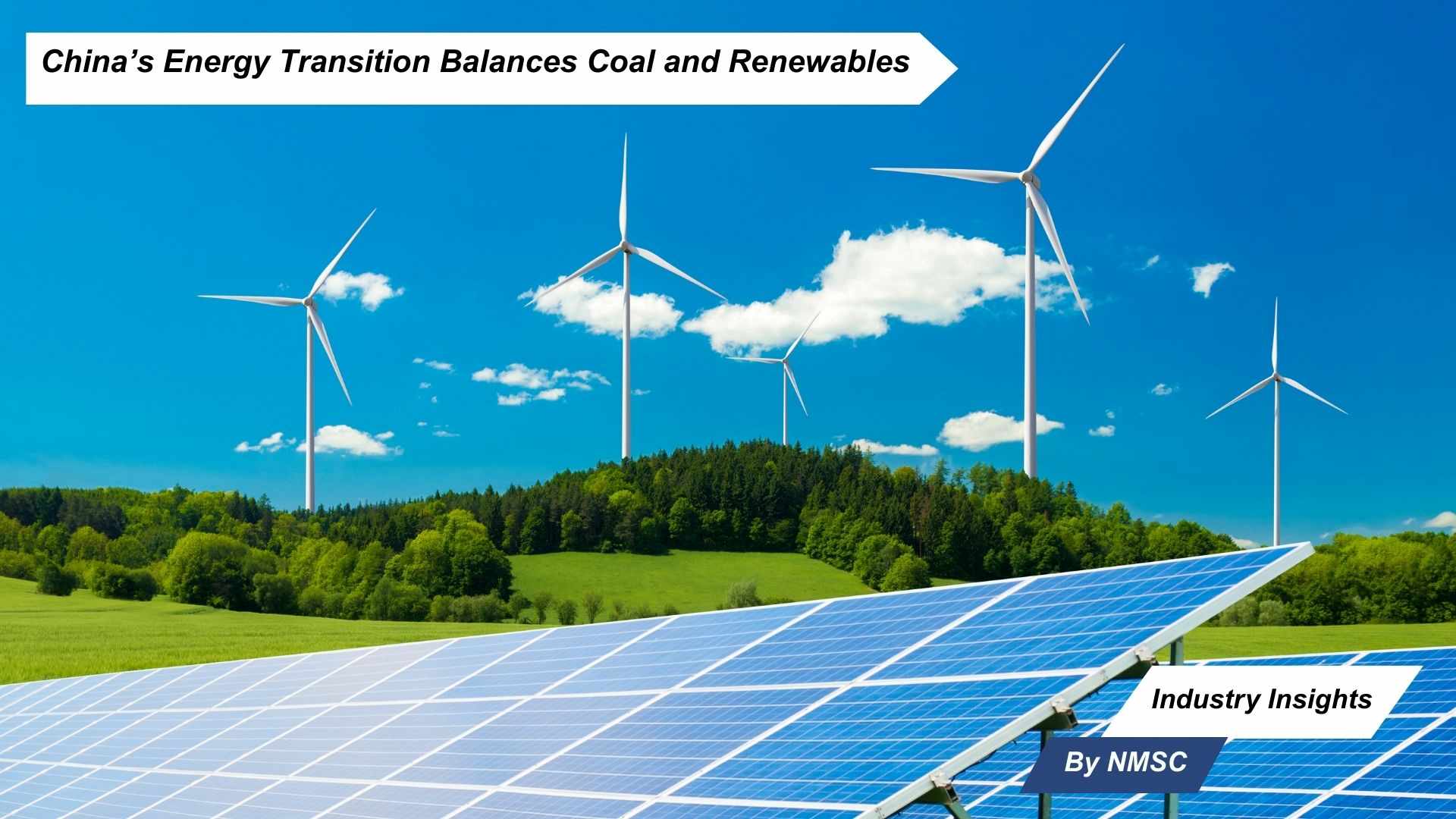
Industry Insights from Next Move Strategy Consulting
As some Western economies struggle with power shortages driven by surging electricity demand from artificial intelligence infrastructure, parts of the Western media have shifted focus toward China’s coal-fired power sector. Recent claims suggesting that increased coal plant construction signals a retreat from climate commitments risk oversimplifying and misrepresenting the structural transformation underway within China’s energy system.
Beyond a Narrow View of Coal Expansion
Linking coal capacity additions directly to stalled decarbonization overlooks China’s pragmatic energy strategy. While renewable energy remains the long-term direction, its intermittent and volatile nature continues to pose challenges globally. In this context, China’s newer coal power plants are no longer designed to function primarily as baseload suppliers, but rather as flexible grid-support assets aligned with the country’s dual-carbon goals. Industry insights reported by China Energy News indicate that coal-fired power is transitioning from a “main force” in electricity supply to a “regulator” role over the next five years, ensuring system stability amid rapid renewable expansion.
Coal as a Flexibility Enabler for Renewables
When wind and solar generation peaks, coal plants reduce output to prioritize green electricity. During periods of low renewable output or peak demand, they respond quickly to maintain grid reliability. At a time when large-scale energy storage technologies have yet to achieve a fundamental breakthrough, this rapid-adjustment capability remains essential for real-time power system balance.
Renewables at the Core of System Transformation
China’s position as a global leader in renewable energy underscores the depth of its transition. Installed solar capacity is projected to surpass coal for the first time in 2026, according to estimates from the China Electricity Council. In 2026 alone, China is expected to add more than 400 million kilowatts of new generation capacity, with wind and solar accounting for over 300 million kilowatts. Data from the National Energy Administration further reflects this shift. By the end of 2025, total installed power generation capacity reached 3.89 billion kilowatts, up 16.1 percent year-on-year. Solar capacity rose 35.4 percent to 1.2 billion kilowatts, while wind capacity increased 22.9 percent. Meanwhile, average utilization hours of large power-generating equipment declined, signaling coal output reductions to accommodate renewable generation.
A Cleaner, More Efficient Coal Fleet
Newly added coal power capacity does not represent a return to high-consumption, high-pollution models. These facilities typically deploy ultra-low emission and high-efficiency technologies, supported by intelligent systems that enable precise and flexible operations. At the same time, China continues to retire small, inefficient coal units across multiple provinces, following a dual-track approach of introducing advanced capacity while phasing out outdated assets.
Strategic Implications for Global Energy Transition
Through targeted and measured actions, China is pursuing energy security while actively engaging in global climate governance. This balanced transition path supports high-quality economic development and offers practical lessons for other developing economies navigating similar challenges.
Next Move Strategy Consulting’s Viewpoint
According to Next Move Strategy Consulting’s view, China’s approach highlights a critical insight often missed in Western assessments: Energy Transition Market is not defined by single-year capacity additions, but by long-term structural change. The integration of flexible coal power with large-scale renewable deployment reflects a system-level transformation that prioritizes reliability, efficiency, and sustainability in parallel. Judging China’s climate actions solely through the lens of coal capacity risks overlooking these dynamics and underestimating the broader evolution shaping the global energy transition.
Source: Global Times
Prepared by: Next Move Strategy Consulting
About the Author
 Sanyukta Deb
— Sanyukta Deb is Digital Marketing Team Lead at Next Move Strategy Consulting, where she has led content strategy and technical SEO for the firm's B2B market research publications for over 2 years. Her editorial process translates NextMSC's primary and secondary research — spanning technology, industrial, and consumer sectors — into commercial narratives, backed by search-intent, keyword, and competitive analysis. She brings 5 years of overall experience in digital marketing and content strategy.
Sanyukta Deb
— Sanyukta Deb is Digital Marketing Team Lead at Next Move Strategy Consulting, where she has led content strategy and technical SEO for the firm's B2B market research publications for over 2 years. Her editorial process translates NextMSC's primary and secondary research — spanning technology, industrial, and consumer sectors — into commercial narratives, backed by search-intent, keyword, and competitive analysis. She brings 5 years of overall experience in digital marketing and content strategy.
About the Reviewer
 Debashree Dey
— Debashree Dey is Assistant Manager at Next Move Strategy Consulting, where she supports cross-vertical market content and communications across diverse industries for 6 years. Her professional background includes senior content writing, communications, and published manuscript authorship, with experience developing audience-focused business narratives and maintaining clear, consistent messaging. Her role supports research-led content development and editorial quality across NextMSC publications.
Debashree Dey
— Debashree Dey is Assistant Manager at Next Move Strategy Consulting, where she supports cross-vertical market content and communications across diverse industries for 6 years. Her professional background includes senior content writing, communications, and published manuscript authorship, with experience developing audience-focused business narratives and maintaining clear, consistent messaging. Her role supports research-led content development and editorial quality across NextMSC publications.

















Add Comment