Poland Prefabricated New Construction Market Size, Share, Growth & Forecast by Material Type (Concrete, Steel, Timber, Other Materials), by Construction System (2D Panelized Systems, 3D Volumetric Systems, Component-Based Systems, Hybrid Systems), by End Use (Residential Buildings, Commercial Buildings, Institutional Buildings, Industrial Buildings, Infrastructure), by Buyer Type, by Contractor Role – Opportunity Analysis and Industry Forecast 2025–2035
Industry: Construction & Manufacturing | Latest Edition: September 30, 2026 | No of Pages: 721 | No. of Tables: 844 | No. of Figures: 838 | Format: PDF | Report Code: CM5054
What Is the Poland Prefabricated New Construction Market Size?
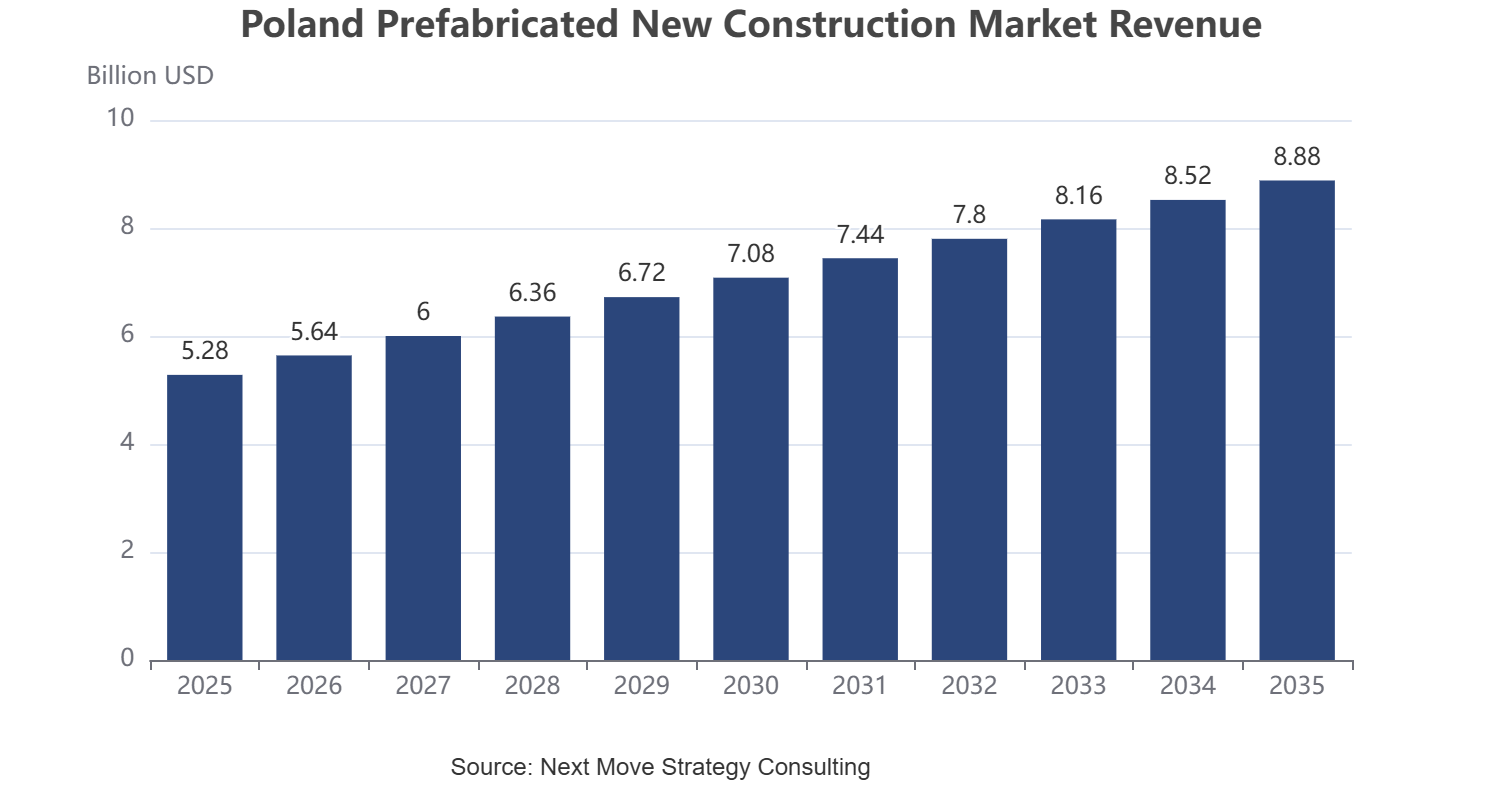
Based on research conducted by NMSC, The Poland Prefabricated New Construction Market was valued at USD 5.28 billion in 2025 and is estimated to reach USD 5.84 billion in 2026. The market is projected to expand to USD 8.88 billion by 2035, driven by acute construction-labor shortages, rebounding building-permit activity, and tightening EU energy-performance requirements for new buildings. Rising investments in production automation, higher-insulation panel and volumetric systems, and factory-based manufacturing capacity, supported by expanding developer adoption of off-site construction methods and growing public-sector demand for standardized building components, are further accelerating market growth. The market is expected to register a revenue CAGR of 5.34% during the forecast period from 2026 to 2035.
|
Field |
Details |
|
Market Size in 2025 |
USD 5.28 Billion |
|
Market Size in 2026 |
USD 5.84 Billion |
|
Revenue Forecast in 2035 |
USD 8.88 Billion |
|
Growth Rate |
CAGR of 5.34% from 2026 to 2035 |
|
Analysis Period |
2025–2035 |
|
Base Year Considered |
2025 |
|
Forecast Period |
2026–2035 |
|
Market Size Estimation |
USD Billion |
|
Companies Profiled |
15 |
|
Market Share |
Available for Top 10 Companies |
Poland Prefabricated New Construction Market Overview
The Poland Prefabricated New Construction Industry spans concrete, steel, timber, and hybrid off-site building systems delivered through panelized, volumetric, and component-based construction methods across residential, commercial, institutional, industrial, and infrastructure projects. Our analysis indicates that the industry is evolving from single-family timber-frame housing toward multi-family volumetric and modular systems as developers seek faster delivery. Poland's transposition of the recast EU Energy Performance of Buildings Directive is pushing manufacturers toward higher-insulation panel systems, while growing automation in precast and modular factories is improving production consistency and shortening project lead times nationwide.
| Key Takeaways |
|
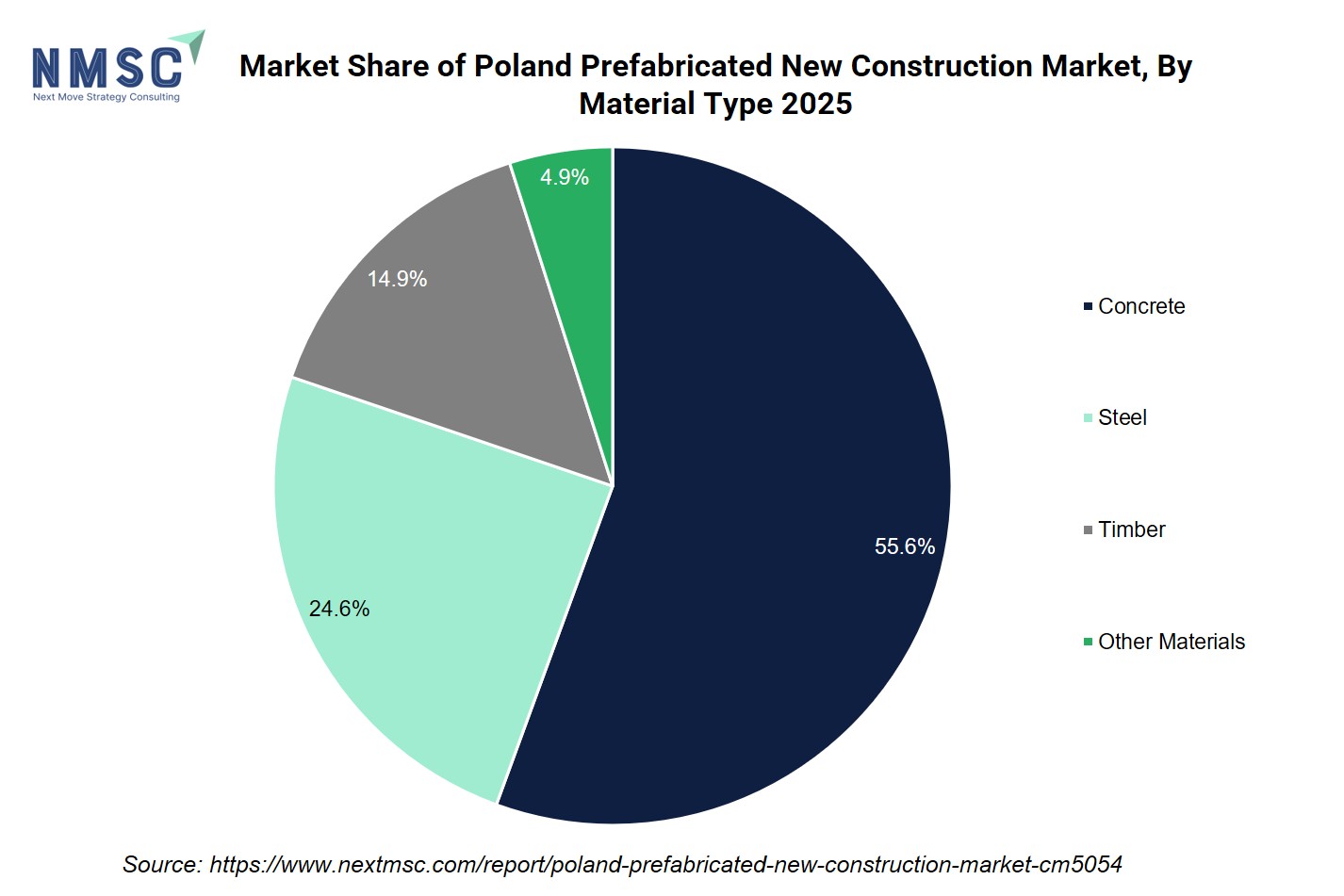
By material type, Concrete held the largest share of the Poland Prefabricated New Construction Market at USD 2,932.45 million in 2025, reflecting its widespread adoption in residential, commercial, and infrastructure projects owing to its structural strength, durability, and cost efficiency. |
|
Timber is the fastest-growing material type in the Poland Prefabricated New Construction Market at a CAGR of 6.91% from 2026 to 2035, projected to grow from USD 785.04 million in 2025 to USD 1,531.03 million by 2035, driven by rising demand for sustainable, low-carbon, and energy-efficient building solutions. |
|
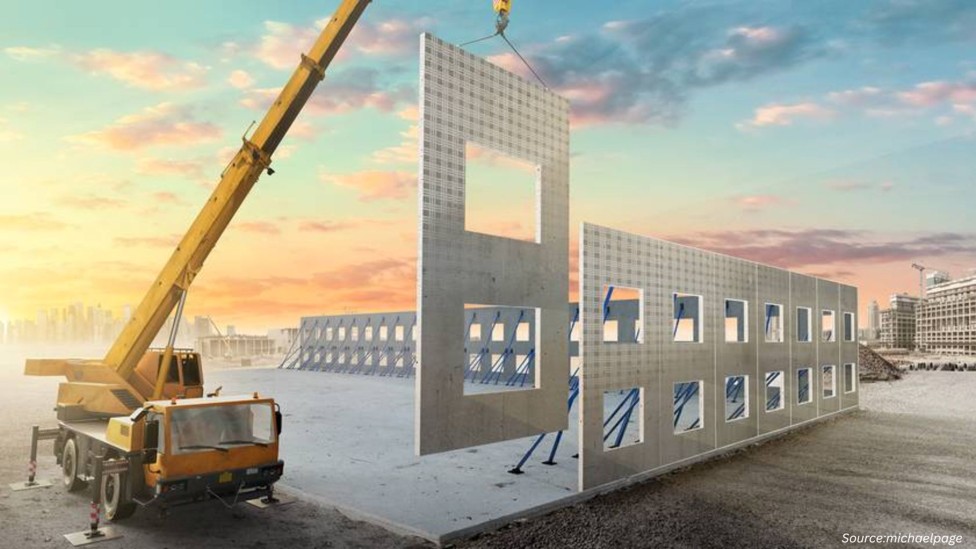
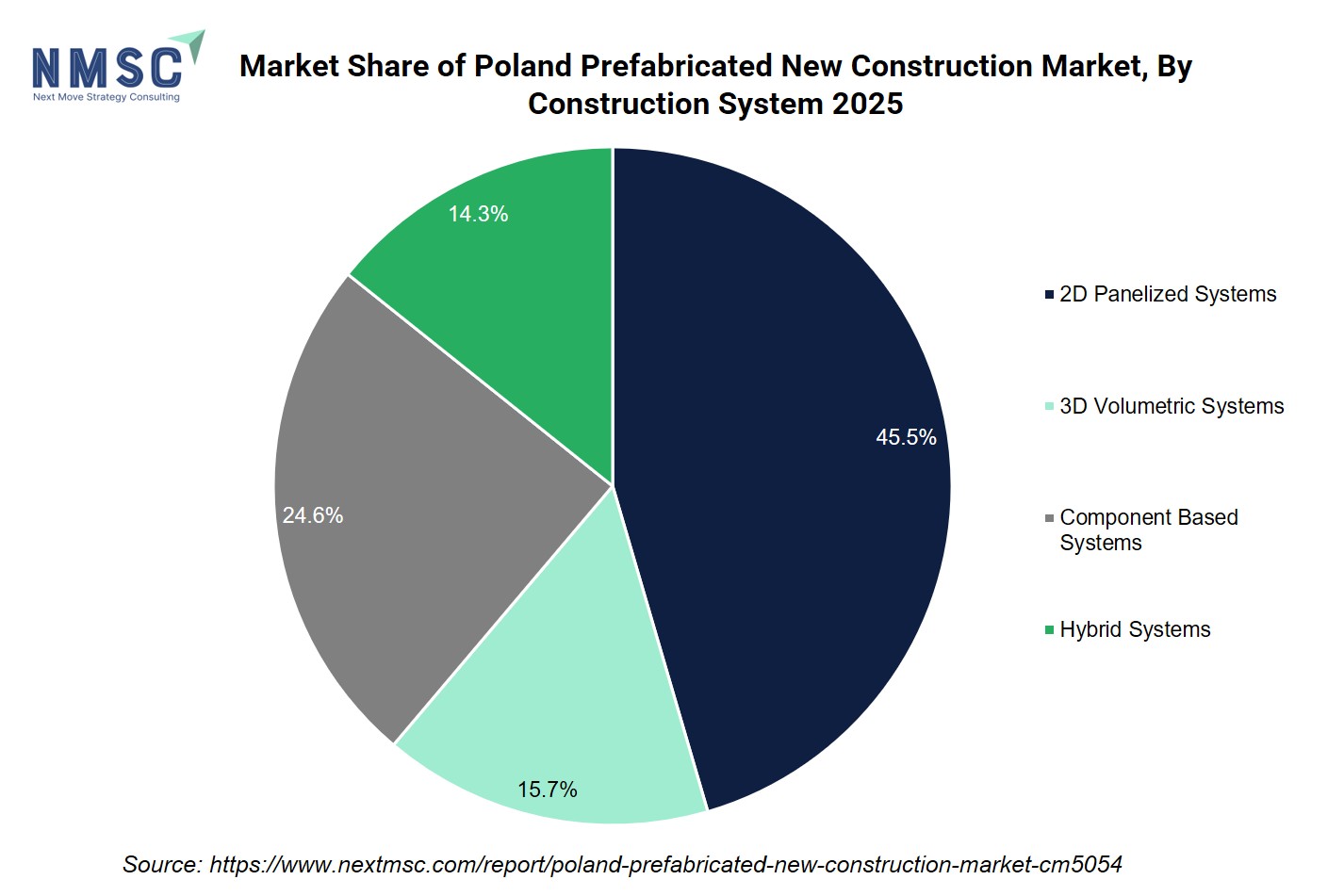
By construction system, 2D Panelized Systems led the Poland Prefabricated New Construction Market with USD 2,399.78 million in 2025, supported by faster installation, lower construction costs, and broad adoption across residential and commercial developments. |
|
3D Volumetric Systems is the fastest-growing construction system in the Poland Prefabricated New Construction Market at a CAGR of 6.94% from 2026 to 2035, fueled by increasing demand for factory-built modular buildings, shorter project timelines, and improved construction productivity. |
|
By end use, Residential Buildings represented the largest end-use segment in the Poland Prefabricated New Construction Market with USD 2,619.68 million in 2025, driven by strong housing demand, urban development initiatives, and growing adoption of prefabricated housing solutions. |
|
Industrial Buildings is the fastest-growing end-use segment in the Poland Prefabricated New Construction Market at a CAGR of 6.70% from 2026 to 2035, supported by expanding manufacturing facilities, logistics infrastructure, and industrial investment across Poland. |
|
By buyer type, Private Developers held the largest share of the Poland Prefabricated New Construction Market with USD 1,860.81 million in 2025, supported by robust investments in residential, mixed-use, and commercial real estate developments. |
|
Private Developers is also the fastest-growing buyer type in the Poland Prefabricated New Construction Market at a CAGR of 6.85% from 2026 to 2035, projected to expand from USD 1,860.81 million in 2025 to USD 3,608.41 million by 2035, driven by increasing private sector investments and demand for faster, cost-efficient construction. |
|
By contractor role, General Contractors led the Poland Prefabricated New Construction Market with USD 1,546.49 million in 2025, reflecting their central role in managing large-scale prefabricated construction projects across multiple end-use sectors. |
|
Modular Integrators is the fastest-growing contractor role in the Poland Prefabricated New Construction Market at a CAGR of 7.63% from 2026 to 2035, driven by increasing adoption of off-site construction, modular assembly expertise, and integrated project delivery models. |
Regulatory Framework Impacting the Poland Prefabricated New Construction Market
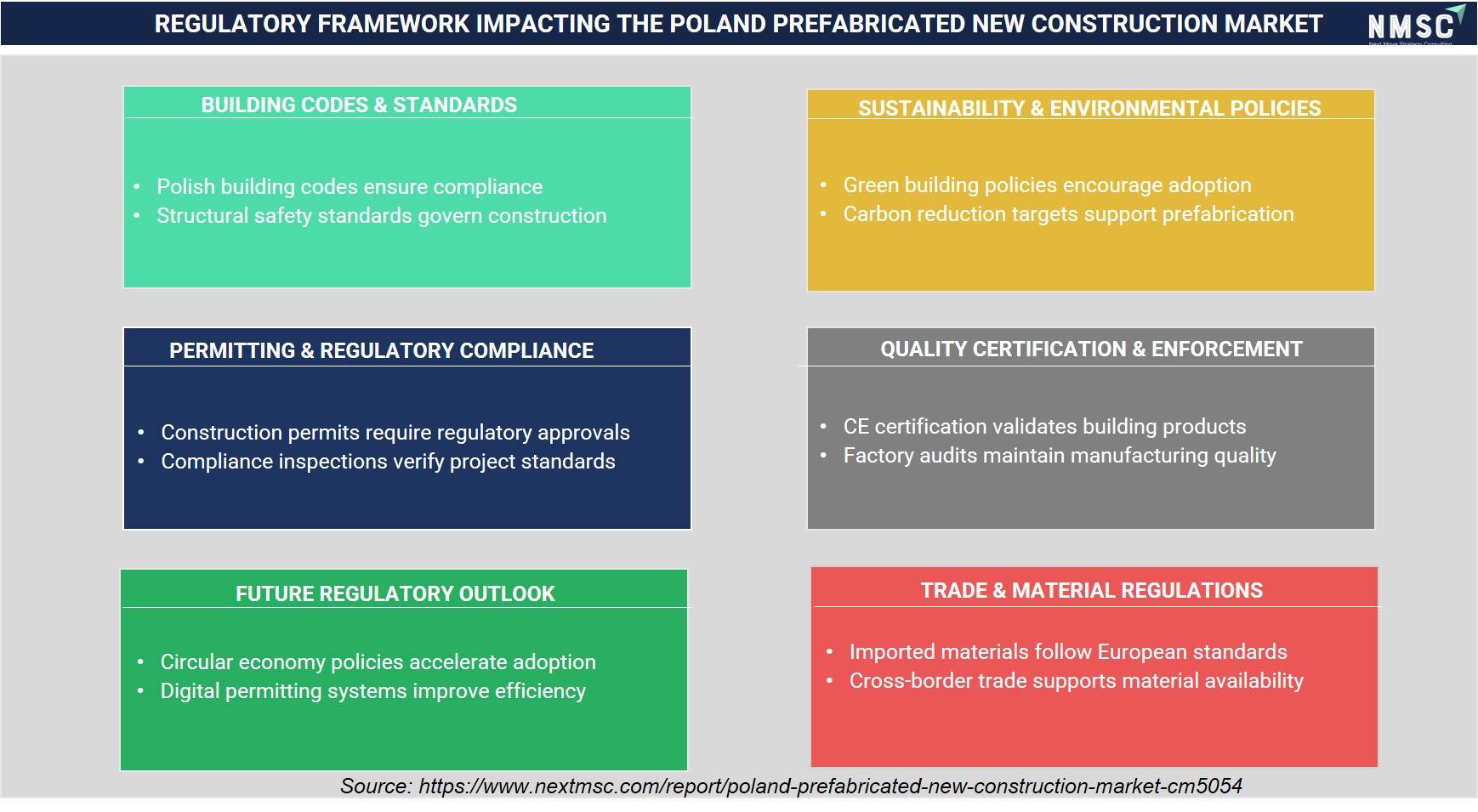
The Poland prefabricated new construction market operates within a comprehensive regulatory framework covering building codes, sustainability policies, permitting, quality certification, and trade regulations. Compliance with national and European standards ensures structural safety and product quality, while evolving circular economy initiatives and digital permitting systems support greater efficiency and long-term market development.
Key Emerging Trends in the Poland Prefabricated New Construction Industry
How Is Volumetric Modular Construction Expanding Beyond Industrial Applications in Poland?
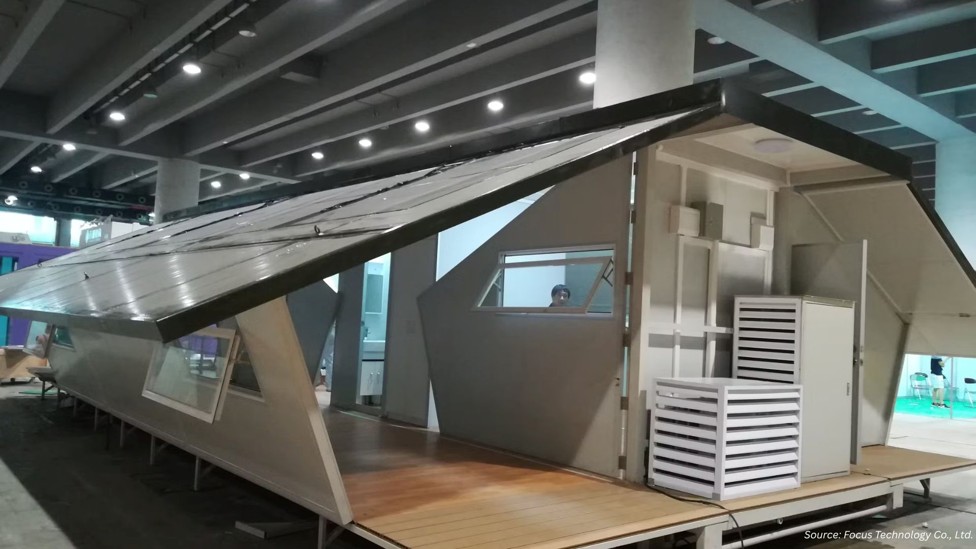
Timber-based Poland Volumetric Modular Buildings solutions, long associated with single-family housing, are increasingly being deployed for multi-family residential and public-institutional projects, supporting the broader Poland Modular Construction industry. UNIHOUSE S.A.'s Bielsk Podlaski factory, with a stated production capacity of approximately 2,000 modules per year, illustrates this shift toward larger-scale volumetric output. Our research indicates that this transformation is enabling developers to deliver multi-storey residential blocks, schools, and care facilities within months rather than years. Public-sector buyers evaluating social housing and educational infrastructure are among the earliest adopters of fully finished volumetric modules, accelerating the adoption of Poland Offsite Construction methods.
How Are EU Building-Decarbonization Rules Reshaping Prefabricated Product Design?
NMSC's analysis indicates that Poland's transposition of the recast EU Energy Performance of Buildings Directive, which sets zero-emission standards for all new buildings from 2030 and for new public buildings from 2028, is pushing manufacturers toward higher-insulation panel and hybrid systems. Concrete and steel producers are engineering thinner, better-insulated envelope components to meet tightening thresholds, while timber-frame vendors are promoting the material's lower embodied-carbon profile. Vendors able to document compliant thermal performance are gaining preference among institutional and developer buyers navigating the directive's 29 May 2026 national transposition deadline, reinforcing the evolution of Poland Industrialized Building Systems (IBS).
How Is Precast Concrete Automation Improving Delivery Speed for Large-Format Projects?
Our assessment indicates that automation within Poland Precast Concrete Construction is a defining trend among established Poland Prefabricated New Construction Market vendors. Pekabex S.A., described on its own website as the largest producer of structural prefabricated reinforced concrete elements in Poland, operates multiple production plants supplying beams, columns, hollow-core slabs, and facade elements for logistics, industrial, and multi-family residential projects. This transformation is compressing on-site assembly timelines for large-format commercial and infrastructure projects while improving dimensional consistency, reinforcing demand for factory-based structural systems over traditional site-poured concrete.
What Are the Key Market Drivers, Restraints, and Investment Opportunities that will Shape the Poland Prefabricated New Construction Industry in the Next Decade?
Growth Catalyst & Risk Assessment Matrix
|
Drivers / Trends / Restraints |
(+/-) % Impact on CAGR Forecast |
Geographic Relevance |
Impact Timeline |
|
Persistent construction-labor shortages accelerating adoption of factory-built systems |
+1.4% |
Nationwide, urban residential markets |
Medium term (2–4 years) |
|
Rising developer adoption of volumetric and panelized systems for multi-family housing |
+1.1% |
Warsaw, Kraków, Wrocław, Poznań metropolitan markets |
Medium to long term (3–6 years) |
|
Tightening EU energy-performance requirements favoring higher-insulation prefabricated envelopes |
+0.9% |
Nationwide, EU-regulated new construction |
Medium term (2–5 years) |
|
High upfront capital requirements for factory automation limiting smaller producers' scale-up |
−0.7% |
Domestic small and mid-size manufacturers |
Medium term (2–4 years) |
|
Cyclical sensitivity to mortgage rates and developer financing conditions |
−0.5% |
Residential developer segment nationwide |
Short to medium term (1–3 years) |
What Are the Growth Drivers of the Poland Prefabricated New Construction Industry?
How Are Labor Shortages Accelerating Prefabricated Construction Adoption in Poland?
Persistent skilled-labor shortages across Poland's construction sector are driving increased adoption of prefabricated building systems that reduce dependence on on-site labor. Our analysis indicates that Poland Offsite Construction and panelized as well as volumetric construction methods enable contractors to streamline workforce requirements while maintaining project delivery schedules. This advantage is particularly valuable for large-scale residential developments, where labor constraints continue to encourage developers to adopt factory-based construction solutions under the broader Poland Modular Construction landscape.
How Is Rebounding Building-Permit Activity Supporting Market Expansion?
Improving building-permit activity is strengthening the outlook for Poland's prefabricated construction industry. Our assessment indicates that rising project approvals reflect renewed developer confidence and a healthier construction pipeline. As more residential and commercial developments progress from planning into execution, manufacturers of panelized, modular, and Poland Industrialized Building Systems (IBS) are expected to benefit from increasing demand and stronger order volumes.
What Are the Growth Inhibitors of the Poland Prefabricated New Construction Industry?
How Do High Automation Capital Requirements Restrain Smaller Producers?
We observed that the high capital investment required for factory automation remains a significant barrier to broader industry participation. Establishing advanced production facilities demands considerable expenditure on automated manufacturing equipment, quality-control technologies, and logistics capabilities. Our assessment indicates that these financial requirements favor established manufacturers, particularly those operating in Poland Precast Concrete Construction, limiting the ability of smaller regional producers to expand production capacity and compete effectively within the market.
How Does Mortgage-Rate Sensitivity Constrain Residential Demand?
Through our market assessment, demand for prefabricated residential construction remains closely linked to mortgage affordability and financing conditions. Higher borrowing costs can reduce homebuyer purchasing activity, affecting the pace of new housing development despite ongoing construction demand. Our assessment indicates that this financing sensitivity creates fluctuations in order volumes for residential-focused manufacturers, including providers of Poland Volumetric Modular Buildings, encouraging greater emphasis on commercial, institutional, and infrastructure projects that are less dependent on household borrowing.
What Are the Growth Opportunities in the Poland Prefabricated New Construction Industry?
How Does EU Decarbonization Regulation Create Opportunity for Compliant Manufacturers?
Based on our assessment, evolving European decarbonization regulations are creating significant opportunities for manufacturers that offer energy-efficient and low-carbon prefabricated building systems. Timber-frame and hybrid construction solutions are particularly well positioned due to their strong sustainability credentials. We expect manufacturers that demonstrate compliance with evolving environmental performance standards to strengthen their competitive position among institutional and private-sector developers while advancing the adoption of Poland Industrialized Building Systems (IBS).
How Is Public-Sector Infrastructure Demand Creating Opportunities for Modular Integrators?
Our findings suggest that growing investment in public infrastructure is creating attractive opportunities for Poland Modular Construction providers and component manufacturers. Factory-built solutions offered through Poland Offsite Construction provide advantages in construction speed, quality consistency, and cost predictability, making them well suited for public-sector projects. We expect continued infrastructure development to support stable long-term demand for modular, prefabricated, and volumetric building systems across multiple institutional applications.
Supply Chain Structure of the Poland Prefabricated New Construction Market
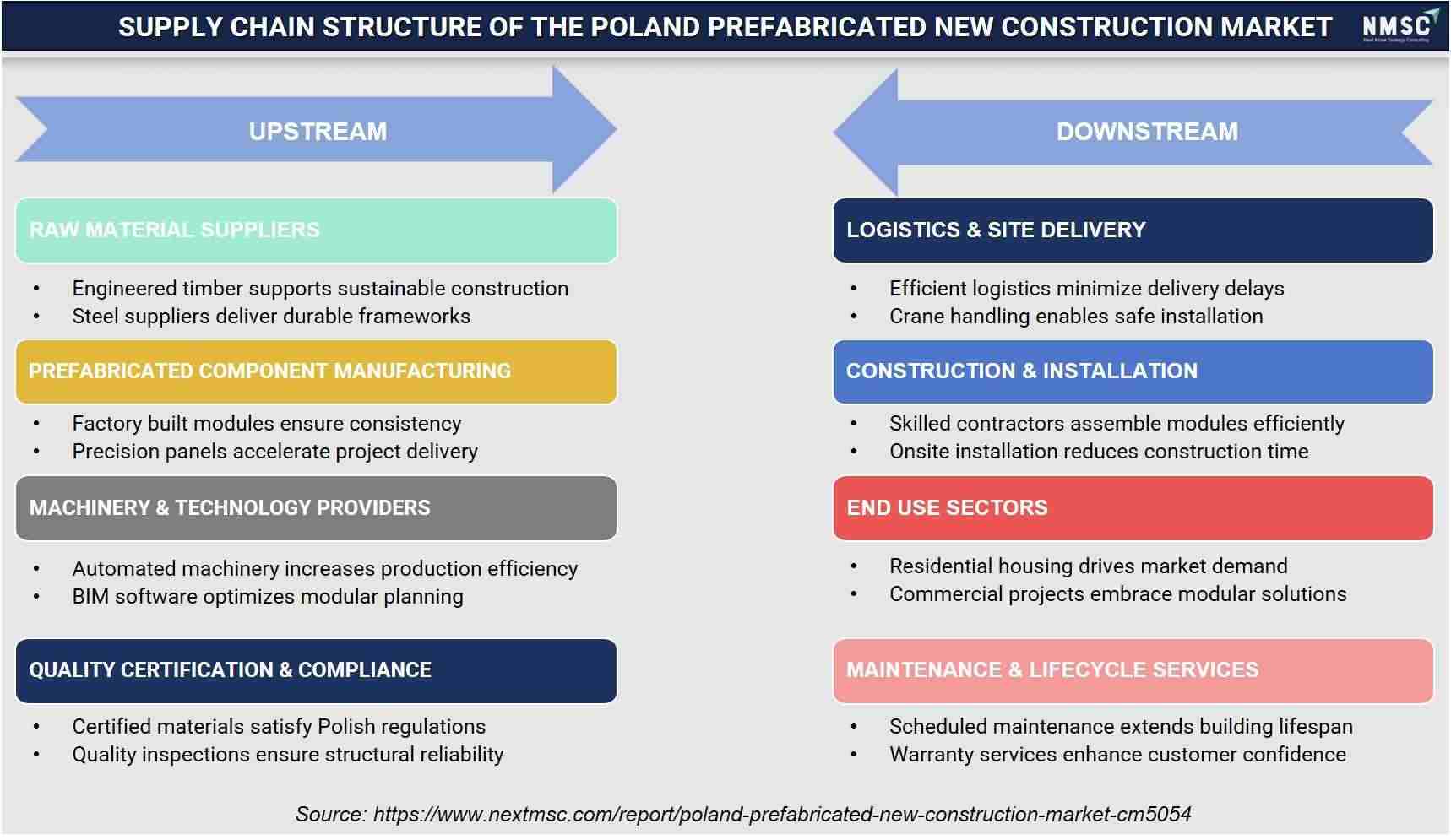
The Poland prefabricated new construction market relies on an integrated supply chain, beginning with raw material sourcing and prefabricated component manufacturing, supported by advanced machinery and regulatory compliance. Efficient logistics, skilled installation, and lifecycle services ensure timely project delivery, structural quality, and long-term performance, enabling wider adoption across residential and commercial construction.
How Is the Poland Prefabricated New Construction Industry Segmented in This Report, and What Are the Key Insights from the Segmentation Analysis?
Which Material Type Leads the Poland Prefabricated New Construction Market, and Which Is Growing Fastest?
|
Material Type Segment |
2025 (USD Mn) |
2035 (USD Mn) |
CAGR (%) 2026–2035 |
|
Concrete |
2932.45 |
4940.78 |
5.36% |
|
Steel |
1300.35 |
2026.86 |
4.54% |
|
Timber |
785.04 |
1531.03 |
6.91% |
|
Other Materials |
259.18 |
381.89 |
3.95% |
Based on our analysis of Poland's structural building trends, the Prefabricated New Construction Industry is segmented by material type into concrete, steel, timber, and other materials, including polymer-based and hybrid material systems. Concrete leads in 2025 given its established use in Poland Prefab Buildings across multi-family residential, industrial, and infrastructure precast applications. Timber is the fastest-growing material type at a 6.91% CAGR, driven by rising adoption of sustainable Poland Factory-Built Construction and growing developer preference for lower embodied-carbon building envelopes.
Which Construction System Commands the Largest Share of Prefabricated Adoption in Poland?
|
Construction System Segment |
2025 (USD Mn) |
2035 (USD Mn) |
CAGR (%) 2026–2035 |
|
2D Panelized Systems |
2399.78 |
3962.33 |
5.14% |
|
3D Volumetric Systems |
828.7 |
1620.65 |
6.94% |
|
Component Based Systems |
1296.06 |
1990.24 |
4.38% |
|
Hybrid Systems |
752.49 |
1307.34 |
5.68% |
Through our market assessment, the Poland Prefabricated New Construction Industry is segmented by construction system into 2D panelized systems, 3D volumetric systems, component-based systems, and hybrid systems. Poland Panelized Construction dominates through 2D Panelized Systems, reflecting its established use across single-family and low-rise residential projects where wall and floor panels are manufactured off-site and assembled rapidly. Meanwhile, 3D Volumetric Systems represent the fastest-growing construction system at a 6.94% CAGR as developers increasingly deploy fully finished modules for multi-family and institutional projects requiring compressed delivery schedules under Poland Modern Methods of Construction (MMC).
Which End Use Segment Leads Demand for Prefabricated Construction in Poland?
|
End Use Segment |
2025 (USD Mn) |
2035 (USD Mn) |
CAGR (%) 2026–2035 |
|
Residential Buildings |
2619.68 |
4570.04 |
5.72% |
|
Commercial Buildings |
577.28 |
672.78 |
1.54% |
|
Institutional Buildings |
645.41 |
1005.42 |
4.53% |
|
Industrial Buildings |
1050.33 |
2009.76 |
6.70% |
|
Infrastructure |
384.33 |
622.56 |
4.94% |
Based on end use, the Poland Prefabricated New Construction Industry is segmented into residential, commercial, institutional, industrial buildings, and infrastructure. Residential Buildings lead, supported by sustained developer-led housing completions and growing adoption of Poland Prefab Buildings using panelized and volumetric systems. Industrial Buildings represent the fastest-growing end-use segment at a 6.70% CAGR, propelled by warehouse and logistics facility construction that favors rapid Poland Factory-Built Construction solutions capable of meeting compressed delivery schedules for e-commerce and manufacturing tenants.
Competitive Landscape
Competitive Dynamics and M&A Landscape
|
Key Takeaways |
Details |
|
Market Structure |
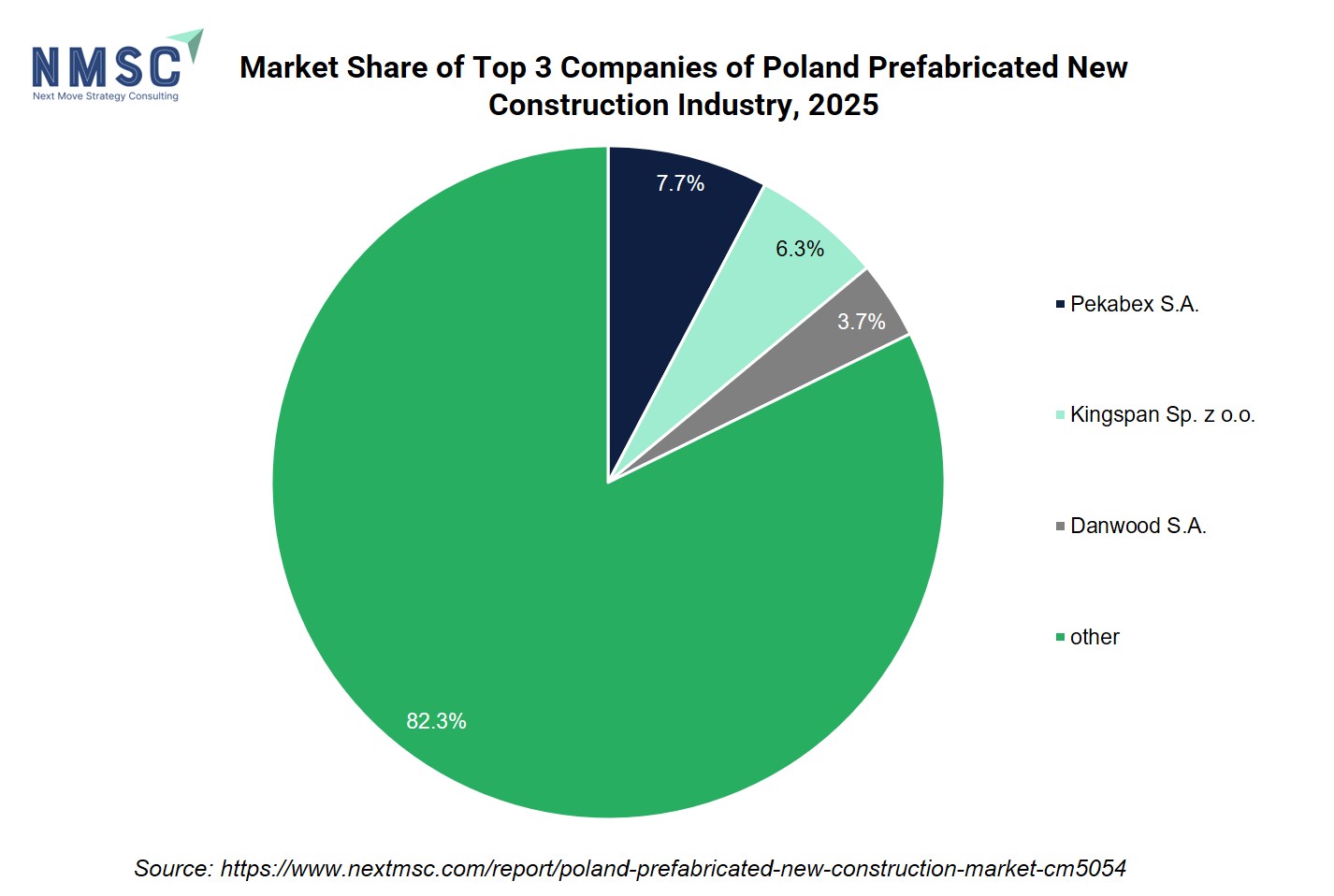
The Poland Prefabricated New Construction Market is moderately fragmented, with established precast and modular leaders such as Pekabex S.A. and UNIHOUSE S.A. competing alongside regional specialists including Danwood S.A., Domikon Sp. z o.o., and Mabudo S.A. across concrete, steel, and timber system categories. |
|
Innovation Focus |
Competitive differentiation is increasingly centered on production automation, volumetric modular scale-up, and higher-insulation envelope systems aligned with tightening EU energy-performance requirements. |
|
M&A Activity |
Consolidation activity remains selective, with established precast and modular producers pursuing capacity expansion and plant modernization to broaden multi-material and multi-system production capability rather than large-scale acquisitions. |
How Do Companies Compete in the Poland Prefabricated New Construction Industry?
The Poland Prefabricated New Construction Industry is characterized by competition across production scale, material specialization, and delivery speed. Pekabex S.A. and ArcelorMittal Construction Polska compete on large-format precast concrete and structural steel capability for industrial and infrastructure projects, while UNIHOUSE S.A. and Danwood S.A. compete on timber-based volumetric and Poland Panelized Construction solutions. NMSC's analysis indicates that market structure is evolving from single-material specialization toward broader multi-system portfolios as buyers seek single-vendor solutions spanning structure, envelope, and interior fit-out through integrated Poland Engineered Building Systems.
Which Competitive Archetypes Dominate the Poland Prefabricated New Construction Market?
Our assessment indicates that two competitive archetypes dominate the market: large-scale precast concrete and structural-steel manufacturers serving industrial, logistics, and infrastructure clients, and timber-frame or volumetric modular specialists serving residential and institutional buyers. Companies such as Pekabex S.A. and Ruukki Polska Sp. z o.o. anchor the former category with established production capacity, while Danwood S.A., UNIHOUSE S.A., and DMDmodular p.s.a. anchor the latter through standardized, factory-finished residential and public-building modules that reflect the growth of Poland Factory-Built Construction.
What Innovation and Differentiation Strategies Explain Market Leadership in Poland's Prefabricated Construction Industry?
Innovation leadership in the Poland Prefabricated New Construction Market centers on production automation, thermal-performance engineering, and delivery-speed optimization. Vendors are investing in automated precast lines, robotics, and digital design-to-fabrication workflows to reduce production variability and shorten lead times. NMSC's analysis indicates that manufacturers able to demonstrate compliance with tightening EU building-decarbonization standards while integrating Poland Modern Methods of Construction (MMC) and Poland Engineered Building Systems are best positioned to capture market share among developers and public-sector buyers prioritizing sustainability and construction speed.
What Is the Outlook for M&A Activity in the Poland Prefabricated New Construction Market?
Merger and acquisition activity within the Poland Prefabricated New Construction Industry is expected to remain selective through 2035, concentrated on capacity expansion and geographic footprint broadening rather than large-scale consolidation. Based on our analysis, established precast and modular producers are more likely to pursue plant modernization, automation investment, and organic capacity additions than acquisitions, supported by increasing demand for Poland Factory-Built Construction and the capital intensity already required for production scale-up.
Key Market Players in the Poland Prefabricated New Construction Industry
-
Box Haus Sp. z o.o.
-
Abakon BD Sp. z o.o.
-
Domikon Sp. z o.o.
-
Castor Sp. z o.o.
-
Mabudo S.A.
-
Kingspan Sp. z o.o.
-
Ruukki Polska Sp. z o.o.
-
ArcelorMittal Construction Polska
-
Thomas Beton Sp. z o.o.
-
WOLF Haus Polska
-
DMDmodular p.s.a.
-
Danwood S.A.
-
Pekabex S.A.
-
UNIHOUSE S.A.
-
MOD Sp. z o.o.
What Are the Latest Developments in the Poland Prefabricated New Construction Industry?
Based on our research, the following developments reflect recent capacity and technology investment activity among Poland Prefabricated New Construction Market participants.
|
Date |
Event |
|
Jun 2026 |
Pekabex advanced the Eko Hala project in Bronisze for Warszawski Rolno-Spożywczy Rynek Hurtowy S.A., with prefabrication playing a central role in delivery. |
|
Mar 2026 |
Pekabex began one of its largest housing projects in Bagartorp, Solna using components manufactured at their Poland plant, including 249 rental apartments, retail space, and an underground garage. |
|
March 2025 |
Kingspan launched PowerPanel 2.0, an integrated roofing solution combining its QuadCore insulated panel with solar technology. During the year, the company also expanded its portfolio to 35 proprietary lower embodied carbon (LEC) products, strengthening its sustainable insulated building envelope offering for new construction. |
Consumer Behavior Analysis of the Poland Prefabricated New Construction Market
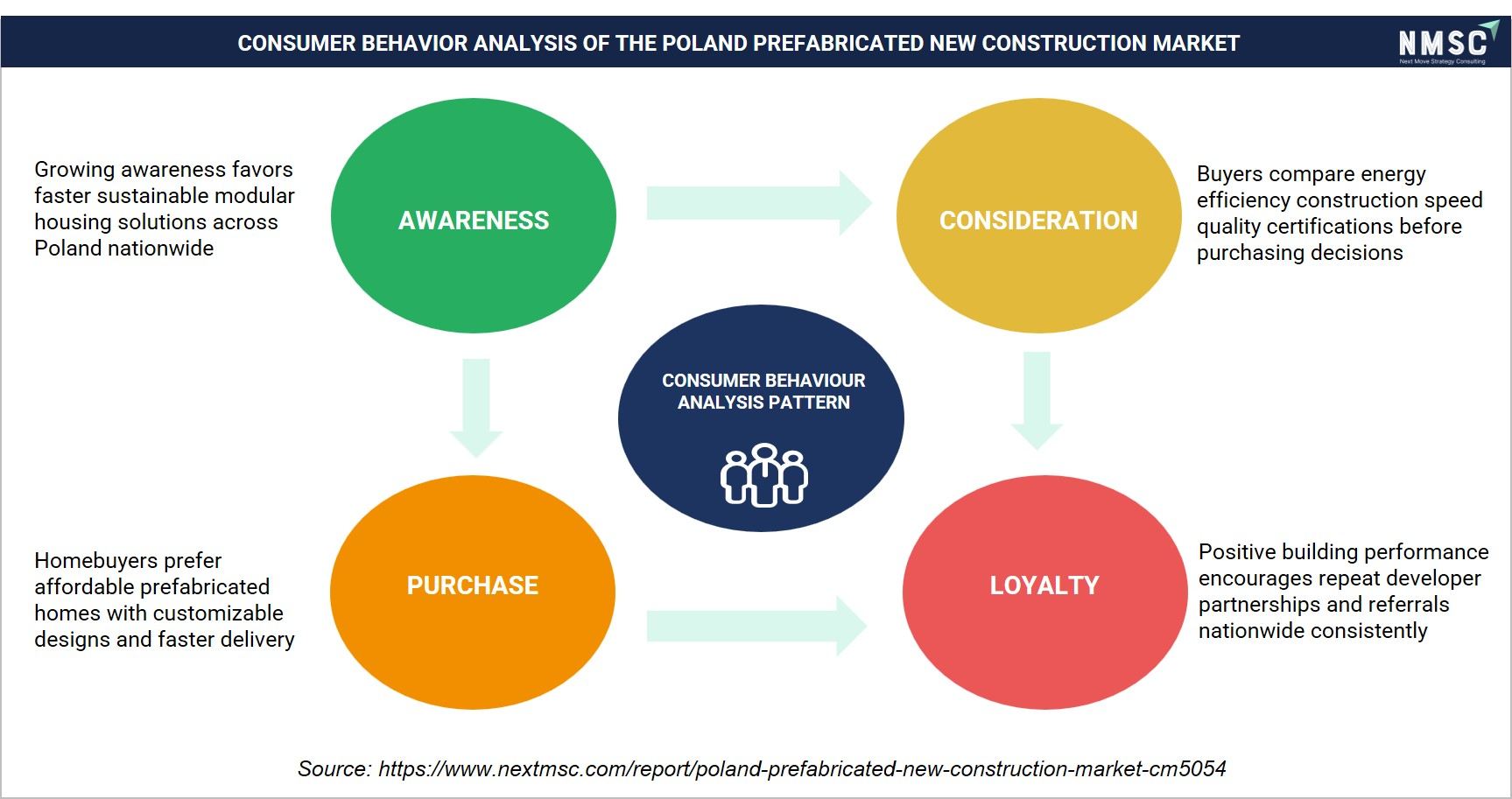
Consumer adoption of prefabricated new construction in Poland is driven by growing awareness of sustainable and time-efficient building solutions. Buyers prioritize energy efficiency, construction quality, certifications, affordability, and customization during evaluation. Positive project outcomes and reliable performance encourage repeat purchases, long-term developer partnerships, and customer referrals, supporting sustained market demand.
What Are the Investment Opportunities in the Poland Prefabricated New Construction Industry?
The Poland Prefabricated New Construction Industry is attracting sustained capital investment driven by production-automation upgrades, capacity expansion, and demand for EU-compliant, low-carbon building systems. Continued investment by Pekabex S.A. in plant modernization and by UNIHOUSE S.A. in volumetric production capacity is reinforcing supply-side growth. Infrastructure investment is concentrated in automated precast and modular manufacturing facilities across Poland's major industrial regions, while ESG-conscious developers and public-sector buyers increasingly favor manufacturers offering Poland Engineered Building Systems with documented energy-performance compliance and lower embodied-carbon material sourcing within broader responsible-construction procurement frameworks.
Key Benefits for Stakeholders
The Poland Prefabricated New Construction Market report delivers actionable insights for construction technology leaders, investors and financial analysts, and building-product manufacturers by providing comprehensive market sizing, forecasts, and segmentation analysis by material type, construction system, end use, buyer type, and contractor role through 2035. It supports strategic capacity planning, investment evaluation, and product development by analyzing high-growth material and system categories, including Poland Panelized Construction, Poland Prefab Buildings, and Poland Modern Methods of Construction (MMC). Segment-level insights and demand forecasts further enable informed decision-making, production planning, and long-term business growth across Poland's evolving prefabricated construction ecosystem.
Key Market Segments
By Material Type
-
Concrete
-
Normal weight concrete
-
LECA concrete
-
Other lightweight concretes
-
-
Steel
-
Structural steel
-
Light gauge steel
-
-
Timber
-
Cross laminated timber
-
Glulam
-
Light timber frame
-
-
Other materials
-
Polymer based systems
-
Hybrid material systems
-
By Construction System
-
2D panelized systems
-
Open panel systems
-
Closed panel systems
-
Structural wall panels
-
Floor and roof panels
-
-
3D volumetric systems
-
Structural shell modules
-
Partially finished modules
-
Fully finished modules
-
-
Component based systems
-
Structural components
-
Envelope components
-
Interior fit-out components
-
Service pods
-
Bathroom pods
-
Kitchen pods
-
MEP pods
-
Utility pods
-
-
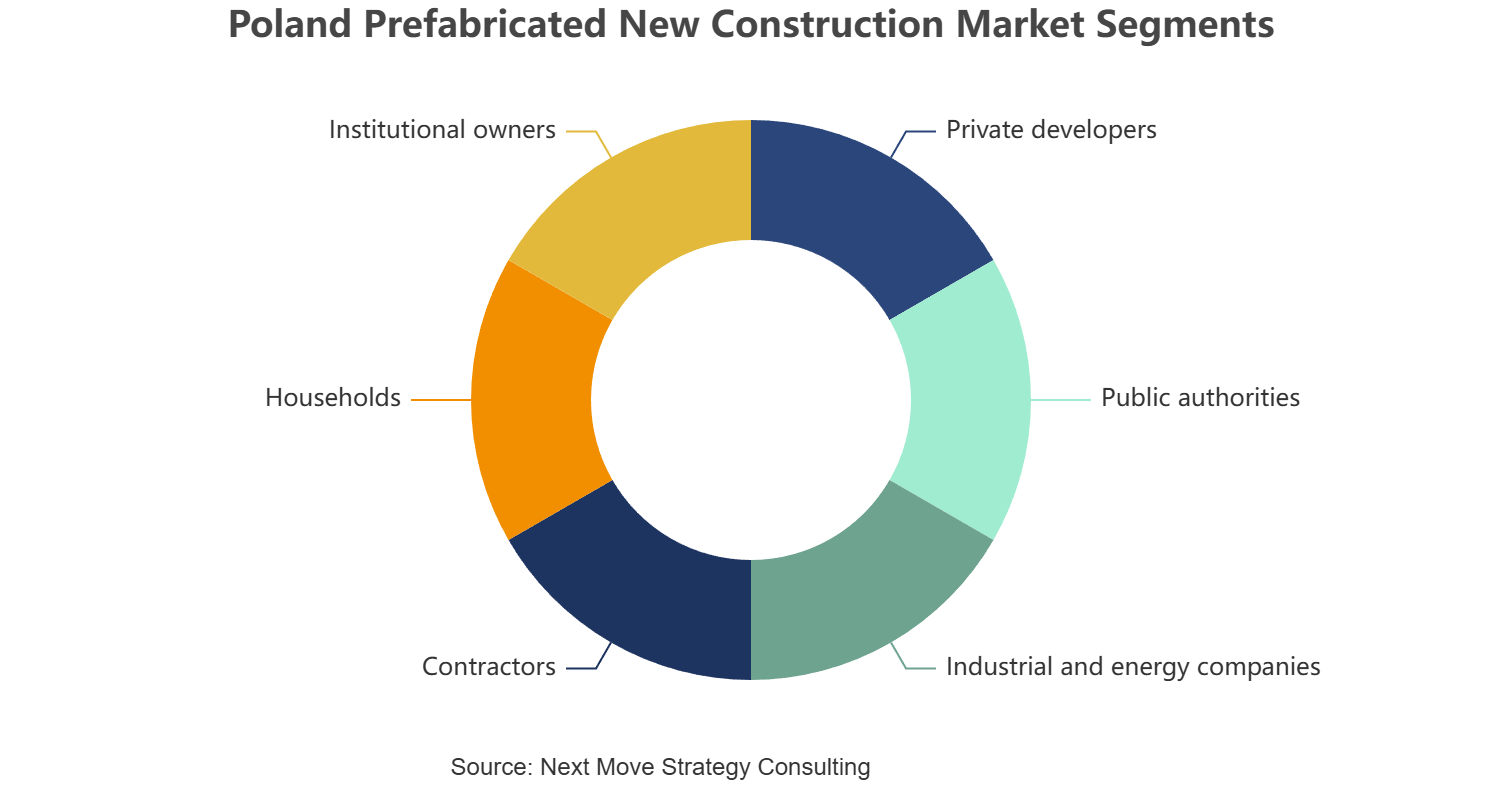
-
Hybrid systems
By Buyer Type
-
Private developers
-
Public authorities
-
Industrial and energy companies
-
Contractors
-
Households
-
Institutional owners
By Contractor Role
-
General contractors
-
Design and build contractors
-
Specialty trade contractors
-
Modular integrators
-
Construction managers
By End Use
-
Residential buildings
-
Single family housing
-
Multi family housing
-
Social housing
-
Student housing
-
Workforce housing
-
-
Commercial buildings
-
Office buildings
-
Retail buildings
-
Hospitality buildings
-
-
Institutional buildings
-
Education buildings
-
Healthcare buildings
-
Public buildings
-
Sports and leisure buildings
-
-
Industrial buildings
-
Manufacturing buildings
-
Warehouses and logistics buildings
-
-
Infrastructure
-
Transportation infrastructure
-
Utility infrastructure
-
Conclusion and Recommendations
The Poland Prefabricated New Construction Market is positioned for steady long-term growth, supported by increasing adoption of off-site construction, labor shortages, and stricter EU sustainability and energy-efficiency requirements. Market participants should prioritize investments in production automation, multi-material capabilities, and low-carbon, regulation-compliant prefabrication solutions to strengthen competitiveness. Expanding capacity in high-growth segments such as timber-based construction, 3D volumetric systems, and modular integration will enhance long-term returns. Despite challenges including financing constraints, capital-intensive production upgrades, and evolving regulatory standards, companies that adopt integrated manufacturing strategies and scalable prefabrication technologies will be best positioned to capitalize on Poland's expanding construction market through 2035.
About the Author
 Mihul Sharma
— Mihul Sharma is Research Associate at Next Move Strategy Consulting, where he has covered technology, industrial, and healthcare markets for 3 years. His work applies structured business research, market analysis, and secondary-source review to assess market trends, competitive developments, and growth opportunities. He supports report development by fully synthesizing industry data, company information, and market signals into concise findings for strategy and investment-focused research teams.
Mihul Sharma
— Mihul Sharma is Research Associate at Next Move Strategy Consulting, where he has covered technology, industrial, and healthcare markets for 3 years. His work applies structured business research, market analysis, and secondary-source review to assess market trends, competitive developments, and growth opportunities. He supports report development by fully synthesizing industry data, company information, and market signals into concise findings for strategy and investment-focused research teams.
About the Reviewer
 Supradip Baul
— Supradip Baul is an accomplished business consultant and strategist with over a decade of rich experience in market intelligence, strategy, technology, and business transformation. His work has included rigorous qualitative and quantitative analysis across multiple industries, helping clients shape investment decisions and long-term roadmaps. Earlier in his career, he was associated with Gartner, where he contributed to industry-leading reports and market share analyses. He has worked with leading global companies and holds an MBA with a dual specialization in Marketing and Finance.
Supradip Baul
— Supradip Baul is an accomplished business consultant and strategist with over a decade of rich experience in market intelligence, strategy, technology, and business transformation. His work has included rigorous qualitative and quantitative analysis across multiple industries, helping clients shape investment decisions and long-term roadmaps. Earlier in his career, he was associated with Gartner, where he contributed to industry-leading reports and market share analyses. He has worked with leading global companies and holds an MBA with a dual specialization in Marketing and Finance.
At Next Move Strategy Consulting, we understand that insightful market research is the cornerstone of successful business decisions. That's why we employ a robust and multifaceted approach, combining various methodologies to deliver the most accurate and actionable data for our clients.

Research Landscape
We navigate the world of research with two primary approaches:
Qualitative Approach
Our qualitative research methodologies involve immersive techniques such as in-depth interviews, focus groups, and observational studies. By engaging directly with individuals and stakeholders, we uncover valuable insights that quantitative data alone may overlook.

Quantitative Research
In tandem with qualitative methodologies, NMSC leverages the power of Quantitative Research to provide a robust foundation of numerical insights. Through systematic data collection and analysis, we quantify patterns, preferences, and market trends, offering a comprehensive view of the business landscape.
Our quantitative research approach employs diverse tools, including surveys, experiments, and statistical modelling. These methodologies enable us to gather data from a large and representative sample, ensuring the statistical significance of our findings. By employing structured questionnaires and standardized data collection methods, we guarantee the reliability and validity of the information we present to our clients.
Quantitative research is particularly effective in measuring the prevalence of trends, assessing market size, and gauging the impact of various factors on consumer behavior. The numerical precision attained through this approach equips our clients with actionable insights, facilitating data-driven decision-making and strategy formulation.


Our Specialized Toolbox for Industry-Specific Market Research
We deploy a specialized arsenal of techniques tailored to meet your unique requirements. Here's a glimpse into our comprehensive toolbox:

Information Procurement
The stage entails acquiring market data or relevant information through various sources and methodologies.


Market Research Approach
We utilize both top-down and bottom-up approaches in market research analysis to achieve a comprehensive understanding of the market dynamics, leveraging the broad perspective of industry trends and macroeconomic factors alongside detailed insights from specific segments and individual companies.

Porters Five Forces Analysis
We conduct Porter's Five Forces analysis to evaluate the competitive landscape of an industry, providing us with insights into factors that affect profitability and strategic positioning.

SWOT Analysis

Forecasting
We utilize a forecasting model to predict future consumption by considering parameters like population, economics, regulations, market competition, drivers, constraints, technology, and pricing. We also employ statistical techniques such as multilinear regression, exponential smoothing, moving average, ARIMA, and Monte Carlo simulations for accurate predictions. In econometric forecasting, we analyzed short-term and long-term event impacts, attributing values based on regulatory frameworks, economic factors, and market events.





 Speak to Our Analyst