CN's Hybrid Locomotive Expansion Signals Rail's Green Era
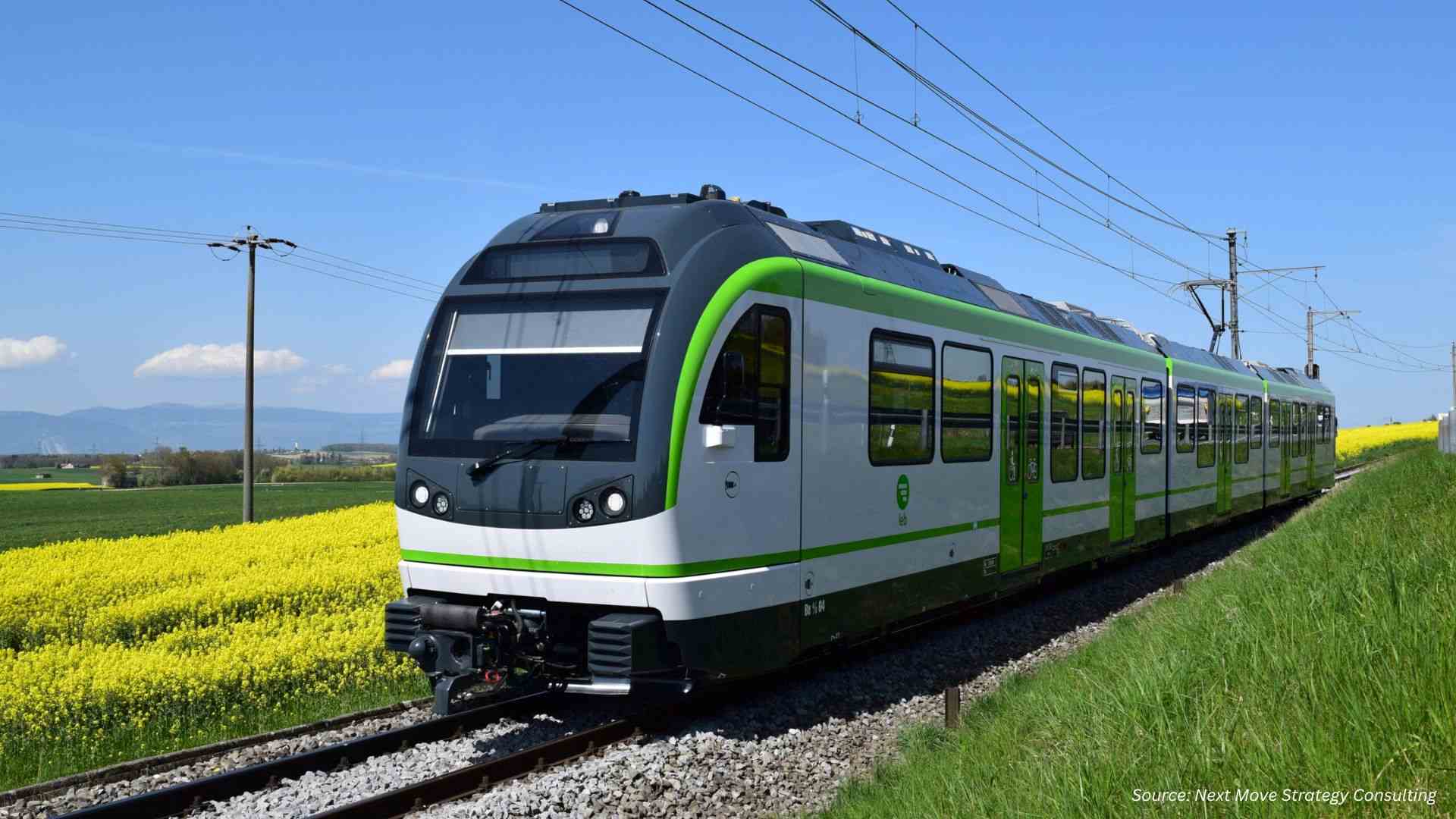
CN Scales Hybrid Locomotive Program as Global Rail Decarbonization Enters a New Phase of Industrial Deployment
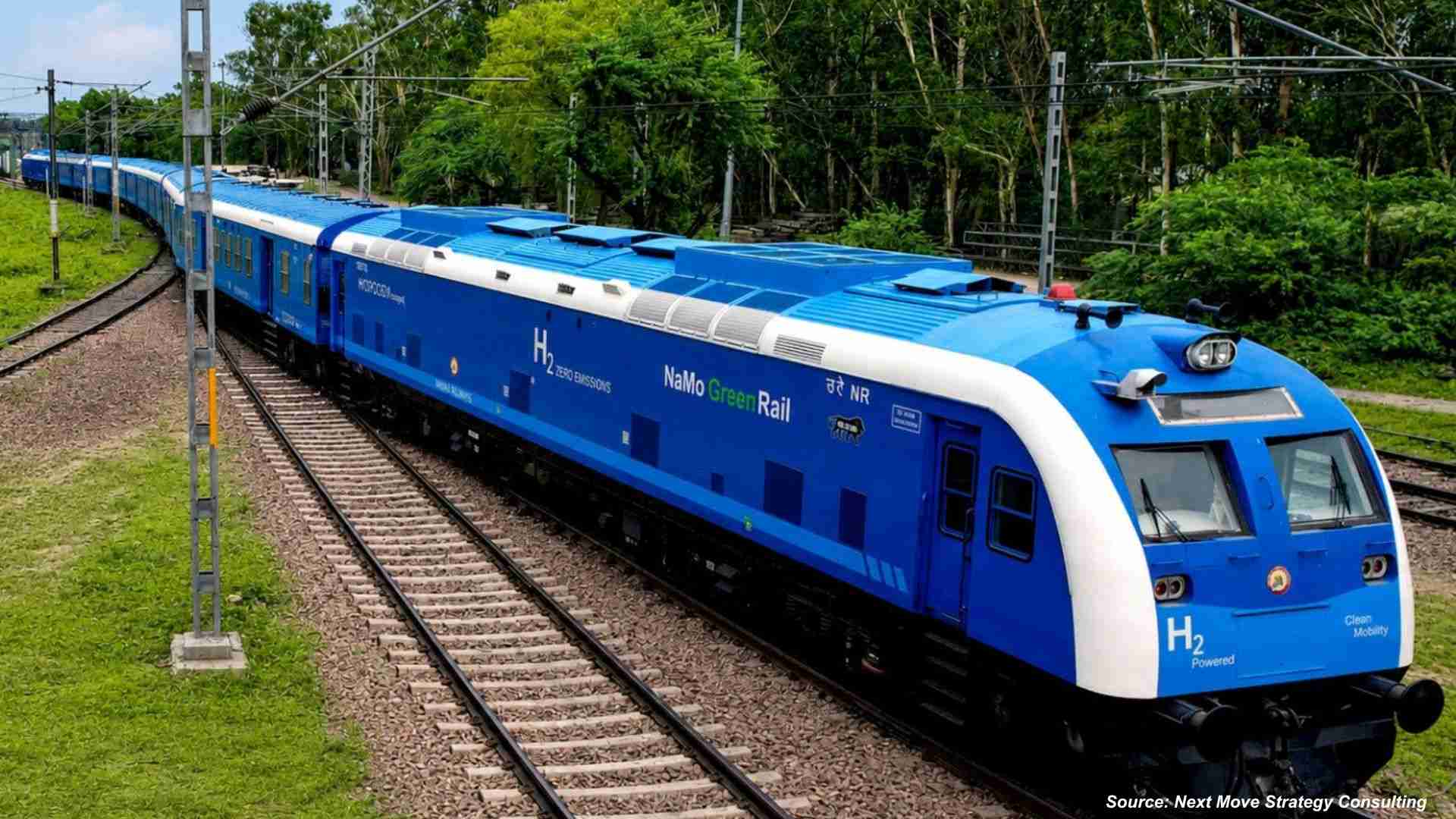
Canadian National Railway (CN) announced on August 14, 2026, the significant advancement of its hybrid locomotive development program — expanding from a single pilot unit to three locomotives currently under active testing, with plans to convert two additional locomotives to hybrid-electric platforms equipped with AC traction technology by the end of 2026. The announcement, made via Globe Newswire, marks one of the most operationally significant milestones in North American freight rail's transition toward low-emission propulsion systems.
CN's initial pilot project delivered up to a 50 percent improvement in fuel efficiency, alongside measurable reductions in traditional engine-related failures, increased horsepower output, and reduced idling — contributing to lower noise and emissions across communities in which the railway operates. The upgraded locomotive design incorporates solid-state battery technology, a 2.8 MWh battery system paired with an 800 HP Tier 4 engine, and an increase in total horsepower from 3,200 to 3,800 HP, with AC traction motors integrated into a DC motor frame while maintaining the same truck interface.
"This milestone represents another important step in CN's locomotive innovation and modernization journey," said Patrick Whitehead, Executive Vice-President and Chief Operating Officer at CN. "By repowering and enhancing existing yard locomotives, we are being more efficient while supporting service to our customers and more sustainable operations for the long term."
The CN development is not an isolated event. It arrives amid a broader, accelerating global shift in rail propulsion technology — one that is reshaping procurement strategies, regulatory frameworks, and capital allocation across the world's largest railway operators.
Market Intelligence: A Sector Gaining Structural Momentum
According to Next Move Strategy Consulting, the global Hybrid Train Market was valued at USD 20.40 billion in 2024 and is projected to reach USD 29.75 billion by 2030, expanding at a compound annual growth rate (CAGR) of 6.5 percent over the 2025–2030 forecast period. The market's growth trajectory is underpinned by three structural forces: accelerating global urbanization, product launches by major rail manufacturers, and binding international commitments to net-zero carbon emissions.
For More Information: Download FREE Sample on Hybrid Train Market Report
The International Energy Agency has established that achieving net-zero emissions by 2050 requires CO₂ emissions from the transport sector to decline by approximately 3 percent per year through 2030. Rail transport — which generates a fraction of the emissions produced by road and aviation — is increasingly positioned as a critical decarbonization lever within national and multilateral climate strategies.
Industry-Wide Deployment: Beyond the North American Corridor
While CN's announcement commands attention in North America, the global deployment of hybrid and alternative-propulsion rail technology has been advancing across multiple geographies simultaneously.
In Europe, Austrian Federal Railways (ÖBB) relaunched a tender in April 2026 for up to 300 eHybrid shunting locomotives, signaling institutional-scale procurement intent. In March 2026, CRRC Corporation Limited advanced its hydrogen-powered and battery-electric train portfolio through new international deployments across Europe and Asia, targeting carbon emission reductions and large-scale adoption of zero-emission rail solutions in both passenger and freight segments. In February 2025, Alstom SA secured multiple contracts for hydrogen and battery-electric trains across key European markets, reinforcing its leadership in sustainable rail mobility. In January 2025, Siemens AG expanded its Mireo Plus H hydrogen train deployments along with battery-electric train offerings, targeting regional and non-electrified rail routes.
In the United States, Wabtec Corporation delivered its first FLXdrive battery-electric locomotives in 2026, alongside hybrid battery-diesel work locomotives, while its engineering team continues to evaluate alternative fuel use across internal combustion engine platforms. The Metropolitan Transportation Authority (MTA) placed an order for 25 hybrid locomotives valued at USD 386 million, with deliveries scheduled to commence in 2027. Siemens Mobility was awarded a historic USD 3.4 billion contract from Amtrak, with the Venture Hybrid battery train entering testing in 2025.
In Asia, East Japan Railway conducted test runs of Japan's first hydrogen hybrid locomotive in February 2024, reinforcing the country's commitment to rail decarbonization. China's total investment in railway fixed assets reached approximately USD 117 billion in 2024, expanding by 11.3 percent year-on-year, reflecting the government's sustained commitment to railway sector expansion and modernization.
The Regulatory and Policy Landscape: A Divergent Global Picture
Railway Age's May 2026 analysis of the North American market noted that the current U.S. administration's prioritization of traditional energy sources — including coal and crude oil — has tempered the pace of alternative-propulsion locomotive adoption in the United States. Industry executives, including Wabtec's spokesman Tim Bader, have indicated that diesel is expected to remain a primary energy source for the North American rail industry for many years, with alternative energy solutions adopted gradually as they mature.
However, the broader global regulatory environment presents a markedly different picture. The European Union's Trans-European Transport Network (TEN-T) Regulation standards, combined with the European Commission's Connecting Europe Facility for 2021–27, are directing substantial capital toward rail electrification and decarbonization. Estonia, for example, concluded a loan agreement with the European Investment Bank in 2025 for the renewal and upgrading of railway infrastructure, including electrification of the Tallinn–Muuga section, as part of a broader EUR 500 million investment program between 2021 and 2026.
The Association of American Railroads (AAR) has noted that U.S. freight railroads sustain approximately USD 25 billion in annual private investment, with 2025 recorded as a historic year for rail safety — achieving record lows in derailments, equipment-related accidents, and employee injuries. This sustained capital commitment, even in a policy environment cautious toward alternative propulsion, underscores the structural investment capacity available to accelerate hybrid adoption when regulatory conditions align.
World Bank and Multilateral Investment: Scaling the Rail Decarbonization Agenda
The World Bank's engagement in railway development has reached a significant scale. As of July 2025, the institution is supporting 15 active investment projects totaling USD 4.5 billion in railway development across more than 20 countries, with the portfolio expected to grow to more than USD 6 billion over the next five years.
The World Bank's rail logistics strategy is built on three pillars: infrastructure financing, policy and regulatory reform, and technical assistance and knowledge sharing. Results from active projects demonstrate the tangible impact of rail investment: in India, the Eastern Dedicated Freight Corridor projects constructed 1,200 kilometers of new dedicated freight tracks between 2011 and 2024, boosted freight train capacity fourfold, and are projected to reduce cumulative greenhouse gas emissions by 57 percent from 2010 baseline levels by 2042.
Selected World Bank Rail Investment Projects — Key Outcomes
|
Country |
Project Focus |
Key Outcome |
Metric |
|
India |
Eastern Dedicated Freight Corridor (EDFC) |
New dedicated freight track constructed |
1,200 km (2011–2024) |
|
India |
EDFC — Capacity Enhancement |
Freight train capacity increase |
4x (32 to 130+ train pairs/day) |
|
India |
EDFC — Climate Impact |
Projected cumulative GHG reduction by 2042 |
57% vs. 2010 baseline (13.19 Mt CO₂e) |
|
India |
EDFC — Logistics Cost |
Logistics cost reduction |
USD 58 million |
|
Egypt |
Cairo Alexandria Logistics Development |
Population benefiting from improved transport access |
~30 million people |
|
Cameroon |
Douala–N'Djamena Multimodal Corridor |
Container shipping cost reduction (2012–2022) |
Over 7% |
|
Uzbekistan |
Pap–Angren Railway |
Passenger travel cost reduction (2015–2020) |
33% |
|
Uzbekistan |
Pap–Angren Railway |
Freight cost reduction for key goods |
Up to 80% |
|
Serbia |
Railway Sector Modernization |
Fatality rate reduction per train-km (2019–2025) |
3.56 → 1.89 (approx. 47% reduction) |
Competitive Landscape: Strategic Positioning Among Key Players
The hybrid train market's competitive dynamics are being shaped by a combination of product innovation, geographic expansion, and strategic partnerships. CRRC Corporation Limited, the world's largest rolling stock manufacturer, continues to advance its hydrogen-powered and battery-electric portfolio through international deployments. Alstom SA and Siemens AG are leveraging their established European market positions to secure long-term contracts for hydrogen and battery-electric trains across non-electrified regional routes. Wabtec Corporation, headquartered in the United States, is pursuing a dual-track strategy — advancing battery-electric and hybrid battery-diesel platforms while maintaining its dominant position in conventional diesel-electric locomotive supply.
Hitachi Rail Limited launched Europe's first hybrid battery train in Italy in April 2024, targeting carbon emission reductions across non-electrified corridors. Stadler Rail AG, CAF, Hyundai Rotem, and Škoda Transportation are each advancing hybrid and alternative-propulsion offerings across their respective regional markets.
The integration of autonomous technology into hybrid locomotive platforms represents a significant emerging opportunity. Siemens AG has developed autonomous mobility technology aimed at automating train operations and enhancing operational efficiency — a development that, when combined with hybrid propulsion, positions rail operators to meet both stringent emission regulations and evolving operational efficiency mandates.
Key Hybrid Train Market Players — Recent Strategic Developments (2025–2026)
|
Company |
Country |
Development |
Period |
|
CN (Canadian National Railway) |
Canada |
Expanded hybrid locomotive program from 1 pilot to 3 units under test; targeting 2 additional hybrid-electric conversions by end-2026; pilot achieved up to 50% fuel efficiency improvement |
August 2026 |
|
CRRC Corporation Limited |
China |
Advanced hydrogen-powered and battery-electric train portfolio through new international deployments across Europe and Asia |
March 2026 |
|
ÖBB (Austrian Federal Railways) |
Austria |
Relaunched tender for up to 300 eHybrid shunting locomotives |
April 2026 |
|
Wabtec Corporation |
USA |
Delivered first FLXdrive battery-electric locomotives; delivered hybrid battery-diesel work locomotives |
2026 |
|
Siemens Mobility |
USA/Germany |
Awarded USD 3.4 billion Amtrak contract; Venture Hybrid battery train entered testing |
2025 |
|
MTA (Metropolitan Transportation Authority) |
USA |
Ordered 25 hybrid locomotives valued at USD 386 million; deliveries from 2027 |
2025 |
|
Alstom SA |
France |
Secured multiple contracts for hydrogen and battery-electric trains across European markets |
February 2025 |
|
Siemens AG |
Germany |
Expanded Mireo Plus H hydrogen train deployments; targeting regional and non-electrified routes |
January 2025 |
|
Hitachi Rail Limited |
Italy/UK |
Launched Europe's first hybrid battery train in Italy |
April 2024 |
|
East Japan Railway |
Japan |
Conducted test runs of Japan's first hydrogen hybrid locomotive |
February 2024 |
Demand Drivers: Urbanization, Net-Zero Commitments, and Infrastructure Investment
The World Bank has reported that the global urban population reached 4.40 billion in 2023 and is projected to exceed 8.80 billion by 2050 — a doubling that will place unprecedented demand on urban and intercity transit infrastructure. As urban populations expand, the demand for sustainable, high-capacity transportation systems intensifies, directly supporting hybrid train adoption as a transitional and long-term solution.
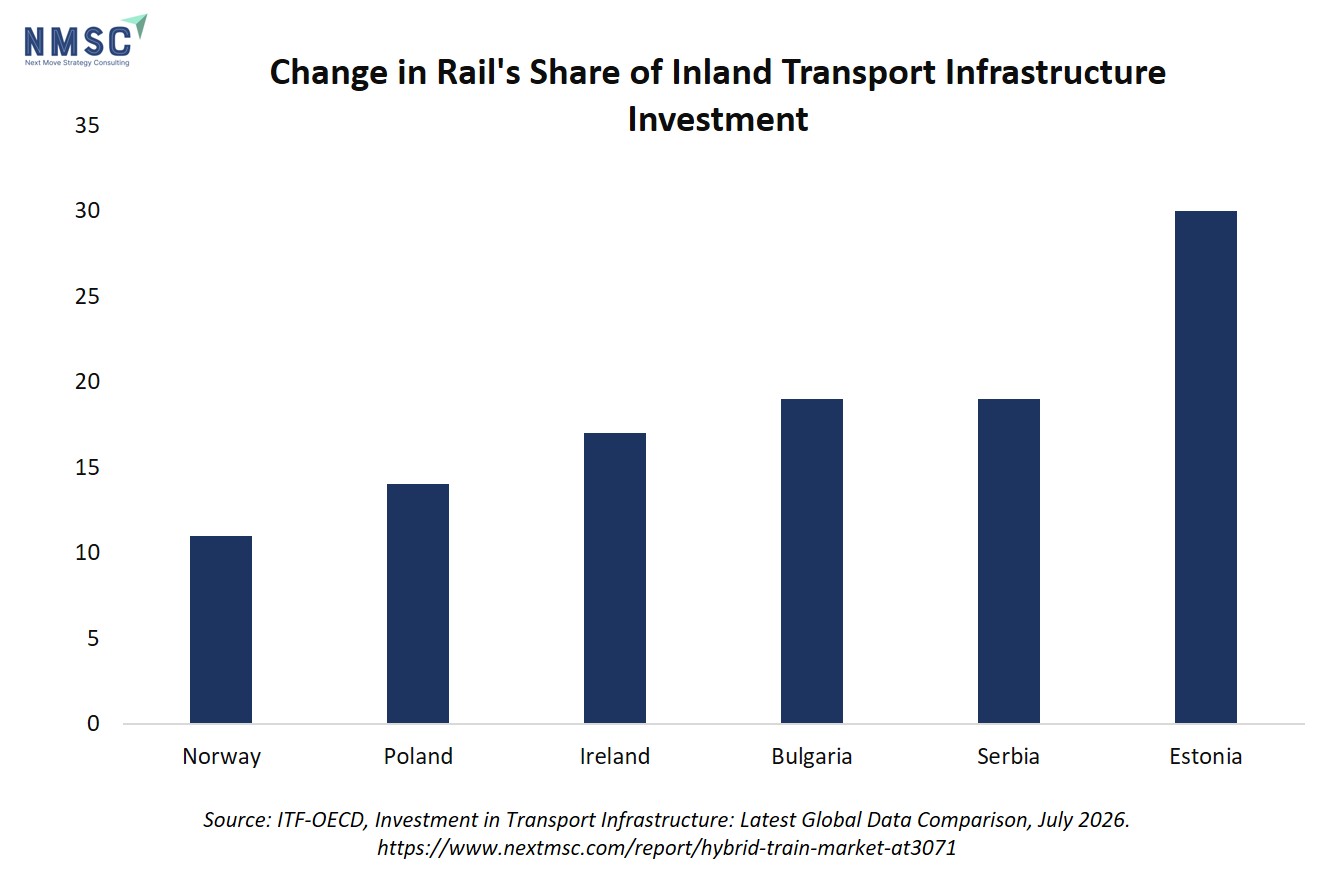
The ITF-OECD's July 2026 statistics brief confirmed that 20 of 32 countries with available data increased the share of investment directed to rail infrastructure over the past decade, with six countries — Estonia, Serbia, Bulgaria, Ireland, Poland, and Norway — recording increases of more than 10 percentage points in rail's share of total transport infrastructure investment. This structural reallocation of capital toward rail reflects both climate policy imperatives and the economic efficiency advantages of rail freight and passenger transport.
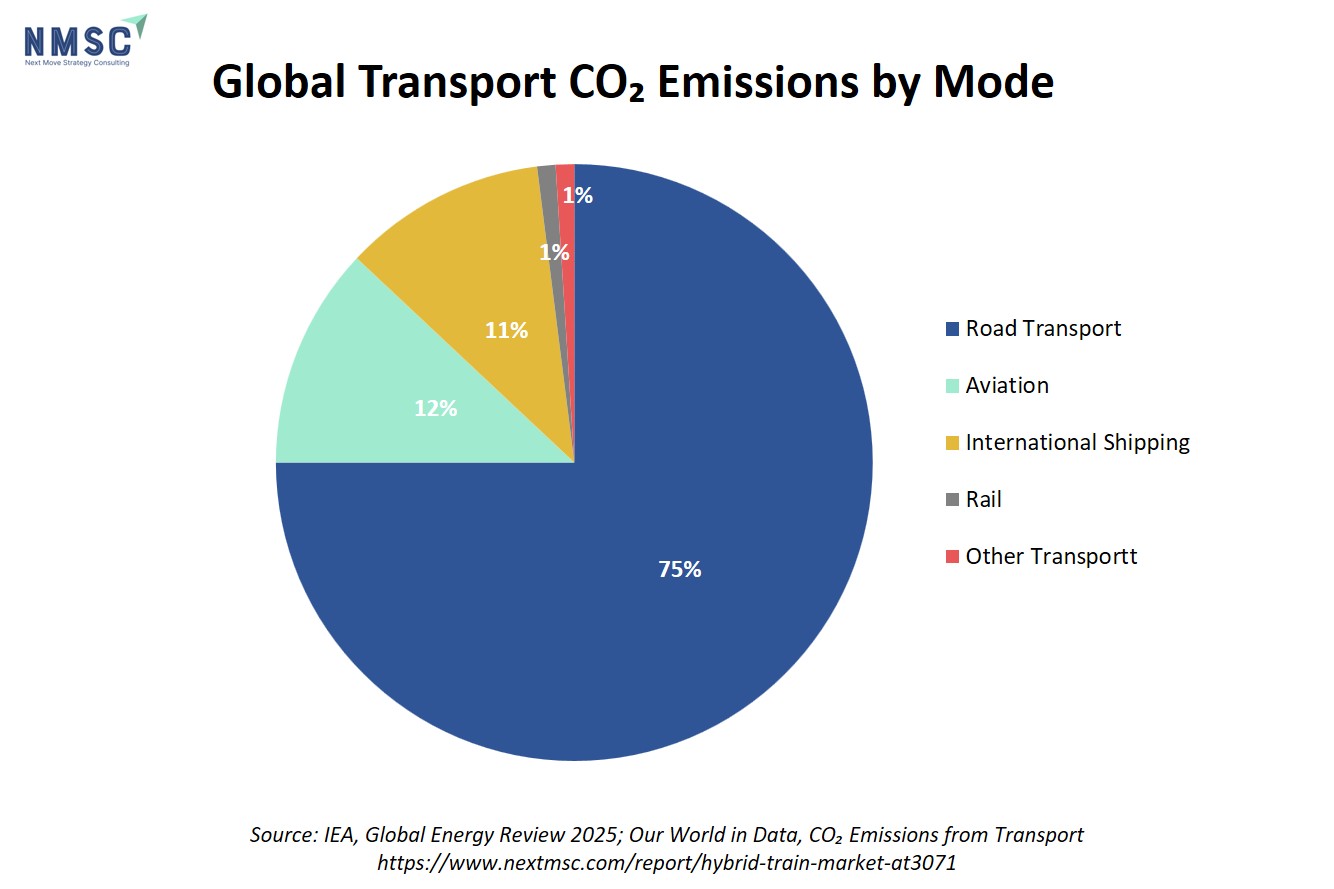
Transport accounts for approximately 30 percent of global energy demand, with road transport responsible for the overwhelming majority of transport-sector CO₂ emissions. Rail, by contrast, generates approximately 1 percent of global transport emissions — a differential that positions hybrid and zero-emission rail solutions as among the most cost-effective decarbonization pathways available to governments and operators.
Restraints and Risk Factors
Despite the sector's structural growth momentum, significant headwinds persist. The high initial capital investment associated with hybrid locomotive development and deployment remains a material constraint for railway operators with limited balance sheet capacity. The absence of a cohesive regulatory push in the United States — the world's largest freight rail market by network length — introduces uncertainty regarding the pace of large-scale adoption in North America. As Wabtec's Tim Bader noted, several critical elements must align before large-scale adoption of alternative energy solutions can occur, including technological maturity, supporting infrastructure, and an enabling regulatory environment.
Infrastructure limitations — particularly the absence of hydrogen refueling networks and high-capacity charging infrastructure along mainline routes — continue to constrain the operational range and commercial viability of battery-electric and hydrogen fuel cell locomotives beyond yard and short-haul applications.
Bottom Line
The global hybrid train market is entering a phase of accelerating industrial deployment, driven by the convergence of climate policy mandates, sustained public and multilateral investment in rail infrastructure, and the demonstrated operational performance of hybrid propulsion systems. CN's August 2026 announcement — achieving up to 50 percent fuel efficiency gains from its hybrid locomotive pilot and scaling to five units by year-end — provides concrete, verifiable evidence that hybrid rail technology is transitioning from experimental to operational at scale. Simultaneously, procurement actions by ÖBB, MTA, Amtrak, and major European operators confirm that institutional demand is broadening beyond early adopters.
According to Next Move Strategy Consulting, the market is projected to grow from USD 20.40 billion in 2024 to USD 29.75 billion by 2030 at a CAGR of 6.5 percent. The primary investment opportunities lie in Asia-Pacific — the fastest-growing regional market — and in the integration of autonomous technology with hybrid propulsion platforms. Key risks include the pace of U.S. regulatory alignment, the capital intensity of fleet conversion programs, and the maturity timeline for hydrogen refueling infrastructure. For investors, operators, and policymakers, the strategic imperative is clear: the window for early-mover advantage in hybrid rail is narrowing as procurement cycles accelerate and technology standards consolidate.
About Next Move Strategy Consulting
Next Move Strategy Consulting is a premier market research and management consulting firm that has been committed to provide strategically analysed well documented latest research reports to its clients. The research industry is flooded with many firms to choose from, what makes NMSC different from the rest is its top-quality research and the obsession of turning data into knowledge by dissecting every bit of it and providing fact-based research recommendation that is supported by information collected from over 500 million websites, paid databases, industry journals and one on one consultations with industry experts across a diverse range of industry sectors. The high-quality customized research reports with actionable insights and excellent end-to-end customer service help our clients to take critical business decisions that enables them to move beyond time and have competitive edge in the industry.
We have been servicing over 1000 customers globally that includes 90% of the Fortune 500 companies over a decade. Our analysts are constantly tracking various high growth markets and identifying hidden opportunities in each sector or the industry. We provide one of the industry's best quality syndicate as well as custom research reports across 10 different industry verticals. We are committed to deliver high quality research solutions in accordance to your business needs. Our industry standard delivery solutions that ranges from the pre consultation to after-sales services, provide an excellent client experience and ensure right strategic decision making for businesses.
For more information, please contact:
Next Move Strategy Consulting
5th Floor 867 Boylston St, STE 500,
Boston, MA 02116, U.S.
E-Mail: [email protected]
Direct: +1-217-650-7991
Website: www.nextmsc.com
About the Author
 Sanyukta Deb
— Sanyukta Deb is Digital Marketing Team Lead at Next Move Strategy Consulting, where she has led content strategy and technical SEO for the firm's B2B market research publications for over 2 years. Her editorial process translates NextMSC's primary and secondary research — spanning technology, industrial, and consumer sectors — into commercial narratives, backed by search-intent, keyword, and competitive analysis. She brings 5 years of overall experience in digital marketing and content strategy.
Sanyukta Deb
— Sanyukta Deb is Digital Marketing Team Lead at Next Move Strategy Consulting, where she has led content strategy and technical SEO for the firm's B2B market research publications for over 2 years. Her editorial process translates NextMSC's primary and secondary research — spanning technology, industrial, and consumer sectors — into commercial narratives, backed by search-intent, keyword, and competitive analysis. She brings 5 years of overall experience in digital marketing and content strategy.
About the Reviewer
 Debashree Dey
— Debashree Dey is Assistant Manager at Next Move Strategy Consulting, where she supports cross-vertical market content and communications across diverse industries for 6 years. Her professional background includes senior content writing, communications, and published manuscript authorship, with experience developing audience-focused business narratives and maintaining clear, consistent messaging. Her role supports research-led content development and editorial quality across NextMSC publications.
Debashree Dey
— Debashree Dey is Assistant Manager at Next Move Strategy Consulting, where she supports cross-vertical market content and communications across diverse industries for 6 years. Her professional background includes senior content writing, communications, and published manuscript authorship, with experience developing audience-focused business narratives and maintaining clear, consistent messaging. Her role supports research-led content development and editorial quality across NextMSC publications.
















Add Comment