Cosmetic Dentistry Market Enters Transformative Era
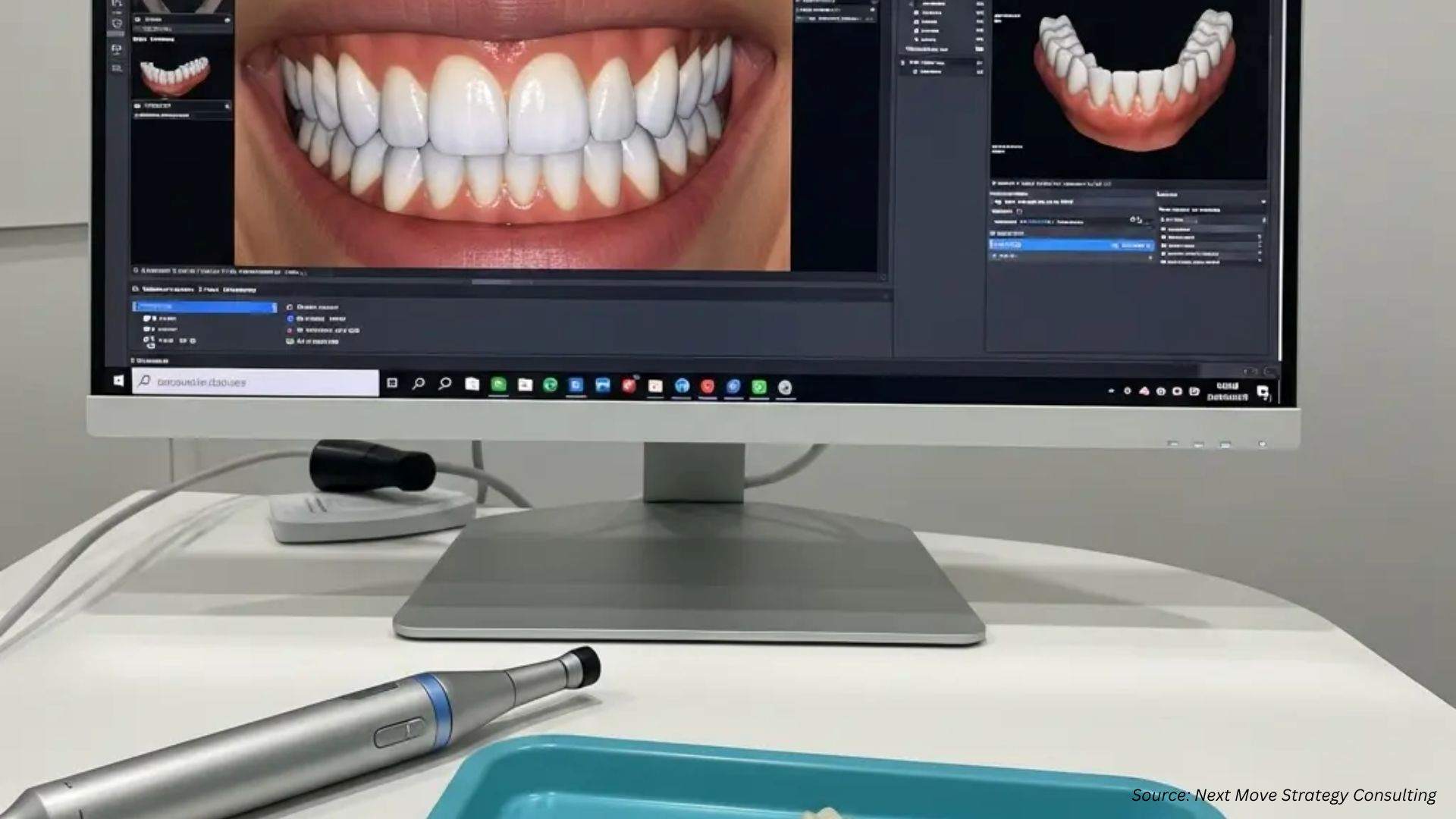
WHO's Global Oral Health Mandate and U.S. Dental Workforce Legislation Converge to Reshape the Cosmetic Dentistry Sector's Long-Term Trajectory
On March 3, 2026, the World Health Organization issued a landmark call for a global shift toward environmentally friendly, less invasive, and more affordable oral health care — a directive that carries direct structural implications for the cosmetic dentistry industry worldwide. The WHO's statement, published through its official news channel, reinforced the organization's Bangkok Declaration of November 2024, in which Member States committed to elevating oral diseases as a global public health priority under the banner "No Health Without Oral Health." The declaration, adopted at the first-ever WHO Global Oral Health Meeting in Bangkok, Thailand, reaffirmed commitments to the landmark 2021 World Health Assembly Resolution on oral health and called for the integration of oral health care into universal health coverage benefit packages globally.
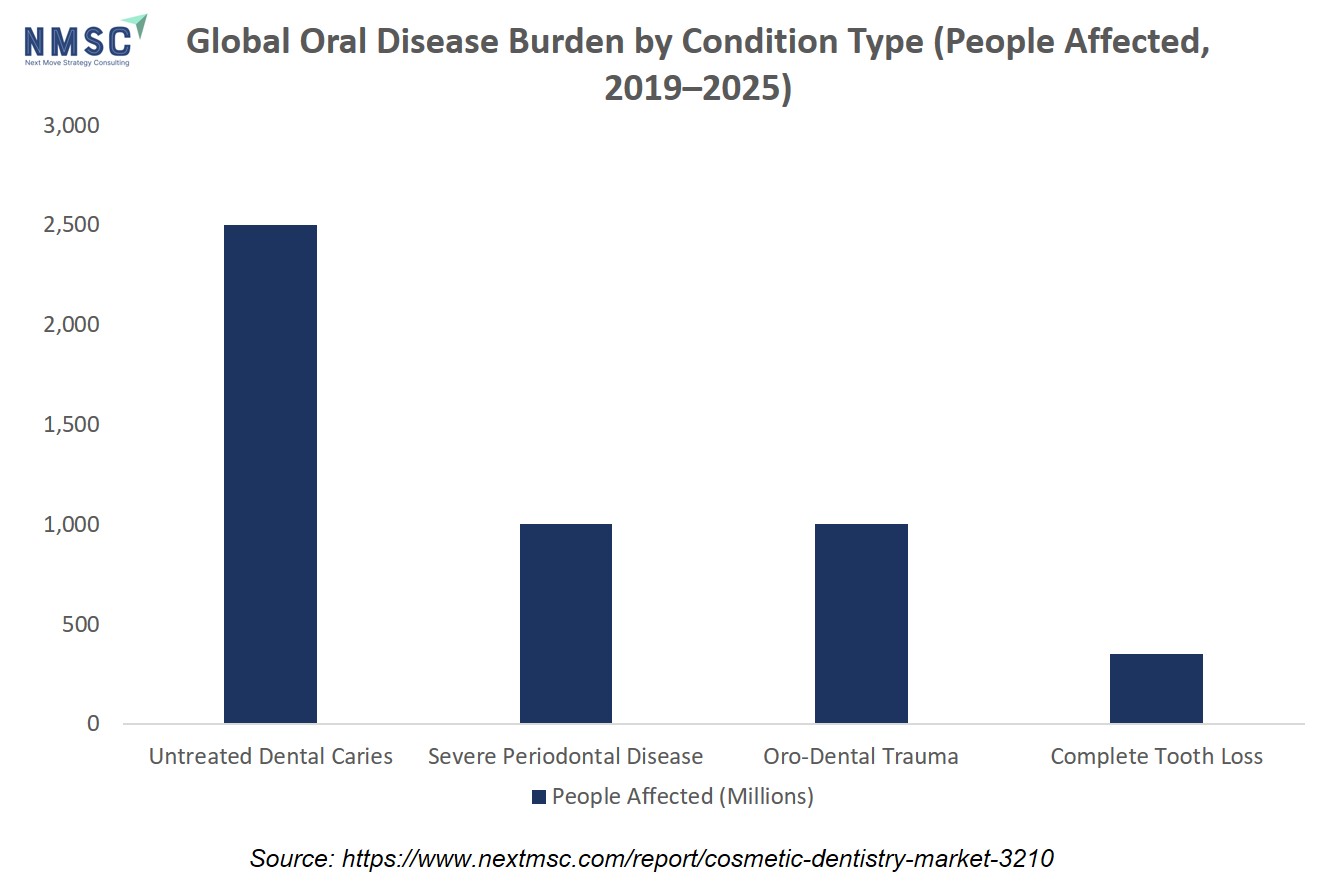
The WHO's intervention arrives at a moment of acute structural change for the dental sector. Oral diseases currently affect an estimated 3.7 billion people worldwide, with untreated dental caries alone afflicting 2.5 billion — making it the most prevalent health condition globally according to the Global Burden of Disease 2021 study. Severe periodontal disease affects more than 1 billion people, and complete tooth loss carries a global prevalence of approximately 23% among adults aged 60 years and older. These figures define the foundational demand environment within which the global Cosmetic Dentistry Market operates — a sector projected to reach USD 83.55 billion by 2030, expanding at a compound annual growth rate of 12.9%, according to analysis published by Next Move Strategy Consulting.
For More Information – Download FREE Sample on Cosmetic Dentistry Market Report
U.S. Dental Workforce Legislation Accelerates Structural Consolidation
Simultaneously, a legislative development of considerable consequence for the North American dental market took effect on July 1, 2026. Provisions embedded in the One Big Beautiful Bill Act — signed into law in July 2025 — imposed new federal borrowing limits on dental school graduates, capping Direct Unsubsidized Loans at USD 50,000 annually and USD 200,000 over a lifetime, while eliminating the Grad PLUS loan program entirely.
The American Dental Association, in a letter to the U.S. Department of Education dated August 26, 2025, warned that the provisions would disproportionately affect the 78% of dental school graduates who begin their careers carrying more than USD 312,000 in student loan debt, with 85% relying on Direct Unsubsidized Loans and 79% on Grad PLUS loans to finance their education. The ADA cautioned that the legislation would likely accelerate the migration of new graduates toward corporate dental support organizations (DSOs), which offer loan repayment assistance and predictable income structures — a dynamic that is expected to intensify the already-pronounced consolidation wave reshaping the U.S. dental industry.
The Dental M&A Surge: A Generational Inflection Point
The convergence of these regulatory and demographic forces has produced what investment banking analysts describe as the most consequential M&A environment in dentistry since 2002. In 2024 alone, researchers tracked 161 dental transactions — a 10% year-over-year increase that surprised even seasoned intermediaries — with specialty practices, particularly oral surgery groups, sitting atop acquisition wish lists due to their higher reimbursement rates and natural referral flows.
Private equity remains the principal engine behind today's consolidation wave. In the U.S., only approximately 25% of the nearly 200,000 dental practices are currently DSO-affiliated, despite more than a decade of steady consolidation — a fragmentation profile that continues to offer significant roll-up opportunity. In 2024, the sector recorded over 120 add-on acquisitions, the highest volume among all healthcare services categories, with tuck-in acquisition multiples typically ranging from 3x to 6x EBITDA.
The May 2026 DSO deal roundup published by Group Dentistry Now documented a continuation of this trend, with MB2 Dental introducing eight new practices across six states, PDS Health opening five de novo locations across four states to bring its total to more than 1,000 supported offices in 24 states, and Apex Dental Partners expanding to 65 practices across eight states. These transactions reflect a sector in which scale, technology adoption, and compliance sophistication are becoming decisive competitive differentiators — dynamics that directly influence capital allocation toward advanced cosmetic and restorative dental equipment.
Market Fundamentals: Healthcare Expenditure and Demographic Tailwinds
The macroeconomic environment underpinning the cosmetic dentistry market remains structurally supportive. Global health expenditure per capita reached USD 1,265 in 2023, compared with USD 1,043 in 2017 — a 21.3% increase over six years, according to the World Bank Group. This sustained rise in healthcare spending is enabling broader access to elective and aesthetic dental procedures that were previously beyond the financial reach of large population segments.
At the OECD level, average health spending across member countries was estimated at nearly USD 6,000 per capita in 2024, adjusted for purchasing power parity, according to OECD Health at a Glance 2025. The United States, which leads the global cosmetic dentistry market, recorded health consumption expenditure of USD 14,770 per capita in 2024 — more than double the OECD average — reflecting the country's deep integration of elective and aesthetic healthcare services into mainstream consumer spending.
The aging global population constitutes a second structural demand driver of considerable magnitude. The World Population Prospects 2022 documented that people aged 65 and older accounted for 10% of the global population in 2022 and are projected to represent 16% by 2050. In China alone, the geriatric population aged 65 and older reached 201 million in 2023, compared with 152 million in 2017 — a 32.2% increase over six years, according to the World Bank Group. This demographic cohort generates disproportionate demand for restorative and cosmetic dental procedures, including implants, veneers, and teeth whitening, as older adults increasingly prioritize oral aesthetics alongside functional restoration.
Global Oral Disease Burden — Key WHO Statistics (2025)
|
Oral Condition |
Global Burden |
Key Demographic |
|
Total oral diseases |
~3.7 billion people affected |
All ages |
|
Untreated dental caries |
2.5 billion people |
All ages |
|
Severe periodontal disease |
>1 billion cases |
Adults |
|
Oro-dental trauma |
~1 billion people |
Prevalence ~20% in children ≤12 |
|
Complete tooth loss (edentulism) |
~7% of adults 20+; ~23% of adults 60+ |
Older adults |
|
Oral cancer (lip & oral cavity) |
389,846 new cases; 188,438 deaths (2022) |
More common in men |
Digital Dentistry: The Technology Wave Reshaping the Competitive Landscape
The NMSC report identifies the incorporation of digital tools — including 3D imaging, computer-aided design, and AI-driven treatment planning — as the most significant opportunity for market expansion over the forecast period. The commercial evidence for this assessment is compelling.
Align Technology (NASDAQ: ALGN) announced on March 6, 2025, the availability of restorative capabilities on its next-generation iTero Lumina intraoral scanner and the new iTero Lumina Pro dental imaging system — a development that extends the platform's utility from orthodontic workflows to comprehensive restorative and multidisciplinary ortho-restorative applications. The iTero Lumina Pro incorporates Near Infra-Red Imaging (NIRI) technology for interproximal caries detection, delivers a 3x larger field of view compared with its predecessor, and scans 2x faster — capabilities that directly reduce chair time and improve diagnostic accuracy across general practitioner dental practices. The system is commercially available across the United States, Canada, European Union countries, the United Kingdom, Australia, Japan, India, Singapore, and multiple additional markets.
Dentsply Sirona presented major enhancements to its Primescan 2 — the industry's first cloud-native intraoral scanning solution — at the International Dental Show (IDS) in Cologne in March 2025. The updated platform introduced integrated caries detection using advanced near-infrared and fluorescence technologies, reduced bandwidth requirements by up to 50% through optimized smart compression, and accelerated SureSmile orthodontic simulations by up to 90% through automated tooth segmentation. The Primescan 2 cart, introduced simultaneously, features wireless connectivity, a built-in battery, and an ergonomic design for improved clinical mobility.
The NMSC report further notes that Align Technology launched the Invisalign Smile Architect platform in April 2023, enabling dentists to fuse clear aligner therapy with facially driven ortho-restorative care, while Envista Holdings rolled out its Spark Clear Aligner System with a 3D treatment visualization module in late 2023, and Straumann Holdings launched a line of customizable 3D-printed veneers in early 2024 — collectively reflecting an industry-wide pivot toward integrated, digitally enabled aesthetic treatment platforms.
Regional Analysis: North America Leads, Asia-Pacific Accelerates
North America retains its position as the dominant regional market for cosmetic dentistry, underpinned by elevated healthcare expenditure, high consumer awareness of aesthetic dental procedures, and the deepening penetration of digital dentistry platforms across both DSO-affiliated and independent practices. Canadian health spending increased from USD 167.74 billion to USD 180.05 billion in 2023, reflecting a year-on-year increase of 7.3%, according to Statistics Canada — a trajectory that supports continued investment in premium dental services across the region.
The social media-driven normalization of cosmetic dental procedures — particularly teeth whitening, porcelain veneers, and clear aligner therapy — has materially expanded the addressable consumer base in North America, with younger demographics increasingly treating smile aesthetics as a routine personal investment rather than a luxury expenditure.
Asia-Pacific is identified by the NMSC report as the fastest-growing regional market, driven by rising disposable incomes, a rapidly expanding middle class, and a burgeoning elderly population with significant unmet restorative and aesthetic dental needs. China's geriatric population growth — from 152 million in 2017 to 201 million in 2023 — is generating sustained demand for implants, prosthetics, and cosmetic restorations. Japan's net income per capita is projected to rise from USD 22,970 in 2022 to USD 28,785 by 2050, according to International Energy Outlook data, further expanding the consumer base for premium cosmetic dental services across the region.
Europe presents a more complex picture, with robust M&A activity — including two high-profile dental assets with EBITDAs exceeding USD 100 million expected to come to market in the near term — offset by regulatory complexity and the recalibration of acquisition multiples from their 2021 peaks. Strategic buyers are expected to resume M&A activity as a key growth mechanism, with add-on acquisition multiples having declined by 1–3x EBITDA from peak levels, creating more attractive entry points for financial sponsors.
Health Expenditure per Capita, Selected OECD Countries (2022)
|
Country |
Health Expenditure per Capita (USD) |
% of GDP |
Cosmetic Dentistry Market Relevance |
|
United States |
$12,555 |
16.6% |
Largest cosmetic dentistry market globally |
|
Germany |
$7,383 |
12.7% |
Leading European market; strong digital dentistry adoption |
|
Australia |
$6,651 |
10.7% |
High per-capita spending; growing aesthetic dentistry demand |
|
France |
$5,765 |
12.1% |
Established cosmetic dentistry market |
|
Japan |
$4,666 |
11.5% |
Fastest-growing Asia-Pacific premium dental market |
|
United Kingdom |
$4,653 |
11.3% |
Active DSO consolidation; strong private dental sector |
|
South Korea |
$3,867 |
9.7% |
Emerging cosmetic dentistry hub; dental tourism destination |
|
OECD Average |
$4,986 |
9.2% |
Benchmark for market development correlation |
Key Players and Competitive Strategy
The NMSC report profiles 15 key players across the global cosmetic dentistry market, including 3M Company, Dentsply Sirona, Align Technology Inc., Institut Straumann AG, ZimVie Inc., Henry Schein Inc., Kuraray Co. Ltd., Envista Holdings Corporation, BIOLASE Inc., Planmeca Group, Boston Micro Fabrication, Nobel Biocare Services AG, OSSTEM IMPLANT CO. LTD., Temrex Corp., and BioHorizons.
The competitive landscape is characterized by three converging strategic imperatives: the advancement of digital dentistry platforms, the development of AI-driven treatment planning tools, and the introduction of minimally invasive techniques that are progressively displacing traditional methods due to their superior accuracy, reduced patient discomfort, and streamlined clinical workflows.
Lincoln International's June 2025 sector analysis identified eight structural demand drivers underpinning the dental sector's attractiveness to institutional capital: demographic development and higher life expectancy, expanding oral health consciousness linked to systemic disease research, global megatrends of health and beauty driving demand for high-fee aesthetic services, high prevalence of tooth loss requiring implants and restorations, increasingly affordable treatments, growing penetration of digital dentistry, technological innovations including AI-driven diagnostics and robotic surgery, and ongoing DSO and dental lab consolidation.
The dental MedTech vertical is identified as a particularly promising investment sub-sector, with technology expanding margins by driving down equipment costs, streamlining processes, and increasing patient engagement across European and North American markets.
Market Restraints and Risk Factors
Despite its robust growth trajectory, the cosmetic dentistry market faces meaningful structural constraints. The high cost of cosmetic dental procedures — veneers, implants, and teeth whitening can require substantial out-of-pocket expenditure — remains the primary barrier to market accessibility, particularly in emerging economies where insurance coverage for elective procedures is limited or absent.
The One Big Beautiful Bill Act's loan cap provisions introduce a secondary risk: if new dental graduates migrate en masse toward DSO employment to manage debt burdens, the resulting concentration of clinical capacity within large corporate platforms could reduce competitive pricing pressure and further elevate the cost of cosmetic procedures for consumers. The ADA has explicitly flagged this concern, noting that the legislation could disproportionately influence graduates' career choices and accelerate the growing influence of corporate dental practice models.
Interoperability challenges between competing digital platforms — AI systems, 3D imaging solutions, and cloud-based practice management software — represent a technical constraint that limits the efficiency gains available to smaller independent practices, potentially widening the competitive gap between DSO-affiliated and solo practitioners.
Bottom Line
The global cosmetic dentistry market is entering a period of accelerated structural transformation, driven by the simultaneous convergence of WHO-level public health mandates, U.S. dental workforce legislation, unprecedented private equity consolidation activity, and a technology wave that is fundamentally redefining clinical workflows and patient experience standards. The sector's 12.9% CAGR trajectory to 2030 — among the highest in the broader healthcare equipment and services landscape — reflects durable demand fundamentals anchored by an aging global population, rising health expenditure, and the social normalization of aesthetic dental investment.
For institutional investors, the dental M&A environment in 2026 presents a historically attractive entry window, with add-on acquisition multiples recalibrated from their 2021 peaks and record levels of private credit dry powder available to finance platform growth. The One Big Beautiful Bill Act's July 2026 implementation is expected to accelerate DSO consolidation, creating larger, more scalable platforms that command premium valuations and generate recurring revenue through integrated cosmetic and restorative service offerings.
Key risks include the affordability barrier constraining market penetration in emerging economies, regulatory scrutiny of DSO deal structures, and the capital intensity of digital platform upgrades for smaller independent practices. Companies that successfully integrate AI-driven diagnostics, cloud-based workflows, and minimally invasive cosmetic techniques into scalable clinical platforms are best positioned to capture disproportionate share in an increasingly technology-driven and consolidation-shaped competitive environment.
About Next Move Strategy Consulting
Next Move Strategy Consulting is a premier market research and management consulting firm that has been committed to provide strategically analysed well documented latest research reports to its clients. The research industry is flooded with many firms to choose from, what makes NMSC different from the rest is its top-quality research and the obsession of turning data into knowledge by dissecting every bit of it and providing fact-based research recommendation that is supported by information collected from over 500 million websites, paid databases, industry journals and one on one consultations with industry experts across a diverse range of industry sectors. The high-quality customized research reports with actionable insights and excellent end-to-end customer service help our clients to take critical business decisions that enables them to move beyond time and have competitive edge in the industry.
We have been servicing over 1000 customers globally that includes 90% of the Fortune 500 companies over a decade. Our analysts are constantly tracking various high growth markets and identifying hidden opportunities in each sector or the industry. We provide one of the industry's best quality syndicate as well as custom research reports across 10 different industry verticals. We are committed to deliver high quality research solutions in accordance to your business needs. Our industry standard delivery solutions that ranges from the pre consultation to after-sales services, provide an excellent client experience and ensure right strategic decision making for businesses.
For more information, please contact:
Next Move Strategy Consulting
5th Floor 867
Boylston St, STE 500,
Boston, MA 02116, U.S.
E-Mail: [email protected]
Direct: +1-217-650-7991
Website: www.nextmsc.com
About the Author
 Sanyukta Deb
— Sanyukta Deb is Digital Marketing Team Lead at Next Move Strategy Consulting, where she has led content strategy and technical SEO for the firm's B2B market research publications for over 2 years. Her editorial process translates NextMSC's primary and secondary research — spanning technology, industrial, and consumer sectors — into commercial narratives, backed by search-intent, keyword, and competitive analysis. She brings 5 years of overall experience in digital marketing and content strategy.
Sanyukta Deb
— Sanyukta Deb is Digital Marketing Team Lead at Next Move Strategy Consulting, where she has led content strategy and technical SEO for the firm's B2B market research publications for over 2 years. Her editorial process translates NextMSC's primary and secondary research — spanning technology, industrial, and consumer sectors — into commercial narratives, backed by search-intent, keyword, and competitive analysis. She brings 5 years of overall experience in digital marketing and content strategy.
About the Reviewer
 Debashree Dey
— Debashree Dey is Assistant Manager at Next Move Strategy Consulting, where she supports cross-vertical market content and communications across diverse industries for 6 years. Her professional background includes senior content writing, communications, and published manuscript authorship, with experience developing audience-focused business narratives and maintaining clear, consistent messaging. Her role supports research-led content development and editorial quality across NextMSC publications.
Debashree Dey
— Debashree Dey is Assistant Manager at Next Move Strategy Consulting, where she supports cross-vertical market content and communications across diverse industries for 6 years. Her professional background includes senior content writing, communications, and published manuscript authorship, with experience developing audience-focused business narratives and maintaining clear, consistent messaging. Her role supports research-led content development and editorial quality across NextMSC publications.

















Add Comment