Electric Bike Market: Battery Innovation and OEM Momentum
Lede
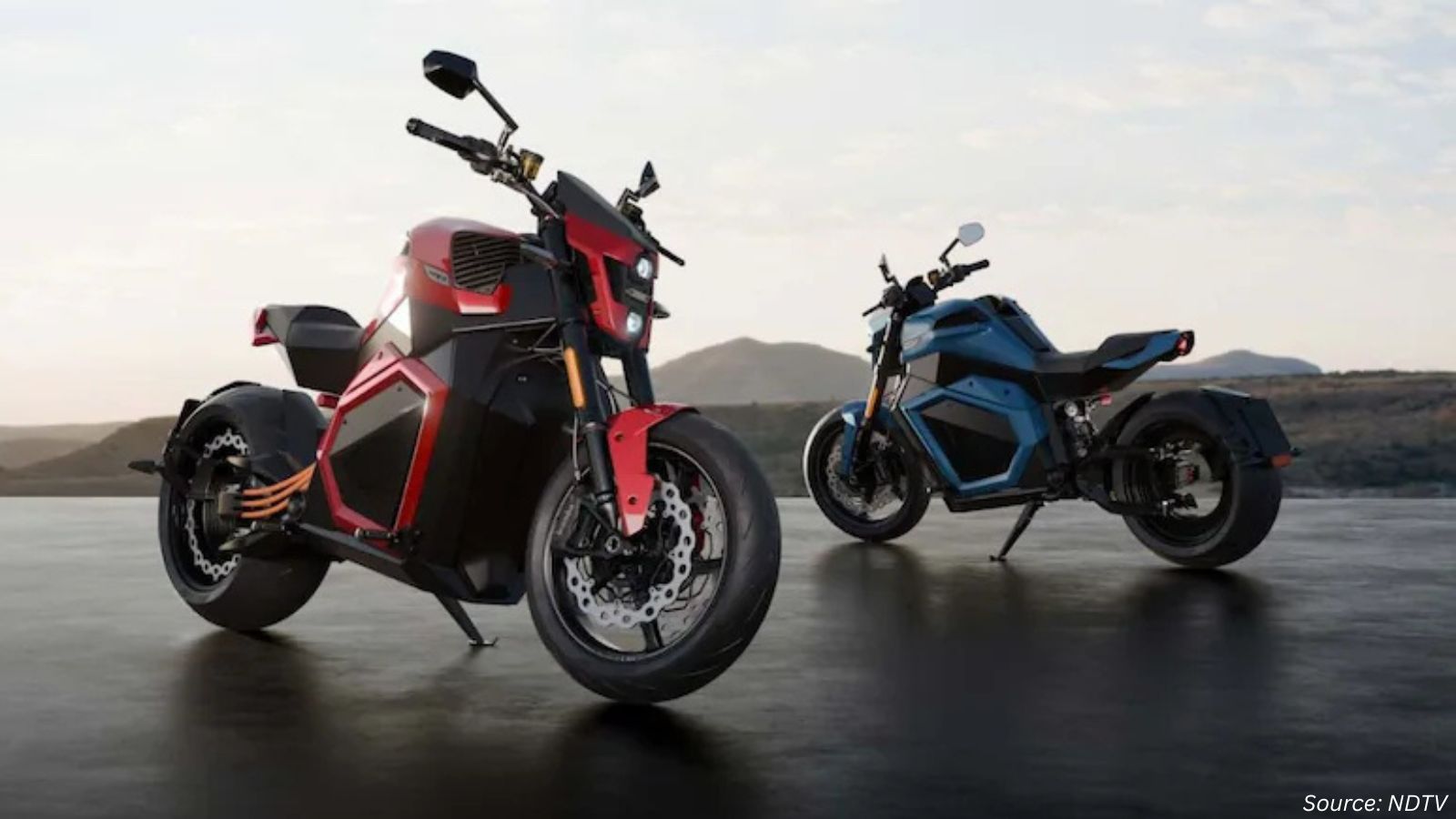
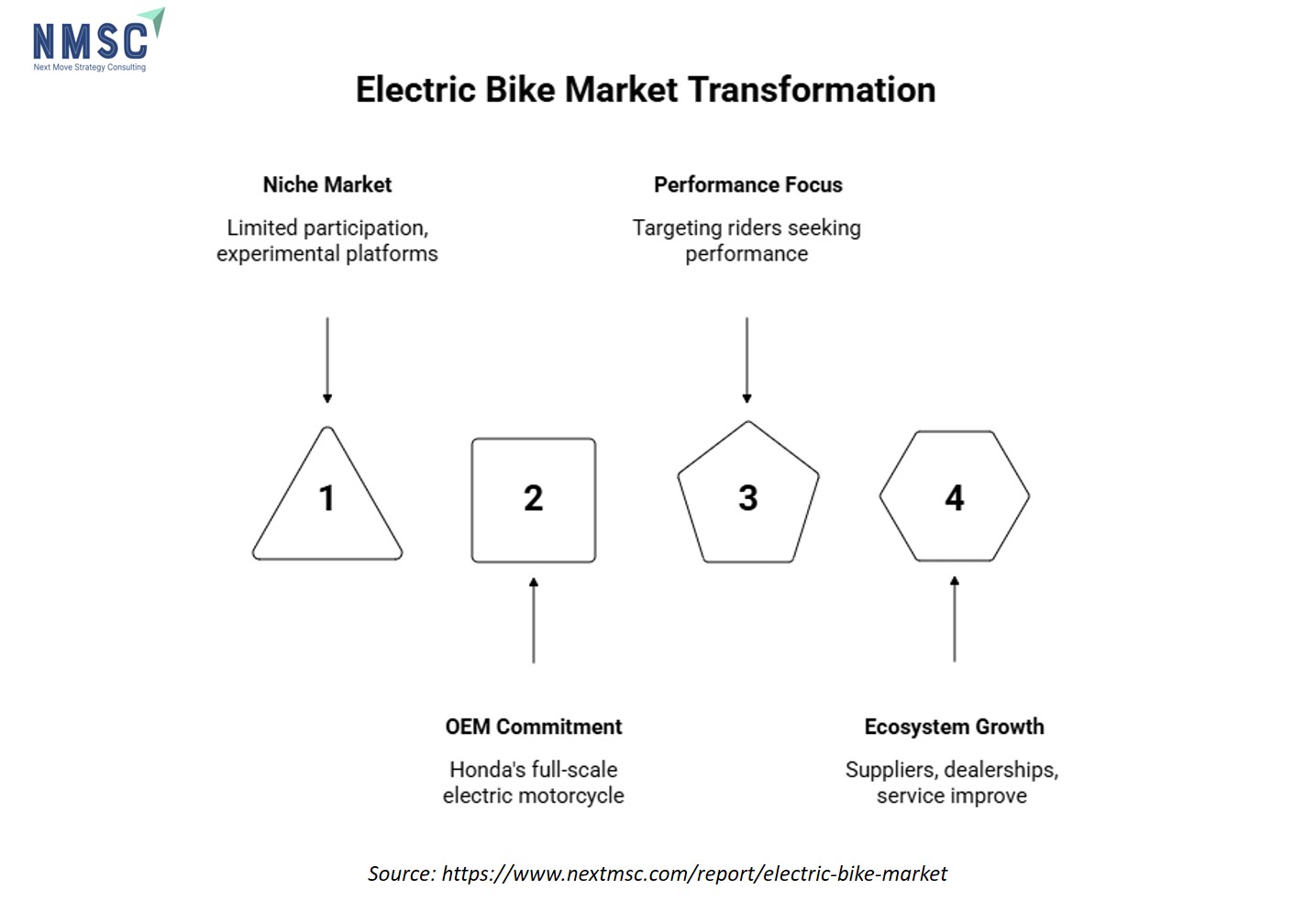
Three recent developments, the rollout of battery-swapping stations for e-bike delivery fleets in Dubai, the unveiling of the world’s first solid-state battery electric motorcycle, and Honda’s entry into full-scale electric motorcycles, collectively signal a decisive shift in the Electric Bike Market. Together, these stories highlight how the market is moving beyond early adoption toward infrastructure readiness, deeper technology differentiation, and stronger OEM commitment. The common thread is a transition from product-led experimentation to ecosystem-driven, commercially scalable electric mobility.
1. Battery Swapping Infrastructure Reshapes Commercial E-Bike Use
Dubai’s decision to deploy dedicated battery-swapping stations for electric bikes used in last-mile delivery marks a critical evolution in how electric two-wheelers are supported at the infrastructure level. Rather than relying solely on plug-in charging, the initiative focuses on minimizing vehicle downtime, one of the biggest operational pain points for delivery fleets.
Battery swapping allows riders to exchange depleted batteries for fully charged ones within minutes, significantly improving asset utilization. For delivery operators, this model improves route efficiency, reduces idle time, and lowers operational uncertainty associated with charging availability. More importantly, it demonstrates how infrastructure innovation can unlock demand, not just respond to it.
This approach also reflects a broader trend in the Electric Bike Market: electrification is no longer limited by vehicle capability alone. Supporting systems, charging formats, energy logistics, and fleet management, are increasingly shaping adoption rates, especially in dense urban environments.
2. Solid-State Batteries Push Performance Expectations Higher
The unveiling of a solid-state battery electric motorcycle represents a technology-led inflection point for the Electric Bike Market. Solid-state batteries promise improvements across multiple performance dimensions, including higher energy density, faster charging, improved thermal stability, and enhanced safety compared to conventional lithium-ion systems.
From a market perspective, the significance lies less in immediate mass adoption and more in expectation setting. Features such as ultra-fast charging and extended range challenge long-standing perceptions around electric two-wheelers being limited to short commutes or urban use. Even if solid-state batteries remain premium or limited in scale in the near term, their commercial debut accelerates innovation cycles across the supply chain, from battery suppliers to power electronics and thermal management systems.
This development signals a gradual shift in competition within the Electric Bike Market, from cost and styling differentiation toward battery architecture and energy performance as core value drivers.
3. Honda’s Entry Signals OEM-Led Market Maturity
Honda’s introduction of a full-scale electric motorcycle underscores a deeper structural change in the Electric Bike Market. As one of the world’s largest two-wheeler manufacturers, Honda’s move reflects rising confidence in electric platforms as long-term portfolio pillars rather than experimental sidelines.
Unlike early electric bikes that focused primarily on urban commuting, Honda’s electric motorcycle targets riders seeking performance, reliability, and compatibility with existing charging standards. This positions electric bikes closer to traditional internal combustion motorcycles in terms of consumer expectations and use cases.
OEM participation at this level also has ripple effects across suppliers, dealerships, and service ecosystems. Standardization, quality benchmarks, and aftersales infrastructure tend to improve when legacy manufacturers commit at scale, helping the broader market transition from niche to mainstream.
4. Next Move Strategy Consulting – Opinion, Impact, and Near-Term Prospects
Next Move Strategy Consulting views these developments as strong indicators that the Electric Bike Market is entering a scale-up and ecosystem-build phase, rather than an experimentation phase.
-
Infrastructure becomes a growth multiplier: Battery swapping and fast-charging networks will increasingly determine commercial viability, particularly for fleet and delivery applications.
-
Battery technology as the primary differentiator: Advances such as solid-state systems shift competition toward energy density, charging speed, and lifecycle performance rather than basic electrification.
-
OEM participation accelerates standardization: Honda’s entry reflects a broader trend where global manufacturers legitimize electric bikes for wider consumer segments.
-
Value extends beyond the vehicle: Software, energy services, battery management, and fleet optimization are emerging as high-value layers within the market.
-
Adoption widens geographically: Infrastructure-backed models enable faster penetration in regions with dense urban logistics and sustainability mandates.
Overall, the Electric Bike Market is evolving into a multi-layered ecosystem where vehicles, batteries, and infrastructure are developed in parallel rather than in isolation.
5. Practical Suggestions for Stakeholders
-
Manufacturers should design platforms compatible with multiple charging and swapping standards to future-proof product lines.
-
Battery and component suppliers should focus on durability, fast-charge tolerance, and lifecycle optimization rather than capacity alone.
-
Fleet operators should evaluate battery-as-a-service and swapping models to reduce upfront capital expenditure.
-
Policymakers and urban planners should integrate e-bike infrastructure into broader transport and sustainability frameworks.
-
Investors should track companies positioned at the intersection of batteries, infrastructure, and software-enabled mobility.
Conclusion
The convergence of battery-swapping infrastructure, next-generation battery technologies, and major OEM participation signals a turning point for the Electric Bike Market. The industry is moving from early adoption toward operational maturity, where success will depend on scalability, ecosystem integration, and performance credibility. Companies that align vehicle innovation with infrastructure readiness and energy efficiency will be best positioned to capture long-term value as electric bikes become a core element of urban and commercial mobility.
About Next Move Strategy Consulting:
Next Move Strategy Consulting is a premier market research and management consulting firm that has been committed to providing strategically analysed well documented latest research reports to its clients. The research industry is flooded with many firms to choose from, what makes Next Move different from the rest is its top-quality research and the obsession of turning data into knowledge by dissecting every bit of it and providing fact-based research recommendation that is supported by information collected from over 500 million websites, paid databases, industry journals and one on one consultations with industry experts across a diverse range of industry sectors. The high-quality customized research reports with actionable insights and excellent end-to-end customer service help our clients to take critical business decisions that enables them to move beyond time and have competitive edge in the industry.
We have been servicing over 1000 customers globally that includes 90% of the Fortune 500 companies over a decade. Our analysts are constantly tracking various high growth markets and identifying hidden opportunities in each sector or the industry. We provide one of the industry’s best quality syndicate as well as custom research reports across 10 different industry verticals. We are committed to deliver high quality research solutions in accordance to your business needs. Our industry standard delivery solutions that ranges from the pre consultation to after-sales services, provide an excellent client experience and ensure right strategic decision making for businesses.
For more information please contact:
Next Move Strategy Consulting
5th Floor 867
Boylston St, STE 500,
Boston, MA 02116, U.S.
E-Mail: [email protected]
Direct: +1-857-758-5017
Website: www.nextmsc.com
About the Author
 Sanyukta Deb
— Sanyukta Deb is Digital Marketing Team Lead at Next Move Strategy Consulting, where she has led content strategy and technical SEO for the firm's B2B market research publications for over 2 years. Her editorial process translates NextMSC's primary and secondary research — spanning technology, industrial, and consumer sectors — into commercial narratives, backed by search-intent, keyword, and competitive analysis. She brings 5 years of overall experience in digital marketing and content strategy.
Sanyukta Deb
— Sanyukta Deb is Digital Marketing Team Lead at Next Move Strategy Consulting, where she has led content strategy and technical SEO for the firm's B2B market research publications for over 2 years. Her editorial process translates NextMSC's primary and secondary research — spanning technology, industrial, and consumer sectors — into commercial narratives, backed by search-intent, keyword, and competitive analysis. She brings 5 years of overall experience in digital marketing and content strategy.
About the Reviewer
 Debashree Dey
— Debashree Dey is Assistant Manager at Next Move Strategy Consulting, where she supports cross-vertical market content and communications across diverse industries for 6 years. Her professional background includes senior content writing, communications, and published manuscript authorship, with experience developing audience-focused business narratives and maintaining clear, consistent messaging. Her role supports research-led content development and editorial quality across NextMSC publications.
Debashree Dey
— Debashree Dey is Assistant Manager at Next Move Strategy Consulting, where she supports cross-vertical market content and communications across diverse industries for 6 years. Her professional background includes senior content writing, communications, and published manuscript authorship, with experience developing audience-focused business narratives and maintaining clear, consistent messaging. Her role supports research-led content development and editorial quality across NextMSC publications.
















Add Comment