EPA Refrigerant Rule and Trane Deal Reshape Global HVAC Market
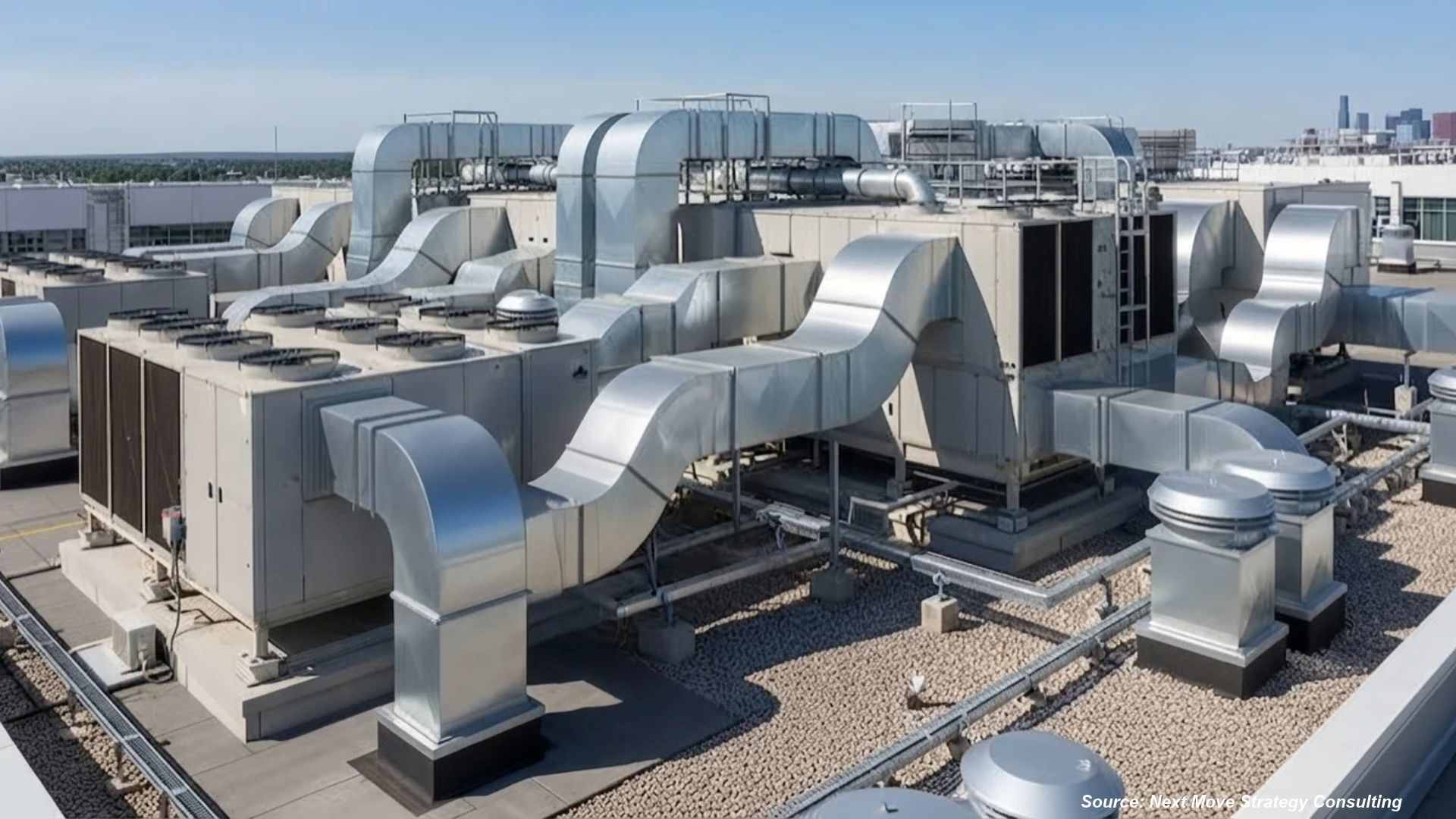
EPA's May 2026 Refrigerant Rule and Trane's Data Center Cooling Acquisition Signal a Structural Inflection Point for the Global HVAC Industry
On May 26, 2026, the U.S. Environmental Protection Agency published a final rule under the American Innovation and Manufacturing (AIM) Act of 2020, permitting the continued installation of HVAC units manufactured or imported before January 1, 2025, that use R-410A refrigerant until existing inventories are exhausted. The rule, which takes effect on July 27, 2026, resolves a critical supply-chain impasse that had threatened to strand billions of dollars of pre-transition equipment across U.S. residential and commercial construction sites. The regulatory clarification arrives at a moment of accelerating structural transformation across the global climate-control industry — one that extends well beyond refrigerant chemistry into data center thermal management, electrified heating, and AI-enabled building diagnostics.
According to Next Move Strategy Consulting's HVAC Systems Market report, the global HVAC market was valued at USD 236.14 billion in 2025 and is projected to reach USD 430.93 billion by 2035, growing at a CAGR of 6.20% from 2026 to 2035. The market is estimated at USD 250.78 billion in 2026, reflecting sustained momentum across residential cooling penetration, commercial retrofit modernization, and the emergence of high-density data center cooling as a discrete and rapidly scaling demand category.
For More Information: Download FREE Sample on HVAC Systems Market Report
EPA's AIM Act Rule: A Regulatory Pivot That Reshapes the Refrigerant Transition Timeline
The EPA's May 2026 final rule represents a material recalibration of the AIM Act's original enforcement architecture. Under the prior framework, contractors and builders were prohibited from installing any split HVAC system manufactured before January 1, 2025, that used R-410A refrigerant after January 1, 2026. The EPA had deprioritized enforcement of that deadline late in 2025 in response to documented concerns about the availability and cost of A2L refrigerants in the field, before formally amending the rule through the May 2026 final rulemaking.
The new class of refrigerants — commonly referred to as A2Ls — carries a lower global warming potential (GWP) than R-410A but required manufacturers to redesign equipment to accommodate their mildly flammable properties. The EPA's Technology Transitions rule further establishes EPA's AIM Act HFC allowance program phases regulated HFC production and consumption down to 15% of historic baseline levels from 2036 onward, compressing the long-term supply of the refrigerant used for servicing existing equipment. Critically, New York State has codified the original January 1, 2026 installation deadline through its own statewide law, meaning the federal rule's flexibility does not extend to that jurisdiction.
The practical consequence for the HVAC supply chain is a bifurcated transition: manufacturers continue producing A2L-compatible systems as the primary forward-looking product line, while the installed base of R-410A equipment remains serviceable through a diminishing but still-available component supply. This dynamic is compressing innovation timelines for OEMs, accelerating the commercial case for low-GWP refrigerant portfolios, and creating a near-term installation window that is simultaneously an inventory clearance event and a technology adoption catalyst.
Trane Technologies' Stellar Energy Acquisition: HVAC Enters the AI Infrastructure Economy
Concurrent with the refrigerant transition, the HVAC industry's competitive frontier has shifted decisively toward data center thermal management. On February 18, 2026, Trane Technologies completed the acquisition of Stellar Energy Americas, a provider of turnkey modular data center cooling solutions. The transaction, originally announced on December 2, 2025, positions Trane directly within the hyperscale and AI infrastructure cooling segment — a market whose thermal density requirements have outpaced the capacity of conventional air-side cooling architectures.
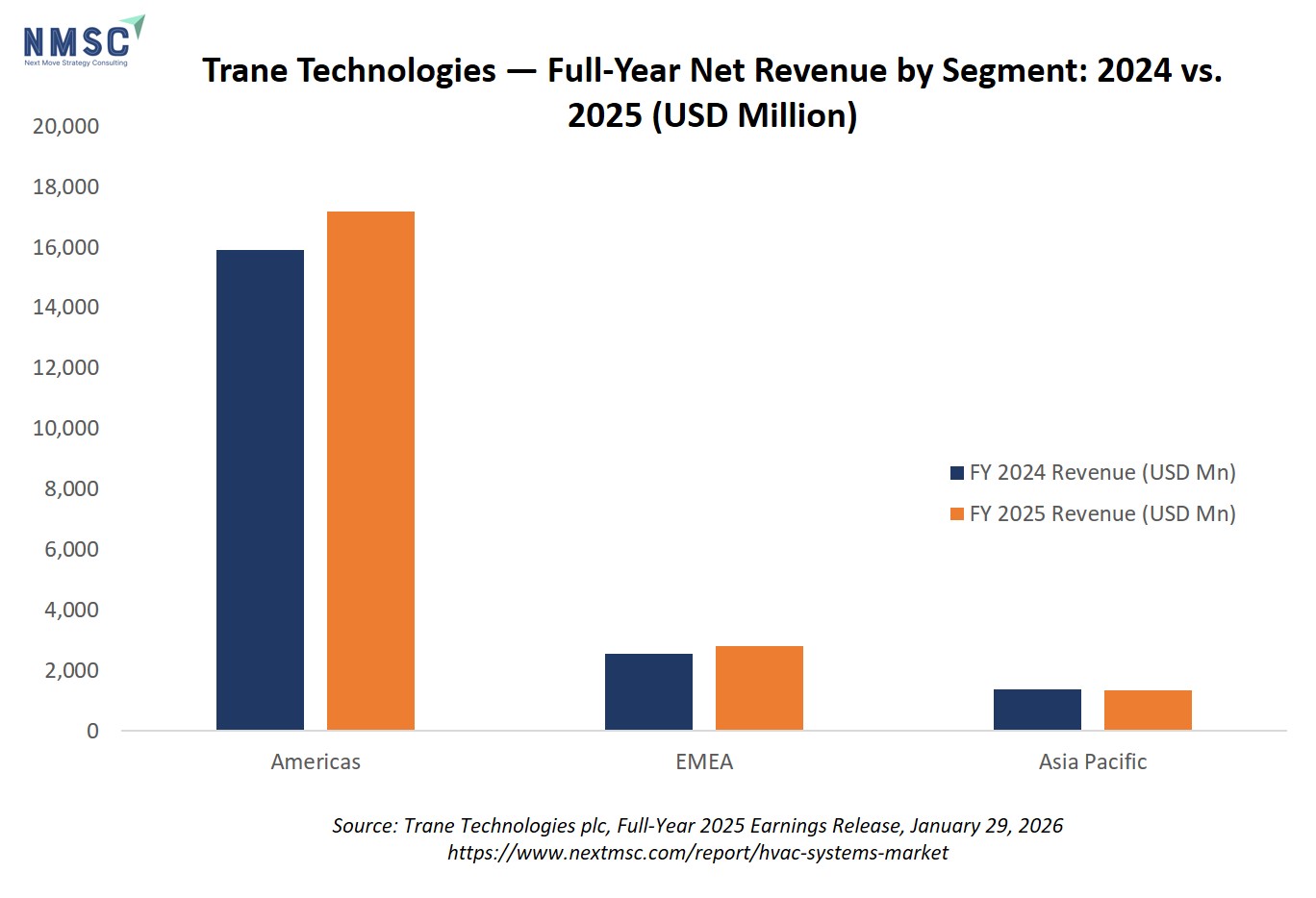
The Stellar Energy acquisition follows Daikin Applied's November 2025 acquisition of Chilldyne, a specialist in negative-pressure liquid cooling systems engineered for high-performance AI data centers, where the negative-pressure design reduces leak risk compared to conventional pressurized liquid cooling configurations. Together, these transactions signal that the world's largest HVAC manufacturers are repositioning their capital allocation from incremental hardware scaling toward advanced thermal management for digital infrastructure — a segment where cooling density, uptime reliability, and modular scalability command premium contract values.
In a parallel strategic move, Johnson Controls International completed the divestment of its Residential and Light Commercial HVAC business to the Bosch Group in August 2025, in an all-cash transaction that Johnson Controls described as enabling the company to strengthen its position as a focused, pure-play provider of advanced building solutions. The divestment reflects a broader industry pattern of portfolio rationalization, where diversified conglomerates are shedding volume-driven residential segments to concentrate capital on higher-margin commercial, industrial, and mission-critical cooling applications.
Samsung's SmartThings Pro: AI-Enabled Diagnostics Redefine Commercial HVAC Management
At AHR Expo 2026 in February, Samsung Electronics launched SmartThings Pro, an AI-powered enterprise IoT platform designed for HVAC professionals that enables remote management, real-time diagnostics, and logic-driven automation across residential and commercial portfolios. The platform's commercial deployment capability — spanning multi-site portfolio management and predictive fault detection — directly addresses the procurement shift that NMSC primary research has documented: commercial facility operators now rank predictive maintenance capability and building management system compatibility above upfront equipment pricing in vendor selection criteria.
NMSC Market Segmentation: Where Structural Demand Is Concentrating
|
Segment |
Leading Sub-Segment (2025 Share) |
Fastest-Growing Sub-Segment |
Key Structural Driver |
|
Equipment |
Split ACs (31.42%) |
Chillers |
AI data center and commercial complex investment |
|
System Type |
Decentralized (52.85%) |
Hybrid Systems |
Phased capital deployment in segmented urban typologies |
|
Implementation |
New Construction (55.00%) |
Retrofit Buildings |
Energy performance mandates and ESG-linked asset compliance |
|
Technology |
Inverter (45.74%) |
Smart/IoT-Enabled |
Electricity tariff volatility and building management integration |
|
Energy Efficiency |
3-Star (28.59%) |
5-Star Systems |
Strengthening sustainability mandates and lifecycle cost awareness |
|
Capacity |
Up to 1.5 Ton (38.41%) |
Above 5 Ton |
Commercial and industrial cooling intensification |
|
Installation |
Wall-Mounted (43.15%) |
Ducted Configurations |
Commercial and premium residential project growth |
|
End User |
Residential (48.78%) |
Commercial |
Higher contract values and recurring revenue in office, healthcare, hospitality |
According to NextMSC primary research and analysis, inverter technology captured 45.74% of the global HVAC market in 2025, reflecting its transition from a premium differentiation lever to a standardized procurement expectation — driven by the dual pressure of electricity tariff volatility and mandatory efficiency scoring frameworks in regulated markets. Smart/IoT-enabled systems are projected to register the fastest technology-segment growth rate through 2035, as cloud-based monitoring platforms and AI-enabled diagnostics convert HVAC from a mechanical asset into a managed performance service.
The retrofit implementation segment is projected to outpace new construction growth through 2035, as tightening energy performance standards in Europe and North America convert building upgrade cycles from discretionary maintenance events into compliance-driven capital expenditures. NMSC primary research and analysis indicates that commercial asset owners are increasingly executing HVAC upgrades as capital preservation strategies — directly tied to regulatory deadlines and operating cost exposure rather than comfort-driven discretionary investment.
Asia-Pacific's 40.75% revenue share in 2025 reflects the region's dual role as the world's largest HVAC manufacturing base and its most volumetrically significant consumption market, anchored by China's OEM depth and India's accelerating residential penetration in Tier I and Tier II cities experiencing prolonged heat conditions. The Middle East & Africa region's 6.85% CAGR — the fastest among all regions — reflects a structurally distinct demand profile: the Gulf Cooperation Council sustains premium centralized and district cooling demand through large-scale hospitality and mixed-use mega-projects, while sub-Saharan Africa represents a first-installation frontier where rising residential electrification is creating net-new cooling demand rather than replacement cycles.
NMSC Strategic Perspective: Three Structural Shifts Redefining HVAC's Investment Thesis
NextMSC primary research and analysis identifies three structural shifts that are collectively redefining the HVAC market's investment thesis for the period through 2035:
1. The Refrigerant Transition as a Competitive Sorting Mechanism
The EPA's May 2026 AIM Act final rule has extended the R-410A installation window, but it has not altered the underlying trajectory: R-410A production will reach 15% of current output by 2036, and manufacturers who have already invested in A2L-compatible product lines are positioned to capture the replacement cycle as the existing inventory depletes. The transition is functioning as a competitive sorting mechanism — OEMs with certified A2L portfolios, trained installer networks, and low-GWP refrigerant supply agreements are structurally advantaged in commercial tender qualification, particularly in jurisdictions such as New York where the original January 1, 2026 deadline remains in force at the state level.
2. Data Center Cooling as a Discrete, High-Margin HVAC Sub-Market
The Trane Technologies–Stellar Energy Americas and Daikin–Chilldyne acquisitions are not isolated transactions; they represent the leading edge of a capital reallocation wave toward AI infrastructure thermal management. The thermal density requirements of GPU-intensive AI computing clusters — which can exceed 100 kW per rack in advanced configurations — cannot be addressed by conventional air-side HVAC architectures. Liquid cooling, modular chiller systems, and turnkey thermal management platforms are emerging as a discrete sub-market within HVAC, one that commands higher contract values, longer service agreements, and stronger recurring revenue visibility than residential or light-commercial equipment sales.
3. Performance-Linked Service Models Replacing Transactional Equipment Sales
NMSC primary research and analysis documents a consistent pattern across commercial procurement engagements: facility operators are shifting from equipment-centric purchasing toward outcome-based service contracts that embed predictive maintenance, energy analytics, and performance guarantees into multi-year agreements. This shift is structurally expanding the addressable revenue per installed unit — converting a one-time equipment sale into a recurring revenue stream — and is reinforcing the competitive advantage of manufacturers with proprietary digital platforms, such as Samsung's SmartThings Pro, that can demonstrate measurable energy savings and uptime improvements against contractual benchmarks.
4. Competitive Landscape: M&A Activity Accelerates Portfolio Rationalization
The HVAC competitive landscape in 2026 is characterized by simultaneous consolidation at the OEM level and rapid M&A activity in the services and distribution segments. Capstone Partners' July 2026 HVAC Services M&A Update documents healthy deal activity year-to-date, with private equity platforms actively acquiring regional HVAC service providers to build density and expand technical capabilities.
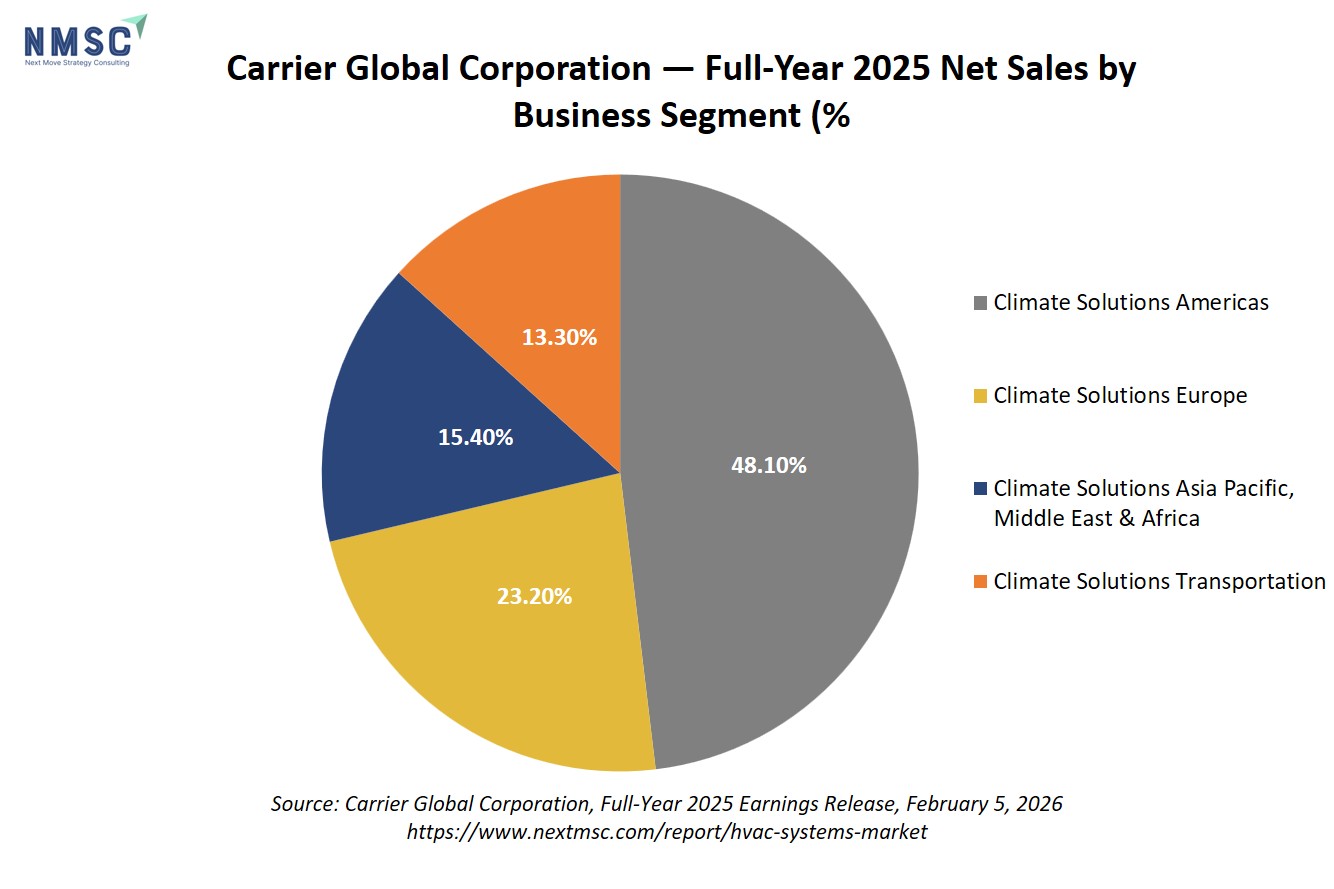
At the OEM level, the Johnson Controls–Bosch transaction and the Trane–Stellar Energy deal illustrate divergent but complementary strategic logics: Johnson Controls is concentrating on commercial building intelligence, while Trane is expanding into mission-critical cooling infrastructure. Daikin, Carrier Global, Mitsubishi Electric, and LG Electronics continue to compete through high-efficiency inverter portfolios, low-GWP refrigerant readiness, and connected building ecosystems. Haier Group's September 2025 inauguration of a USD 270 million air conditioner manufacturing plant in Chon Buri, Thailand — targeting 6 million units annually by 2027 and serving as an export hub for Europe and North America — signals that Asian OEMs are actively diversifying their manufacturing geography to reduce tariff exposure and strengthen supply chain resilience.
Bottom Line
The global HVAC market is undergoing a structural transformation that extends well beyond cyclical replacement demand. The EPA's May 2026 AIM Act final rule has clarified the R-410A transition timeline, creating a defined installation window for existing inventory while accelerating the commercial case for A2L-compatible systems — a dynamic that is compressing OEM innovation cycles and rewarding manufacturers with certified low-GWP portfolios. Simultaneously, Trane Technologies' acquisition of Stellar Energy Americas and Daikin's acquisition of Chilldyne signal the industry's decisive pivot toward AI data center thermal management, a segment where cooling density requirements and mission-critical uptime standards command premium contract values and long-duration service agreements. According to NextMSC primary research and analysis, the global HVAC market is projected to expand from USD 250.78 billion in 2026 to USD 430.93 billion by 2035 at a 6.20% CAGR, with Asia-Pacific leading volumetric growth at a 6.8% CAGR and the Middle East & Africa registering the fastest regional expansion at 6.85%. For investors and industry participants, the most durable value creation opportunities lie at the intersection of electrification depth, digital platform integration, and scalable thermal management for high-density computing infrastructure.
About Next Move Strategy Consulting
Next Move Strategy Consulting is a premier market research and management consulting firm that has been committed to provide strategically analysed well documented latest research reports to its clients. The research industry is flooded with many firms to choose from, what makes NMSC different from the rest is its top-quality research and the obsession of turning data into knowledge by dissecting every bit of it and providing fact-based research recommendation that is supported by information collected from over 500 million websites, paid databases, industry journals and one on one consultations with industry experts across a diverse range of industry sectors. The high-quality customized research reports with actionable insights and excellent end-to-end customer service help our clients to take critical business decisions that enables them to move beyond time and have competitive edge in the industry.
We have been servicing over 1000 customers globally that includes 90% of the Fortune 500 companies over a decade. Our analysts are constantly tracking various high growth markets and identifying hidden opportunities in each sector or the industry. We provide one of the industry's best quality syndicate as well as custom research reports across 10 different industry verticals. We are committed to deliver high quality research solutions in accordance to your business needs. Our industry standard delivery solutions that ranges from the pre consultation to after-sales services, provide an excellent client experience and ensure right strategic decision making for businesses.
For more information, please contact:
Next Move Strategy Consulting
5th Floor 867 Boylston St, STE 500,
Boston, MA 02116, U.S.
E-Mail: [email protected]
Direct: +1-217-650-7991
Website: www.nextmsc.com
About the Author
 Sanyukta Deb
— Sanyukta Deb is Digital Marketing Team Lead at Next Move Strategy Consulting, where she has led content strategy and technical SEO for the firm's B2B market research publications for over 2 years. Her editorial process translates NextMSC's primary and secondary research — spanning technology, industrial, and consumer sectors — into commercial narratives, backed by search-intent, keyword, and competitive analysis. She brings 5 years of overall experience in digital marketing and content strategy.
Sanyukta Deb
— Sanyukta Deb is Digital Marketing Team Lead at Next Move Strategy Consulting, where she has led content strategy and technical SEO for the firm's B2B market research publications for over 2 years. Her editorial process translates NextMSC's primary and secondary research — spanning technology, industrial, and consumer sectors — into commercial narratives, backed by search-intent, keyword, and competitive analysis. She brings 5 years of overall experience in digital marketing and content strategy.
About the Reviewer
 Debashree Dey
— Debashree Dey is Assistant Manager at Next Move Strategy Consulting, where she supports cross-vertical market content and communications across diverse industries for 6 years. Her professional background includes senior content writing, communications, and published manuscript authorship, with experience developing audience-focused business narratives and maintaining clear, consistent messaging. Her role supports research-led content development and editorial quality across NextMSC publications.
Debashree Dey
— Debashree Dey is Assistant Manager at Next Move Strategy Consulting, where she supports cross-vertical market content and communications across diverse industries for 6 years. Her professional background includes senior content writing, communications, and published manuscript authorship, with experience developing audience-focused business narratives and maintaining clear, consistent messaging. Her role supports research-led content development and editorial quality across NextMSC publications.

















Add Comment