FARMAR Project Secures £1.5M, Altering AgBot Market Size
Horizon Europe Awards £1.5 Million to FARMAR Initiative; Global Agricultural Robots Market Size Forecast Faces Bullish Adjustments
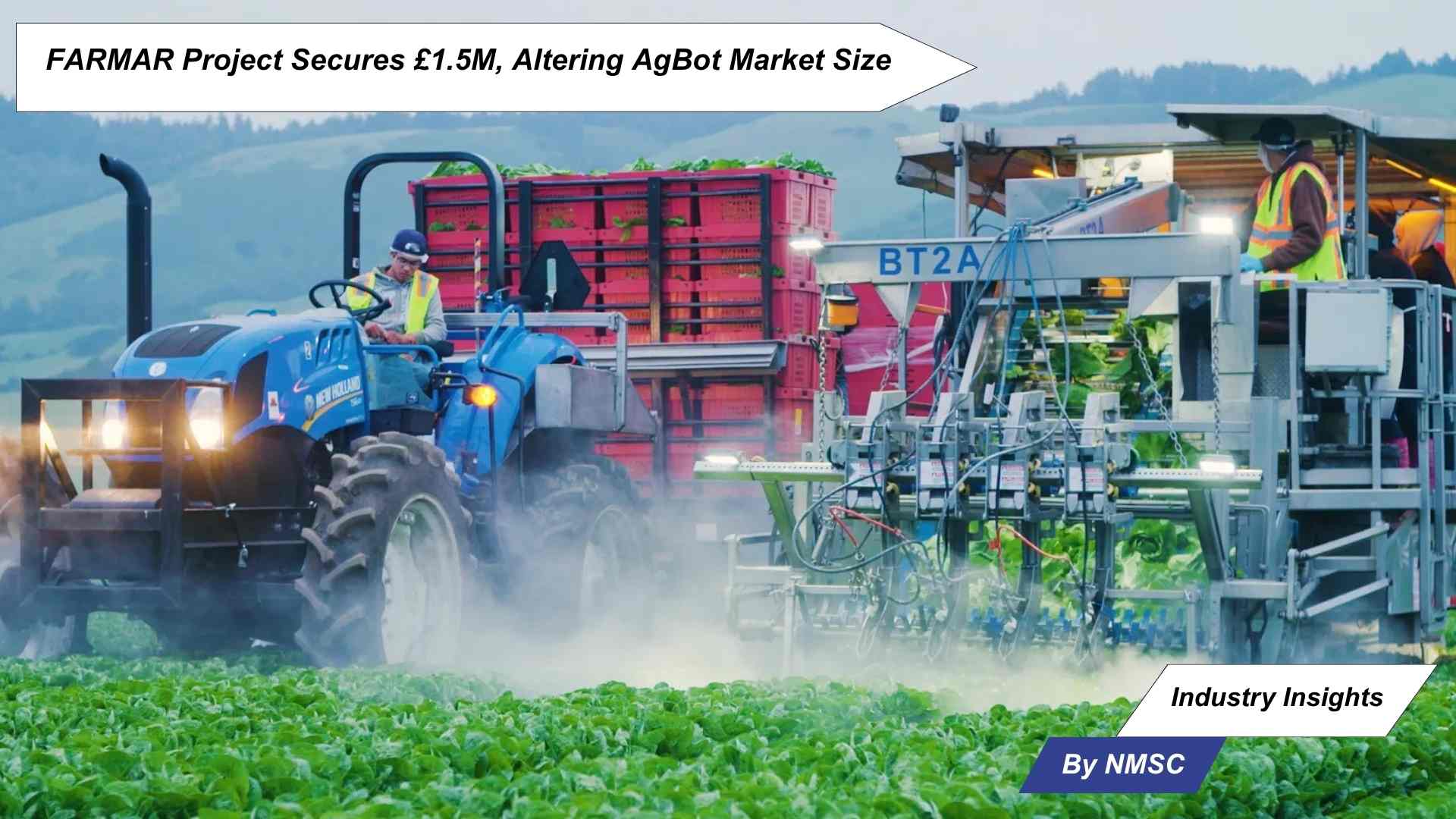
DURHAM, UK — May 30, 2026 — In a development that accelerates the integration of cognitive automation within primary sector industries, the international Horizon Europe program has officially awarded approximately £1.5 million to launch the FARMAR initiative. Coordinated by Durham University’s Department of Computer Science, the four-year global project aims to translate heritage farming practices into adaptive robotic networks, establishing a resilient framework for localized agricultural operations.
Overcoming Labor and Climate Bottlenecks via Human-in-the-Loop AI
For years, traditional agricultural automation frameworks struggled with rigid operational programming, rendering them largely ineffective when confronted with erratic weather disruptions or complex crop variations. The technological architecture developed under the FARMAR (Farmer-in-the-loop heritage-aware AI and Robotic Mechanisation for Agricultural Resilience) banner directly addresses this rigidity by embedding real human expertise into the software loop.
Cumbrian engineering pioneer Forth UK has been appointed as the lead industrial partner tasked with manufacturing the physical prototypes for international deployment. Operating via localized on-site computing units, the system transforms a farmer’s verbal narratives and physical field-walking routines into direct, step-by-step robotic instructions. This approach allows decentralized fleets of lightweight ground vehicles and specialized drones to scout fields, flag structural anomalies, and manage weeds safely under human oversight.
Key Project Mechanics and Capabilities:
-
Decentralized Robotic Coordination: Small on-site processors manage localized teams of ground crawlers and aerial drones simultaneously.
-
Heritage-Aware Machine Learning: Natural language processing algorithms convert spoken farmer testimony and localized heritage routines into actionable mechanical pathways.
-
Global Validation Framework: Cross-border trial networks mapped across the UK, Europe, Asia, and North America to test adaptive resilience across diverse climates.
-
Dynamic Human Interface: Simplified mobile application layers enabling real-time review, remote override, and manual adjustment of automated workflows.
Industry Response and Market Implications
The transition toward lightweight, collaborative agricultural platforms arrives as global agribusinesses seek practical methods to insulate field margins from escalating chemical costs and acute labor deficits. Industry analysts expect that utilizing heritage-aware AI models will substantially reduce the high initial integration barriers that previously restricted robotics adoption to hyper-industrialized, large-scale farms.
"Shifting agricultural engineering away from rigid autonomous systems toward human-guided, heritage-aware robotic platforms marks a major turning point in the sector," notes a Lead Automation Analyst at Next Move Strategy Consulting. "According to NMSC analysts, localized field adaptability is the core parameter governing the expansion curve of the global Agricultural Robots Market size. Our long-term tracking indicates that by using affordable, lightweight fleets driven by on-site computing rather than heavy, high-capital machinery, the industry lowers entry costs for small-to-medium enterprise farms, significantly expanding the addressable commercial market."
Setting the New Cadence for Smart Agriculture
Backed by Forth UK’s technical experience in handling high-consequence environments like Sellafield, the FARMAR project moves beyond isolated academic theory into practical, industrial-grade validation. By proving that advanced computer vision, aerial scouting, and autonomous ground execution can be safely synchronized via an intuitive mobile app, the consortium establishes the underlying operational baseline for the next generation of food security infrastructure.
Source: Business Crack
Prepared By: Prakhyat Chowdhury
About the Author
 Sanyukta Deb
— Sanyukta Deb is Digital Marketing Team Lead at Next Move Strategy Consulting, where she has led content strategy and technical SEO for the firm's B2B market research publications for over 2 years. Her editorial process translates NextMSC's primary and secondary research — spanning technology, industrial, and consumer sectors — into commercial narratives, backed by search-intent, keyword, and competitive analysis. She brings 5 years of overall experience in digital marketing and content strategy.
Sanyukta Deb
— Sanyukta Deb is Digital Marketing Team Lead at Next Move Strategy Consulting, where she has led content strategy and technical SEO for the firm's B2B market research publications for over 2 years. Her editorial process translates NextMSC's primary and secondary research — spanning technology, industrial, and consumer sectors — into commercial narratives, backed by search-intent, keyword, and competitive analysis. She brings 5 years of overall experience in digital marketing and content strategy.
About the Reviewer
 Debashree Dey
— Debashree Dey is Assistant Manager at Next Move Strategy Consulting, where she supports cross-vertical market content and communications across diverse industries for 6 years. Her professional background includes senior content writing, communications, and published manuscript authorship, with experience developing audience-focused business narratives and maintaining clear, consistent messaging. Her role supports research-led content development and editorial quality across NextMSC publications.
Debashree Dey
— Debashree Dey is Assistant Manager at Next Move Strategy Consulting, where she supports cross-vertical market content and communications across diverse industries for 6 years. Her professional background includes senior content writing, communications, and published manuscript authorship, with experience developing audience-focused business narratives and maintaining clear, consistent messaging. Her role supports research-led content development and editorial quality across NextMSC publications.















Add Comment