FDA Clears First Glucose-Ketone Wearable, Reshaping CGM Market | NextMSC
FDA Clears World's First Dual Glucose-Ketone Wearable, Forcing a Fundamental Rethink of CGM's Clinical Boundaries
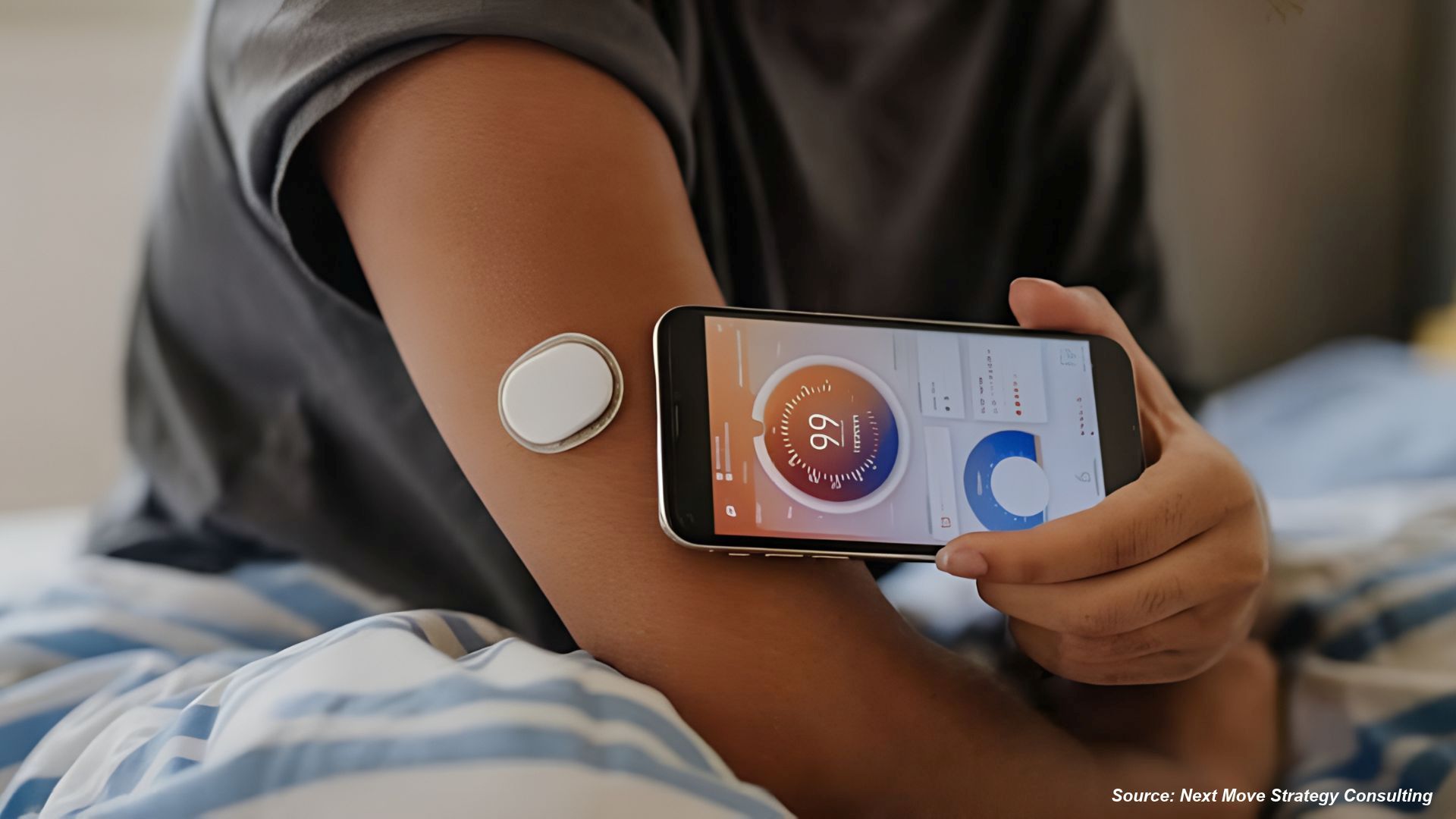
On August 25, 2026, the U.S. Food and Drug Administration authorized the Libre Duo 10 Day Continuous Dual Glucose Ketone Monitoring System — the first wearable device in the world to simultaneously and continuously track both blood glucose and ketone levels in a single sensor worn on the body. The authorization, granted to Abbott Diabetes Care through the De Novo premarket review pathway, marks a structural inflection point for the global continuous glucose monitoring systems (CGMS) market — one that extends the clinical addressable market beyond glycemic management into real-time ketoacidosis prevention for the estimated 2.1 million Americans living with type 1 diabetes.
According to Next Move Strategy Consulting's Continuous Glucose Monitoring Systems (CGMS) Market report, the global CGMS market was valued at USD 7.12 billion in 2022 and is projected to reach USD 16.05 billion by 2030, growing at a CAGR of 9.7% from 2023 to 2030. NMSC's proprietary model — which applies bottom-up segment analysis across device type, component, demographics, end-user, and 28 countries — positions the market's sustained double-digit trajectory on the convergence of three structural forces: a rapidly expanding global diabetic population, the codification of CGM as a standard-of-care technology by leading clinical bodies, and a wave of regulatory authorizations that are materially widening the device's clinical utility beyond its traditional insulin-dependent user base.
For More Information: Download FREE Sample on Continuous Glucose Monitoring Systems (CGMS) Market Report
The Libre Duo Authorization: Why This Is Not an Incremental Product Launch
The clinical significance of the Libre Duo 10 Day authorization cannot be assessed through the lens of a conventional product refresh. Prior to this authorization, patients requiring ketone monitoring — primarily those at risk of diabetic ketoacidosis (DKA) — were compelled to use separate, point-in-time tests that provided a single static measurement with no directional trend data. The Libre Duo 10 Day eliminates that gap by delivering continuous, minute-by-minute readings of both glucose and ketone levels transmitted wirelessly to a compatible smartphone, with automatic alerts when ketone levels approach clinically dangerous thresholds.
"Today's authorization is a breakthrough for the safety of children and adults living with diabetes," said Michelle Tarver, M.D., Ph.D., Director of the FDA's Center for Devices and Radiological Health, in the FDA's official press announcement dated August 25, 2026. "Knowing that ketone levels are rising, and having that information in real time, around the clock, can be the difference between early intervention and a life-threatening emergency."
The FDA's authorization was supported by a clinical program spanning six studies enrolling more than 600 participants aged 2 years and older, demonstrating that the device accurately tracked clinically meaningful differences in ketone levels across its 10-day wear period — including identifying elevated ketone levels before the onset of DKA. The device had previously received FDA Breakthrough Device designation, reflecting the agency's assessment that it addresses a life-threatening condition with no adequate alternative.
From a market-structure perspective, this authorization does two things simultaneously: it deepens Abbott's competitive moat in the premium CGM segment and it establishes a new product category — continuous dual-analyte monitoring — that competitors must now respond to, accelerating R&D investment across the sector.
The Epidemiological Imperative: A Patient Population That Has Outgrown Legacy Monitoring
The commercial case for CGMS expansion is inseparable from the scale of the underlying disease burden. According to the International Diabetes Federation's 11th Edition Diabetes Atlas (2025), nearly 1 in 9 adults globally — approximately 589 million people — are now living with diabetes, with an estimated 252 million of those individuals unaware of their condition. According to the U.S. Centers for Disease Control and Prevention, an estimated 40.1 million Americans are living with diabetes, of whom approximately 2.1 million have type 1 diabetes — the population most directly served by advanced CGM systems with DKA-prevention capabilities.
The World Bank has reported that diabetes prevalence among adults aged 20 to 79 in the United States stood at 10.7% in 2021, while China recorded a prevalence of 10.6% in the same cohort — underscoring the scale of the Asia-Pacific opportunity that NMSC's regional analysis identifies as a key growth vector through 2030.
ADA 2026 Standards of Care: CGM Transitions from Recommended to Required
The regulatory and clinical policy environment has shifted decisively in the CGMS market's favor. The American Diabetes Association's Standards of Care in Diabetes — 2026, published in Diabetes Care (January 2026, Volume 49, Supplement 1), formally recommends CGM use at diabetes onset and at any point thereafter for children, adolescents, and adults on insulin therapy, on noninsulin therapies that can cause hypoglycemia, and on any diabetes treatment where CGM supports management.
Critically, the ADA's 2026 guidelines also designate automated insulin delivery (AID) systems — which are architecturally dependent on CGM sensors as their primary data input — as the preferred insulin delivery method over multiple daily injections for people with type 1 diabetes and adults with type 2 diabetes. This creates a compounding demand effect: every AID system adoption is simultaneously a CGM sensor adoption, structurally linking the growth trajectories of both product categories.
The ADA's 2026 standards further specify that people with diabetes should have uninterrupted access to CGM supplies, and that interruption of CGM access is associated with a worsening of outcomes — a clinical finding that directly supports payer coverage expansion and reduces the risk of demand cyclicality.
IDF Europe Calls for Policy Modernization Around CGM Technology Selection
In a September 2026 expert opinion published by the International Diabetes Federation's European region, Prof. Tadej Battelino, IDF Europe Chair, called for a fundamental shift in how CGM technologies are evaluated for access, reimbursement, and procurement decisions — arguing that historical device classifications (real-time CGM vs. intermittently scanned CGM) are becoming increasingly outdated and risk reinforcing assumptions that no longer reflect the capabilities of contemporary systems.
The IDF Europe position paper explicitly endorses the ADA 2026 Standards of Care's reclassification framework and advocates for procurement policies that prioritize sensor performance, clinical evidence, and person-centered care over legacy device categories. For market participants, this institutional signal carries direct commercial implications: reimbursement frameworks in European markets that have historically favored lower-cost intermittently scanned devices may be revised to accommodate premium real-time systems, expanding the addressable revenue pool for manufacturers of advanced CGM platforms.
Competitive Landscape: Revenue Momentum and the Race for Platform Dominance
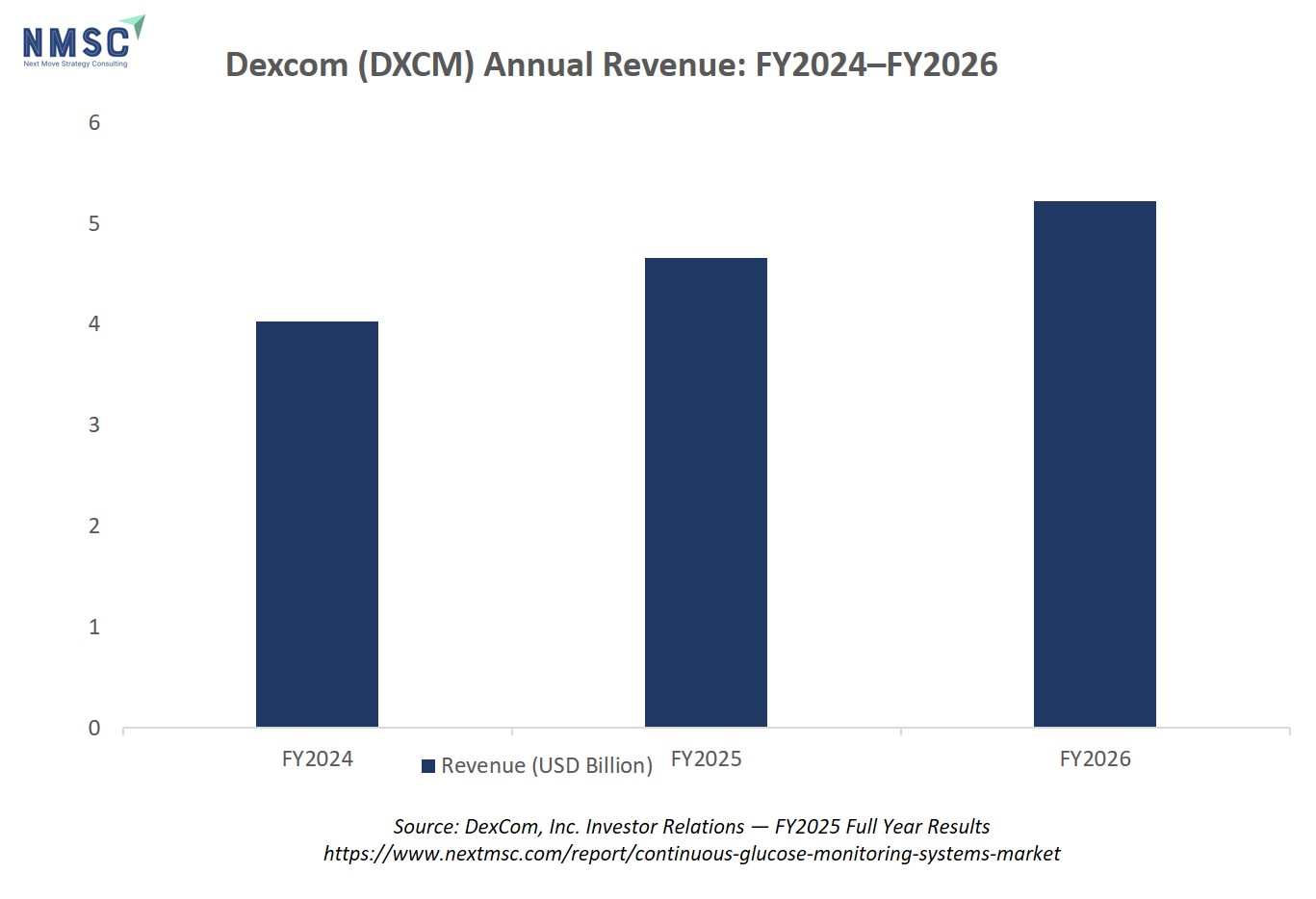
The financial performance of leading CGMS manufacturers confirms that the market's structural growth is translating into measurable revenue expansion. Dexcom reported full-year 2025 revenues of USD 4.66 billion, representing a 16% increase over 2024's approximately USD 4 billion, driven by continued global rollout of the G7 system. For full-year 2026, Dexcom has guided for total revenue of USD 5.16 billion to USD 5.25 billion, representing expected growth of approximately 11% to 13% over 2025.
Abbott's diabetes care segment, anchored by the FreeStyle Libre franchise, has maintained competitive pressure on Dexcom across both prescription and over-the-counter channels. The August 2026 Libre Duo authorization now positions Abbott as the sole provider of a commercially authorized dual-analyte continuous monitoring system globally, a differentiation that is likely to sustain premium pricing power in the type 1 diabetes segment while simultaneously opening a new clinical indication that Dexcom and Medtronic do not currently address with a single wearable device.
Key CGMS Market Developments — Selected Events, 2026
|
Date |
Company / Body |
Development |
Significance |
|
August 25, 2026 |
Abbott Diabetes Care / U.S. FDA |
FDA authorizes Libre Duo 10 Day — world's first wearable dual glucose-ketone CGM |
Opens new clinical indication (DKA prevention); creates new product category |
|
January 2026 |
American Diabetes Association |
ADA 2026 Standards of Care formally recommend CGM at diabetes onset; designate AID systems as preferred insulin delivery method |
Codifies CGM as standard of care; structurally links CGM demand to AID system adoption |
|
September 2026 |
IDF Europe / Prof. Tadej Battelino |
IDF Europe expert opinion calls for policy modernization in CGM access and reimbursement |
May accelerate European payer coverage of premium real-time CGM systems |
|
Full-Year 2025 |
Dexcom, Inc. |
Reports USD 4.66 billion in revenue (16% YoY growth); guides 2026 revenue at USD 5.16–5.25 billion |
Confirms sustained commercial momentum of G7 platform globally |
Regional Analysis: North America Leads, Asia-Pacific Accelerates
North America retained the dominant share of the global CGMS market through the forecast period, underpinned by the highest per-capita concentration of FDA-authorized CGM devices, the broadest private and public insurance coverage frameworks, and the presence of the three largest global CGM manufacturers — Abbott Laboratories, Dexcom, Inc., and Medtronic — all headquartered or primarily listed in the United States, according to NextMSC primary research and analysis.
Asia-Pacific represents the market's most structurally significant growth opportunity through 2030. The IDF's 11th Edition Diabetes Atlas (2025) confirms that the global diabetes burden is disproportionately concentrated in Asia, with China and India accounting for the largest absolute patient populations. Regional manufacturers including Terumo Corporation, BeatO, and iXensor are developing affordable CGM platforms specifically calibrated for price-sensitive markets, while South Korea's regulatory body — the Ministry of Food and Drug Safety — has approved domestically developed CGM devices such as the CareSens Air, the smallest and lightest CGM device available in South Korea with a 15-day wear period, according to NextMSC primary research and analysis.
NMSC Strategic Perspective: The Dual-Analyte Authorization Redraws the Market's Ceiling
The FDA's authorization of the Libre Duo 10 Day on August 25, 2026 is not merely a product milestone — it is a market-structure event that materially alters the ceiling of the CGMS addressable market. Until this authorization, the CGMS market's growth was bounded by the population of individuals requiring glucose monitoring. The Libre Duo authorization introduces a second clinical use case — continuous ketone surveillance — that is medically distinct from glucose monitoring and that previously generated revenue in a separate, lower-technology product category (point-in-time ketone test strips and meters).
NextMSC's proprietary research and analysis identifies three second-order implications of this development that institutional investors and strategic planners should monitor closely:
1. Competitive Response Timelines Will Compress. Abbott's Breakthrough Device designation and the six-study clinical program required for De Novo authorization represent a substantial regulatory moat. Competitors seeking to develop equivalent dual-analyte systems must replicate this clinical evidence base, which NMSC estimates will require a minimum of 24 to 36 months of clinical development before a comparable submission could be filed with the FDA. This window gives Abbott a period of exclusive commercial operation in the dual-analyte CGM category.
2. The Home Healthcare End-User Segment Will Disproportionately Benefit. The Libre Duo's design — a wearable sensor transmitting wirelessly to a smartphone — is architecturally optimized for home use, not hospital or clinic settings. NMSC's segmentation analysis identifies home healthcare as the fastest-growing end-user segment within the CGMS market, and the Libre Duo authorization accelerates this trajectory by enabling type 1 diabetes patients to manage DKA risk continuously outside of clinical settings for the first time.
3. Pediatric Market Penetration Will Accelerate. The Libre Duo is authorized for individuals aged 2 years and older — a deliberate regulatory choice that positions the device for the pediatric type 1 diabetes population, which has historically been underserved by CGM systems due to the complexity of managing both glucose and ketone risk simultaneously in young children. The ADA 2026 Standards of Care's explicit recommendation for early CGM initiation in children and adolescents, combined with the Libre Duo's pediatric authorization, creates a reinforcing demand signal in the child population segment (≤14 years) that NMSC tracks as a distinct demographic within its market model.
Market Drivers: Specific Mechanisms, Not Generic Trends
Sensor Wear Duration as a Reimbursement Lever: The transition from 7-day to 10-day and 14-day sensor wear periods — exemplified by the Libre Duo's 10-day wear and the Libre 3 Plus's extended wear — reduces the annualized cost per patient of CGM therapy, directly addressing the reimbursement objections that have historically constrained payer coverage expansion in mid-income markets. This cost-per-day reduction is a specific mechanism that NMSC's analysis identifies as a key enabler of the home healthcare segment's growth.
AID System Adoption as a CGM Volume Multiplier: The ADA 2026 Standards of Care's designation of AID systems as the preferred insulin delivery method for type 1 diabetes creates a structural demand multiplier for CGM sensors. Every AID system — which requires a CGM sensor as its primary input — generates recurring sensor revenue that is independent of the patient's decision to use CGM as a standalone monitoring tool. NMSC's proprietary analysis of the integrated insulin pump component segment reflects this compounding demand dynamic.
Over-the-Counter Channel Expansion: The FDA's 2024 clearance of Dexcom's Stelo Glucose Biosensor System as the first OTC CGM for adults who do not use insulin-requiring medications opened a consumer health channel that did not previously exist for CGM manufacturers. Abbott's Lingo OTC CGM has since entered the same channel. This OTC expansion extends the CGMS addressable market to individuals with prediabetes and those seeking metabolic health monitoring — a population that is orders of magnitude larger than the diagnosed diabetes population.
Bottom Line
The global CGMS market is undergoing a structural transformation that is simultaneously widening its clinical scope, deepening its regulatory legitimacy, and accelerating its commercial momentum. The FDA's August 2026 authorization of Abbott's Libre Duo 10 Day — the world's first wearable device to continuously monitor both glucose and ketone levels — establishes a new product category within the CGMS market and materially expands the addressable clinical use case beyond glycemic management into real-time DKA prevention. The ADA's 2026 Standards of Care, which formally recommend CGM at diabetes onset and designate AID systems as the preferred insulin delivery method, have codified CGM as a non-discretionary component of diabetes management — reducing demand cyclicality and strengthening the case for payer coverage expansion globally. IDF Europe's September 2026 expert opinion signals that European reimbursement frameworks may be revised to reflect the capabilities of contemporary CGM systems, potentially unlocking premium pricing in markets that have historically favored lower-cost intermittently scanned devices. Against this backdrop, NextMSC primary research and analysis projects the global CGMS market to grow from USD 7.12 billion in 2022 to USD 16.05 billion by 2030 at a CAGR of 9.7% — a trajectory that the Libre Duo authorization, the ADA 2026 guidelines, and Dexcom's USD 4.66 billion 2025 revenue performance collectively validate as conservative rather than optimistic.
About Next Move Strategy Consulting
Next Move Strategy Consulting is a premier market research and management consulting firm that has been committed to provide strategically analysed well documented latest research reports to its clients. The research industry is flooded with many firms to choose from, what makes NMSC different from the rest is its top-quality research and the obsession of turning data into knowledge by dissecting every bit of it and providing fact-based research recommendation that is supported by information collected from over 500 million websites, paid databases, industry journals and one on one consultations with industry experts across a diverse range of industry sectors. The high-quality customized research reports with actionable insights and excellent end-to-end customer service help our clients to take critical business decisions that enables them to move beyond time and have competitive edge in the industry.
We have been servicing over 1000 customers globally that includes 90% of the Fortune 500 companies over a decade. Our analysts are constantly tracking various high growth markets and identifying hidden opportunities in each sector or the industry. We provide one of the industry's best quality syndicate as well as custom research reports across 10 different industry verticals. We are committed to deliver high quality research solutions in accordance to your business needs. Our industry standard delivery solutions that ranges from the pre consultation to after-sales services, provide an excellent client experience and ensure right strategic decision making for businesses.
For more information, please contact:
Next Move Strategy Consulting
5th Floor 867
Boylston St, STE 500,
Boston, MA 02116, U.S.
E-Mail: [email protected]
Direct: +1-217-650-7991
Website: www.nextmsc.com
About the Author
 Sanyukta Deb
— Sanyukta Deb is Digital Marketing Team Lead at Next Move Strategy Consulting, where she has led content strategy and technical SEO for the firm's B2B market research publications for over 2 years. Her editorial process translates NextMSC's primary and secondary research — spanning technology, industrial, and consumer sectors — into commercial narratives, backed by search-intent, keyword, and competitive analysis. She brings 5 years of overall experience in digital marketing and content strategy.
Sanyukta Deb
— Sanyukta Deb is Digital Marketing Team Lead at Next Move Strategy Consulting, where she has led content strategy and technical SEO for the firm's B2B market research publications for over 2 years. Her editorial process translates NextMSC's primary and secondary research — spanning technology, industrial, and consumer sectors — into commercial narratives, backed by search-intent, keyword, and competitive analysis. She brings 5 years of overall experience in digital marketing and content strategy.
About the Reviewer
 Debashree Dey
— Debashree Dey is Assistant Manager at Next Move Strategy Consulting, where she supports cross-vertical market content and communications across diverse industries for 6 years. Her professional background includes senior content writing, communications, and published manuscript authorship, with experience developing audience-focused business narratives and maintaining clear, consistent messaging. Her role supports research-led content development and editorial quality across NextMSC publications.
Debashree Dey
— Debashree Dey is Assistant Manager at Next Move Strategy Consulting, where she supports cross-vertical market content and communications across diverse industries for 6 years. Her professional background includes senior content writing, communications, and published manuscript authorship, with experience developing audience-focused business narratives and maintaining clear, consistent messaging. Her role supports research-led content development and editorial quality across NextMSC publications.

















Add Comment