Global Sensor Market Update: NASA Safety Breakthrough
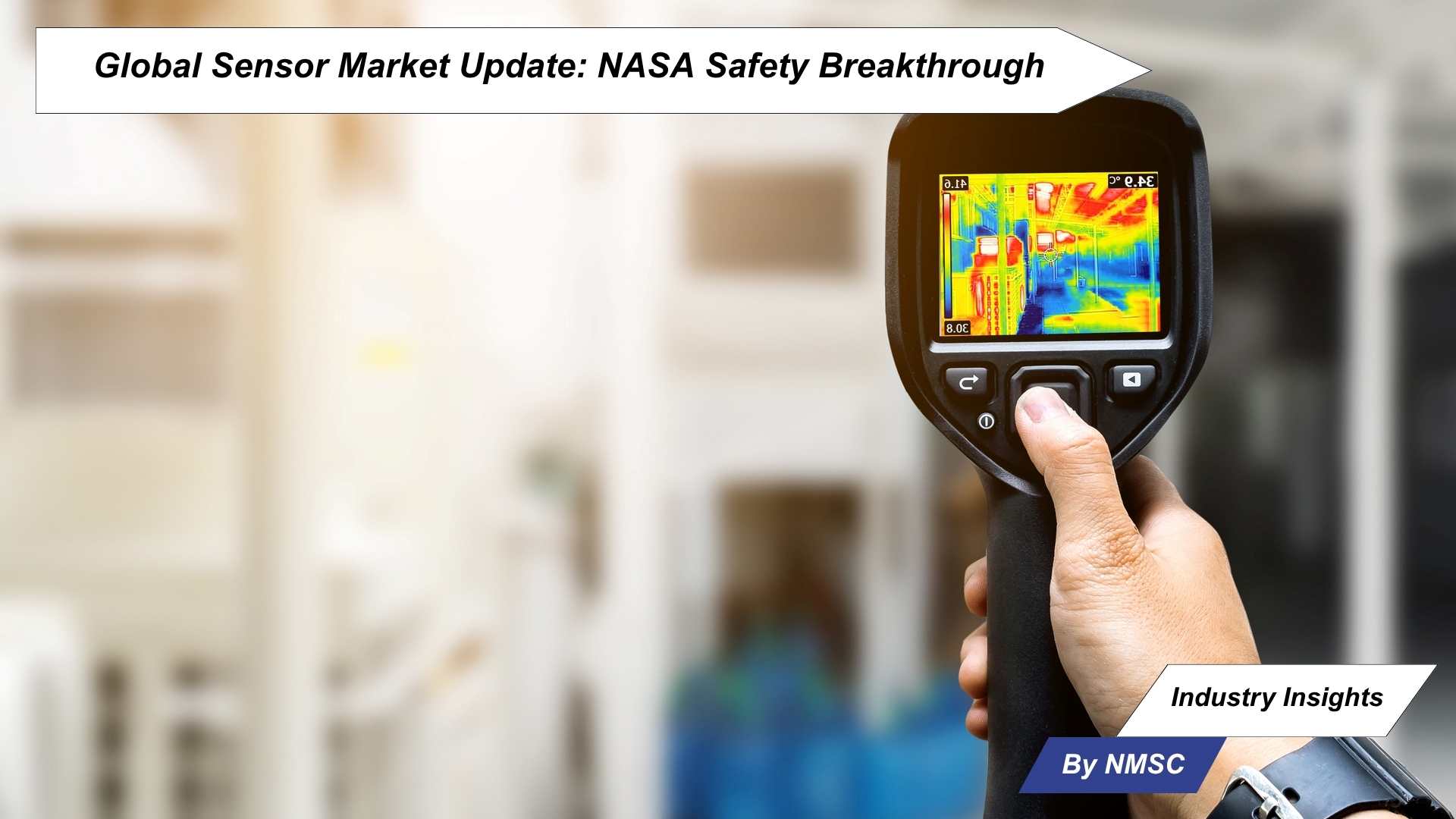
New Thermal Sensor Technology Redefines Wildfire Safety Equipment Market Following NASA Milestone Launch
ANDALUSIA, USA — May 28, 2026 — As severe wildfire seasons pose an escalating threat to emergency personnel and state infrastructures, a critical technology deployment by NASA’s FireSense project marks a transformative milestone in the industrial safety and emergency response landscape. Developed in collaboration with the Alabama Forestry Commission (AFC), the agency’s new low-cost thermal sensor introduces real-time heat telemetry to frontline fire bulldozers, establishing a vital precedent for data-driven protection in high-risk environments.
Addressing Critical Blind Spots in Frontline Fire Equipment
For years, wildland firefighters operating heavy bulldozers have struggled to accurately gauge ambient thermal thresholds. The recent transition to enclosed "envirocabs"—while shielding operators from smoke inhalation—has inadvertently isolated them from environmental heat indicators. This creates a critical risk where intense radiant heat can melt internal electrical wiring, stalling the vehicle and trapping the operator.
NASA's FireSense project addresses this dangerous operational gap with a simplified, highly ruggedized thermal sensor designed to mount directly onto fire dozers. By utilizing off-the-shelf components, the system integrates a commercial thermocouple wired directly to a dashboard-mounted LED interface, providing operators with immediate, visual warning signals when radiant heat passes safe limits.
"NASA’s expertise in this case comes not in the novelty of the instrument itself, but in figuring out how to solve the problem quickly and integrate that technology into their existing system," stated Jennifer Fowler, Science Integration Manager for the Wildland Fires Program at NASA's Langley Research Center.
Key Operational Capabilities at a Glance:
• Radiant Heat Detection: Uses a commercial, kiln-grade thermocouple to measure intense environmental heat beneath the forest canopy.
• Instant Dashboard Telemetry: Features a battery-powered, high-visibility blinking LED indicator that alerts operators to retreat immediately when threshold limits are breached.
• Low-Cost Scalability: Engineered with off-the-shelf industrial components, enabling cost-effective fleet-wide deployment across state agencies.
Market Shift and Strategic Industry Response
The deployment of NASA's sensor technology comes amid a sharp rise in global demand for advanced environmental tracking hardware. Industry experts view the introduction of low-cost, vehicle-integrated telemetry as a catalyst that will redefine standards for heavy industrial protection equipment.
"The introduction of accessible, localized telemetry by public space programs is fundamentally altering safety hardware investment trends," notes Sanyukta Deb, Lead Digital Strategist at Next Move Strategy Consulting. "According to NMSC analysts, the industrial sensor market is seeing an increased emphasis on immediate, edge-computed situational awareness as operators look to replace legacy, unmonitored enclosures with active threat-response systems."
Expanding the Wildland Firefighting Tech Frontier
The successful field integration of these thermal Sensors signifies a broader push toward cooperative technology development between aerospace engineering and localized emergency services. Moving forward, NASA FireSense and the AFC plan to build upon this infrastructure by deploying the Fire Thermal InfraRed Spectrometer (FireTIRS) to measure advanced metrics, including fire convection, flame length, and gas emissions.
Source: NASA
Prepared By: Prakhyat Chowdhury
About the Author
 Sanyukta Deb
— Sanyukta Deb is Digital Marketing Team Lead at Next Move Strategy Consulting, where she has led content strategy and technical SEO for the firm's B2B market research publications for over 2 years. Her editorial process translates NextMSC's primary and secondary research — spanning technology, industrial, and consumer sectors — into commercial narratives, backed by search-intent, keyword, and competitive analysis. She brings 5 years of overall experience in digital marketing and content strategy.
Sanyukta Deb
— Sanyukta Deb is Digital Marketing Team Lead at Next Move Strategy Consulting, where she has led content strategy and technical SEO for the firm's B2B market research publications for over 2 years. Her editorial process translates NextMSC's primary and secondary research — spanning technology, industrial, and consumer sectors — into commercial narratives, backed by search-intent, keyword, and competitive analysis. She brings 5 years of overall experience in digital marketing and content strategy.
About the Reviewer
 Debashree Dey
— Debashree Dey is Assistant Manager at Next Move Strategy Consulting, where she supports cross-vertical market content and communications across diverse industries for 6 years. Her professional background includes senior content writing, communications, and published manuscript authorship, with experience developing audience-focused business narratives and maintaining clear, consistent messaging. Her role supports research-led content development and editorial quality across NextMSC publications.
Debashree Dey
— Debashree Dey is Assistant Manager at Next Move Strategy Consulting, where she supports cross-vertical market content and communications across diverse industries for 6 years. Her professional background includes senior content writing, communications, and published manuscript authorship, with experience developing audience-focused business narratives and maintaining clear, consistent messaging. Her role supports research-led content development and editorial quality across NextMSC publications.
















Add Comment