HKU Hosts 2026 AI Governance Conference Global Outlook
Industry Insights from Next Move Strategy Consulting
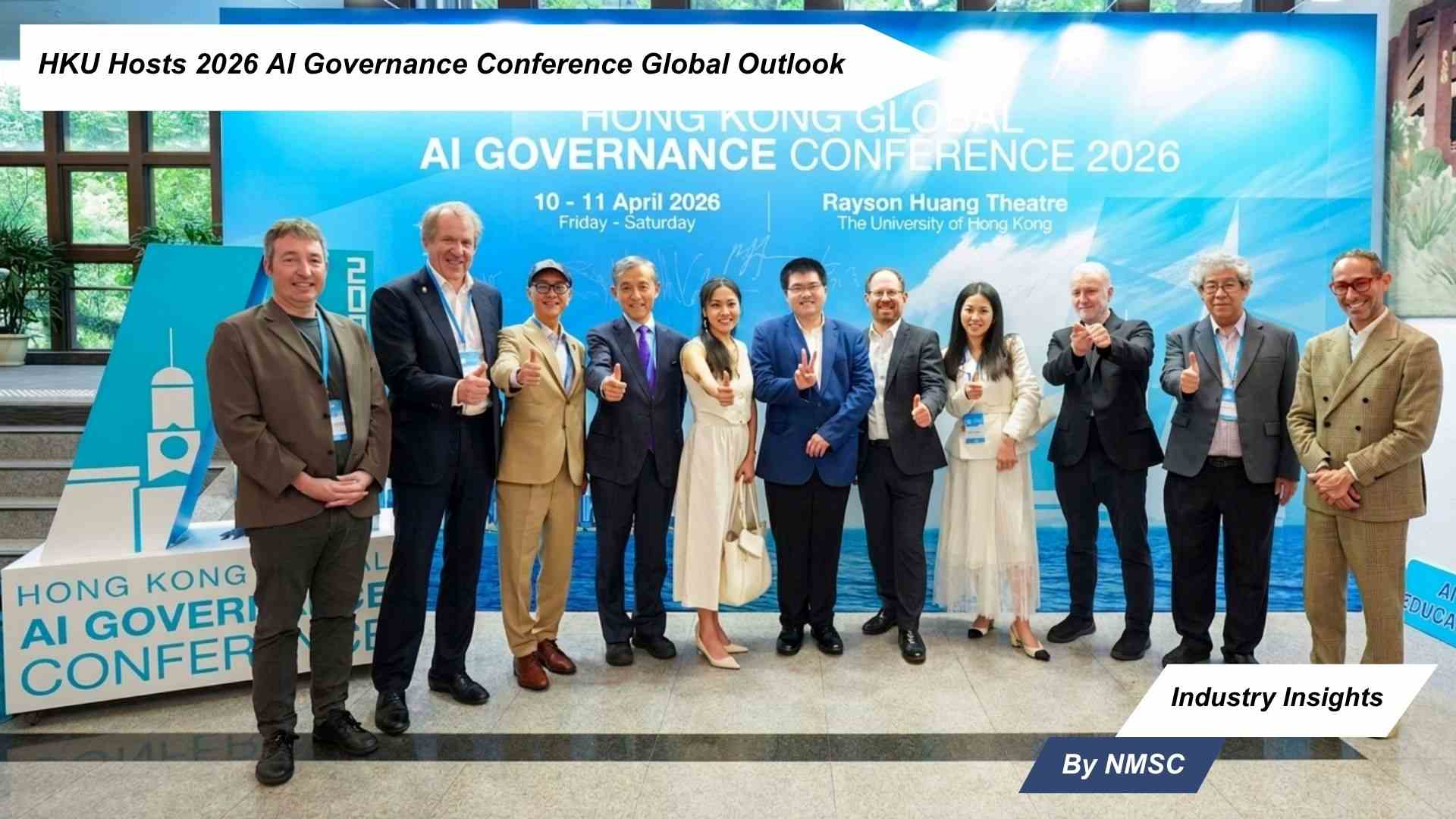
As artificial intelligence continues to advance at an unprecedented pace, the need for effective governance frameworks has become a defining priority for institutions, policymakers, and industry leaders worldwide. The Hong Kong Global AI Governance Conference 2026, hosted by the Musketeer Foundation Institute of Data Science at the University of Hong Kong (HKU IDS), marks a significant milestone in shaping international dialogue around the governance, ethics, and policy challenges of emerging AI systems.
Held on 10–11 April at the Rayson Huang Theatre, the two-day conference convened 38 leading scholars, policymakers, and industry practitioners, drawing more than 400 registrations. Through keynote discussions, fireside conversations, and expert panels, the event examined how governance systems can evolve in parallel with increasingly sophisticated AI technologies.
Advancing Governance Beyond Traditional Models
A central focus of the conference was the growing gap between current regulatory approaches and the rapid pace of AI innovation. Participants explored the limitations of existing frameworks, the complexity of coordinating governance across borders, and the importance of moving beyond narrow geopolitical perspectives when shaping future AI policies.
In his opening remarks, Professor Xiang Zhang, President and Vice-Chancellor of HKU, underscored the urgency of proactive planning. He noted that AI development is accelerating exponentially and highlighted the need to address its social, legal, political, and philosophical implications. He also emphasized the importance of global collaboration to ensure AI develops in a safe, controllable, and beneficial manner.
Key Themes at a Glance:
-
Global Coordination in AI Governance – Addressing the challenges of aligning frameworks across multiple jurisdictions and systems.
-
Ethics and Accountability – Exploring responsibility, explainability, and institutional oversight in AI deployment.
-
Education for AI-Resilient Societies – Highlighting the role of education in preparing communities for AI-driven transformation.
-
Interdisciplinary Collaboration – Encouraging deeper integration between technology, humanities, and policymaking.
-
Cross-Cultural Dialogue – Leveraging Hong Kong’s position as a bridge across diverse intellectual traditions and governance models.
Hong Kong’s Strategic Role in Global AI Dialogue
The conference, initiated by the Centre for Interdisciplinary Dynamics: Ethics, AI and Society (IDEAS) under HKU IDS, demonstrated Hong Kong’s unique ability to convene leading voices from Western institutions, Chinese Mainland universities, and global technology firms. Rather than promoting a single ideological framework, the city was positioned as a platform for open exchange across cultures, systems, and academic traditions.
Mr Ka Chai Leong, benefactor of HKU IDS and Founder of The Musketeers Education and Culture Charitable Foundation, also addressed attendees, noting AI’s rapid advancement and its transformative impact on everyday life. He highlighted the value of initiatives such as IDEAS in advancing meaningful discussions on AI governance.
Distinguished Global Participation
The conference featured contributions from prominent leaders across academia, law, and technology, including Dr Xu Li of SenseTime, Professor Tony Chan, Professor Duncan Ivison, Professor Lan Xue, Professor Cass Sunstein, and Professor Mark Wu, alongside senior representatives from international organisations and policy institutions.
Their discussions reinforced that AI governance is not solely a technical or regulatory matter, but one that requires continuous engagement across disciplines, institutions, and societies.
Next Move Strategy Consulting View on AI Governance Market
According to Next Move Strategy Consulting, the global AI Governance Market is emerging as a critical pillar of the broader AI ecosystem. As enterprises, governments, and academic institutions accelerate AI adoption, demand is expected to rise for governance solutions focused on transparency, compliance, accountability, and risk management.
The increasing need for explainable AI systems, ethical deployment models, and coordinated policy frameworks is likely to drive innovation across governance platforms and advisory services. Conferences such as HKGAGC 2026 highlight how collaboration between academia, policymakers, and industry will shape the next phase of AI governance investment and strategic development.
Redefining Responsible AI Leadership
The Hong Kong Global AI Governance Conference 2026 signals a new chapter in the global conversation on responsible AI development. By bringing together world-class expertise and diverse perspectives, HKU has reinforced the importance of collaborative governance in ensuring that technological progress remains aligned with societal values and long-term public benefit.
As AI systems continue to evolve, initiatives like this conference will play an essential role in building the frameworks, partnerships, and shared understanding needed to guide the future of artificial intelligence responsibly.
Source: Mirage News
Prepared by: Next Move Strategy Consulting
About the Author
 Sanyukta Deb
— Sanyukta Deb is Digital Marketing Team Lead at Next Move Strategy Consulting, where she has led content strategy and technical SEO for the firm's B2B market research publications for over 2 years. Her editorial process translates NextMSC's primary and secondary research — spanning technology, industrial, and consumer sectors — into commercial narratives, backed by search-intent, keyword, and competitive analysis. She brings 5 years of overall experience in digital marketing and content strategy.
About the Reviewer
 Debashree Dey
— Debashree Dey is Assistant Manager at Next Move Strategy Consulting, where she supports cross-vertical market content and communications across diverse industries for 6 years. Her professional background includes senior content writing, communications, and published manuscript authorship, with experience developing audience-focused business narratives and maintaining clear, consistent messaging. Her role supports research-led content development and editorial quality across NextMSC publications.















Add Comment