Humanoid Robot Deployment Reshapes Construction Market
Industry Insights from Next Move Strategy Consulting
First Humanoid Robot Deployment on Construction Site Signals Shift in Global Construction Market Dynamics
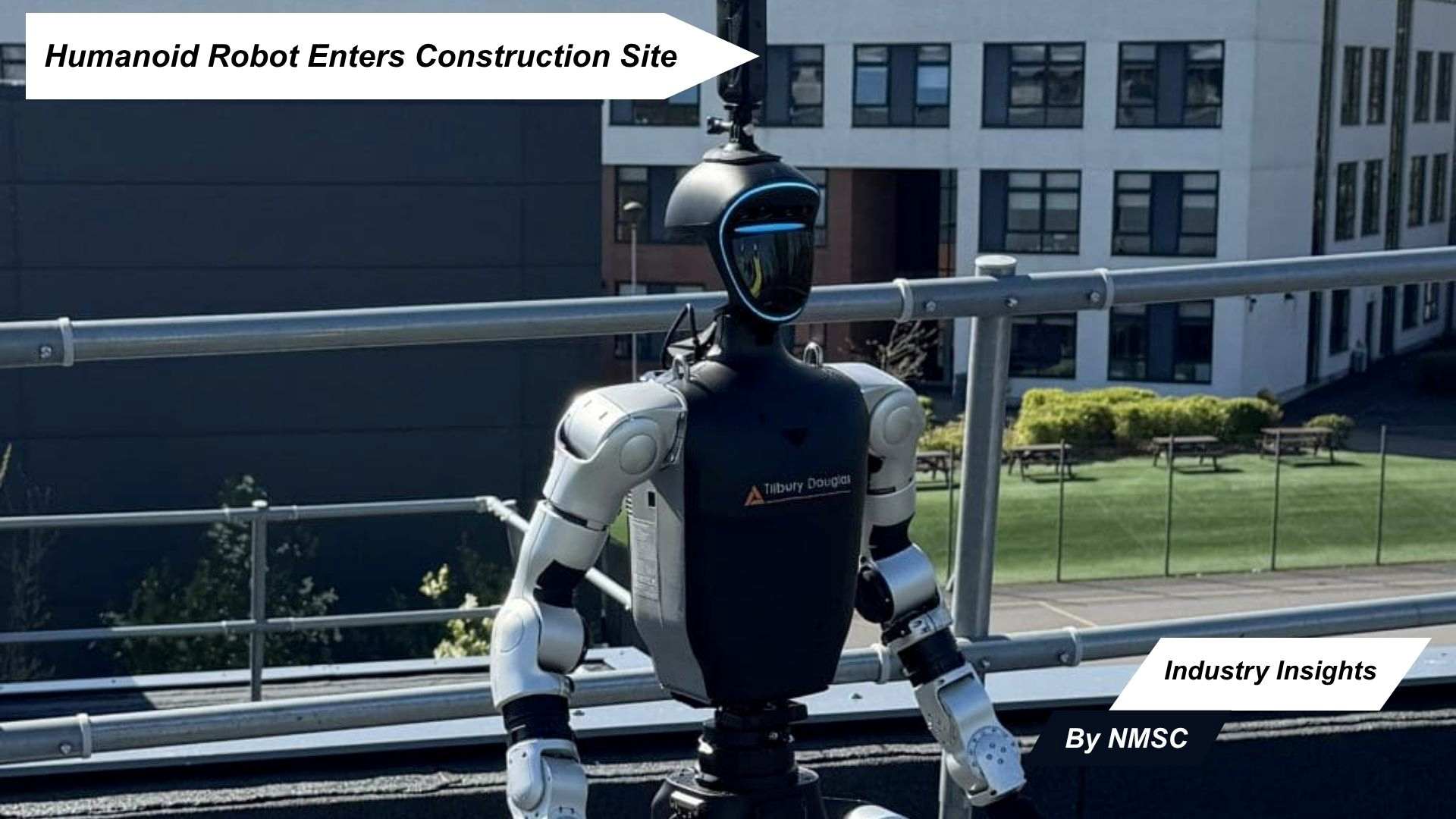
LONDON, United Kingdom — April 24, 2026 — In a landmark development for the construction sector, the first humanoid robot designed to operate directly on active construction sites has been officially launched, marking a pivotal step toward automation in one of the world’s most labor-intensive industries. The move underscores a broader transition toward robotics-driven efficiency as firms confront rising labor shortages, safety concerns, and project delays.
A Breakthrough in Construction Site Automation
The newly introduced humanoid robot has been engineered to assist on-site teams by performing repetitive and physically demanding tasks. Unlike traditional construction robots confined to controlled environments, this innovation is built to function alongside human workers in dynamic, real-world site conditions.
Its deployment reflects a growing urgency within the construction market to modernize workflows and enhance productivity through advanced technologies.
Designed for Real-World Jobsite Integration
The humanoid robot brings a range of capabilities tailored for construction environments, including:
-
Material Handling Support: Assists in transporting heavy materials across the site
-
Precision Task Execution: Performs repetitive actions with consistent accuracy
-
Enhanced Safety Compliance: Reduces human exposure to hazardous tasks
-
Adaptive Mobility: Navigates uneven terrain typical of construction zones
These features position humanoid robotics as a viable complement to human labor, rather than a replacement, particularly in high-risk or labor-scarce scenarios.
Industry Reaction and Market Implications
The introduction has drawn significant attention from construction firms and technology providers alike, as stakeholders evaluate the long-term implications for workforce models and capital investment.
According to NMSC analysts, the integration of humanoid robots into construction workflows could accelerate the adoption of automation technologies across both developed and emerging markets. “This development represents a structural inflection point,” notes a senior analyst at Next Move Strategy Consulting. “Our research indicates that robotics adoption in construction is moving from experimental phases to early commercialization, driven by measurable gains in safety and efficiency.”
Addressing Labor Gaps and Productivity Pressures
The construction industry has long grappled with skilled labor shortages and rising operational costs. The deployment of humanoid robots offers a potential solution by augmenting human capabilities and ensuring continuity in project timelines.
As infrastructure demand grows globally, particularly in urbanizing regions, such innovations are expected to play a critical role in meeting project delivery expectations without compromising safety standards.
Redefining the Future of Construction
The launch of the first humanoid robot on a live construction site signals more than a technological milestone—it reflects a broader transformation in how construction projects are executed. With increasing emphasis on automation, digitalization, and workforce augmentation, the construction market is entering a new phase of evolution.
NMSC analysts suggest that companies investing early in robotics integration are likely to gain a competitive edge, particularly as regulatory frameworks and technology ecosystems continue to mature.
By Joydeep Dey
Source: PBC Today
About the Author
 Sanyukta Deb
— Sanyukta Deb is Digital Marketing Team Lead at Next Move Strategy Consulting, where she has led content strategy and technical SEO for the firm's B2B market research publications for over 2 years. Her editorial process translates NextMSC's primary and secondary research — spanning technology, industrial, and consumer sectors — into commercial narratives, backed by search-intent, keyword, and competitive analysis. She brings 5 years of overall experience in digital marketing and content strategy.
Sanyukta Deb
— Sanyukta Deb is Digital Marketing Team Lead at Next Move Strategy Consulting, where she has led content strategy and technical SEO for the firm's B2B market research publications for over 2 years. Her editorial process translates NextMSC's primary and secondary research — spanning technology, industrial, and consumer sectors — into commercial narratives, backed by search-intent, keyword, and competitive analysis. She brings 5 years of overall experience in digital marketing and content strategy.
About the Reviewer
 Debashree Dey
— Debashree Dey is Assistant Manager at Next Move Strategy Consulting, where she supports cross-vertical market content and communications across diverse industries for 6 years. Her professional background includes senior content writing, communications, and published manuscript authorship, with experience developing audience-focused business narratives and maintaining clear, consistent messaging. Her role supports research-led content development and editorial quality across NextMSC publications.
Debashree Dey
— Debashree Dey is Assistant Manager at Next Move Strategy Consulting, where she supports cross-vertical market content and communications across diverse industries for 6 years. Her professional background includes senior content writing, communications, and published manuscript authorship, with experience developing audience-focused business narratives and maintaining clear, consistent messaging. Her role supports research-led content development and editorial quality across NextMSC publications.

















Add Comment