Hydrogen Hubs Market: Policy Shifts, Regional Momentum and Strategic Imperatives
Lede
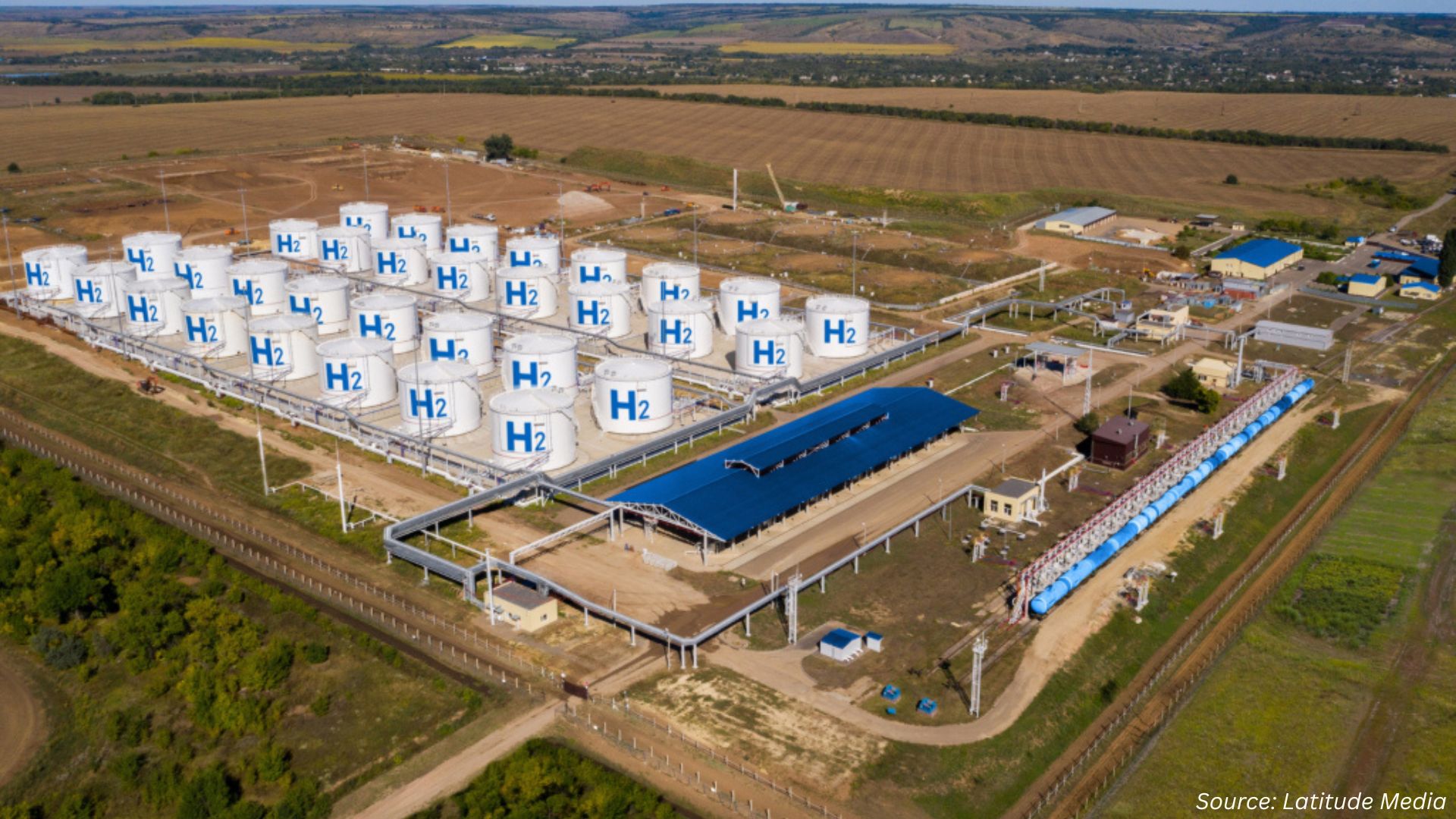
Three recent developments in the global Hydrogen Hubs Market the potential cancellation of U.S. federal funding for regional hubs, India’s strategic designation of three major ports as official green hydrogen hubs, and significant private investment in a UK industrial decarbonization project collectively map a market navigating a pivotal transition. They illustrate a stark divergence between policy-driven uncertainty and the focused pursuit of commercially viable, infrastructure-led ecosystems. These events highlight that strategic value is no longer defined solely by ambition but is increasingly determined by proximity to demand, financial resilience, and the ability to deliver tangible industrial decarbonization.
1. U.S. Funding Cuts Rattle Industry Confidence
The U.S. Department of Energy has rescinded $2.2 billion in awards to two of its seven federally funded regional hydrogen hubs, casting significant uncertainty over the future of the entire $24 billion program. The terminated projects in California and the Pacific Northwest were uniquely designed to focus exclusively on renewable hydrogen. A subsequent list indicates the administration is reviewing funding for all hubs, including those in politically favorable regions like Texas and Appalachia.
The move has introduced profound instability into a sector dependent on long-term, capital-intensive planning. While some hubs, like California's ARCHES, may turn to state-level funding, the cuts signal a chilling effect on private investment and threaten U.S. competitiveness as other nations aggressively advance their hydrogen strategies. Analysts note the immediate impact may be muted by pre-existing challenges in generating sufficient hydrogen demand, but the policy reversal undermines the foundational public-private partnership model essential for such large-scale infrastructure.
2. India Advances Port-Centric Strategy
In stark contrast to the U.S. uncertainty, India has formalized a focused, infrastructure-led approach by designating three major ports—Deendayal (Gujarat), V.O. Chidambaranar (Tamil Nadu), and Paradip (Odisha)—as official Green Hydrogen Hubs under its National Green Hydrogen Mission. This strategy leverages existing maritime logistics, industrial clusters, and export capabilities to create integrated hydrogen ecosystems.
Ports are viewed as natural catalysts, serving as multimodal nodes for production, consumption, and international trade of green hydrogen and its derivatives like ammonia. This recognition is designed to catalyze industrial participation, attract investment, and advance India's goals of becoming a global green hydrogen exporter and achieving net-zero emissions by 2070. The move exemplifies a pragmatic, cluster-based development model that prioritizes location and existing industrial activity over broad, untested regional plans.
3. Private Capital Accelerates UK Industrial Decarbonization
Demonstrating a third pathway, substantial private investment is fast-tracking a hub centered on clear industrial demand. UK asset manager Schroders Greencoat has acquired a majority stake in developer Meld Energy to accelerate construction of the £250 million Saltend Green Hydrogen Hub in Hull. The project will deploy a 100MW electrolyzer to produce hydrogen specifically for decarbonizing industries in the Humber region, one of the UK's most emissions-intensive clusters.
This investment highlights a growing trend: private capital is increasingly confident in backing projects with defined offtakers and a clear decarbonization mandate. The Saltend hub is not a broad regional ecosystem but a targeted solution for heavy industry, emphasizing that commercial viability and proximity to demand are becoming more critical strategic drivers than the scale of geographic ambition.
4. Next Move Strategy Consulting – Opinion, Impact and Near-Term Prospects
Next Move Strategy Consulting interprets these divergent developments as clear signals of a market maturing beyond initial hype. Strategic value is rapidly shifting from grand, policy-dependent national plans toward resilient, demand-driven projects with sound commercial fundamentals.
-
The End of “Field of Dreams” Planning: The assumption that building large-scale supply will automatically create demand is being proven flawed. The most resilient hub strategies, as seen in India and the UK, are now demand-led, anchored to ports, industrial clusters, or specific hard-to-abate sectors.
-
Financial Resilience as a Core Competency: The U.S. funding instability underscores that reliance on a single government funding stream is a critical vulnerability. Future successful hubs will demonstrate financial de-risking through blended capital stacks combining private investment, state/regional support, and corporate offtake agreements.
-
Infrastructure Convergence as a Multiplier: Hubs colocated with major ports (India) or dense industrial zones (UK) unlock inherent advantages. They minimize the cost and complexity of hydrogen transport and leverage existing utilities, permitting pathways, and skilled workforces, accelerating time-to-market.
-
Strategic Differentiation is Key: The “one-size-fits-all” hub model is fading. Winning projects will articulate a clear strategic identity—whether as an export gateway (India), a heavy industry decarbonization anchor (UK), or a renewables integration platform.
-
Investment Signals are Shifting: Investor interest is pivoting from projects with the largest capacity ambitions to those with the most bankable contracts, credible management teams, and proven technology partnerships. Private capital is filling the vacuum left by retreating or inconsistent public funding.
5. Practical Suggestions for Stakeholders
-
Project Developers: Pivot from grant-focused proposals to business models anchored by firm offtake agreements with creditworthy industrial partners. Prioritize sites with existing infrastructure (ports, pipelines, industrial parks).
-
Industrial Offtakers (Chemical, Steel, Refining): Proactively engage in shaping hub development in your region to ensure it meets your specific technical, volume, and cost requirements for decarbonization.
-
Investors & Financiers: Develop rigorous due diligence frameworks that stress-test hub projects against policy volatility, offtaker credit risk, and hydrogen cost competitiveness. Favor projects with phased, scalable deployment.
-
Policymakers: Provide long-term regulatory certainty (e.g., clean hydrogen definitions, carbon pricing) rather than only capital grants. Support enabling infrastructure (pipelines, port upgrades) that benefits multiple users and reduces overall system cost.
-
Technology & Equipment Providers: Align offerings with the need for modular, scalable systems that can be deployed in phases to match demand growth, reducing developers' initial capital outlay.
Conclusion
The Hydrogen Hubs Market is undergoing a necessary and challenging transition from a phase of expansive policy ambition to one of commercial pragmatism. The contrasting paths of the U.S., India, and the UK reveal that sustainable progress is less dependent on the sheer volume of public funding and more on strategic alignment with real-world demand, robust multi-source financing, and the strategic advantages of location. The hubs that will define the market's future are those that solve a specific, urgent decarbonization problem for a dedicated customer base, proving that hydrogen is not just a fuel of the future, but a viable industrial commodity today.
About Next Move Strategy Consulting:
Next Move Strategy Consulting is a premier market research and management consulting firm that has been committed to providing strategically analysed well documented latest research reports to its clients. The research industry is flooded with many firms to choose from, what makes NMSC different from the rest is its top-quality research and the obsession of turning data into knowledge by dissecting every bit of it and providing fact-based research recommendation that is supported by information collected from over 500 million websites, paid databases, industry journals and one on one consultations with industry experts across a diverse range of industry sectors. The high-quality customized research reports with actionable insights and excellent end-to-end customer service help our clients to take critical business decisions that enables them to move beyond time and have competitive edge in the industry.
We have been servicing over 1000 customers globally that includes 90% of the Fortune 500 companies over a decade. Our analysts are constantly tracking various high growth markets and identifying hidden opportunities in each sector or the industry. We provide one of the industry’s best quality syndicate as well as custom research reports across 10 different industry verticals. We are committed to deliver high quality research solutions in accordance to your business needs. Our industry standard delivery solutions that ranges from the pre consultation to after-sales services, provide an excellent client experience and ensure right strategic decision making for businesses.
For more information please contact:
Next Move Strategy Consulting
5th Floor 867 Boylston St, STE 500,
Boston, MA 02116, U.S.
E-Mail: [email protected]
Direct: +1 857 758 5017
Website: www.nextmsc.com
About the Author
 Joydeep Dey
— Joydeep Dey is a content writer and analyst fueled by creativity, research, and continuous learning. He combines compelling storytelling with market insights to turn complex information into engaging, impactful content. Passionate about emerging trends, digital strategy, and innovation-driven communication, he believes curiosity and consistent growth are key to creating meaningful influence in every project.
Joydeep Dey
— Joydeep Dey is a content writer and analyst fueled by creativity, research, and continuous learning. He combines compelling storytelling with market insights to turn complex information into engaging, impactful content. Passionate about emerging trends, digital strategy, and innovation-driven communication, he believes curiosity and consistent growth are key to creating meaningful influence in every project.
About the Reviewer
 Sanyukta Deb
— Sanyukta Deb is Digital Marketing Team Lead at Next Move Strategy Consulting, where she has led content strategy and technical SEO for the firm's B2B market research publications for over 2 years. Her editorial process translates NextMSC's primary and secondary research — spanning technology, industrial, and consumer sectors — into commercial narratives, backed by search-intent, keyword, and competitive analysis. She brings 5 years of overall experience in digital marketing and content strategy.
Sanyukta Deb
— Sanyukta Deb is Digital Marketing Team Lead at Next Move Strategy Consulting, where she has led content strategy and technical SEO for the firm's B2B market research publications for over 2 years. Her editorial process translates NextMSC's primary and secondary research — spanning technology, industrial, and consumer sectors — into commercial narratives, backed by search-intent, keyword, and competitive analysis. She brings 5 years of overall experience in digital marketing and content strategy.


















Add Comment