Renewable Energy Market Sees Record Investment Surge
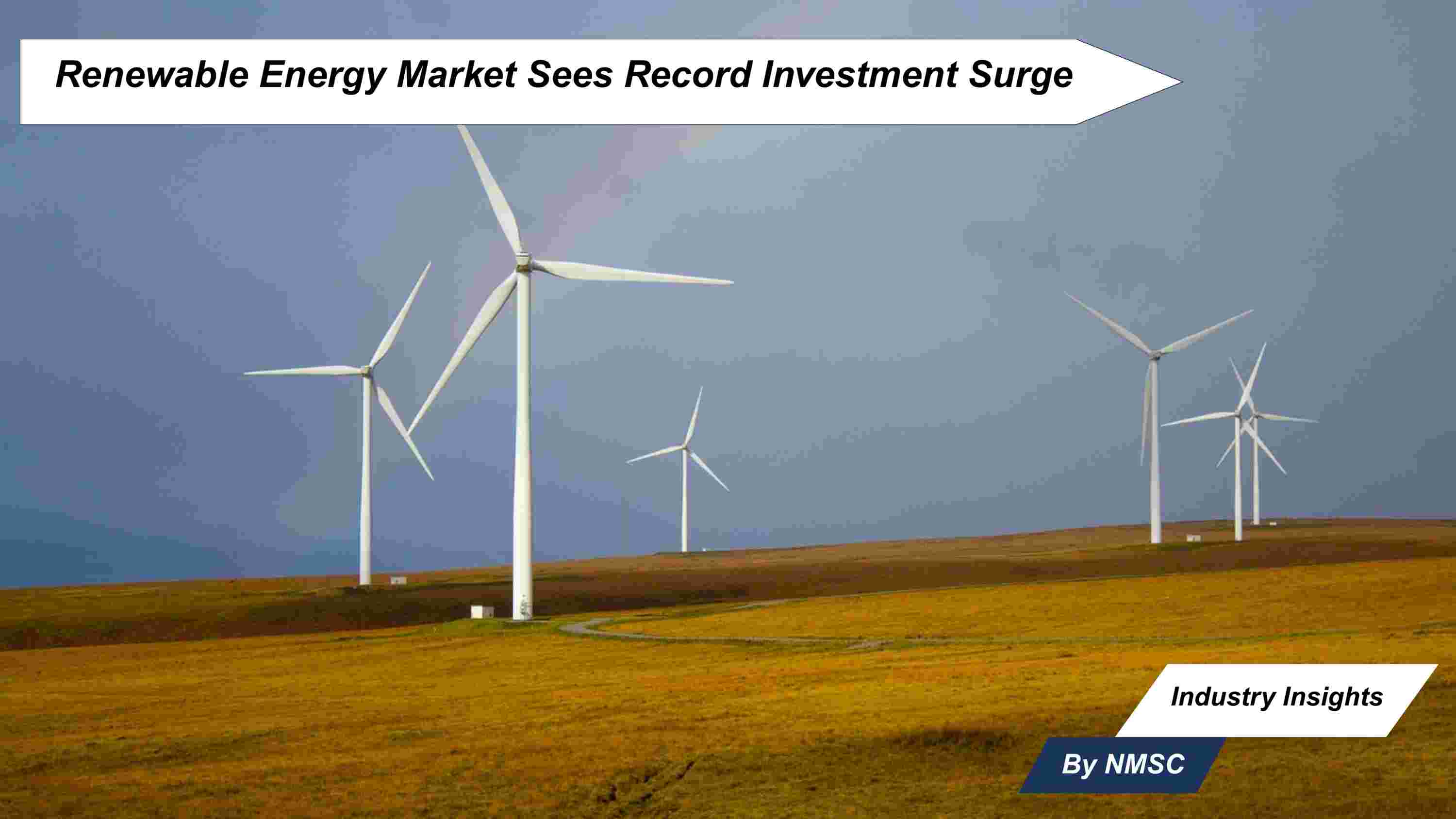
Renewable Energy Investment in Developing Markets Hits Record $140 Billion in 2025, BNEF Reports
NEW YORK, United States September 17, 2026, the Capital deployed in renewable energy projects across low- and middle-income economies reached a record $140 billion in 2025, with domestic financing now accounting for the majority of funding, according to a new analysis published by BloombergNEF on September 16, 2026. The findings underscore a structural shift in how the global Renewable Energy Market is being financed, with middle-income nations increasingly self-funding their own clean energy transitions rather than relying on external capital flows.
The BloombergNEF report, titled Renewables Go Local in Developing Markets, reveals that a cumulative $412 billion was invested in new-build utility-scale renewable projects across low- and middle-income economies excluding mainland China between 2016 and 2025. Of the 2025 total, 68% was sourced from domestic capital providers within those same economies, marking a decisive departure from the historically dominant north-to-south financing model.
India, Brazil, and Turkey collectively absorbed 52% of all disclosed renewable utility-scale investment over the 2016–2025 period, with India alone accounting for 29% of the total. Private investors supplied approximately 85% of asset finance across these markets, while development finance institutions contributed around 25% in low-income economies. The European Union provided more than 33% of all foreign asset finance, with the United States ranking as the largest individual national provider.
The global Renewable Energy Market was valued at USD 856.08 billion in 2021 and is projected to reach USD 2,025.94 billion by 2030, expanding at a compound annual growth rate (CAGR) of 9.6% from 2022 to 2030, according to Next Move Strategy Consulting.
Key Highlights:
-
Record domestic financing: 68% of all renewable energy investment in low- and middle-income economies in 2025 was sourced from within those markets, signaling growing financial self-sufficiency in the clean energy transition.
-
Concentrated market leadership: India, Brazil, and Turkey received 52% of disclosed utility-scale renewable investment over the past decade, with India alone commanding a 29% share reflecting the outsized role of large emerging economies in driving global clean energy deployment.
-
Private capital dominance: Private investors supplied approximately 85% of asset finance in low- and middle-income markets, underscoring the commercial viability of renewable energy projects in these regions and reducing dependence on concessional or development finance.
-
Middle-income economies as capital exporters: Six of the ten largest provider markets globally are middle-income economies, supplying approximately 48% of total disclosed asset finance a reversal of the traditional assumption that developing nations are solely recipients of clean energy capital.
Analyst Insight:
According to analysts at Next Move Strategy Consulting, the shift toward domestic financing in low- and middle-income renewable energy markets represents a maturation of the sector that carries significant long-term implications for global capital allocation. The growing share of locally sourced investment reduces currency and sovereign risk exposure for project developers, potentially accelerating project timelines and improving bankability across emerging market portfolios.
NMSC analysts further note that the concentration of investment in India, Brazil, and Turkey reflects the convergence of favorable policy frameworks, declining technology costs, and expanding domestic financial ecosystems. As these markets deepen their capital markets and institutional investor bases, the renewable energy sector in developing economies is increasingly positioned to attract sustained, large-scale private investment independent of multilateral development bank support a trend that aligns with the broader trajectory of the global renewable energy market toward its projected USD 2,025.94 billion valuation by 2030.
Industry Outlook:
The BloombergNEF findings signal a fundamental reorientation in the architecture of global renewable energy finance. As domestic capital markets in middle-income economies mature and private sector participation deepens, the renewable energy sector is becoming less reliant on traditional north-south aid and concessional lending structures. This evolution is expected to accelerate deployment timelines, reduce financing costs, and broaden the geographic distribution of clean energy capacity additions.
For the broader renewable energy industry, the growing role of domestic and private capital in developing markets introduces new competitive dynamics for international developers, equipment manufacturers, and financial institutions. Nations that successfully cultivate deep local financing ecosystems as India, Brazil, and Turkey have demonstrated are likely to emerge as dominant regional hubs for renewable energy manufacturing, project development, and technology export in the years ahead.
Source: BloombergNEF
For More Information: Download FREE Sample on Renewable Energy Market Report
Prepared By: Sanyukta Deb
About the Author
 Sanyukta Deb
— Sanyukta Deb is Digital Marketing Team Lead at Next Move Strategy Consulting, where she has led content strategy and technical SEO for the firm's B2B market research publications for over 2 years. Her editorial process translates NextMSC's primary and secondary research — spanning technology, industrial, and consumer sectors — into commercial narratives, backed by search-intent, keyword, and competitive analysis. She brings 5 years of overall experience in digital marketing and content strategy.
Sanyukta Deb
— Sanyukta Deb is Digital Marketing Team Lead at Next Move Strategy Consulting, where she has led content strategy and technical SEO for the firm's B2B market research publications for over 2 years. Her editorial process translates NextMSC's primary and secondary research — spanning technology, industrial, and consumer sectors — into commercial narratives, backed by search-intent, keyword, and competitive analysis. She brings 5 years of overall experience in digital marketing and content strategy.
About the Reviewer
 Debashree Dey
— Debashree Dey is Assistant Manager at Next Move Strategy Consulting, where she supports cross-vertical market content and communications across diverse industries for 6 years. Her professional background includes senior content writing, communications, and published manuscript authorship, with experience developing audience-focused business narratives and maintaining clear, consistent messaging. Her role supports research-led content development and editorial quality across NextMSC publications.
Debashree Dey
— Debashree Dey is Assistant Manager at Next Move Strategy Consulting, where she supports cross-vertical market content and communications across diverse industries for 6 years. Her professional background includes senior content writing, communications, and published manuscript authorship, with experience developing audience-focused business narratives and maintaining clear, consistent messaging. Her role supports research-led content development and editorial quality across NextMSC publications.
















Add Comment