ILO Flags 840,000 Deaths as Honeywell and 3M Overhaul Workplace Safety
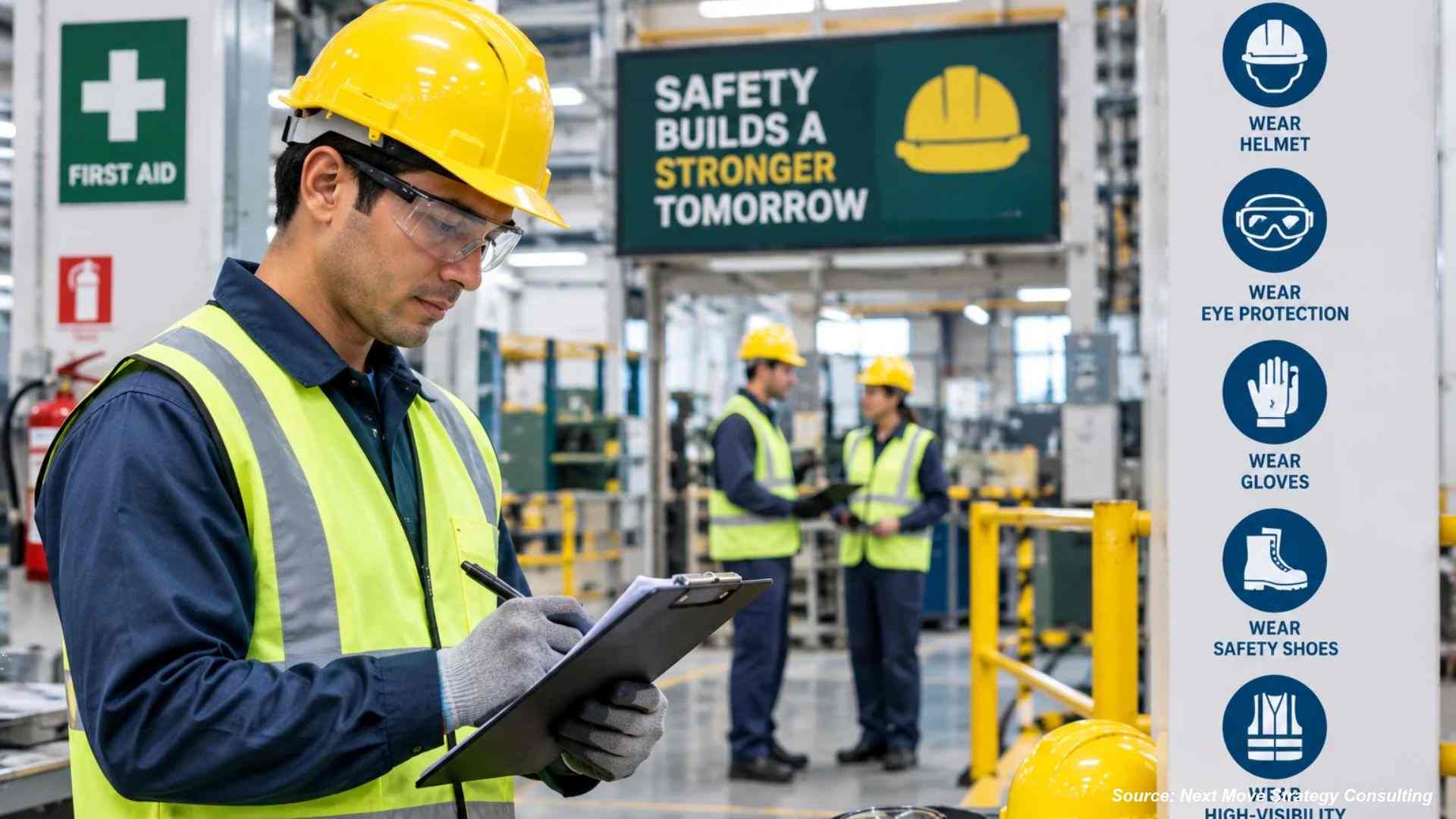
ILO Flags 840,000 Annual Deaths from Psychosocial Hazards as Honeywell and 3M Commit Billions to Workplace Safety Overhaul
On April 28, 2026 — the International Labour Organization's World Day for Safety and Health at Work — the ILO released a landmark report revealing that psychosocial risks at work are now responsible for an estimated 840,000 deaths per year globally, a figure that reframes occupational hazard management well beyond the traditional domain of physical protective equipment. The ILO's 2026 theme — "Let's Ensure a Healthy Psychosocial Working Environment" — signals a structural expansion of what constitutes a workplace safety obligation, encompassing workload design, role clarity, autonomy, and organizational management practices alongside conventional physical hazards. This regulatory and institutional shift is arriving precisely as the commercial market for workplace safety solutions accelerates. According to Next Move Strategy Consulting's Workplace Safety Market report, the global workplace safety market is projected to reach USD 35.72 billion by 2030, growing at a CAGR of 13.2% from 2024 to 2030 — a trajectory underpinned by converging regulatory pressure, industrial expansion in high-hazard sectors, and the rapid commercialization of connected safety technology.
The ILO's broader occupational safety data reinforces the scale of the unresolved challenge. The organization estimates that nearly 3 million workers die from work-related accidents and diseases each year, while a further 395 million sustain non-fatal work injuries annually. In the United States alone, the National Safety Council estimated that work-related fatalities and injuries cost the nation, employers, and individuals nearly USD 1.2 trillion in 2022, while the U.S. Occupational Safety and Health Administration (OSHA) noted in its January 2026 QuickTakes newsletter that employers pay more than an estimated USD 1 billion per week in direct workers' compensation costs for disabling, non-fatal workplace injuries — a figure drawn from Liberty Mutual's 2025 Workplace Safety Index. These figures collectively define the financial imperative that is converting regulatory compliance from a cost centre into a strategic investment priority for industrial operators worldwide.
For More Information: Download FREE Sample on Workplace Safety Market Report
OSHA's Pending Heat Rule Adds a New Compliance Frontier for Employers
The regulatory environment governing workplace safety is undergoing its most significant structural change in decades. OSHA's proposed "Heat Injury and Illness Prevention in Outdoor and Indoor Work Settings" rule — first introduced in August 2024 — remains pending finalization as of mid-2026, but its compliance implications are already reshaping employer procurement decisions. If enacted, the rule would represent the first federal standard to specifically address heat-related hazards, imposing nationwide obligations on employers to develop heat injury and illness prevention plans, implement engineering controls at an initial heat trigger of 80°F, and mandate paid 15-minute rest breaks every two hours when temperatures reach the high-heat trigger of 90°F.
A DLA Piper analysis published on April 6, 2026, authored by Meaghan Colligan Hembree, Gwendolyn Keyes, Michael Massiatte, and Jamie Ehrlich, noted that OSHA's existing National Emphasis Program on heat-related hazards — extended to April 8, 2026 — has continued to provide interim enforcement guidance while the proposed rule remains on the Office of Information and Regulatory Affairs' Unified Agenda. The practical effect is that demand for heat-monitoring wearables, environmental sensors, and real-time alert systems is rising ahead of any formal rulemaking deadline, as employers in construction, agriculture, and manufacturing seek to demonstrate proactive compliance postures.
In fiscal year 2024, OSHA's Compliance Assistance Specialists and field staff conducted nearly 7,800 outreach activities reaching more than 2.3 million people — a scale of engagement that underscores the agency's intent to embed safety culture at the operational level, not merely enforce it through penalty.
Honeywell's Safety Suite 2.0 Redefines Connected Gas Detection for Industrial Operations
On June 2, 2026, Honeywell (NASDAQ: HON) announced the launch of Safety Suite 2.0, an enhanced version of its connected safety software platform designed to provide real-time visibility into portable gas detection device fleets across refineries, chemical plants, utilities, and first responder operations. The platform integrates customizable dashboards, real-time gas detector readings, historical alarm event archives, and automated device onboarding workflows — enabling safety managers to shift from reactive incident response to pattern-based, predictive hazard management.
"Safety Suite empowers leaders to detect potential hazards early, prioritize corrective actions and continuously improve safety performance to protect workers on the job," said Armando Pazos, President, Honeywell Industrial Measurement and Control, in the company's June 2, 2026 press release. "When operations teams can connect insights from historical trends and real-time metrics, organizations can shift from reactive responses to a proactive, safety-first approach."
The commercial rationale for the platform is anchored in a concrete cost figure: responding to gas leaks costs U.S. fire departments more than USD 500 million in a single year, according to data cited by Honeywell in the same press release. Safety Suite 2.0 directly addresses this exposure by enabling operators to monitor worker gas exposure in real time across multiple facilities from a centralized interface — a capability that converts safety compliance from a site-level manual process into a fleet-wide, data-driven operation.
3M's USD 1.95 Billion Joint Venture Signals Consolidation in Fire and Industrial Safety
On March 19, 2026, 3M (NYSE: MMM) announced a definitive agreement to acquire Madison Fire & Rescue in partnership with Bain Capital for USD 1.95 billion, forming a new joint venture that combines 3M's Scott Safety self-contained breathing apparatus (SCBA) business with Madison's portfolio of rescue technology and fire suppression brands — including Holmatro, Amkus, Task Force Tips, and Waterax. Under the terms of the transaction, 3M will own 50.1% of the new entity and receive USD 700 million in cash proceeds upon closing, with Bain Capital holding the remaining 49.9%. The transaction is expected to close in the second half of 2026.
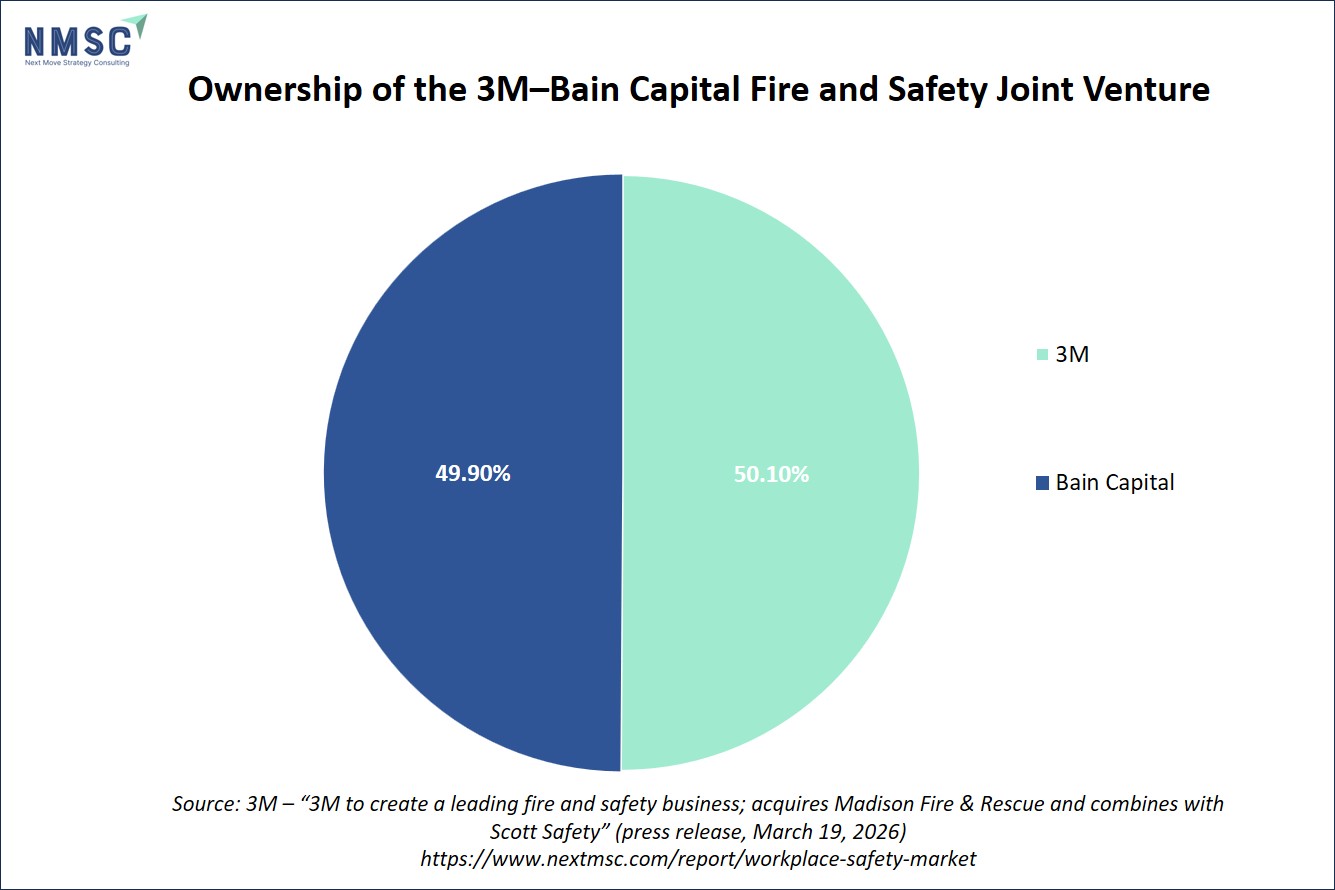
"This strategic transaction broadens 3M's safety portfolio, one of our priority verticals, by expanding our market reach and building scale for future growth," said William Brown, Chairman and CEO of 3M, in the company's March 19, 2026 press release. "It positions us to enhance margins and generate strong free cash flow, and enables continued investment in innovations that create value for customers and shareholders."
The transaction is the most significant consolidation event in the workplace safety sector in 2026 to date, and it reflects a broader industry pattern: leading safety equipment manufacturers are moving from single-product PPE supply toward integrated, multi-hazard safety ecosystems that serve firefighters, first responders, and industrial workers through a unified portfolio.
Safety Technology Adoption: From Pilot Projects to Proven ROI
The National Safety Council's Work to Zero initiative published a detailed assessment of emerging workplace safety technologies on February 27, 2026, authored by Kenna Stanley, Senior Research Associate at the NSC. The report identified artificial intelligence, digital EHS management systems, immersive training (VR/AR), industrial wearables, robotics, and sensor-based monitoring as the six technology categories with the strongest near-term potential to reduce serious incidents and fatalities.
The NSC's Work to Zero Safety Technology 2024 report found that 83% of employees expressed openness to trying new safety technologies, with consideration, testing, and use of safety technologies increasing significantly between 2020 and 2023. A case study conducted with an energy sector company demonstrated that deploying drones and crawling robots to inspect high-pressure boiler systems eliminated more than 60,000 hours of high-risk work and delivered at least USD 10 million in production- and safety-related improvements — a result that quantifies the return on investment available when hazardous human exposure is replaced by autonomous inspection technology.
More than 5,000 workers lose their lives on the job each year in the United States, and while overall injury rates have declined over time, serious incidents and fatalities have not followed the same downward trend — a gap that the NSC identifies as the primary justification for accelerating technology-enabled hazard prevention.
Market Segmentation and Regional Dynamics
According to NextMSC primary research and analysis, the workplace safety market is segmented by components (hardware, software, and service), products (safety helmets, footwear, hearing protection, sensors, control products, alarm systems, motors, and lighting products), services (wired and wireless), company size (SMEs and large enterprises), and end-users (oil & gas, mining, chemical & pharmaceutical, nuclear plants, and others).
North America holds the dominant share of the workplace safety market, driven by the concentration of major technology vendors — including IBM, Honeywell, and Rockwell Automation — and by the scale of mining activity across the region. According to the World Gold Council, North American countries collectively produced 491.2 tonnes of gold in 2022, with Canada alone ranking fourth globally at 194.5 tonnes — a production base that sustains persistent demand for PPE, gas detection, and environmental monitoring equipment.
Asia-Pacific is the fastest-growing regional segment, propelled by the scale of underground mining operations in China — which hosts approximately 1,500 major mining sectors, with 75% operating underground — and by government-led digitization initiatives such as India's Director General of Mines Safety (DGMS) programme, which introduced digital monitoring and streamlined safety approvals for the country's mining industry in January 2023.
Competitive Landscape: Key Developments in 2026
Major Workplace Safety Market Competitive Developments (March–June 2026)
|
Company |
Event |
Date |
Strategic Significance |
|
Honeywell International Inc. |
Launched Safety Suite 2.0 — connected gas detection software platform for refineries, chemical plants, utilities, and first responders |
June 2, 2026 |
Shifts Honeywell's safety offering from hardware-only PPE to a recurring software-and-data model; addresses USD 500M+ annual gas leak cost burden on fire departments |
|
3M Company |
Announced USD 1.95B acquisition of Madison Fire & Rescue; formed joint venture with Bain Capital combining Scott Safety SCBA with Madison's Holmatro, Amkus, Task Force Tips, and Waterax brands |
March 19, 2026 |
Creates a vertically integrated fire and industrial safety platform; 3M retains 50.1% ownership and receives USD 700M cash proceeds |
|
Siemens AG |
Launched FDA261 and FDA262 digitalized aspirating smoke detectors with dual wavelength technology for early fire detection in warehouses, mining areas, and factories |
January 2023 (reference) |
Expands Siemens' critical infrastructure protection portfolio into high-hazard industrial environments |
NMSC Strategic Perspective: Three Structural Shifts Redefining the Market Through 2030
NextMSC primary research and analysis identifies three structural shifts that will determine which segments and geographies capture disproportionate share of the USD 35.72 billion market by 2030.
1. The Software Layer Becomes the Margin Engine
Honeywell's Safety Suite 2.0 launch is emblematic of a broader transition underway across the competitive landscape: hardware-centric safety vendors are building recurring software and data subscription layers on top of their physical product portfolios. This shift is significant because software-based safety management systems — covering compliance tracking, real-time exposure monitoring, incident reporting, and predictive analytics — carry structurally higher gross margins than PPE hardware and create customer lock-in through data continuity. NMSC analysis indicates that the software component within the workplace safety market is positioned to grow at a rate materially above the overall market CAGR of 13.2%, as large enterprises in oil & gas, chemical, and pharmaceutical sectors prioritize integrated digital safety ecosystems over point-solution hardware procurement.
2. Psychosocial Risk Regulation Opens a New Addressable Market
The ILO's April 2026 designation of psychosocial hazards as a primary occupational safety concern — backed by the 840,000 annual death figure — is not merely a public health statement; it is a regulatory signal that will translate into enforceable employer obligations across ILO member states over the coming legislative cycle. For the workplace safety market, this creates a new addressable segment in EHS software, digital training platforms, and organizational risk assessment tools that did not previously exist within the traditional PPE and physical hazard management framework. Vendors with established EHS software capabilities — including IBM, HCL Technologies, and Wolters Kluwer — are best positioned to capture this emerging demand.
3. Mining Sector Expansion in Asia-Pacific Sustains Hardware Demand
The United Nations Environment Programme's projection that global fossil fuel production will increase by 110% by 2030 — cited in the NMSC report — directly translates into sustained demand for physical safety equipment in the mining, oil & gas, and chemical sectors that collectively represent the largest end-user segments of the workplace safety market. Asia-Pacific's expanding underground mining base, combined with government-mandated safety digitization programmes in India and China, means that the region's hardware procurement cycle will remain robust even as software adoption accelerates in North America and Europe. NMSC analysis projects that Asia-Pacific will narrow the regional market share gap with North America over the 2024–2030 forecast period, driven by this dual hardware-and-digital demand dynamic.
Bottom Line
The global workplace safety market is undergoing a simultaneous expansion on two fronts: the physical hazard management domain — driven by mining sector growth, fossil fuel production expansion, and OSHA's pending heat illness prevention standard — and an emerging psychosocial risk management domain, formally elevated by the ILO's April 2026 World Day declaration linking 840,000 annual deaths to workplace psychosocial hazards. These two vectors are converging to expand the total addressable market well beyond traditional PPE boundaries. Honeywell's Safety Suite 2.0 launch and 3M's USD 1.95 billion fire and safety joint venture with Bain Capital signal that the market's leading players are repositioning for a future in which connected software platforms and integrated multi-hazard portfolios — not standalone equipment sales — define competitive advantage. According to NextMSC primary research and analysis, the market's trajectory from USD 15.03 billion in 2023 to USD 35.72 billion by 2030 at a 13.2% CAGR reflects this structural broadening, with software, wearables, and sensor-based monitoring emerging as the highest-growth sub-segments within an increasingly technology-intensive safety landscape.
About Next Move Strategy Consulting
Next Move Strategy Consulting is a premier market research and management consulting firm that has been committed to provide strategically analysed well documented latest research reports to its clients. The research industry is flooded with many firms to choose from, what makes NMSC different from the rest is its top-quality research and the obsession of turning data into knowledge by dissecting every bit of it and providing fact-based research recommendation that is supported by information collected from over 500 million websites, paid databases, industry journals and one on one consultations with industry experts across a diverse range of industry sectors. The high-quality customized research reports with actionable insights and excellent end-to-end customer service help our clients to take critical business decisions that enables them to move beyond time and have competitive edge in the industry.
We have been servicing over 1000 customers globally that includes 90% of the Fortune 500 companies over a decade. Our analysts are constantly tracking various high growth markets and identifying hidden opportunities in each sector or the industry. We provide one of the industry's best quality syndicate as well as custom research reports across 10 different industry verticals. We are committed to deliver high quality research solutions in accordance to your business needs. Our industry standard delivery solutions that ranges from the pre consultation to after-sales services, provide an excellent client experience and ensure right strategic decision making for businesses.
For more information, please contact:
Next Move Strategy Consulting
5th Floor 867 Boylston St, STE 500,
Boston, MA 02116, U.S.
E-Mail: [email protected]
Direct: +1-217-650-7991
Website: www.nextmsc.com
About the Author
 Sanyukta Deb
— Sanyukta Deb is Digital Marketing Team Lead at Next Move Strategy Consulting, where she has led content strategy and technical SEO for the firm's B2B market research publications for over 2 years. Her editorial process translates NextMSC's primary and secondary research — spanning technology, industrial, and consumer sectors — into commercial narratives, backed by search-intent, keyword, and competitive analysis. She brings 5 years of overall experience in digital marketing and content strategy.
Sanyukta Deb
— Sanyukta Deb is Digital Marketing Team Lead at Next Move Strategy Consulting, where she has led content strategy and technical SEO for the firm's B2B market research publications for over 2 years. Her editorial process translates NextMSC's primary and secondary research — spanning technology, industrial, and consumer sectors — into commercial narratives, backed by search-intent, keyword, and competitive analysis. She brings 5 years of overall experience in digital marketing and content strategy.
About the Reviewer
 Debashree Dey
— Debashree Dey is Assistant Manager at Next Move Strategy Consulting, where she supports cross-vertical market content and communications across diverse industries for 6 years. Her professional background includes senior content writing, communications, and published manuscript authorship, with experience developing audience-focused business narratives and maintaining clear, consistent messaging. Her role supports research-led content development and editorial quality across NextMSC publications.
Debashree Dey
— Debashree Dey is Assistant Manager at Next Move Strategy Consulting, where she supports cross-vertical market content and communications across diverse industries for 6 years. Her professional background includes senior content writing, communications, and published manuscript authorship, with experience developing audience-focused business narratives and maintaining clear, consistent messaging. Her role supports research-led content development and editorial quality across NextMSC publications.















Add Comment