India Introduces Four-Bin Waste Segregation Rule Nationwide
Industry Insights from Next Move Strategy Consulting
As India intensifies its focus on sustainable waste management practices, the nationwide rollout of a four-bin waste segregation system marks a significant step toward improving environmental outcomes and public hygiene. The new rule, which categorizes waste into four distinct streams, reflects a structured approach to managing the country’s growing waste challenges.
A Structured Shift in Waste Segregation Practices
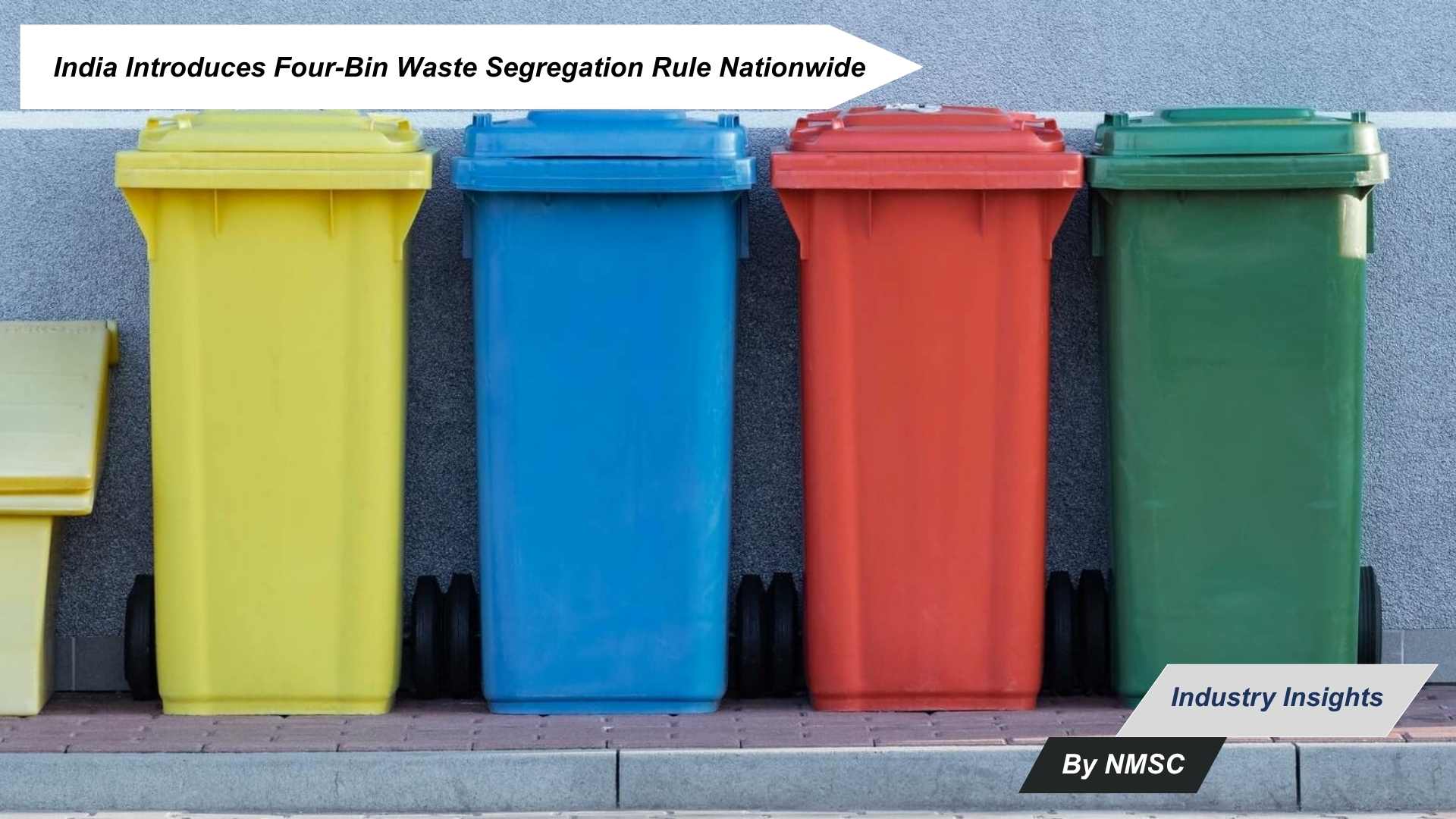
For years, improper waste disposal and lack of segregation at the source have posed serious environmental and logistical challenges. The introduction of the four-bin system aims to address these gaps by mandating households and institutions to separate waste into clearly defined categories—green, blue, red, and black bins—each designated for a specific type of waste.
This initiative represents more than a procedural update; it signals a behavioral and systemic shift in how waste is handled at the source, laying the groundwork for more efficient recycling and disposal processes.
Key Components of the Four-Bin System:
-
Green Bin: used for wet or biodegradable waste such as food scraps and organic matter.
-
Blue Bin: allocated for dry recyclable waste including paper, plastic, glass, and metal.
-
Red Bin: used for domestic hazardous waste like sanitary products and certain contaminated materials.
-
Black Bin: designated for non-recyclable and inert waste that cannot be processed further.
Driving Efficiency and Environmental Responsibility
At its core, the four-bin framework is designed to streamline waste collection, enhance recycling efficiency, and reduce the burden on landfills. By ensuring segregation at the source, the system enables municipal authorities to process waste more effectively and minimize contamination across waste streams.
This structured classification also supports safer handling of hazardous materials while improving the recovery of recyclable resources, aligning with broader sustainability goals.
Implementation and Public Participation
The success of the initiative depends heavily on public awareness and participation. Authorities are emphasizing the importance of compliance at the household level, as proper segregation is critical to achieving the intended environmental benefits.
According to NDTV, the rule has come into effect with immediate implementation, underscoring the urgency of adopting responsible waste management practices across urban and rural areas.
Strategic Outlook for Waste Management in India
According to Next Move Strategy Consulting, the introduction of the four-bin system is expected to play a pivotal role in reshaping India’s Waste Management ecosystem. By promoting accountability at the source and enabling more efficient downstream processing, the initiative sets the stage for long-term environmental improvements.
Industry observers note that structured segregation frameworks such as this can significantly enhance recycling rates, reduce landfill dependency, and support cleaner urban environments.
Advancing Toward a Cleaner Future
As India confronts the challenges of rapid urbanization and rising waste generation, the four-bin waste segregation rule represents a proactive and necessary intervention. With effective implementation and widespread public adherence, the initiative has the potential to transform waste management practices and contribute to a more sustainable future.
Source: NDTV
Prepared By: Next Move Strategy Consulting
About the Author
 Sanyukta Deb
— Sanyukta Deb is Digital Marketing Team Lead at Next Move Strategy Consulting, where she has led content strategy and technical SEO for the firm's B2B market research publications for over 2 years. Her editorial process translates NextMSC's primary and secondary research — spanning technology, industrial, and consumer sectors — into commercial narratives, backed by search-intent, keyword, and competitive analysis. She brings 5 years of overall experience in digital marketing and content strategy.
Sanyukta Deb
— Sanyukta Deb is Digital Marketing Team Lead at Next Move Strategy Consulting, where she has led content strategy and technical SEO for the firm's B2B market research publications for over 2 years. Her editorial process translates NextMSC's primary and secondary research — spanning technology, industrial, and consumer sectors — into commercial narratives, backed by search-intent, keyword, and competitive analysis. She brings 5 years of overall experience in digital marketing and content strategy.
About the Reviewer
 Debashree Dey
— Debashree Dey is Assistant Manager at Next Move Strategy Consulting, where she supports cross-vertical market content and communications across diverse industries for 6 years. Her professional background includes senior content writing, communications, and published manuscript authorship, with experience developing audience-focused business narratives and maintaining clear, consistent messaging. Her role supports research-led content development and editorial quality across NextMSC publications.
Debashree Dey
— Debashree Dey is Assistant Manager at Next Move Strategy Consulting, where she supports cross-vertical market content and communications across diverse industries for 6 years. Her professional background includes senior content writing, communications, and published manuscript authorship, with experience developing audience-focused business narratives and maintaining clear, consistent messaging. Her role supports research-led content development and editorial quality across NextMSC publications.


















Add Comment