India Semiconductor Market Gains Momentum for 2026
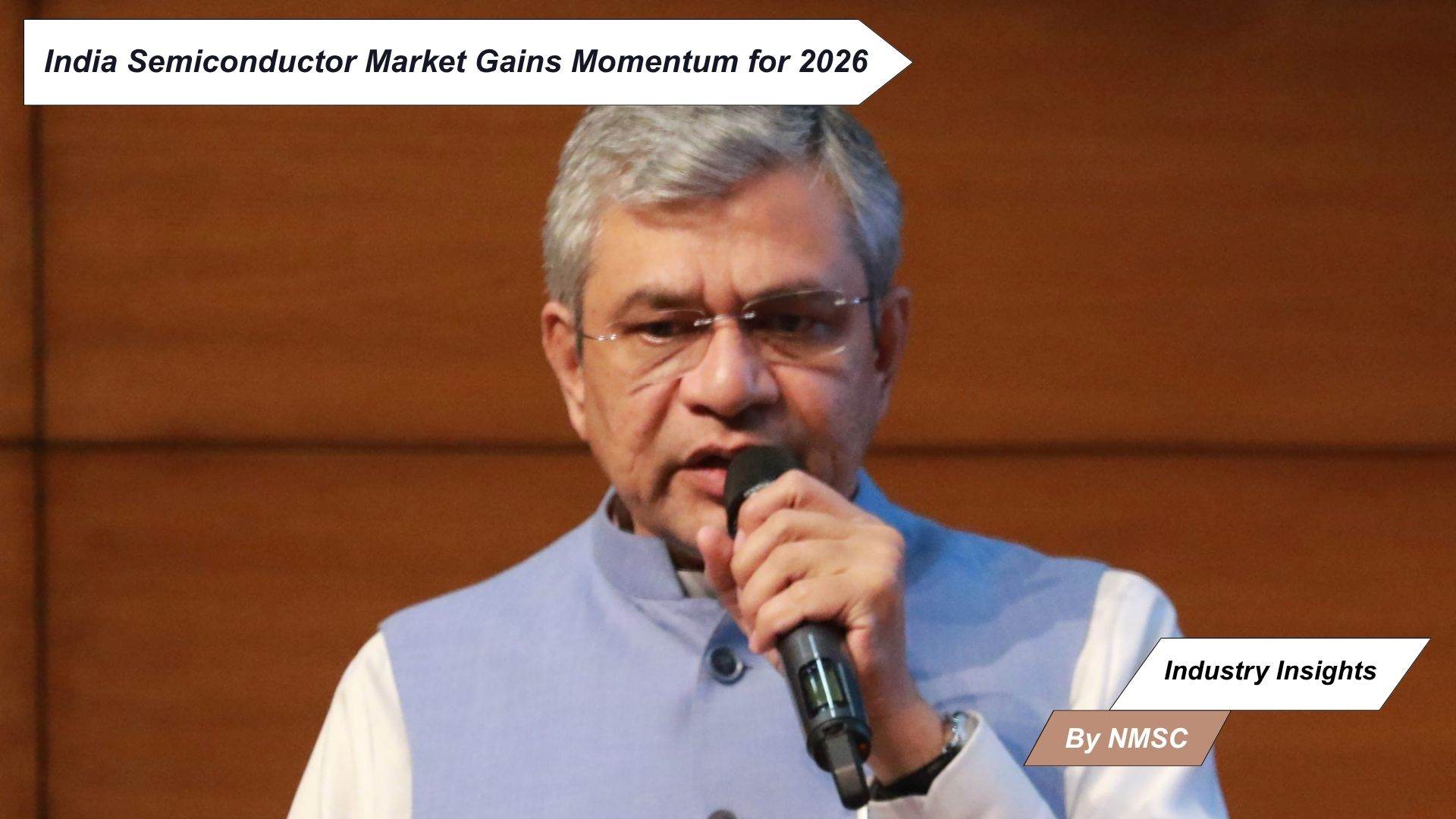
Industry Insights from Next Move Strategy Consulting
India’s Semiconductor Market is entering a critical phase of expansion as the government accelerates efforts to build a robust domestic chip manufacturing ecosystem. The announcement that four semiconductor plants will be ready in 2026 highlights a significant step forward in the country’s long-term strategy to strengthen its position in the global semiconductor landscape.
This development follows the inauguration of new facilities and reflects a broader push to establish end-to-end semiconductor capabilities within the country.
Accelerating India’s Semiconductor Roadmap
Union Electronics and Information Technology Minister Ashwini Vaishnaw outlined a structured roadmap for the sector, emphasizing rapid progress and clear timelines. According to the announcement, four semiconductor plants are expected to be operational by 2026, with additional facilities planned for subsequent years.
The roadmap further indicates that two more semiconductor plants are scheduled for completion in 2027, while India’s first semiconductor fabrication unit is targeted for 2028 in Dholera.
This phased development approach signals a long-term commitment to building a self-sustaining semiconductor ecosystem supported by manufacturing, design, and infrastructure capabilities.
Rapid Execution and Infrastructure Development
The pace of execution has emerged as a defining factor in India’s semiconductor progress. The recent inauguration of the Kaynes Semicon OSAT facility in Sanand marks the second semiconductor plant launched within a short span of time.
Notably, the facility transitioned from foundation to commercial production within just 14 months, demonstrating improved project execution capabilities.
In addition, earlier milestones include the inauguration of Micron Technology’s plant in February, followed by another facility in March, with a third plant expected to be inaugurated in July.
These developments reflect a rapidly evolving infrastructure landscape aimed at supporting large-scale semiconductor production.
Strengthening Talent and Design Capabilities
Alongside infrastructure, India is also focusing on building a strong talent pipeline and design ecosystem. The government highlighted that nearly 60,000 engineers have been trained in advanced semiconductor design tools such as Synopsys and Cadence.
These engineers, drawn from over 300 universities, are actively contributing to chip design initiatives, with some designs already being manufactured in laboratory environments.
Furthermore, global technology companies including Nvidia, AMD, and Intel are engaged in advanced chip design activities in India, reinforcing the country’s growing importance in the global semiconductor value chain.
Building a Competitive Semiconductor Ecosystem
The semiconductor program is being supported by the development of a comprehensive ecosystem that includes machinery, chemicals, gases, and testing infrastructure.
According to the minister, achieving global competitiveness will depend on maintaining high standards in both quality and cost, ensuring that India can establish a sustainable position in the international semiconductor market.
This integrated approach highlights the importance of aligning manufacturing capabilities with ecosystem support to drive long-term industry growth.
According to Next Move Strategy Consulting
The ongoing developments are expected to significantly influence the semiconductor market by accelerating domestic manufacturing capabilities and reducing reliance on external supply chains.
Next Move Strategy Consulting analysis indicates that the establishment of multiple semiconductor plants within a defined timeline will strengthen India’s position as an emerging hub for chip production. The simultaneous focus on infrastructure, talent development, and ecosystem support is likely to enhance operational efficiency and attract further investments into the sector.
Additionally, the phased rollout of semiconductor facilities and the planned fabrication unit are anticipated to create new opportunities across design, testing, and advanced manufacturing segments, contributing to sustained market growth.
A Defining Phase for India’s Semiconductor Market
India’s semiconductor journey is transitioning from policy-driven ambition to tangible execution. With multiple plants nearing completion, a growing talent base, and increasing participation from global players, the country is steadily building a foundation for long-term success in the semiconductor industry.
As these projects move toward operational readiness, the semiconductor market in India is poised to enter a new phase characterized by scale, capability, and global relevance.
Source: DD News
Prepared by: Next Move Strategy Consulting
About the Author
 Sanyukta Deb
— Sanyukta Deb is Digital Marketing Team Lead at Next Move Strategy Consulting, where she has led content strategy and technical SEO for the firm's B2B market research publications for over 2 years. Her editorial process translates NextMSC's primary and secondary research — spanning technology, industrial, and consumer sectors — into commercial narratives, backed by search-intent, keyword, and competitive analysis. She brings 5 years of overall experience in digital marketing and content strategy.
Sanyukta Deb
— Sanyukta Deb is Digital Marketing Team Lead at Next Move Strategy Consulting, where she has led content strategy and technical SEO for the firm's B2B market research publications for over 2 years. Her editorial process translates NextMSC's primary and secondary research — spanning technology, industrial, and consumer sectors — into commercial narratives, backed by search-intent, keyword, and competitive analysis. She brings 5 years of overall experience in digital marketing and content strategy.
About the Reviewer
 Debashree Dey
— Debashree Dey is Assistant Manager at Next Move Strategy Consulting, where she supports cross-vertical market content and communications across diverse industries for 6 years. Her professional background includes senior content writing, communications, and published manuscript authorship, with experience developing audience-focused business narratives and maintaining clear, consistent messaging. Her role supports research-led content development and editorial quality across NextMSC publications.
Debashree Dey
— Debashree Dey is Assistant Manager at Next Move Strategy Consulting, where she supports cross-vertical market content and communications across diverse industries for 6 years. Her professional background includes senior content writing, communications, and published manuscript authorship, with experience developing audience-focused business narratives and maintaining clear, consistent messaging. Her role supports research-led content development and editorial quality across NextMSC publications.

















Add Comment