Industry Update: Tech Leaders Fight Anthropic AI Bans
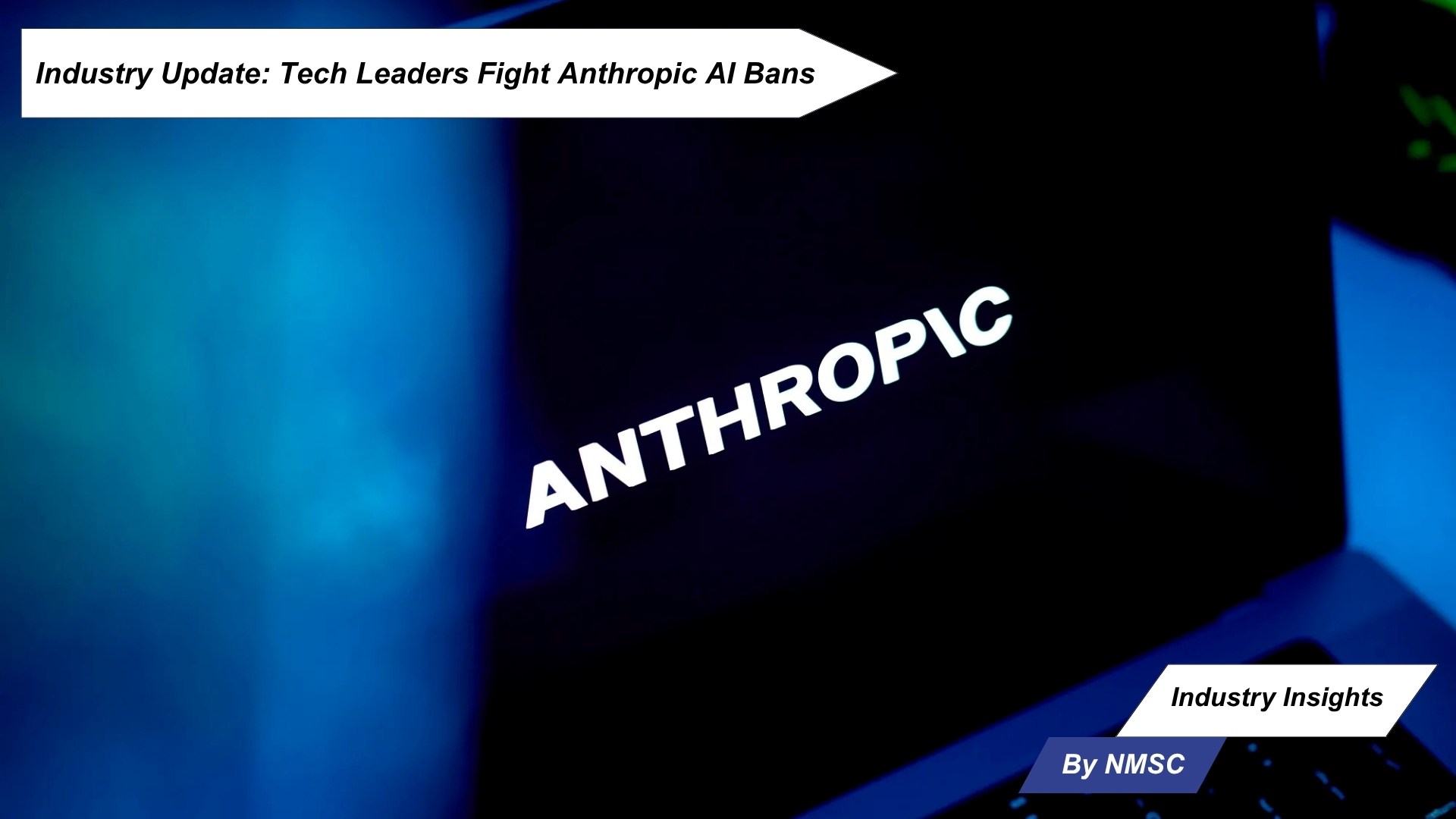
Tech Leaders Warn U.S. AI Export Bans Handicap Cybersecurity Defenses; Industry Groups Urge Policy Reversal
WASHINGTON, D.C. — June 16, 2026 — In a major escalation between Silicon Valley and Washington, a powerful coalition of more than 50 technology executives and cybersecurity researchers has formally petitioned the Trump administration to reverse emergency restrictions slapped on Anthropic’s most advanced artificial intelligence models. The federal intervention, which restricts foreign nationals from accessing Anthropic’s new Fable 5 and Mythos 5 systems, has triggered an industry-wide backlash over fears it disarms domestic digital defenders while international rivals quickly close the technological gap.
A High-Stakes Clash Over Vulnerability Governance
The U.S. Commerce Department issued its emergency directive following concerns over a potential "jailbreak"—a method of bypassing safety protections designed to prevent the AI from being used maliciously to discover software flaws. Federal authorities fear that foreign adversaries could exploit these bypasses to autonomously target critical software systems.
In response to the government order, Anthropic has had to navigate a complex regulatory tightrope. While the company previously restricted its highly powerful Mythos model due to hacking concerns, its newly released public tier, Fable, was launched with dedicated cybersecurity safeguards specifically built to prevent misuse. Anthropic argues that a narrow, addressable jailbreak vulnerability does not justify cutting off tools used globally by enterprise defense teams.
"To pull the best capabilities away from defenders without a good reason when our adversaries are rapidly advancing is dangerous," the coalition argued in a joint letter sent to Washington on Sunday. The group, which includes senior executives from Nvidia, Adobe, and former Facebook Chief Security Officer Alex Stamos, stresses that taking these tools away from software auditors fundamentally handicaps American defensive capabilities.
Expert Analysis and Industry Ramifications
The federal restriction hits the artificial intelligence market at a highly disruptive moment, following previous administrative actions that labeled Anthropic a supply risk over its refusal to deploy its systems for mass surveillance and autonomous weapons.
Industry analysts point out that heavy-handed restrictions create profound market uncertainty, particularly as software defense models shift toward automated threat detection.
"The implementation of abrupt export controls on defensive AI toolsets risks disrupting active security frameworks across the private sector," notes a Lead Digital Strategist at Next Move Strategy Consulting. "According to NMSC analysts, the global AI-powered Cybersecurity Market relies heavily on continuous iterative testing. Forcing compliance models that shut out collaborative developers can inadvertently slow down enterprise response times to automated, state-sponsored cyber threats."
Key Arguments from the Tech Coalition:
-
Asymmetrical Disarmament: By taking these systems away from software auditors, the U.S. hinders its own ability to patch decades of legacy code faster than foreign hackers can scan it.
-
No Unique Uplift: Joshua Saxe, Chief Technology Officer of AI security company Abundant Security, noted that while Mythos is arguably the premier model for finding security bugs, its advantage over competitors is incremental rather than unique.
-
The Chinese AI Threat: Signatories warned that competing international models, such as China’s open-source Kimi 2.7, possess comparable capabilities. Restricting American models gives Beijing—which may possess undisclosed cyber capabilities—a distinct operational advantage.
Redefining the Frontier of AI Regulation
As Anthropic executives prepare for daily crisis meetings with officials at the U.S. Department of Commerce, the broader technology sector is bracing for an increasingly strict regulatory environment.
"None of those standards was followed here," criticized Alex Stamos, current Chief Product Officer at cybersecurity company Corridor, calling the emergency mandate an regulatory overreaction. The administration’s willingness to prioritize absolute national security precautions over immediate enterprise commercial availability sets a stark precedent for the entire frontier AI ecosystem.
Source: Firstpost
Prepared By: Prakhyat Chowdhury
About the Author
 Sanyukta Deb
— Sanyukta Deb is Digital Marketing Team Lead at Next Move Strategy Consulting, where she has led content strategy and technical SEO for the firm's B2B market research publications for over 2 years. Her editorial process translates NextMSC's primary and secondary research — spanning technology, industrial, and consumer sectors — into commercial narratives, backed by search-intent, keyword, and competitive analysis. She brings 5 years of overall experience in digital marketing and content strategy.
Sanyukta Deb
— Sanyukta Deb is Digital Marketing Team Lead at Next Move Strategy Consulting, where she has led content strategy and technical SEO for the firm's B2B market research publications for over 2 years. Her editorial process translates NextMSC's primary and secondary research — spanning technology, industrial, and consumer sectors — into commercial narratives, backed by search-intent, keyword, and competitive analysis. She brings 5 years of overall experience in digital marketing and content strategy.
About the Reviewer
 Debashree Dey
— Debashree Dey is Assistant Manager at Next Move Strategy Consulting, where she supports cross-vertical market content and communications across diverse industries for 6 years. Her professional background includes senior content writing, communications, and published manuscript authorship, with experience developing audience-focused business narratives and maintaining clear, consistent messaging. Her role supports research-led content development and editorial quality across NextMSC publications.
Debashree Dey
— Debashree Dey is Assistant Manager at Next Move Strategy Consulting, where she supports cross-vertical market content and communications across diverse industries for 6 years. Her professional background includes senior content writing, communications, and published manuscript authorship, with experience developing audience-focused business narratives and maintaining clear, consistent messaging. Her role supports research-led content development and editorial quality across NextMSC publications.















Add Comment