Is Augmented Reality Transforming Military Flight Training and Aircraft Maintenance in Defense Aviation?
Lede
US Air Force F-16 live-flight AR training and TAE Aerospace’s smart-glasses maintenance trials indicate a structural shift toward immersive operational readiness and digital aviation workflows.
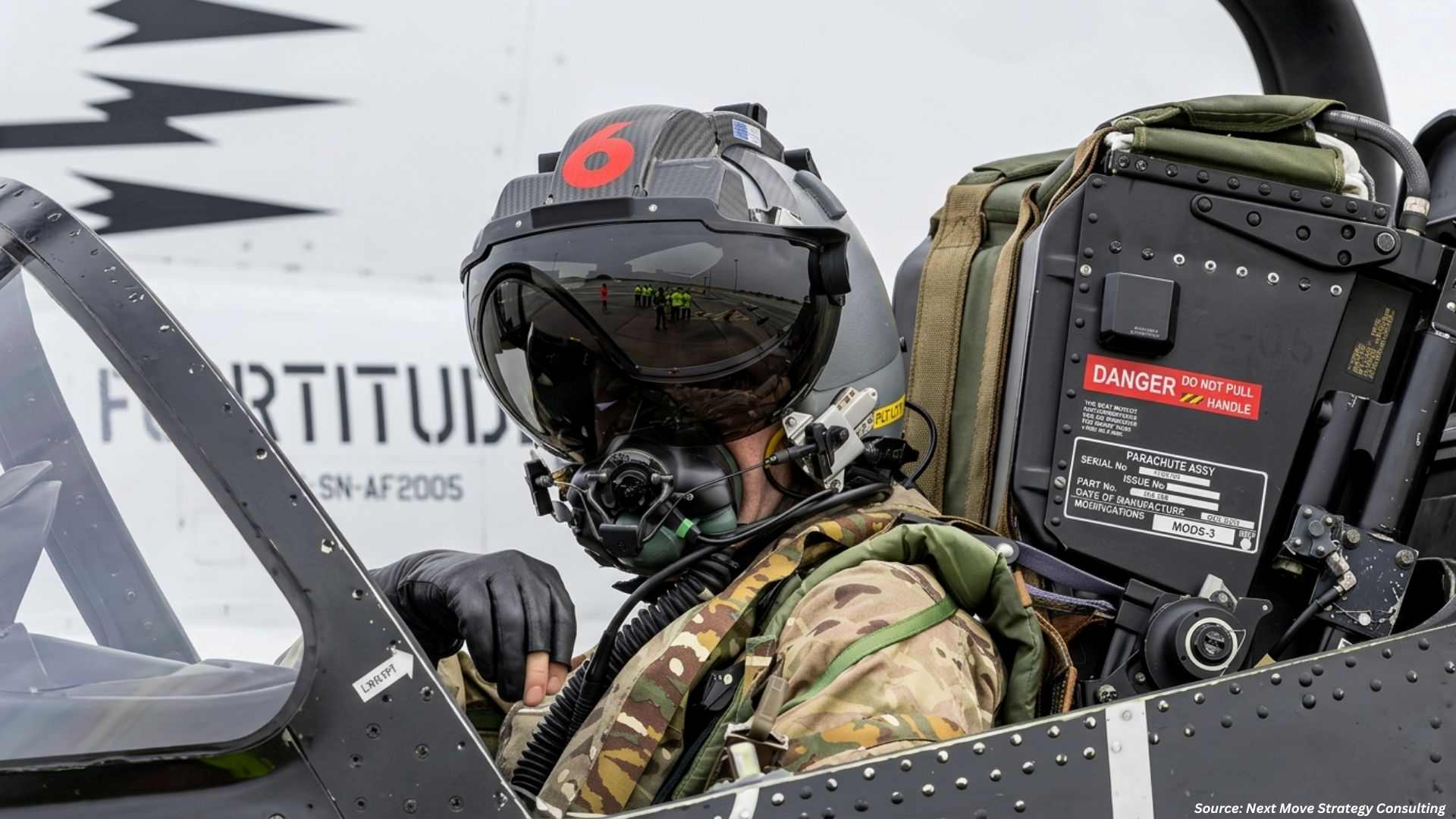
A significant transition in defense aviation where Augmented Reality (AR) Cloud Market is moving from controlled simulation environments into real operational settings. Recent developments involving the United States Air Force and Australia’s TAE Aerospace demonstrate how immersive digital systems are being embedded directly into pilot training and aircraft maintenance workflows.
This shift matters because defense aviation continues to face escalating costs, pilot training limitations, and increasing aircraft maintenance complexity. As I analyze both cases, I note that augmented reality is emerging as an operational augmentation layer rather than a replacement technology, enhancing efficiency, situational awareness, and decision-making in real time.
Augmented Reality Integration in Defense Aviation Ecosystem
The infographic highlights how augmented reality is reshaping two critical pillars of defense aviation pilot training and aircraft maintenance by embedding digital intelligence directly into real-world operational environments. On the left side, it visualizes F-16 pilots using AR-enabled helmet displays during live flight missions, where synthetic adversaries, mission targets, and tactical scenarios are dynamically projected into the cockpit environment to enhance decision-making and combat readiness. On the right side, it illustrates aircraft maintenance technicians using AR smart glasses to access real-time engineering data, remote expert guidance, and automated system diagnostics while servicing complex aviation systems. The center of the infographic connects both use cases under a unified digital aviation ecosystem, showing data flow between enterprise platforms, AR devices, and operational command systems. Overall, the visual emphasizes the transition from traditional training manuals and static simulations to fully immersive, data-driven, and real-time augmented operational frameworks that improve efficiency, reduce cost, and enhance mission readiness across defense aviation systems.

US Air Force F-16 AR Combat Training
The United States Air Force has introduced a contract-based integration of an airborne augmented reality system into the F-16 Fighting Falcon platform. This initiative enables pilots to experience synthetic adversaries and mission scenarios during live flight operations, marking a major shift in how air combat training is conducted.
The system projects virtual aircraft and dynamic mission elements into the pilot’s visual interface while the aircraft is in actual flight. This allows pilots to engage in simulated combat scenarios without requiring additional physical aircraft or live adversary formations.
This development reflects a broader effort by defense institutions to improve training efficiency while reducing operational costs. A key insight highlighted by program leadership is that immersive in-flight simulation enables more flexible and responsive pilot training, especially in complex mission environments.
At Next Move Strategy Consulting, this approach significantly reduces dependency on traditional multi-aircraft training formations while increasing scenario variability. It also introduces a scalable training model where digital adversaries can be adjusted in real time based on pilot performance and mission objectives.
Traditional Training vs Augmented Reality Flight Training
|
Parameter |
Traditional Flight Training |
AR-Based Flight Training |
|
Training Environment |
Live aircraft exercises and simulators |
Live flight with synthetic overlays |
|
Cost Structure |
High operational and fuel costs |
Reduced incremental training cost |
|
Scenario Flexibility |
Limited by available aircraft |
Fully programmable scenarios |
|
Risk Exposure |
Higher during live drills |
Controlled and adaptive environment |
|
Data Analytics |
Post-mission review |
Real-time performance tracking |
TAE Aerospace AR Smart Glasses for Maintenance
TAE Aerospace is conducting trials of augmented reality smart glasses designed to enhance aircraft maintenance operations. The initiative integrates enterprise maintenance software with wearable AR devices, allowing technicians to access real-time technical data directly within their field of view during servicing operations.
This system eliminates reliance on printed manuals or stationary computer terminals, enabling technicians to perform maintenance tasks with hands-free digital assistance. It also supports remote expert collaboration, where specialists can provide live guidance during complex procedures.
This model significantly enhances operational efficiency by integrating digital intelligence directly into field environments. It also improves data accuracy by enabling real-time recording and automatic documentation of maintenance activities.
At Next Move Strategy Consulting, this development represents a shift toward fully connected aviation maintenance ecosystems. These ecosystems integrate workforce tools, enterprise systems, and wearable technologies into a unified operational environment, reducing downtime and improving asset lifecycle management.

Conventional Maintenance vs AR-Based Maintenance Systems
|
Parameter |
Conventional Maintenance Approach |
AR Smart Glasses Maintenance |
|
Information Access |
Printed manuals and fixed terminals |
Real-time digital overlays |
|
Technician Workflow |
Device-dependent and manual |
Fully hands-free operation |
|
Remote Support |
Limited interaction capability |
Live expert assistance |
|
Data Capture |
Manual logging |
Automated visual and system capture |
|
Efficiency Level |
Moderate |
High operational efficiency |
Evolution of AR in Defense Aviation
The augmented reality adoption in defense aviation is being driven by three major factors: the need for cost optimization, the demand for improved training realism, and the growing complexity of aircraft maintenance systems.
In pilot training, AR is enabling continuous learning environments where mission scenarios can be dynamically adjusted without logistical constraints. In maintenance operations, AR is improving workforce efficiency by integrating digital instructions directly into technician workflows.
Regionally, North America leading adoption due to advanced defense modernization programs. Europe is steadily expanding AR usage through pilot training modernization initiatives. Asia Pacific is gradually integrating AR into maintenance and aviation support systems, particularly within commercial and defense aviation service providers.
At Next Move Strategy Consulting, that the long-term trajectory of augmented reality in aviation will be defined by integration depth rather than hardware proliferation. The most significant transformation will occur when AR systems become fully connected with enterprise aviation software, predictive analytics platforms, and operational command systems.
The convergence of augmented reality with artificial intelligence and enterprise aviation systems will create a unified digital operational layer. This will enhance predictive maintenance capabilities, improve mission readiness, and reduce lifecycle costs across defense fleets.
Augmented Reality Adoption in Defense Aviation: Application Share Breakdown
The pie chart illustrates how Augmented Reality (AR) is being adopted across key defense aviation applications, highlighting its distribution of use across three major operational areas.
Pilot Training dominates the adoption landscape with 45% share, indicating that AR is most widely used for immersive simulation, real-time cockpit visualization, and enhanced skill development for pilots. This reflects the growing reliance on AR to improve training efficiency and reduce real-world training risks.
Aircraft Maintenance follows with 35% share, showing significant usage of AR in assisting technicians with step-by-step repair guidance, equipment diagnostics, and overlay-based maintenance instructions, which helps reduce downtime and improve accuracy.
Operational Support accounts for the remaining 20% share, where AR is used for mission planning, situational awareness, and ground operations coordination, supporting overall defense aviation efficiency.
Overall, the chart highlights that AR is most heavily concentrated in training and maintenance functions, underscoring its role in improving both human performance and operational reliability in defense aviation systems.

Digital Transformation of Aviation Operations Through Augmented Reality
The infographic illustrates the growing integration of augmented reality across defense aviation operations, focusing on how digital overlays are redefining both in-flight training and ground-based maintenance processes. It depicts a connected ecosystem where fighter pilots experience real-time virtual threat simulations inside the cockpit using AR-enabled systems, enabling them to practice mission scenarios under realistic flight conditions without requiring additional aircraft or live adversaries. Alongside this, it showcases maintenance personnel using wearable AR devices that project technical schematics, repair instructions, and system diagnostics directly into their field of view, allowing hands-free and highly accurate servicing of complex aircraft systems. The visualization further emphasizes the seamless flow of operational data between aircraft systems, enterprise platforms, and remote expert networks, highlighting improved coordination and faster decision-making. Overall, the infographic communicates a shift toward a fully digitized aviation environment where augmented reality acts as a bridge between human expertise and intelligent systems, enhancing readiness, efficiency, and operational precision across the defense aviation lifecycle.

What to Do Next (Strategic Recommendations)
Defense organizations should prioritize gradual integration of augmented reality into existing training frameworks to avoid operational disruption while maximizing learning benefits. Aviation maintenance providers should focus on deploying AR-based tools in high-complexity repair environments where efficiency gains are most significant.
Technology developers should ensure interoperability between AR systems and enterprise aviation platforms to enable seamless data exchange. Governments and defense agencies should evaluate augmented reality as a cost-optimization tool for long-term training and maintenance budgets. Investors should monitor dual-use applications of AR technology across both defense and industrial aviation sectors.
Conclusion
I conclude that augmented reality is transitioning from experimental deployment to operational integration within defense aviation systems. The F-16 live-flight training initiative and TAE Aerospace maintenance trials demonstrate how AR is reshaping both pilot training and aircraft maintenance processes. From my analysis, the most significant long-term impact will emerge from the integration of AR with broader digital aviation ecosystems, leading to improved efficiency, readiness, and operational intelligence.
About Next Move Strategy Consulting:
Next Move Strategy Consulting is a premier market research and management consulting firm that has been committed to provide strategically analysed well documented latest research reports to its clients. The research industry is flooded with many firms to choose from, what makes Next Move different from the rest is its top-quality research and the obsession of turning data into knowledge by dissecting every bit of it and providing fact-based research recommendation that is supported by information collected from over 500 million websites, paid databases, industry journals and one on one consultations with industry experts across a diverse range of industry sectors. The high-quality customized research reports with actionable insights and excellent end-to-end customer service help our clients to take critical business decisions that enables them to move beyond time and have competitive edge in the industry.
We have been servicing over 1000 customers globally that includes 90% of the Fortune 500 companies over a decade. Our analysts are constantly tracking various high growth markets and identifying hidden opportunities in each sector or the industry. We provide one of the industry’s best quality syndicate as well as custom research reports across 10 different industry verticals. We are committed to deliver high quality research solutions in accordance to your business needs. Our industry standard delivery solutions that ranges from the pre consultation to after-sales services, provide an excellent client experience and ensure right strategic decision making for businesses.
For more information, please contact:
Next Move Strategy Consulting
5th Floor 867
Boylston St, STE 500,
Boston, MA 02116, U.S.
E-Mail: [email protected]
Direct: +1-217-650-7991
Website: www.nextmsc.com
About the Author
 Sanyukta Deb
— Sanyukta Deb is Digital Marketing Team Lead at Next Move Strategy Consulting, where she has led content strategy and technical SEO for the firm's B2B market research publications for over 2 years. Her editorial process translates NextMSC's primary and secondary research — spanning technology, industrial, and consumer sectors — into commercial narratives, backed by search-intent, keyword, and competitive analysis. She brings 5 years of overall experience in digital marketing and content strategy.
Sanyukta Deb
— Sanyukta Deb is Digital Marketing Team Lead at Next Move Strategy Consulting, where she has led content strategy and technical SEO for the firm's B2B market research publications for over 2 years. Her editorial process translates NextMSC's primary and secondary research — spanning technology, industrial, and consumer sectors — into commercial narratives, backed by search-intent, keyword, and competitive analysis. She brings 5 years of overall experience in digital marketing and content strategy.
About the Reviewer
 Debashree Dey
— Debashree Dey is Assistant Manager at Next Move Strategy Consulting, where she supports cross-vertical market content and communications across diverse industries for 6 years. Her professional background includes senior content writing, communications, and published manuscript authorship, with experience developing audience-focused business narratives and maintaining clear, consistent messaging. Her role supports research-led content development and editorial quality across NextMSC publications.
Debashree Dey
— Debashree Dey is Assistant Manager at Next Move Strategy Consulting, where she supports cross-vertical market content and communications across diverse industries for 6 years. Her professional background includes senior content writing, communications, and published manuscript authorship, with experience developing audience-focused business narratives and maintaining clear, consistent messaging. Her role supports research-led content development and editorial quality across NextMSC publications.
















Add Comment