Augmented Reality (AR) Market by Component (Hardware, Software, and Services), by Device Type (Head-Mounted Displays (HMD), Smart Glasses, Head-Up Displays (HUD), and Handheld Devices), by Technology (Marker-Based, Markerless, Location-Based, and Projection-Based), by Deployment (On-Device, Cloud-Assisted, and Hybrid), by Application (Gaming & Entertainment, Social Media & Filters, Retail & E-commerce, and Others), and Others – Global Opportunity Analysis and Industry Forecast, 2025–2030
Industry: ICT & Media | Publishing Date: October 2, 2025 | Last Updated: May 15, 2026 | No of Pages: N/A | No. of Tables: N/A | No. of Figures: N/A | Format: PDF | Report Code: IC1165
Augmented Reality Cloud Market Overview
The Augmented Reality (AR) Cloud Market size was valued at USD 4.18 billion in 2024 and is predicted to reach USD 33.14 billion by 2030 with a CAGR of 41.21% from 2025-2030. The Augmented Reality (AR) Cloud, also known as the augmented reality cloud, refers to a network of cloud-based data that integrates various forms of data to create a persistent and location-based augmented reality experience for users. This enables developers to create AR experiences that are accessible in specific physical locations over time, providing a seamless user experience across devices and platforms.
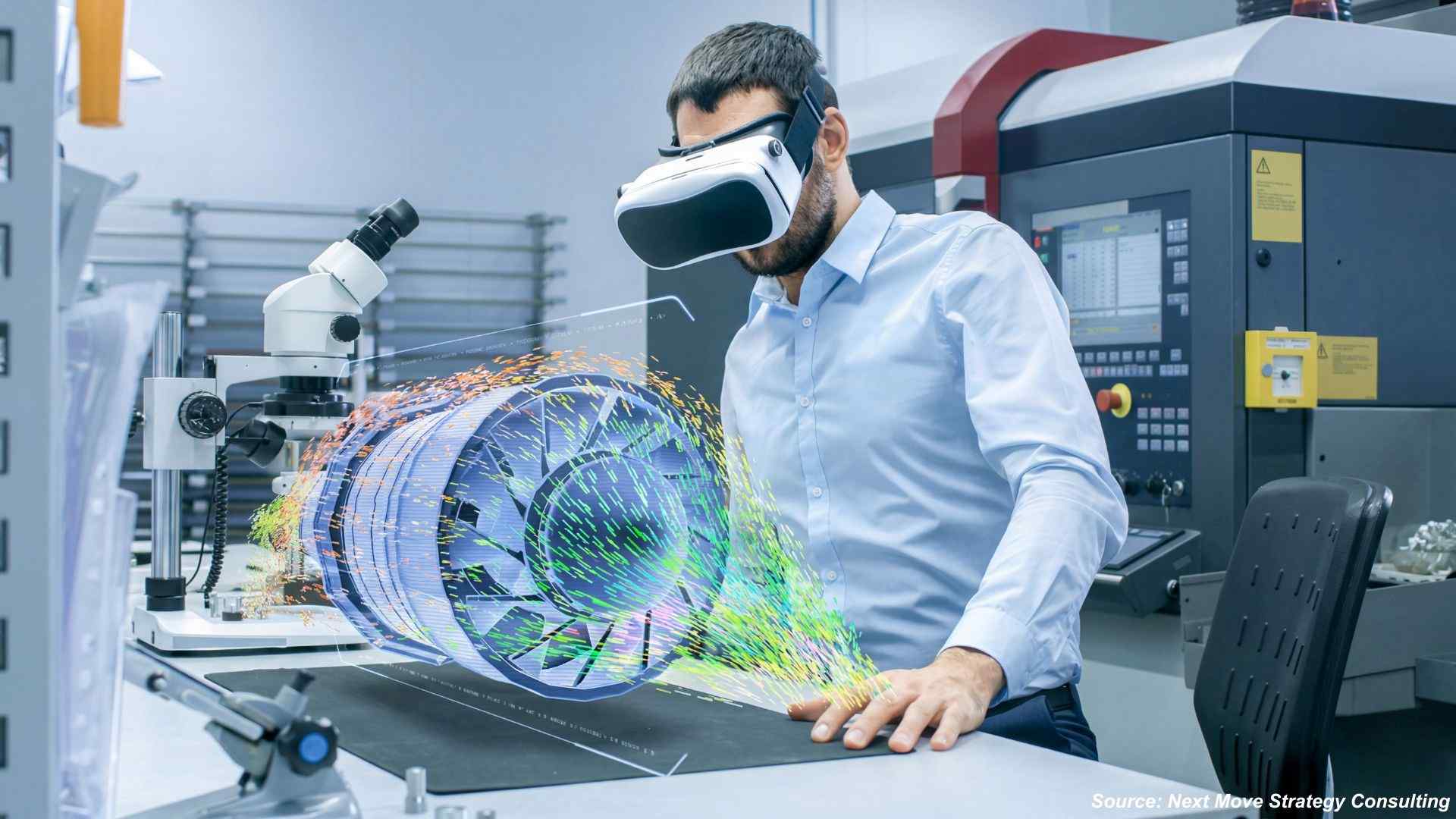
The AR cloud is created by collecting and synthesizing real-time sensor data from various sources such as cameras, GPS, and other sensors, which are then processed by cloud-based software and algorithms. It has the potential to enable a wide range of applications, including immersive gaming, navigation, retail experiences, and virtual meetings.
Market Dynamics and Trends
The global surge in smartphone adoption fuels the expansion of AR-based applications, driving the augmented reality cloud market growth as smartphones become increasingly powerful, enabling widespread access to advanced AR experiences. Moreover, the increasing demand for location-based AR encounters, such as AR navigation, advertising, and tourism, is propelling the expansion of the market. It utilizes GPS and camera sensors, these encounters overlay digital content onto the real world, delivering immersive and customized interactions to users.
In addition, rising use of AR technology in industrial and enterprise sectors such as manufacturing, logistics, and healthcare boosts the AR Cloud market. As it offers real-time guidance to workers, enhancing workplace efficiency and safety, leading businesses to invest in AR solutions. However, the growing concern of data privacy and security is expected to restrain the growth of market during the forecast period. It involves collecting & processing large amounts of personal and location-based data, which may lead to misuse or mishandling of data that result in negative consequences for individuals.
On the contrary, advancements in technology, such as 5G networks, edge computing, and AI, are expected to create ample growth opportunities for the market in the coming years. As these technologies helps to improve the performance and functionality of AR applications as well as enable real-time data processing & analysis that leads to advanced and sophisticated AR experiences.
Market Segmentations and Scope of the Study
The augmented reality (AR) market is segmented on the basis of component, device type, technology, deployment, application, end user, and region. On the basis of component, the market is divided into hardware, software, and services. The hardware segment includes displays & optics, sensors & cameras, and processing units. The software segment comprises platforms & operating systems, applications, and SDKs & tools. The services segment includes system integration, content creation, and support & maintenance services.
On the basis of device type, the market is classified into head-mounted displays (HMD), smart glasses, head-up displays (HUD), and handheld devices. The head-mounted displays segment is further categorized into standalone HMD and tethered HMD, while handheld devices include smartphones and tablets.
On the basis of technology, the market is segmented into marker-based, markerless, location-based, and projection-based technologies. The markerless segment is further divided into SLAM and depth sensing technologies. Based on deployment, the market is categorized into on-device, cloud-assisted, and hybrid deployment models.
On the basis of application, the market is segmented into gaming & entertainment, social media & filters, retail & e-commerce, industrial & manufacturing, healthcare, automotive & aerospace, and education & training. The retail & e-commerce segment further includes virtual try-on and product visualization applications, while industrial & manufacturing includes assembly guidance and remote assistance. The healthcare segment comprises surgical visualization and medical training applications.
On the basis of end user, the market is segmented into consumer, enterprise, and public sector. Regional breakdown and analysis of each of the aforesaid segments include North America, Europe, Asia-Pacific, RoW.
Geographical Analysis
North America holds the predominating share of the AR cloud market and is expected to continue its dominance during the forecast period. This is attributed to the factors such as the presence of prominent companies across the region which are extensively working towards the advancement in the industry. In 2023, Google launched an 'Immersive Stream for XR' tool allows Google Cloud users to experience 3D and AR environments on smartphones via a simple link or QR code scan, enhancing features including Google Maps' 'immersive view' and improving at-home shopping experiences for automotive and retail brands.
Moreover, the increasing adoption of cutting-edge technologies such as cloud and AR is facilitating organizational modernization, data management, and enhanced security, driving market growth in the region. For example, Mexico launched its inaugural Oracle Cloud Infrastructure (OCI) in July 2022, providing public and private entities, partners, and developers with tools to enhance customer experiences and foster innovation within the country's ecosystem.
On the other hand, Asia-Pacific is expected to show a steady rise in the Augmented Reality (AR) Cloud market due to the rapid growing development of high-speed internet and 5G networks. This growth is expected to drive the widespread adoption of AR technology and AR-based solutions across various industries in the region. According to the GSMA Intelligence, it was found that 16% of operators in Asia-Pacific expect private networks to account for over 20% of enterprise revenues by 2025.
Moreover, the rising government initiatives for accelerating digital technology are expected to drive the Augmented Reality (AR) Cloud market growth in this region. According to the United Nations Conference on Trade and Development (UNCTAD), the region achieved a 9% growth rate in digitally deliverable exports from 2015 to 2022, surpassing the global average of 6.8% and reaching USD 958 billion.
Competitive Landscape
The Augmented Reality (AR) Cloud market trends comprising of various market players such as Apple Inc., Meta Platforms Inc., Microsoft Corporation, Google LLC, Snap Inc., Unity Technologies, PTC Inc., Magic Leap, Inc., Varjo Oy, Niantic, Inc., XREAL, Inc., Vuzix Corporation, Lenovo Group Limited, HTC Corporation, RealWear, Inc., Sony Group Corporation, Samsung Electronics Co., Ltd., Rokid Technology Co., Ltd., TeamViewer AG, and Qualcomm Incorporated among others. These market players are adopting innovation, product launch and acquisition as their key developmental strategy to maintain their dominance in the Augmented Reality (AR) Cloud market.
For instance, in February 2025, Apple Inc. continued expanding its augmented reality ecosystem through enhancements to Apple Vision Pro and updates to visionOS developer tools. The company introduced improved spatial computing capabilities, advanced gesture controls, and expanded enterprise-focused AR applications aimed at increasing adoption across productivity, entertainment, and immersive collaboration environments. These developments highlight Apple’s long-term strategy of integrating augmented reality into its broader hardware and software ecosystem to strengthen user engagement and next-generation digital experiences.
Also, in January 2025, Meta Platforms Inc. announced new AI-powered mixed reality features for its Quest ecosystem, focusing on immersive social interaction, enterprise collaboration, and spatial computing experiences. The company expanded developer support for Horizon OS and enhanced integration between AR wearables and AI assistants to improve user interaction within virtual and augmented environments. These initiatives reflect Meta’s continued investment in building scalable metaverse and immersive technology ecosystems.
Moreover, in March 2025, Microsoft Corporation strengthened its enterprise augmented reality offerings through expanded industrial and healthcare applications powered by Microsoft Mesh and mixed reality cloud technologies. The company focused on integrating AR collaboration tools with AI-enabled workflows to support remote assistance, training, and industrial visualization use cases. Such developments demonstrate Microsoft’s emphasis on enterprise-driven augmented reality solutions and digital transformation initiatives.
Key Benefits
-
The augmented reality (AR) cloud market report provides the quantitative analysis of the current market and estimations from 2024 to 2030. This analysis assists in identifying the prevailing market opportunities to capitalize on.
-
The study comprises of a detailed analysis of the augmented reality (AR) cloud market trends including the current and future trends for depicting the prevalent investment pockets in the market.
-
The information related to key drivers, restraints, and opportunities and their impact on the augmented reality (AR) cloud market is provided in the report.
-
The competitive analysis of the market players along with their market share in the augmented reality (AR) cloud market is mentioned.
-
The SWOT analysis and Porter’s Five Forces model are elaborated in the study.
-
The value chain analysis in the market study provides a clear picture of the stakeholders’ roles.
Augmented Reality (AR) Cloud Market Key Segments
By Augmented Reality (AR) Market
-
Hardware
-
Displays & Optics
-
Sensors & Cameras
-
Processing Units
-
-
Software
-
Platforms & OS
-
Applications
-
SDKs & Tools
-
-
Services
-
System Integration
-
Content Creation
-
Support & Maintenance
-
By Device Type
-
Head-Mounted Displays (HMD)
-
Standalone HMD
-
Tethered HMD
-
-
Smart Glasses
-
Head-Up Displays (HUD)
-
Handheld Devices
-
Smartphones
-
Tablets
-
By Technology
-
Marker-Based
-
Markerless
-
SLAM
-
Depth Sensing
-
-
Location-Based
-
Projection-Based
By Deployment
-
On-Device
-
Cloud-Assisted
-
Hybrid
By Application
-
Gaming & Entertainment
-
Social Media & Filters
-
Retail & E-commerce
-
Virtual Try-On
-
Product Visualization
-
-
Industrial & Manufacturing
-
Assembly Guidance
-
Remote Assistance
-
-
Healthcare
-
Surgical Visualization
-
Medical Training
-
-
Automotive & Aerospace
-
Education & Training
By End User
-
Consumer
-
Enterprise
-
Public Sector
By Region
-
North America
-
The U.S.
-
Canada
-
Mexico
-
-
Europe
-
The UK
-
Germany
-
France
-
Italy
-
Spain
-
Denmark
-
Netherlands
-
Finland
-
Sweden
-
Norway
-
Russia
-
Rest of Europe
-
-
Asia-Pacific
-
China
-
Japan
-
India
-
South Korea
-
Australia
-
Indonesia
-
Singapore
-
Taiwan
-
Thailand
-
Rest of Asia-Pacific
-
-
RoW
-
Latin America
-
Middle East
-
Africa
-
Key Players
-
Apple Inc.
-
Meta Platforms Inc.
-
Microsoft Corporation
-
Google LLC
-
Snap Inc.
-
Unity Technologies
-
PTC Inc.
-
Magic Leap, Inc.
-
Varjo Oy
-
Niantic, Inc.
-
XREAL, Inc.
-
Vuzix Corporation
-
Lenovo Group Limited
-
HTC Corporation
-
RealWear, Inc.
-
Sony Group Corporation
-
Samsung Electronics Co., Ltd.
-
Rokid Technology Co., Ltd.
-
TeamViewer AG
-
Qualcomm Incorporated
Report Scope and Segmentation:
|
Parameters |
Details |
|
Market Size in 2024 |
USD 4.18 billion |
|
Revenue Forecast in 2030 |
USD 33.14 billion |
|
Growth Rate |
CAGR of 41.21% from 2025 to 2030 |
|
Analysis Period |
2024–2030 |
|
Base Year Considered |
2024 |
|
Forecast Period |
2025–2030 |
|
Market Size Estimation |
Billion (USD) |
|
Growth Factors |
|
|
Countries Covered |
28 |
|
Companies Profiled |
10 |
|
Market Share |
Available for 10 companies |
|
Customization Scope |
Free customization (equivalent up to 80 working hours of analysts) after purchase. Addition or alteration to country, regional, and segment scope. |
|
Pricing and Purchase Options |
Avail customized purchase options to meet your exact research needs. |


About the Author
 Sikha Haritwal
— Sikha Haritwal is an assistant manager with strong expertise in market research, data analysis, and cross-functional coordination. She plays a key role in leading complex research initiatives, strengthening analytical rigor, and enabling data-driven decision-making across teams. Known for her leadership mindset and structured problem-solving approach, she supports process improvement, enhances operational efficiency, and contributes to building scalable frameworks that drive long-term strategic outcomes and organizational effectiveness.
Sikha Haritwal
— Sikha Haritwal is an assistant manager with strong expertise in market research, data analysis, and cross-functional coordination. She plays a key role in leading complex research initiatives, strengthening analytical rigor, and enabling data-driven decision-making across teams. Known for her leadership mindset and structured problem-solving approach, she supports process improvement, enhances operational efficiency, and contributes to building scalable frameworks that drive long-term strategic outcomes and organizational effectiveness.
About the Reviewer
 Supradip Baul
— Supradip Baul is an accomplished business consultant and strategist with over a decade of rich experience in market intelligence, strategy, technology, and business transformation. His work has included rigorous qualitative and quantitative analysis across multiple industries, helping clients shape investment decisions and long-term roadmaps. Earlier in his career, he was associated with Gartner, where he contributed to industry-leading reports and market share analyses. He has worked with leading global companies and holds an MBA with a dual specialization in Marketing and Finance.
Supradip Baul
— Supradip Baul is an accomplished business consultant and strategist with over a decade of rich experience in market intelligence, strategy, technology, and business transformation. His work has included rigorous qualitative and quantitative analysis across multiple industries, helping clients shape investment decisions and long-term roadmaps. Earlier in his career, he was associated with Gartner, where he contributed to industry-leading reports and market share analyses. He has worked with leading global companies and holds an MBA with a dual specialization in Marketing and Finance.
At Next Move Strategy Consulting, we understand that insightful market research is the cornerstone of successful business decisions. That's why we employ a robust and multifaceted approach, combining various methodologies to deliver the most accurate and actionable data for our clients.

Research Landscape
We navigate the world of research with two primary approaches:
Qualitative Approach
Our qualitative research methodologies involve immersive techniques such as in-depth interviews, focus groups, and observational studies. By engaging directly with individuals and stakeholders, we uncover valuable insights that quantitative data alone may overlook.

Quantitative Research
In tandem with qualitative methodologies, NMSC leverages the power of Quantitative Research to provide a robust foundation of numerical insights. Through systematic data collection and analysis, we quantify patterns, preferences, and market trends, offering a comprehensive view of the business landscape.
Our quantitative research approach employs diverse tools, including surveys, experiments, and statistical modelling. These methodologies enable us to gather data from a large and representative sample, ensuring the statistical significance of our findings. By employing structured questionnaires and standardized data collection methods, we guarantee the reliability and validity of the information we present to our clients.
Quantitative research is particularly effective in measuring the prevalence of trends, assessing market size, and gauging the impact of various factors on consumer behavior. The numerical precision attained through this approach equips our clients with actionable insights, facilitating data-driven decision-making and strategy formulation.


Our Specialized Toolbox for Industry-Specific Market Research
We deploy a specialized arsenal of techniques tailored to meet your unique requirements. Here's a glimpse into our comprehensive toolbox:

Information Procurement
The stage entails acquiring market data or relevant information through various sources and methodologies.


Market Research Approach
We utilize both top-down and bottom-up approaches in market research analysis to achieve a comprehensive understanding of the market dynamics, leveraging the broad perspective of industry trends and macroeconomic factors alongside detailed insights from specific segments and individual companies.

Porters Five Forces Analysis
We conduct Porter's Five Forces analysis to evaluate the competitive landscape of an industry, providing us with insights into factors that affect profitability and strategic positioning.

SWOT Analysis

Forecasting
We utilize a forecasting model to predict future consumption by considering parameters like population, economics, regulations, market competition, drivers, constraints, technology, and pricing. We also employ statistical techniques such as multilinear regression, exponential smoothing, moving average, ARIMA, and Monte Carlo simulations for accurate predictions. In econometric forecasting, we analyzed short-term and long-term event impacts, attributing values based on regulatory frameworks, economic factors, and market events.





 Speak to Our Analyst