Is the Future of Human–Machine Interaction Being Redefined by AI and Brain–Computer Interfaces?
LEDE:
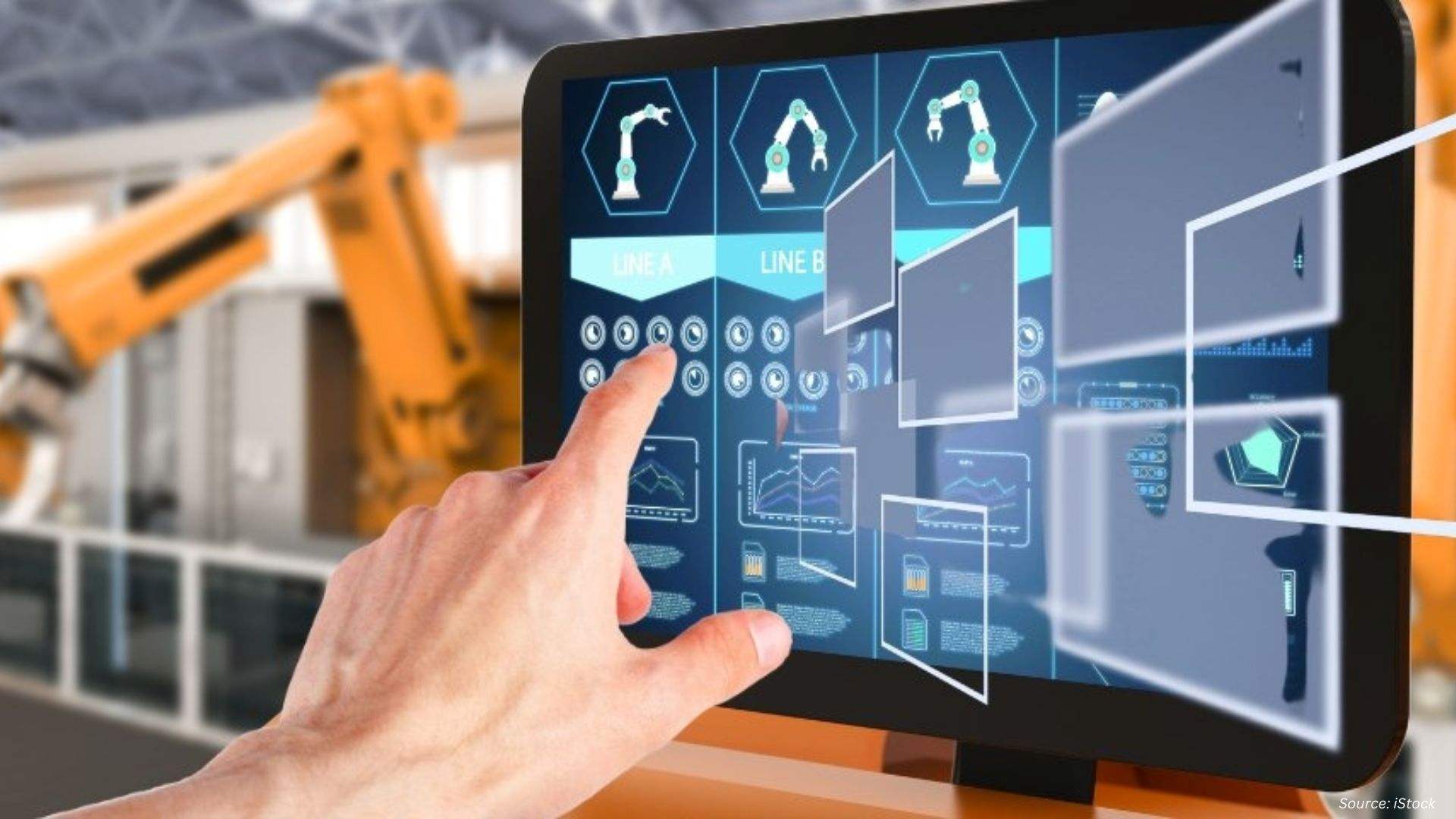
The next phase of digital interaction may no longer depend on screens, keyboards, or even voice commands. Advances in artificial intelligence (AI) and brain–computer interface (BCI) technologies are rapidly transforming how humans interact with machines. From predictive and personalized interfaces powered by AI to neural systems that enable devices to respond directly to brain signals, the evolution of Human–Machine Interface (HMI) technologies is opening new pathways across industries such as mobility, healthcare, and digital entertainment. These developments are reshaping user expectations and signaling significant momentum for the Human Machine Interface (HMI) Market.
AI Is Transforming the Way Humans Interact with Machines
Recent discussions within the design and technology community highlight how artificial intelligence is redefining HMI systems and user experiences. AI-powered assistants, natural language processing tools, and predictive algorithms are now enabling machines to communicate with humans in more intuitive ways.
Modern HMI platforms increasingly rely on voice interaction technologies similar to virtual assistants such as Siri, Amazon Alexa, and Google Assistant, which allow users to interact with devices through natural language. This shift marks a transition from traditional command-based systems to conversational and adaptive interfaces.
AI-driven systems also personalize digital interfaces by analyzing user behavior, preferences, and historical interaction patterns. These capabilities allow HMI systems to anticipate user needs, automate repetitive tasks, and improve workflow efficiency. In sectors such as automotive and smart mobility, this technology is already reshaping vehicle interiors, where digital dashboards, voice commands, and connected displays work together to create more intelligent in-car environments.
Beyond convenience, these developments are influencing workforce dynamics and business models. AI-enabled HMI tools automate routine processes, enabling employees to focus on tasks that require creativity, decision-making, and emotional intelligence. Organizations that adopt these technologies early often gain competitive advantages through improved user experience and data-driven service models.
However, the integration of AI within HMI systems also raises critical design considerations. Developers must ensure intuitive usability across diverse user groups while maintaining robust data privacy and cybersecurity frameworks. Since AI-powered interfaces rely heavily on data collection to deliver personalized experiences, companies must balance innovation with responsible data governance.
Accessibility has also emerged as a major advantage of AI-driven HMI design. Features such as voice commands, screen readers, text-to-speech functionality, and adaptive interface customization are making technology more inclusive for users with diverse physical and cognitive abilities.
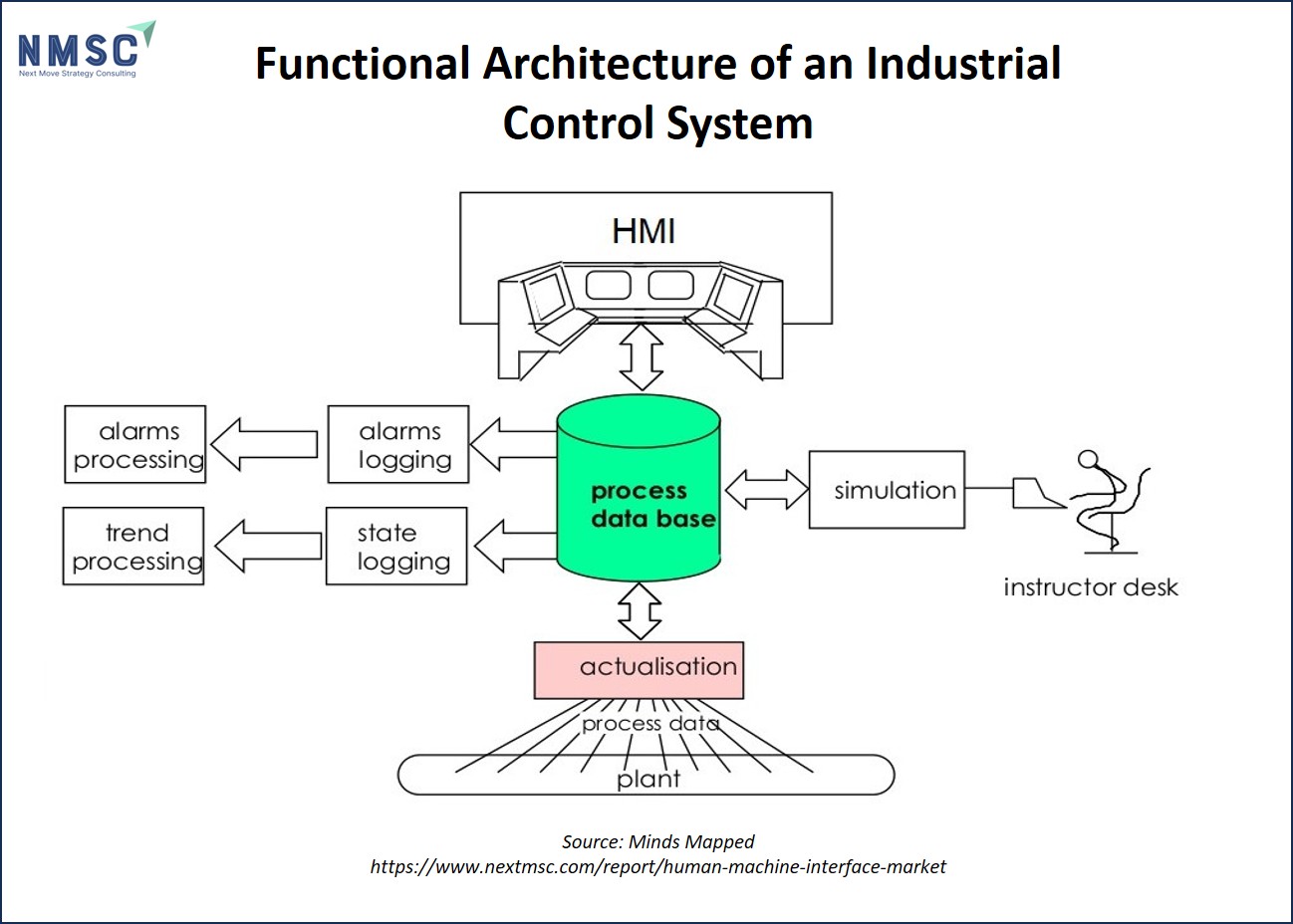
The Data Ecosystem of Human-Machine Interaction
It highlights the HMI as a central intelligence hub rather than just a screen.
-
Real-time Decision Making: The bidirectional arrows between the HMI and the process database suggest that the system isn't just showing data; it’s a two-way communication channel where human input directs the plant.
-
The Human Element: The inclusion of the "instructor desk" and the HMI console emphasizes the shift toward "human-machine integration," where the system is designed to complement human cognition, moving toward the advanced interfaces.
Brain–Computer Interfaces Are Pushing Human–Machine Integration Even Further
While AI-enhanced interfaces are reshaping digital interactions today, brain–computer interfaces represent the next frontier of human–machine communication. BCIs enable direct interaction between the human brain and external devices by interpreting neural signals and converting them into actionable commands.
These systems typically fall into two categories. Non-invasive BCIs use sensors placed on the scalp to detect brain activity, while invasive BCIs involve implanting electrodes into the brain for higher precision. Non-invasive technologies, such as EEG-based systems, are already being used for neurological rehabilitation, cognitive training, and assistive communication tools for patients with severe paralysis.
In healthcare, BCI systems are demonstrating the potential to assist in neurosurgical procedures, support advanced prosthetics, and improve rehabilitation outcomes for neurological disorders. The technology is also expanding into education and entertainment, where neural inputs could power immersive gaming, virtual reality experiences, and cognitive learning platforms.
China has emerged as a significant hub for BCI innovation, with strong government support and an expanding ecosystem of companies and research institutions working on neural interface technologies. The country views BCIs as a strategic industry that intersects biotechnology, information technology, and neuroscience.
Policy initiatives aimed at developing high-tech industries have accelerated research, patent activity, and startup formation in the sector. The technology is also being explored as a response to demographic and healthcare challenges, including aging populations and the rising prevalence of neurological conditions.
Beyond medical applications, BCIs could eventually enable entirely new forms of human-machine collaboration, allowing users to control devices, vehicles, and digital environments using neural signals alone.
Long-Term Industry Impact on the Human Machine Interface (HMI) Market
The convergence of AI-driven interfaces and emerging brain–computer technologies is expected to significantly influence the long-term trajectory of the Human Machine Interface (HMI) Market.
First, the definition of an interface itself is evolving. Traditional graphical user interfaces are gradually being supplemented by voice interaction, gesture recognition, and neural communication technologies. This transition will expand the role of HMI across industries ranging from mobility and industrial automation to healthcare and smart consumer electronics.
Second, personalization will become a core requirement. AI-powered HMI systems capable of learning user behavior in real time will enable adaptive digital environments that dynamically adjust to individual preferences, making technology more seamless and intuitive.
Third, cross-industry integration will accelerate innovation. Automotive, healthcare, robotics, and immersive entertainment platforms are increasingly adopting similar HMI frameworks, creating opportunities for shared technology ecosystems and interoperability.
Finally, the growing complexity of human–machine interactions will place greater emphasis on cybersecurity, ethical AI use, and human-centric design principles. As HMI systems become more deeply integrated with personal data and biological signals, trust, transparency, and data protection will become essential components of interface design.
Next Move Strategy Consulting’s View
According to Next Move Strategy Consulting, the ongoing shift toward intelligent and adaptive interfaces signals a structural transformation within the Human Machine Interface (HMI) Market rather than a short-term technological trend.
The firm notes that AI integration is moving HMI from static control panels toward dynamic interaction ecosystems where systems continuously learn from user behavior. This trend will likely accelerate the development of predictive interfaces capable of responding to user intent before explicit commands are issued.
At the same time, the emergence of brain–computer interfaces represents a longer-term opportunity that could redefine how humans communicate with digital systems. While widespread adoption may still require technological refinement and regulatory alignment, BCIs could eventually expand the HMI landscape into sectors such as neuro-rehabilitation, cognitive computing, and immersive digital environments.
Next Move Strategy Consulting also observes that industries that rely heavily on real-time human-machine interaction such as automotive mobility, robotics, healthcare devices, and smart manufacturing are likely to become early adopters of these advanced interface technologies.
In the coming decade, the convergence of AI, sensor technologies, and neural computing may gradually blur the boundaries between humans and digital systems, turning interfaces from simple interaction points into intelligent partners that enhance human capabilities.
About Next Move Strategy Consulting:
Next Move Strategy Consulting is a premier market research and management consulting firm that has been committed to providing strategically analysed well documented latest research reports to its clients. The research industry is flooded with many firms to choose from, what makes NMSC different from the rest is its top-quality research and the obsession of turning data into knowledge by dissecting every bit of it and providing fact-based research recommendation that is supported by information collected from over 500 million websites, paid databases, industry journals and one on one consultations with industry experts across a diverse range of industry sectors. The high-quality customized research reports with actionable insights and excellent end-to-end customer service help our clients to take critical business decisions that enables them to move beyond time and have competitive edge in the industry.
We have been servicing over 1000 customers globally that includes 90% of the Fortune 500 companies over a decade. Our analysts are constantly tracking various high growth markets and identifying hidden opportunities in each sector or the industry. We provide one of the industry’s best quality syndicate as well as custom research reports across 10 different industry verticals. We are committed to deliver high quality research solutions in accordance to your business needs. Our industry standard delivery solutions that ranges from the pre consultation to after-sales services, provide an excellent client experience and ensure right strategic decision making for businesses.
For more information, please contact:
Next Move Strategy Consulting
5th Floor 867
Boylston St, STE 500
Boston, MA 02116, U.S.
E-Mail: [email protected]
Direct: +1 857 758 5017
Website: www.nextmsc.com
About the Author
 Sanyukta Deb
— Sanyukta Deb is Digital Marketing Team Lead at Next Move Strategy Consulting, where she has led content strategy and technical SEO for the firm's B2B market research publications for over 2 years. Her editorial process translates NextMSC's primary and secondary research — spanning technology, industrial, and consumer sectors — into commercial narratives, backed by search-intent, keyword, and competitive analysis. She brings 5 years of overall experience in digital marketing and content strategy.
Sanyukta Deb
— Sanyukta Deb is Digital Marketing Team Lead at Next Move Strategy Consulting, where she has led content strategy and technical SEO for the firm's B2B market research publications for over 2 years. Her editorial process translates NextMSC's primary and secondary research — spanning technology, industrial, and consumer sectors — into commercial narratives, backed by search-intent, keyword, and competitive analysis. She brings 5 years of overall experience in digital marketing and content strategy.
About the Reviewer
 Debashree Dey
— Debashree Dey is Assistant Manager at Next Move Strategy Consulting, where she supports cross-vertical market content and communications across diverse industries for 6 years. Her professional background includes senior content writing, communications, and published manuscript authorship, with experience developing audience-focused business narratives and maintaining clear, consistent messaging. Her role supports research-led content development and editorial quality across NextMSC publications.
Debashree Dey
— Debashree Dey is Assistant Manager at Next Move Strategy Consulting, where she supports cross-vertical market content and communications across diverse industries for 6 years. Her professional background includes senior content writing, communications, and published manuscript authorship, with experience developing audience-focused business narratives and maintaining clear, consistent messaging. Her role supports research-led content development and editorial quality across NextMSC publications.
















Add Comment