Japan Robot Medicine Lab Accelerates Robotics Market
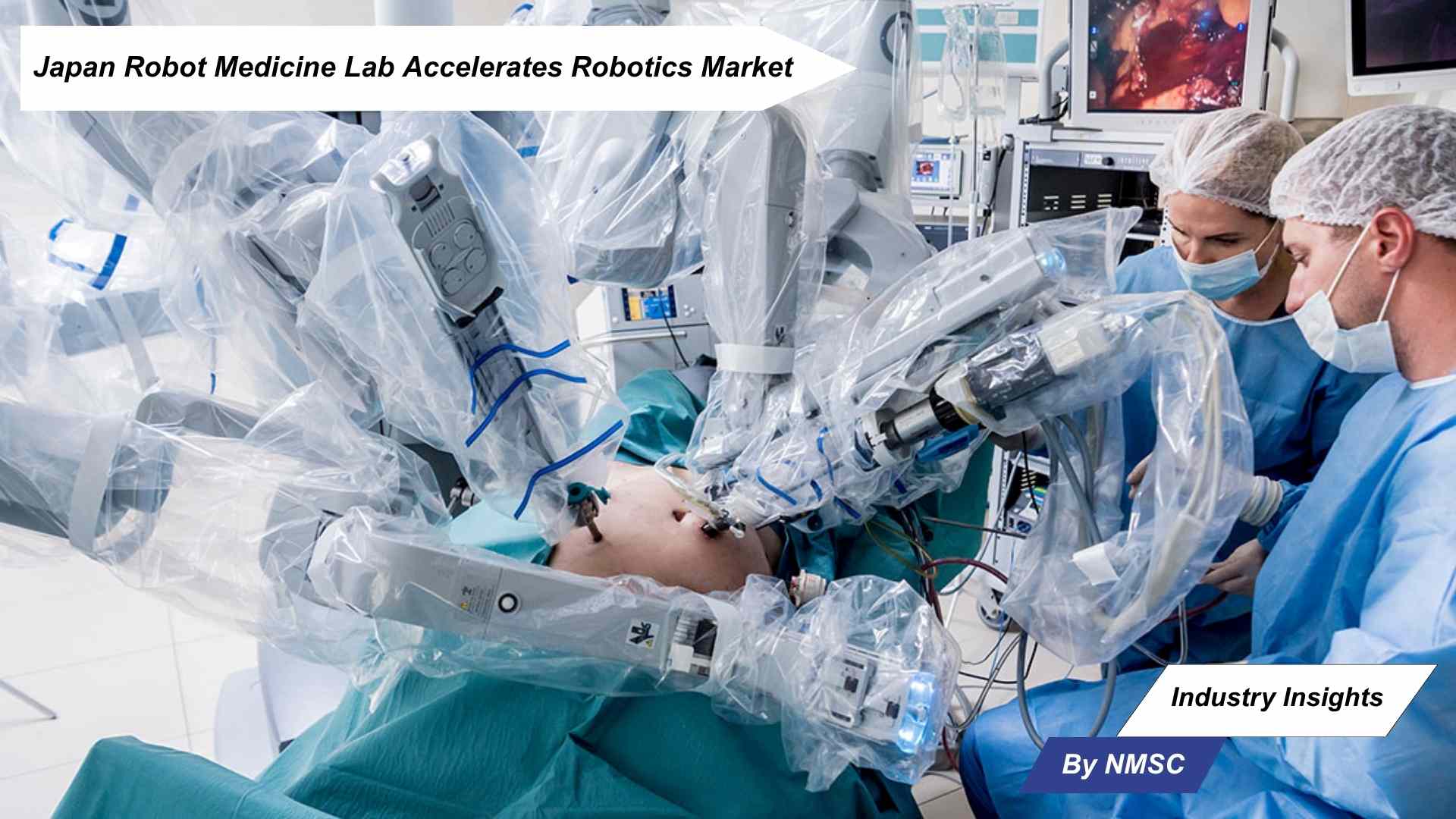
Japan’s Robot-Run Medicine Lab Reshapes Medical Robotics Industry
TOKYO, Japan — May 13, 2026 — Japan’s Institute of Science Tokyo has launched what is being described as the world’s first fully automated medicine laboratory operated entirely by humanoid robots, autonomous systems, and artificial intelligence, signaling a major turning point for the global Medical Robotics industry.
The new robotics-driven facility at the university’s Yushima campus currently operates with 10 robots and no on-site human researchers. The initiative is part of a long-term strategy to automate nearly the entire scientific research cycle, from experimental setup to hypothesis validation and drug discovery.
At the center of the laboratory is the humanoid Maholo LabDroid, a robotic system equipped with dual arms capable of handling delicate scientific procedures traditionally performed by human technicians. The robot can transfer reagents with precision, manage temperature-sensitive materials, and conduct automated cell cultivation tasks with minimal intervention.
A Shift Toward Autonomous Scientific Research
The university plans to significantly expand the robotics infrastructure over the coming years, targeting approximately 2,000 research robots by 2040. Researchers believe the approach could dramatically improve laboratory productivity while addressing growing workforce shortages in advanced medical research environments.
Key capabilities of the robotics laboratory include:
-
Humanoid Laboratory Operations: Robots independently execute delicate medical and chemical procedures.
-
Automated Cell Culture Systems: AI-integrated machines perform repetitive cultivation and monitoring tasks.
-
Continuous Research Operations: The unmanned setup enables around-the-clock experimentation.
-
AI-Driven Scientific Automation: Intelligent systems coordinate workflows and optimize experimental efficiency.
The launch reflects a broader global trend toward AI-powered pharmaceutical research as organizations seek faster and more scalable methods for drug discovery and biotechnology development.
Industry Analysts Forecast Strong Market Momentum
According to healthcare technology analysts, fully autonomous laboratories could become a foundational element in the next generation of pharmaceutical innovation.
“Humanoid robotics combined with AI-driven experimentation represents a transformative shift for medical research infrastructure,” says Sikha Haritwal, Senior Analyst at Next Move Strategy Consulting. “NMSC analysts are observing increased investments in laboratory automation platforms designed to improve precision, reduce operational bottlenecks, and accelerate scientific discovery.”
The announcement also follows recent developments in the United States, where biotechnology firm Insilico Medicine introduced a humanoid robot named Supervisor into its AI-powered drug discovery laboratory. The system is designed to assist with laboratory supervision, equipment handling, and future autonomous scientific workflows.
Global Race Intensifies in AI-Powered Laboratories
Industry experts note that most laboratory equipment worldwide was originally designed for human operation, creating a significant barrier to complete automation. Humanoid robots are increasingly viewed as a practical solution because they can interact with existing instruments and infrastructure without requiring major redesigns.
Japan’s latest breakthrough further reinforces the country’s leadership in robotics engineering and advanced automation. Analysts believe the convergence of humanoid robotics, generative AI, and autonomous laboratory systems could redefine pharmaceutical R&D, biotechnology manufacturing, and precision medicine over the next decade.
As healthcare systems and research institutions face mounting pressure to accelerate innovation, fully automated laboratories may emerge as a central pillar of the future scientific ecosystem.
Source: Interesting Engineering
Prepared By: Prakhyat Chowdhury
About the Author
 Prakhyat Chowdhury
— Prakhyat Chowdhury is a results-driven Market Analyst and data strategist specializing in business intelligence, trend forecasting, and performance-focused market growth. His competitive intelligence frameworks, and data-driven insights enhances strategic planning, operational efficiency, and organizational authority. Known for strong communication, analytical thinking, and multilingual proficiency, he delivers rigorous, objective-led solutions that support scalable business outcomes across industries with professionalism. He consistently aligns quantitative and qualitative analysis with global business goals.
Prakhyat Chowdhury
— Prakhyat Chowdhury is a results-driven Market Analyst and data strategist specializing in business intelligence, trend forecasting, and performance-focused market growth. His competitive intelligence frameworks, and data-driven insights enhances strategic planning, operational efficiency, and organizational authority. Known for strong communication, analytical thinking, and multilingual proficiency, he delivers rigorous, objective-led solutions that support scalable business outcomes across industries with professionalism. He consistently aligns quantitative and qualitative analysis with global business goals.
About the Reviewer
 Sanyukta Deb
— Sanyukta Deb is Digital Marketing Team Lead at Next Move Strategy Consulting, where she has led content strategy and technical SEO for the firm's B2B market research publications for over 2 years. Her editorial process translates NextMSC's primary and secondary research — spanning technology, industrial, and consumer sectors — into commercial narratives, backed by search-intent, keyword, and competitive analysis. She brings 5 years of overall experience in digital marketing and content strategy.
Sanyukta Deb
— Sanyukta Deb is Digital Marketing Team Lead at Next Move Strategy Consulting, where she has led content strategy and technical SEO for the firm's B2B market research publications for over 2 years. Her editorial process translates NextMSC's primary and secondary research — spanning technology, industrial, and consumer sectors — into commercial narratives, backed by search-intent, keyword, and competitive analysis. She brings 5 years of overall experience in digital marketing and content strategy.
















Add Comment