Mexico Mandates NWS Certificates for U.S. Pet Travel
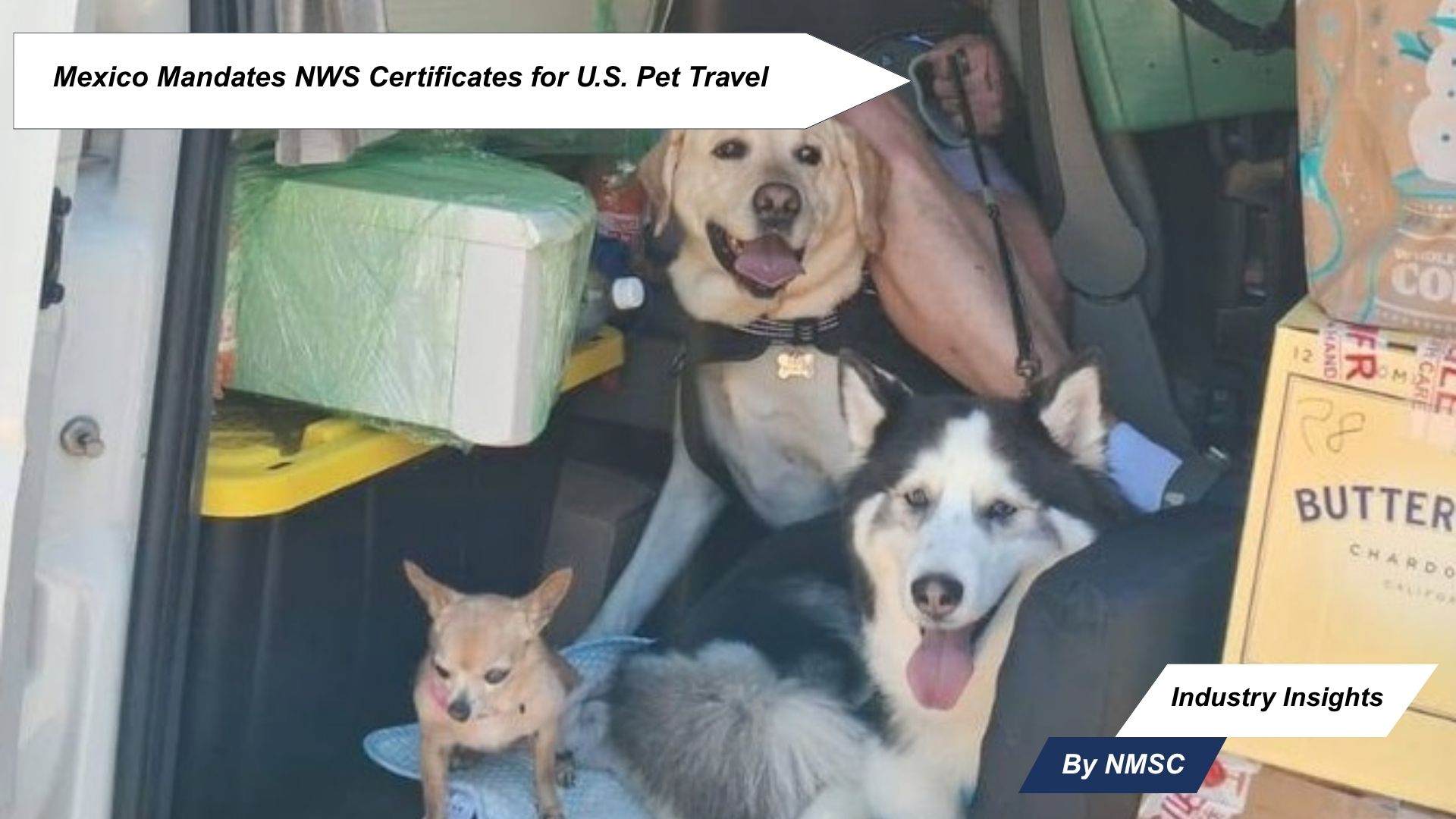
Mexico Mandates Screwworm Inspection Certificates for U.S. Pet Dogs, Birds Effective
WASHINGTON, D.C., United States — August 3, 2026 — Mexico's animal health authorities have mandated new inspection certificates for U.S. pet dogs and birds entering the country, effective today, August 3, 2026, in response to confirmed New World screwworm (NWS) detections in the United States. The regulatory development carries direct implications for the global Veterinary Market is projected to reach USD 172.76 billion by 2030, growing at a CAGR of 6.5%, according to Next Move Strategy Consulting.
Mexico's National Service for Health, Food, and Agrifood Quality (SENASICA) announced the new requirements on July 23, 2026, citing confirmed NWS detections across the United States. Under the updated protocols, pet dogs traveling to Mexico must now carry a NWS Inspection Certificate, while pet birds must present a NWS Inspection Addendum — both documents required to be issued and signed by a USDA-accredited veterinarian within five days of arrival in Mexico.
The new mandate expands upon Mexico's broader biosecurity restrictions already in force since June 5, 2026, which halted U.S. exports of cattle, sheep, goats, swine, equines, commercial ferrets, songbirds, raptors, and ornamental birds. Pet dogs and cats had previously been exempt under established health protocols; however, the August 3 directive now brings pet dogs and birds under formal documentation requirements.
Pet cats remain exempt from the new certification requirements and may continue to cross into Mexico without the NWS inspection certificate, subject to SENASICA inspection upon arrival at the border. Notably, neither the NWS Inspection Certificate for pet dogs nor the NWS Inspection Addendum for pet birds requires APHIS endorsement, according to the U.S. Department of Agriculture's Animal and Plant Health Inspection Service (APHIS).
Key Highlights:
-
Pet dogs traveling to Mexico must carry a USDA-accredited veterinarian-issued NWS Inspection Certificate, valid within five days of arrival in Mexico
-
Pet birds must present a NWS Inspection Addendum in addition to the existing Veterinary Health Certificate for Export, both requiring USDA-accredited veterinarian signatures
-
Pet cats remain exempt from the new documentation requirements and continue to be inspected by SENASICA upon arrival at the border
-
The new requirements follow Mexico's broader livestock and animal import restrictions in effect since June 5, 2026, triggered by NWS detections in the United States
Analyst Insight:
According to analysts at Next Move Strategy Consulting, the enforcement of cross-border NWS inspection protocols represents a significant regulatory inflection point for the veterinary services sector, particularly in U.S. border states. NMSC analysts note that requirements of this nature are expected to increase demand for USDA-accredited veterinary documentation services, parasite prevention treatments, and companion animal health compliance solutions — all of which are key growth drivers within the broader veterinary market. The development further reinforces the critical role of veterinary professionals in national and international biosecurity frameworks, a trend that is likely to sustain elevated service demand through the forecast period.
Industry Outlook:
The enforcement of NWS inspection protocols for pet travel to Mexico reflects a broader pattern of tightening biosecurity regulations reshaping veterinary practice across North America. As NWS detections continue to be reported in proximity to the U.S.-Mexico border, USDA-accredited veterinarians are positioned to assume an increasingly central role in cross-border animal health compliance. The global veterinary market, projected to expand at a CAGR of 6.5% through 2030, is well-positioned to benefit from rising demand for diagnostic services, regulatory documentation, and parasite prevention products within both the companion and production animal segments. Stakeholders across the veterinary supply chain — from pharmaceutical manufacturers to clinical practitioners — are advised to monitor evolving SENASICA and APHIS guidance as the NWS response continues to develop.
Source: American Veterinary Medical Association
For More Information – Download FREE Sample on Veterinary Market Report
Prepared By: Sanyukta Deb

















Add Comment