Microsoft-OpenAI Pact Reshapes AI Cloud Industry
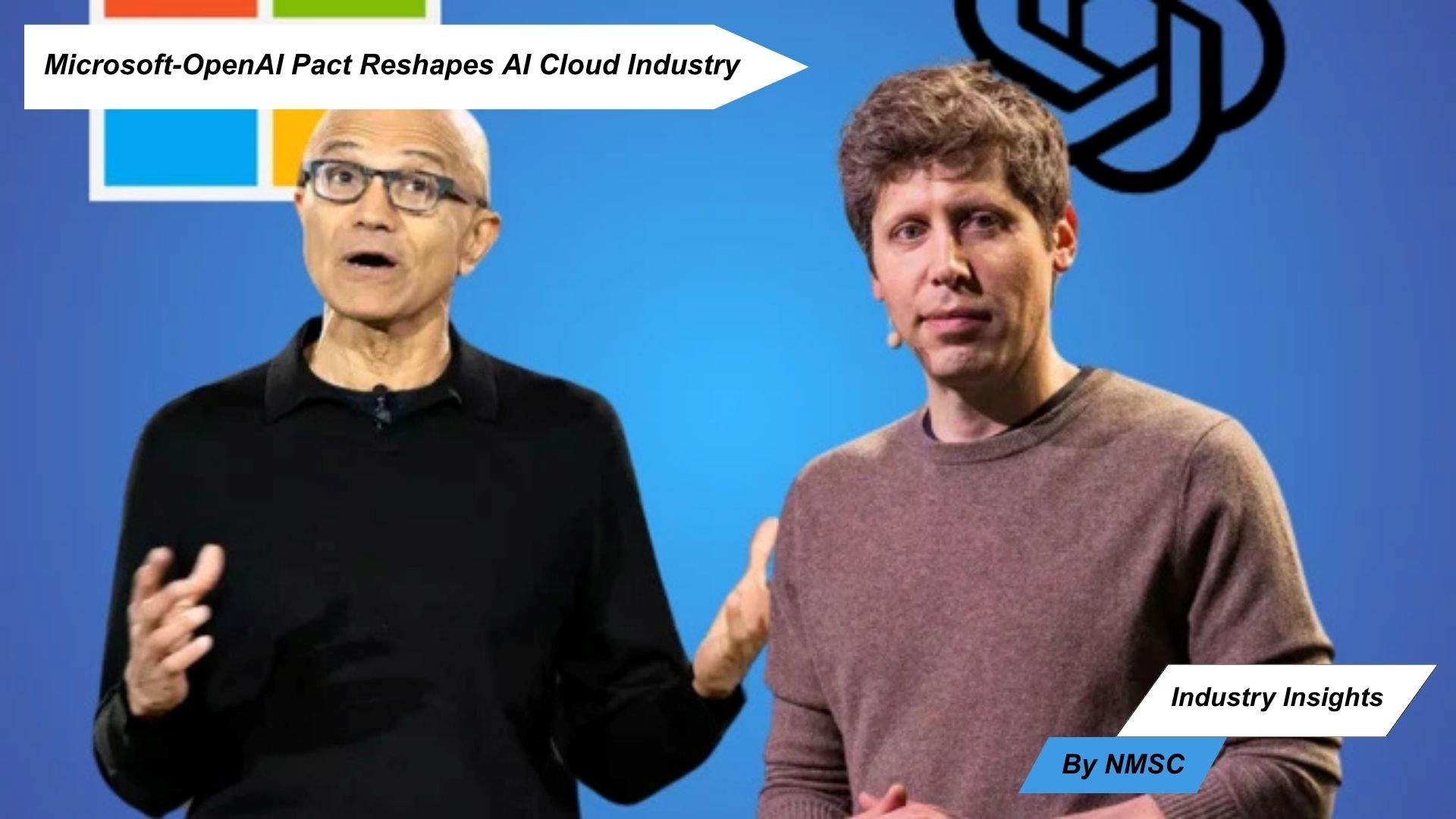
Microsoft-OpenAI Pact Rewrite Sparks Global AI Cloud Industry Update; Competitive Forecast Reset
SEATTLE, United States — April 28, 2026 — Microsoft and OpenAI’s surprise decision to dismantle one of artificial intelligence’s most influential exclusivity agreements is sending immediate shockwaves across the global cloud AI ecosystem, signaling a fresh competitive era for hyperscalers, enterprise AI vendors, and infrastructure investors. Under the revised pact announced Monday, Microsoft will lose its exclusive commercialization rights over OpenAI’s models, while securing long-term royalty participation and licensed IP access through 2032.
The restructuring effectively allows OpenAI to deploy and monetize its generative AI portfolio across rival platforms including Amazon and Google, ending Azure’s privileged hold on enterprise-grade OpenAI access.
A Defining Break in the AI Alliance Model
For nearly seven years, Microsoft’s multibillion-dollar backing of OpenAI positioned the software giant at the center of the AI infrastructure boom. That exclusivity enabled accelerated growth for Azure and strengthened Microsoft’s first-mover advantage in enterprise AI deployment.
The revised agreement, however, confirms that the AI race is no longer being fought through closed bilateral partnerships — it is shifting toward open, multi-cloud distribution and scalable compute arbitrage.
Industry forums and developer communities reacted to the announcement as a “tectonic shift” that could compress enterprise migration timelines and force rapid reassessment of cloud-based AI procurement strategies.
What Changes Under the New Microsoft-OpenAI Terms
Key structural revisions include:
-
End of Microsoft’s exclusive OpenAI model sales rights
-
OpenAI gains freedom to commercialize across AWS, Google Cloud, Oracle, and other providers
-
Microsoft retains non-exclusive IP licensing rights until 2032
-
OpenAI continues revenue sharing with Microsoft through 2030 under a capped ceiling
-
Previous AGI-triggered contractual escape clauses have been removed
These changes materially reduce Microsoft’s monopoly advantage but improve its long-term revenue visibility and capital flexibility, especially as the company aggressively scales its own internal AI stack and enterprise copilots.
NMSC Analysts Signal Broader Cloud AI Spending Redistribution
According to analysts at Next Move Strategy Consulting, the amended partnership is likely to trigger a measurable redistribution of Artificial Intelligence infrastructure spending over the next 12 to 24 months as enterprises gain provider optionality.
“Microsoft is no longer the single gateway to premium OpenAI deployment. That means hyperscale AI demand will now fragment across multiple cloud ecosystems, accelerating pricing competition, inference optimization, and custom model hosting investments,” notes Jayanta Das, Senior Research Analyst at Next Move Strategy Consulting.
NMSC proprietary market tracking indicates that multi-cloud generative AI orchestration demand is now entering a high-growth phase, particularly among regulated industries seeking vendor neutrality, lower latency, and compute redundancy.
Why the Industry Update Matters Now
This is not merely a contract revision — it marks the commercialization of AI as an interoperable infrastructure product rather than a captive software alliance.
For:
-
Cloud Providers: New revenue pathways open for hosting OpenAI workloads
-
Enterprise Buyers: Reduced Azure dependency and greater vendor negotiation power
-
AI Competitors: Faster pressure on pricing, APIs, and model differentiation
-
Investors: Revised valuation assumptions across cloud AI leaders
As Microsoft transitions from exclusive gatekeeper to royalty-backed strategic participant, and OpenAI shifts toward a broader monetization runway ahead of expected capital market activity, the competitive AI cloud market enters a structurally new phase.
The message to the industry is increasingly clear: the age of single-provider AI dominance is ending, and the next wave will be defined by platform portability, compute access, and ecosystem reach.
Source: MSN
Prepared By: By Joydeep Dey
About the Author
 Sanyukta Deb is Digital Marketing Team Lead at Next Move Strategy Consulting, where she has led content strategy and technical SEO for the firm's B2B market research publications for over 2 years. Her editorial process translates NextMSC's primary and secondary research — spanning technology, industrial, and consumer sectors — into commercial narratives, backed by search-intent, keyword, and competitive analysis. She brings 5 years of overall experience in digital marketing and content strategy.
About the Reviewer
 Debashree Dey is Assistant Manager at Next Move Strategy Consulting, where she supports cross-vertical market content and communications across diverse industries for 6 years. Her professional background includes senior content writing, communications, and published manuscript authorship, with experience developing audience-focused business narratives and maintaining clear, consistent messaging. Her role supports research-led content development and editorial quality across NextMSC publications.


















Add Comment