Mind Healing Treatment Market Eyes $304.49 Billion by 2030

U.S. Executive Order 14401 Accelerates Psychedelic Therapy Approvals, Triggering Global Regulatory Realignment as WHO Data Confirms Over One Billion People Living With Mental Disorders
On April 18, 2026, President Donald J. Trump signed Executive Order 14401, titled Accelerating Medical Treatments for Serious Mental Illness, directing the U.S. Department of Health and Human Services (HHS) to fast-track access to innovative therapies — including psychedelic-assisted treatments — for patients with serious, treatment-resistant mental health conditions. The order mandated that the Advanced Research Projects Agency for Health (ARPA-H) allocate at least USD 50 million from existing funds to support state-level programs advancing psychedelic drugs for serious mental illnesses, and directed the FDA and Drug Enforcement Administration to establish a Right to Try pathway for eligible patients to access psychedelic compounds, including ibogaine derivatives.
Six days later, on April 24, 2026, the U.S. Food and Drug Administration responded with a series of concrete regulatory actions, issuing national priority vouchers to three companies conducting clinical trials of serotonin-2A agonist compounds: psilocybin for treatment-resistant depression, psilocybin for major depressive disorder, and methylone for post-traumatic stress disorder (PTSD). The FDA simultaneously authorized the first-ever U.S. clinical study of noribogaine hydrochloride — a derivative of ibogaine — as a potential treatment for alcohol use disorder, marking a historic regulatory precedent in the field of psychedelic medicine.
"These medications have the potential to address the nation's mental health crisis, including conditions like treatment-resistant depression, alcoholism and other serious mental health and substance abuse conditions," said FDA Commissioner Marty Makary, M.D., M.P.H. "As this field moves forward, it is critical that their development is grounded in sound science and rigorous clinical evidence."
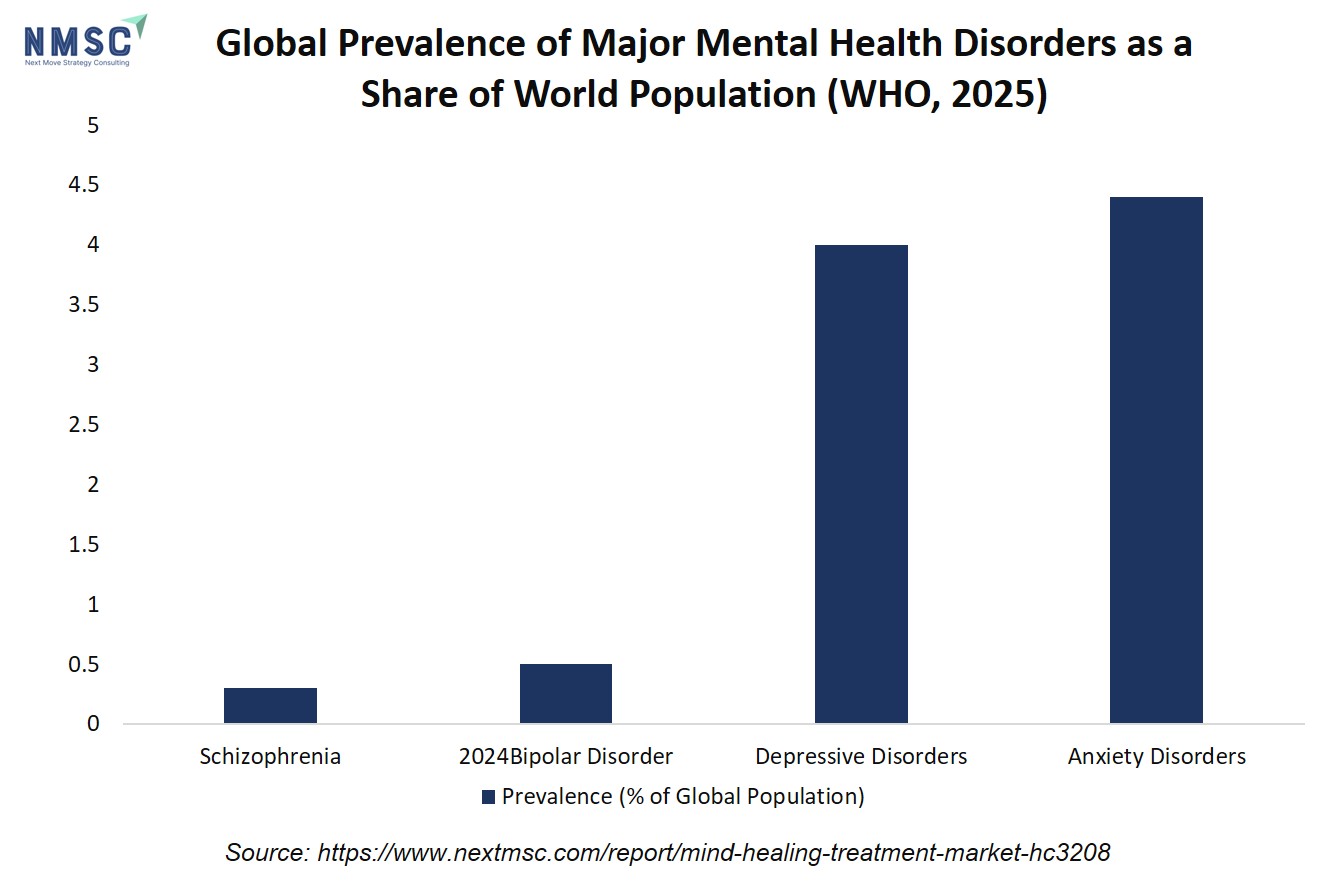
The regulatory intervention arrives at a moment of acute global urgency. In September 2025, the World Health Organization (WHO) released two landmark publications — World Mental Health Today and the Mental Health Atlas 2024 — confirming that more than one billion people worldwide are living with mental health disorders, with depression and anxiety alone costing the global economy an estimated USD 1 trillion annually in lost productivity and healthcare expenditure.
Against this backdrop, the global Mind Healing Treatment Market is projected to reach USD 304.49 billion by 2030, advancing at a compound annual growth rate (CAGR) of 32.4% over the 2025–2030 forecast period, according to Next Move Strategy Consulting (NMSC).
For More Information – Download FREE Sample on Mind Healing Treatment Market Report
The Scale of the Global Mental Health Crisis
The WHO's Mental Health Atlas 2024 — the seventh in a series dating to 2001, drawing on data from 144 countries — presents a sobering assessment of the global mental health landscape. Mental health conditions represent the second-largest cause of long-term disability worldwide, contributing substantially to the loss of healthy life years across all income groups and geographies.
Suicide remains among the most devastating consequences of untreated mental illness, claiming an estimated 727,000 lives in 2021 alone and constituting a leading cause of death among young people across all countries and socioeconomic contexts. Despite global efforts, progress in reducing suicide mortality remains insufficient to meet the United Nations Sustainable Development Goal of a one-third reduction in suicide rates by 2030; on the current trajectory, only a 12% reduction will be achieved by that deadline.
The WHO's data also exposes a stark and persistent investment gap. Median government spending on mental health remains at just 2% of total national health budgets — a figure unchanged since 2017. The disparity between income groups is extreme: high-income countries spend up to USD 65 per person annually on mental health services, while low-income countries allocate as little as USD 0.04 per person. The global median number of mental health workers stands at 13 per 100,000 people, with extreme shortages concentrated in low- and middle-income countries.
Key Global Mental Health Indicators by Country Income Group (WHO Mental Health Atlas 2024)
|
Indicator |
Low-Income Countries |
High-Income Countries |
|
Government Mental Health Spending Per Capita (USD/year) |
USD 0.04 |
Up to USD 65 |
|
Mental Health Budget as % of Total Health Budget |
Below global median |
Above global median |
|
Mental Health Workers per 100,000 Population |
Extreme shortage |
Significantly above median |
|
Share of Affected Individuals Receiving Treatment |
Fewer than 10% |
Over 50% |
|
Countries with Rights-Based Mental Health Legislation |
Minority |
Majority |
|
Countries with Distinct Mental Health Policies |
Minority |
Majority |
|
Countries Fully Transitioned to Community-Based Care |
Very few |
Minority |
|
Countries Meeting ≥3 of 5 WHO Primary Care Integration Criteria |
Partial |
Majority |
Executive Order 14401: A Structural Inflection Point for the Mind Healing Treatment Sector
Executive Order 14401 represents the most consequential U.S. federal policy intervention in mental health treatment in decades, with implications that extend well beyond domestic borders. The order explicitly acknowledges that over 14 million American adults have a serious mental illness, and that approximately 8 million are on prescription medication for these conditions — yet many fail to achieve sustained improvement through standard pharmacological therapies.
The order's provisions are operationally specific. Section 2 directs the FDA Commissioner to issue national priority vouchers to psychedelic drugs that have received Breakthrough Therapy designation. Section 3 mandates ARPA-H to allocate at least USD 50 million to support state-level psychedelic medicine programs. Section 4 directs HHS, FDA, and the Department of Veterans Affairs to sign data-sharing memoranda to accelerate clinical evidence generation. Section 5 directs the Attorney General to initiate rescheduling review for any Schedule I substance that has successfully completed Phase 3 clinical trials for a serious mental health disorder.
The veteran population is a particular focus. The order notes that for over 20 years, more than 6,000 veteran suicides have occurred annually in the United States, with the current veteran suicide rate more than twice that of the non-veteran adult population — a public health emergency that has resisted resolution through conventional pharmacological approaches.
For the global mind healing treatment sector, the regulatory signal is unambiguous: the world's largest pharmaceutical regulatory authority is actively creating accelerated pathways for non-conventional, mind-body, and psychedelic-assisted therapies. This development is expected to catalyze parallel regulatory reviews in the European Medicines Agency (EMA), Health Canada, the UK's Medicines and Healthcare products Regulatory Agency (MHRA), and the Therapeutic Goods Administration (TGA) of Australia, as jurisdictions assess the implications of U.S. precedent for their own approval frameworks.
Market Drivers: Escalating Prevalence, Consumer Shift, and Integration into Mainstream Healthcare
Three structural forces are driving the mind healing treatment market's exceptional growth trajectory, as identified in the NMSC report.
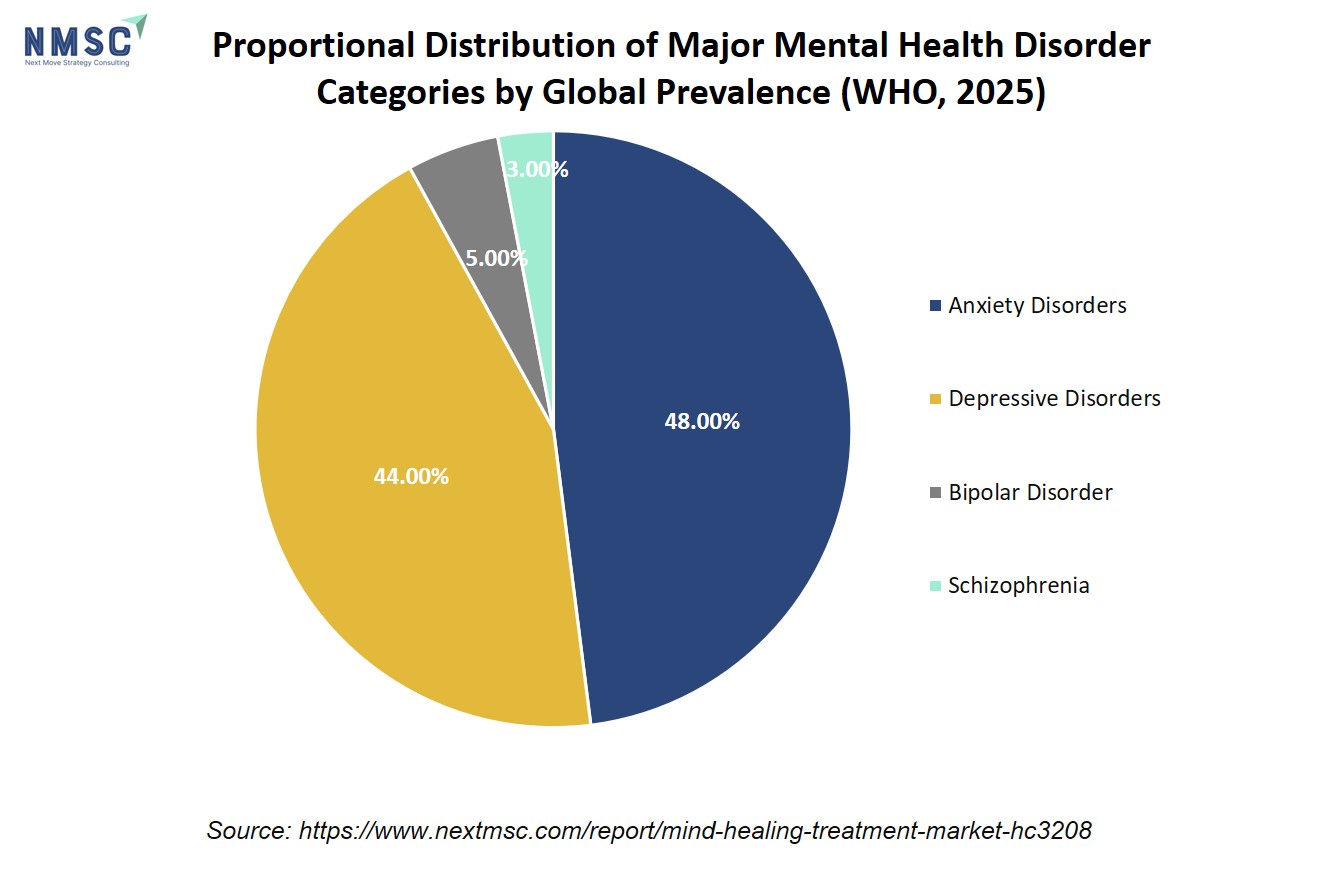
First, the escalating global prevalence of mental health disorders is generating sustained demand for effective treatment alternatives. Globally, over 450 million individuals suffer from various mental and behavioural disorders, and the correlation between mental health disorders and chronic physical illnesses is three times higher compared to the general population. Projections suggest that depression could become the leading health risk worldwide by 2030.
Second, consumer dissatisfaction with conventional pharmacological treatments is accelerating demand for non-invasive, drug-free, and holistic alternatives. Many individuals experiencing mental health challenges express dissatisfaction with traditional medications, citing unwanted side effects or insufficient efficacy. This shift in consumer behaviour is pushing the market toward therapies perceived as gentler, non-invasive, and with fewer adverse effects — including Transcranial Magnetic Stimulation (TMS), mindfulness-based interventions, hypnotherapy, neuro-linguistic programming (NLP), acupuncture, and energy healing modalities.
Third, the growing integration of mind-body therapies into conventional healthcare settings is expanding the market's institutional legitimacy. A growing body of research underscores the efficacy of mind-body therapies (MBT) — encompassing meditation, yoga, tai chi, acupuncture, hypnotherapy, and biofeedback — for conditions including chronic pain, insomnia, anxiety, depression, cancer-related symptoms, and cardiovascular disease. Bibliometric analysis of global research trends in MBT indicates an increasing number of studies examining their relevant aspects, suggesting widespread and accelerating scientific attention.
Market Restraints and Structural Challenges
Despite its exceptional growth trajectory, the mind healing treatment market faces substantive structural challenges. The most significant restraint is the persistent lack of high-level, consistently reproducible scientific evidence and recognized evaluation methods for certain therapeutic modalities. The subjective nature of some MBT evaluations and the complexities of their mechanisms of action pose challenges for traditional scientific scrutiny, complicating regulatory approval processes and institutional adoption.
The WHO's Mental Health Atlas 2024 reinforces this concern at the systemic level: only 45% of countries have laws in full compliance with international human rights standards for mental health, and fewer than 10% of countries have fully transitioned to community-based care models. This regulatory fragmentation creates uneven market conditions across geographies, with practitioners and platforms operating under widely divergent legal and reimbursement frameworks.
Competition from established biomedical models and the influence of pharmaceutical interests also represents a structural headwind, as does the high cost of developing scalable digital health platforms and navigating regulatory complexities for mental wellness solutions.
Global Mental Health Treatment Coverage and Investment Gap — Key Indicators (WHO, 2025)
|
Indicator |
Value |
Reference Year |
|
Global population living with mental health disorders |
Over 1 billion |
2025 |
|
Annual economic cost of depression and anxiety (lost productivity) |
USD 1 trillion |
2025 |
|
Estimated global suicide deaths |
727,000 |
2021 |
|
Median government mental health spending (% of health budget) |
2% |
2024 |
|
Government mental health spending per capita — high-income countries |
Up to USD 65 |
2024 |
|
Government mental health spending per capita — low-income countries |
As little as USD 0.04 |
2024 |
|
Global median mental health workers per 100,000 population |
13 |
2024 |
|
Countries with distinct mental health policies |
81% |
2024 |
|
Countries with rights-based legislation in full compliance |
45% |
2024 |
|
Countries fully transitioned to community-based care |
Fewer than 10% |
2024 |
|
Share of affected individuals receiving care — low-income countries |
Fewer than 10% |
2024 |
|
Share of affected individuals receiving care — high-income countries |
Over 50% |
2024 |
Regional Market Dynamics
North America maintains its position as the dominant regional market for mind healing treatments, underpinned by the highest concentration of research output, institutional investment, and regulatory activity. The United States accounts for a substantial share of global MBT research publications and leads international collaborations in the field. Executive Order 14401 and the FDA's April 2026 regulatory actions are expected to accelerate clinical trial activity, venture capital deployment, and platform development across the North American market.
Europe presents a robust and growing market, with the United Kingdom and Germany ranking among the top nations for MBT research publications. The UK and Spain exhibit high centrality in international research cooperation, fostering a collaborative environment for the development and adoption of new therapies. European healthcare systems' emphasis on evidence-based practice and patient-centered care aligns closely with the mind healing treatment sector's value proposition, while the European Green Deal's focus on holistic well-being is creating institutional demand for non-pharmacological mental health interventions.
Asia-Pacific is registering the most accelerated growth trajectory, driven by China's position as the second-highest contributor to MBT research publications globally, South Korea's active research community, and the deep cultural integration of traditional mind-body practices — including acupuncture, meditation, and tai chi — across the region. The region's growing middle class, expanding digital health infrastructure, and increasing awareness of mental health as a public health priority are creating substantial demand for both traditional and technology-enabled mind healing solutions.
Competitive Landscape and Strategic Developments
The global mind healing treatment market is characterized by a diverse and evolving competitive landscape, spanning digital health platforms, integrative healing centers, pharmaceutical innovators, and technology-enabled wellness providers. Key players profiled in the NMSC report include Headspace Inc., Calm Minds Healing Center, The Healing Company, Breathe Life Healing Centers, NAMI, American Foundation for Suicide, Mindset Health Pty Ltd, The Jed Foundation, Mind Healing & Wellness Center, Healing Harmony, CRC, Medtronic, Acadia Healthcare, Teladoc Health Inc., and NueCo Holdings P.B.C.
Strategic differentiation is increasingly centered on the integration of AI-driven analytics, telehealth delivery, and personalized intervention design. In March 2023, The Healing Company Inc. finalized the acquisition of the Wellbeing Experiences Businesses from Chopra Global LLC for USD 8 million, integrating Chopra's meditation app, physical product line, and licensed experiences including the Chopra Health Retreat. In the same month, Mindset Health raised USD 12 million to enhance its digital hypnosis applications and expand evidence-based therapies for anxiety, depression, and chronic pain, leveraging partnerships with Baylor University and Monash University.
The sector's most significant strategic opportunity lies in the integration of mind healing therapies within a holistic, whole-person healthcare framework — treating the entire individual across physical, emotional, mental, and spiritual dimensions rather than isolated symptoms. Companies such as All Points North (APN), which launched a new facility in London's Harley Street Medical Area in March 2023 offering ketamine-assisted healing, deep transcranial magnetic stimulation (dTMS), and mindfulness-based therapies, exemplify this integrative model.
The UN's World Youth Report, published in February 2026, further reinforced the urgency of inclusive, youth-informed mental health policies — highlighting the need for accessible, non-stigmatizing treatment modalities that resonate with younger demographics, a segment increasingly receptive to digital and holistic mental health solutions.
Bottom Line
The global mind healing treatment market is positioned at a structural inflection point, with converging regulatory, epidemiological, and technological forces driving what NMSC projects to be one of the most rapid market expansions in the global healthcare sector — a 32.4% CAGR through 2030. Executive Order 14401 and the FDA's April 2026 regulatory actions represent a watershed moment, legitimizing psychedelic-assisted and non-conventional therapies within the world's most influential regulatory framework and signaling a durable shift in the global treatment paradigm. The WHO's confirmation that over one billion people live with mental disorders — against a backdrop of chronically underfunded and understaffed mental health systems — establishes a demand floor of extraordinary scale.
Key risks include the persistent challenge of scientific validation for certain therapeutic modalities, regulatory fragmentation across jurisdictions, and the high capital requirements for developing clinically validated, scalable digital health platforms. However, the structural tailwinds — rising prevalence, consumer demand for non-pharmacological alternatives, institutional integration of mind-body therapies, and accelerating regulatory support — are sufficiently powerful to sustain exceptional growth across the forecast period. For investors and strategic planners, North America offers the most immediate opportunity driven by regulatory momentum, while Asia-Pacific presents the highest long-term growth potential anchored in cultural alignment and demographic scale. Vendors capable of delivering evidence-based, AI-enabled, and clinically integrated mind healing solutions are best positioned to capture disproportionate market share as the sector matures.
About Next Move Strategy Consulting
Next Move Strategy Consulting is a premier market research and management consulting firm that has been committed to provide strategically analysed well documented latest research reports to its clients. The research industry is flooded with many firms to choose from, what makes NMSC different from the rest is its top-quality research and the obsession of turning data into knowledge by dissecting every bit of it and providing fact-based research recommendation that is supported by information collected from over 500 million websites, paid databases, industry journals and one on one consultations with industry experts across a diverse range of industry sectors. The high-quality customized research reports with actionable insights and excellent end-to-end customer service help our clients to take critical business decisions that enables them to move beyond time and have competitive edge in the industry.
We have been servicing over 1000 customers globally that includes 90% of the Fortune 500 companies over a decade. Our analysts are constantly tracking various high growth markets and identifying hidden opportunities in each sector or the industry. We provide one of the industry's best quality syndicate as well as custom research reports across 10 different industry verticals. We are committed to deliver high quality research solutions in accordance to your business needs. Our industry standard delivery solutions that ranges from the pre consultation to after-sales services, provide an excellent client experience and ensure right strategic decision making for businesses.
For more information, please contact:
Next Move Strategy Consulting
5th Floor 867
Boylston St, STE 500,
Boston, MA 02116, U.S.
E-Mail: [email protected]
Direct: +1-217-650-7991
Website: www.nextmsc.com
About the Author
 Sanyukta Deb
— Sanyukta Deb is Digital Marketing Team Lead at Next Move Strategy Consulting, where she has led content strategy and technical SEO for the firm's B2B market research publications for over 2 years. Her editorial process translates NextMSC's primary and secondary research — spanning technology, industrial, and consumer sectors — into commercial narratives, backed by search-intent, keyword, and competitive analysis. She brings 5 years of overall experience in digital marketing and content strategy.
Sanyukta Deb
— Sanyukta Deb is Digital Marketing Team Lead at Next Move Strategy Consulting, where she has led content strategy and technical SEO for the firm's B2B market research publications for over 2 years. Her editorial process translates NextMSC's primary and secondary research — spanning technology, industrial, and consumer sectors — into commercial narratives, backed by search-intent, keyword, and competitive analysis. She brings 5 years of overall experience in digital marketing and content strategy.
About the Reviewer
 Debashree Dey
— Debashree Dey is Assistant Manager at Next Move Strategy Consulting, where she supports cross-vertical market content and communications across diverse industries for 6 years. Her professional background includes senior content writing, communications, and published manuscript authorship, with experience developing audience-focused business narratives and maintaining clear, consistent messaging. Her role supports research-led content development and editorial quality across NextMSC publications.
Debashree Dey
— Debashree Dey is Assistant Manager at Next Move Strategy Consulting, where she supports cross-vertical market content and communications across diverse industries for 6 years. Her professional background includes senior content writing, communications, and published manuscript authorship, with experience developing audience-focused business narratives and maintaining clear, consistent messaging. Her role supports research-led content development and editorial quality across NextMSC publications.

















Add Comment