Motion-Enhanced Sensor Breakthrough Drives Imaging Market
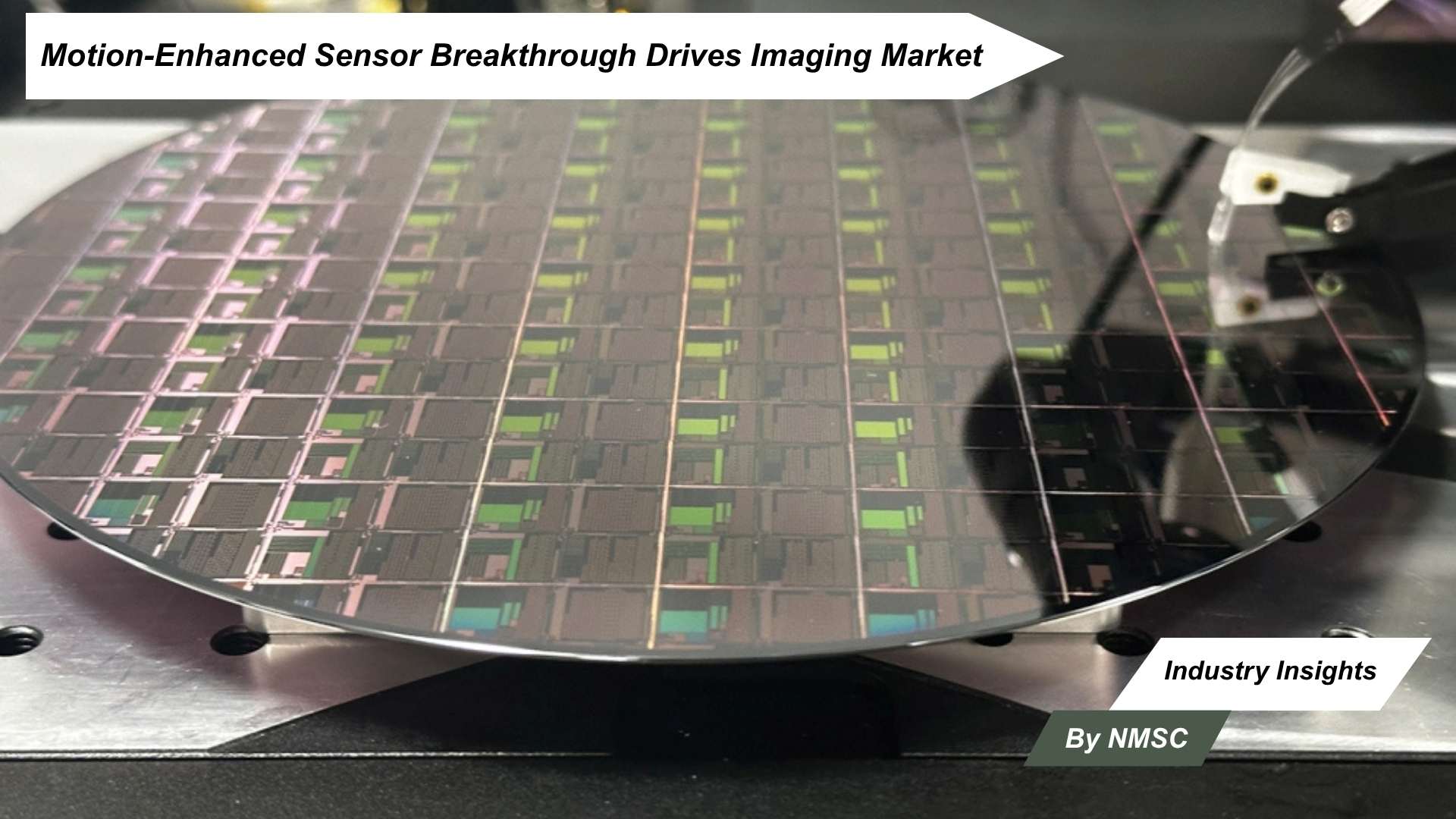
Tsinghua Motion Sensor Breakthrough Boosts Imaging Precision
BEIJING, China — April 28, 2026 — Researchers at Tsinghua University have unveiled a motion-enhanced digital image sensor that overcomes a critical limitation in pixel miniaturization, marking a significant advancement in high-resolution imaging technology. The innovation, detailed in Nature Electronics and reported by Tech Xplore, introduces a novel way to capture ultra-detailed images without shrinking pixel size.
Reinventing Resolution Beyond Pixel Scaling
Traditional digital image sensors (DIS) improve resolution by packing more pixels into smaller spaces. However, this method often reduces light sensitivity and increases noise, leading to grainy images—especially in low-light conditions.
The Tsinghua research team, led by Xiaoguang Zhao, has developed a new imaging paradigm that bypasses these constraints. Instead of relying solely on pixel miniaturization, the system integrates a microelectromechanical system (MEMS) that subtly shifts the sensor during image capture, enabling it to gather more spatial information.
Key Technological Highlights:
-
MEMS-Driven Motion Control: Enables sub-pixel shifts for enhanced data capture
-
33.7× SBP Improvement: Dramatically increases spatial bandwidth product, boosting detail richness
-
Decoupled Sampling Mechanism: Sampling resolution determined by actuator precision, not pixel size
-
Chip-Scale Integration: Compatible with compact electronic devices via flip-chip bonding
A New Imaging Paradigm Gains Ground
The innovation introduces what researchers describe as a spatially modulated imaging approach, grounded in Fourier optics theory. By precisely controlling sensor displacement at nanometer scales, the system effectively enhances resolution while maintaining signal quality.
Experimental validation demonstrated a reduction in equivalent sampling period from 3.6 μm to 0.62 μm, highlighting the sensor’s ability to capture significantly finer details without compromising performance.
According to NMSC analysts, this breakthrough signals a strategic pivot in the imaging Sensor Market. “The industry is approaching the physical limits of pixel scaling,” notes an analyst at Next Move Strategy Consulting. “This development highlights how hybrid solutions combining hardware motion and computational imaging can redefine resolution standards.”
Future Applications and Market Outlook
The motion-enhanced sensor could unlock new capabilities across advanced imaging applications, including precise object tracking, astronomical observation, and next-generation medical imaging systems.
Looking ahead, the research team is exploring advanced scanning techniques such as Lissajous patterns and non-uniform sampling strategies to further optimize performance. Efforts are also underway to enable large-scale manufacturing through MEMS-CMOS co-fabrication.
As demand for ultra-high-resolution imaging accelerates across industries, this innovation positions motion-assisted sensing as a key driver of next-generation sensor market growth.
Source: Tech Xplore
Prepared By: Prakhyat Chowdhury
About the Author
 Sanyukta Deb
— Sanyukta Deb is Digital Marketing Team Lead at Next Move Strategy Consulting, where she has led content strategy and technical SEO for the firm's B2B market research publications for over 2 years. Her editorial process translates NextMSC's primary and secondary research — spanning technology, industrial, and consumer sectors — into commercial narratives, backed by search-intent, keyword, and competitive analysis. She brings 5 years of overall experience in digital marketing and content strategy.
About the Reviewer
 Debashree Dey
— Debashree Dey is Assistant Manager at Next Move Strategy Consulting, where she supports cross-vertical market content and communications across diverse industries for 6 years. Her professional background includes senior content writing, communications, and published manuscript authorship, with experience developing audience-focused business narratives and maintaining clear, consistent messaging. Her role supports research-led content development and editorial quality across NextMSC publications.

















Add Comment