Nvidia H200 Exports Boost the AI Chips Industry Updates
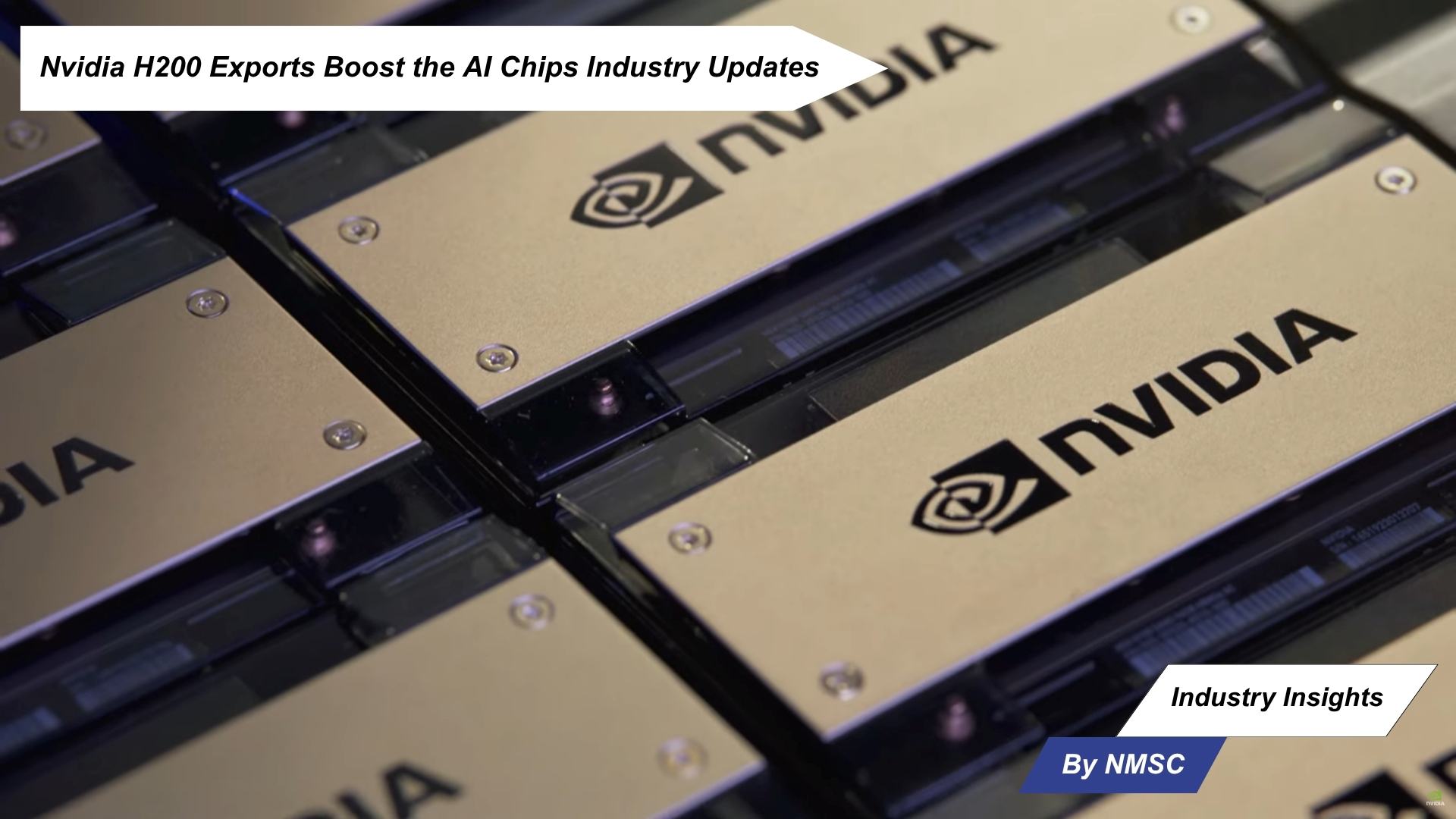
U.S. Clears Nvidia H200 Chip Sales to Chinese Firms Amid AI Industry Shift
WASHINGTON, U.S. — May 14, 2026 — The United States has approved the sale of Nvidia’s H200 artificial intelligence chips to 10 Chinese companies, marking a significant development in the global AI semiconductor landscape as Nvidia CEO Jensen Huang pushes for broader market access amid intensifying geopolitical and technology competition.
The approval comes at a pivotal moment for the AI infrastructure market, where demand for high-performance computing chips continues to surge across cloud computing, generative AI, and enterprise automation sectors. The decision is widely viewed as a calculated move balancing national security concern with the commercial realities of the rapidly expanding AI economy.
A Strategic Opening in the AI Chip Race
The H200 chip, one of NVIDIA Corporation’s advanced AI accelerators, is designed to support large-scale AI model training and inference workloads. The approval allows selected Chinese firms to access high-bandwidth AI computing capabilities while remaining within U.S. export control parameters.
Industry analysts believe the development could ease pressure on Nvidia’s China business, which has faced tightening restrictions over the past several years.
Key Developments Include:
-
U.S. regulators cleared H200 chip exports to 10 Chinese firms under controlled licensing conditions.
-
Nvidia continues seeking broader regulatory flexibility to maintain competitiveness in China’s AI market.
-
The decision reflects growing global dependence on AI compute infrastructure across industries.
According to analysts at Next Move Strategy Consulting (NMSC), the move underscores the increasing complexity of global semiconductor supply chains and the strategic importance of AI accelerators in future digital economies.
“Artificial Intelligence Chips are no longer viewed solely as hardware components; they are now strategic assets shaping national competitiveness,” noted an NMSC semiconductor analyst. “Selective export approvals indicate governments are attempting to balance technological leadership with economic engagement.”
China Remains Critical to AI Semiconductor Demand
China continues to represent one of the world’s largest markets for AI infrastructure, despite ongoing restrictions surrounding advanced semiconductor technologies. Companies operating in cloud services, autonomous systems, robotics, and industrial AI remain heavily dependent on high-performance GPUs for model development.
The approval of H200 sales may also signal a broader effort by U.S. authorities to establish clearer boundaries between restricted military applications and commercial AI deployment.
Market observers say Nvidia’s continued engagement with Chinese enterprises reflects the company’s strategy to preserve market share while adapting products to evolving regulatory frameworks.
Industry Outlook Signals Intensifying Competition
The AI chips market is expected to witness accelerated growth as governments and enterprises invest heavily in sovereign AI infrastructure, data centers, and advanced computing systems.
NMSC analysts indicate that policy-driven semiconductor controls will continue influencing global investment patterns, manufacturing strategies, and supply chain diversification efforts throughout 2026.
As the global AI race intensifies, the U.S. approval for Nvidia’s H200 chip exports highlights the delicate balance between technological control and commercial expansion in one of the world’s most strategically important industries.
Source: CNBC
Prepared By: Prakhyat Chowdhury
About the Author
 Sanyukta Deb
— Sanyukta Deb is Digital Marketing Team Lead at Next Move Strategy Consulting, where she has led content strategy and technical SEO for the firm's B2B market research publications for over 2 years. Her editorial process translates NextMSC's primary and secondary research — spanning technology, industrial, and consumer sectors — into commercial narratives, backed by search-intent, keyword, and competitive analysis. She brings 5 years of overall experience in digital marketing and content strategy.
Sanyukta Deb
— Sanyukta Deb is Digital Marketing Team Lead at Next Move Strategy Consulting, where she has led content strategy and technical SEO for the firm's B2B market research publications for over 2 years. Her editorial process translates NextMSC's primary and secondary research — spanning technology, industrial, and consumer sectors — into commercial narratives, backed by search-intent, keyword, and competitive analysis. She brings 5 years of overall experience in digital marketing and content strategy.
About the Reviewer
 Debashree Dey
— Debashree Dey is Assistant Manager at Next Move Strategy Consulting, where she supports cross-vertical market content and communications across diverse industries for 6 years. Her professional background includes senior content writing, communications, and published manuscript authorship, with experience developing audience-focused business narratives and maintaining clear, consistent messaging. Her role supports research-led content development and editorial quality across NextMSC publications.
Debashree Dey
— Debashree Dey is Assistant Manager at Next Move Strategy Consulting, where she supports cross-vertical market content and communications across diverse industries for 6 years. Her professional background includes senior content writing, communications, and published manuscript authorship, with experience developing audience-focused business narratives and maintaining clear, consistent messaging. Her role supports research-led content development and editorial quality across NextMSC publications.

















Add Comment