CGMS Market Update: Landmark Survival Study at EASD 2026
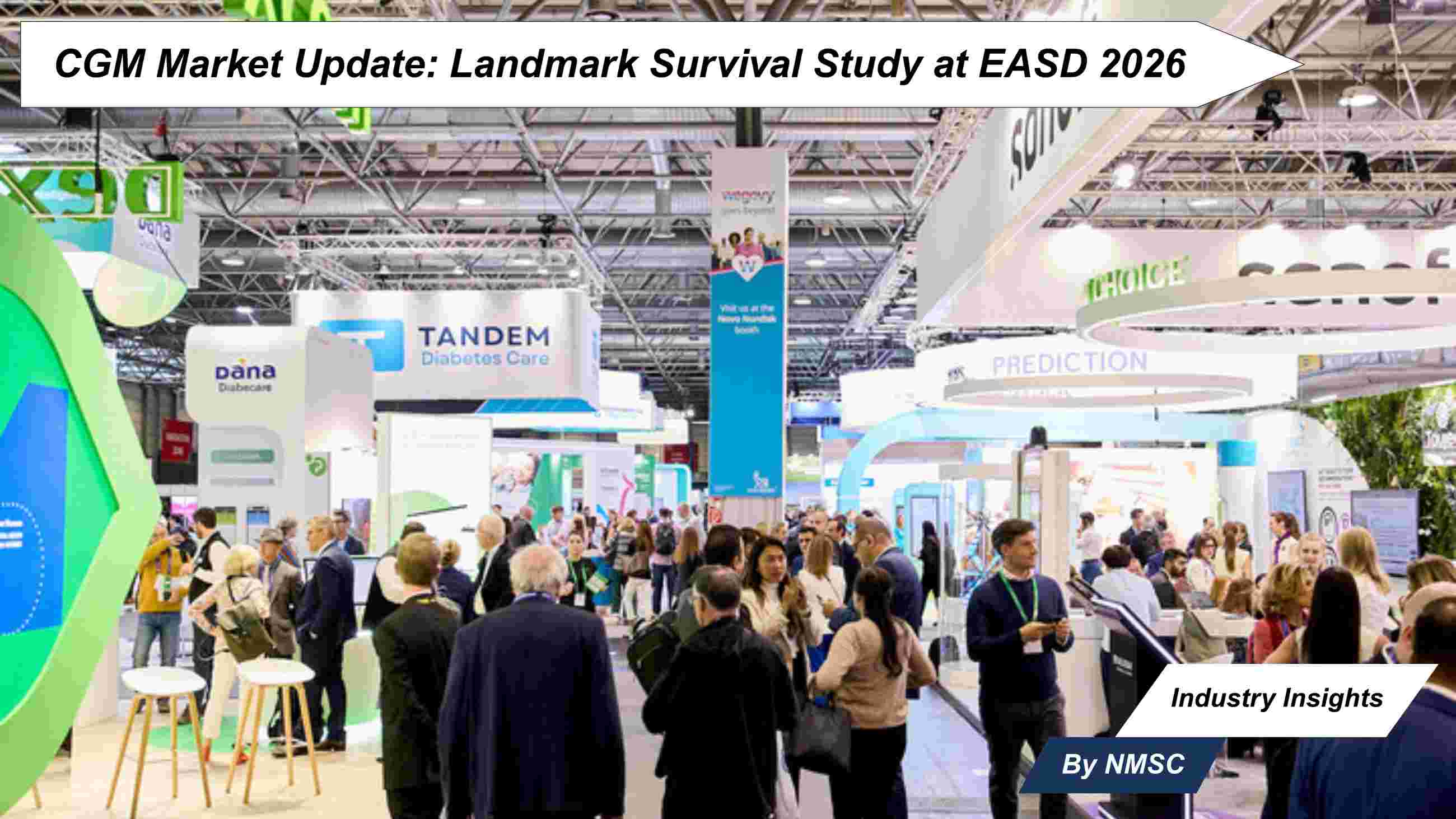
CGM Use Linked to 44% Lower Mortality Risk in Type 2 Diabetes, EASD 2026 Study Reveals
MILAN, Italy — September 28, 2026 — A landmark study presented today at the 62nd Annual Meeting of the European Association for the Study of Diabetes (EASD) in Milan has found that continuous glucose monitoring (CGM) use is associated with a 44% lower risk of death at 12 months among adults with Type 2 diabetes on basal insulin therapy delivering some of the most compelling clinical evidence yet for the expanding Continuous Glucose Monitoring Systems (CGMS) market, which is projected to reach USD 16.05 billion by 2030, growing at a CAGR of 9.7%.
The findings, sourced from an analysis of anonymized electronic health records of more than 140 million Americans via the Truveta platform, represent the first evidence of an association between advanced CGM technologies and a measurably lower risk of death in people with Type 2 diabetes receiving basal insulin therapy. The study employed a target trial emulation methodology a rigorous approach designed to closely mirror a randomized clinical trial comparing 13,935 CGM users against 13,935 matched non-CGM users across 29 baseline characteristics.
At 12 months, CGM users were 44% less likely to die from any cause compared with non-users, with mortality occurring in 1.16% of CGM users versus 2.09% of non-users. At 24 months, the risk of death from any cause remained 35% lower among CGM users (2.12% vs. 3.26%). The average participant age was 58 years, with 47% female representation across both cohorts.
Beyond mortality, the study documented a 26% lower risk of a new macrovascular event including heart attack, heart failure, stroke, or peripheral artery disease among CGM users at 12 months, and a 24% lower risk at 24 months. Notably, heart failure hospitalizations were 54% lower among CGM users at 12 months and 47% lower at 24 months. A separate French observational study involving more than 253,000 people with Type 2 diabetes further reinforced these findings, reporting that hospitalizations for acute diabetes events including severe hyperglycemia, hypoglycemia, and diabetes-induced coma decreased by 81% among non-insulin therapy users, 56% among those on multiple daily insulin injections, and 47% among basal insulin users following CGM initiation.
Key Highlights:
-
Mortality reduction: CGM use was associated with a 44% lower risk of all-cause death at 12 months and a 35% lower risk at 24 months among Type 2 diabetes patients on basal insulin.
-
Cardiovascular protection: The risk of a new macrovascular event was 26% lower at 12 months and 24% lower at 24 months among CGM users versus non-users.
-
Hospitalization impact: Heart failure hospitalizations were approximately halved among CGM users at both 12 months (54% lower) and 24 months (47% lower).
-
Broad real-world evidence base: The study drew on the Truveta platform, encompassing anonymized electronic health records of over 140 million Americans, with findings consistent across multiple sensitivity analyses.
Analyst Insight:
According to analysts at Next Move Strategy Consulting, the EASD 2026 findings carry significant commercial implications for the global CGMS market. The demonstration of a statistically meaningful association between CGM adoption and reduced all-cause mortality in a large, real-world Type 2 diabetes population substantially strengthens the clinical and economic case for broader CGM reimbursement and prescribing particularly among the estimated 63 million people worldwide who rely on insulin to manage Type 2 diabetes. NMSC analysts note that as payers and health systems increasingly prioritize outcomes-based evidence, data of this magnitude is likely to accelerate coverage policy revisions and drive adoption among the currently underserved basal insulin-using population, directly supporting the market's projected trajectory toward USD 16.05 billion by 2030.
Industry Outlook:
The EASD 2026 study arrives at a pivotal moment for the CGMS sector. Despite CGM's established efficacy in Type 1 diabetes management, adoption among Type 2 patients particularly those on basal insulin has historically lagged due to awareness gaps, reimbursement barriers, and limited long-term outcomes data. The new evidence directly addresses the latter, providing healthcare providers, payers, and regulators with a robust clinical rationale to expand access.
Study lead Jochen Seufert, Professor at the University Hospital of Freiburg, stated: "Our study suggests that CGM can make a real difference to the long-term health of people living with Type 2 diabetes who require insulin and may help reduce the risk of early death." As the CGMS market continues to evolve driven by sensor miniaturization, smartphone integration, and expanding clinical indications outcomes data of this scale is expected to serve as a catalyst for policy reform, increased prescribing rates, and accelerated market penetration across both established and emerging healthcare markets.
Source: News-Medical.net
For More Information: Download FREE Sample on Continuous Glucose Monitoring Systems (CGMS) Market Report
Prepared By: Sanyukta Deb
About the Author
 Sanyukta Deb
— Sanyukta Deb is Digital Marketing Team Lead at Next Move Strategy Consulting, where she has led content strategy and technical SEO for the firm's B2B market research publications for over 2 years. Her editorial process translates NextMSC's primary and secondary research — spanning technology, industrial, and consumer sectors — into commercial narratives, backed by search-intent, keyword, and competitive analysis. She brings 5 years of overall experience in digital marketing and content strategy.
Sanyukta Deb
— Sanyukta Deb is Digital Marketing Team Lead at Next Move Strategy Consulting, where she has led content strategy and technical SEO for the firm's B2B market research publications for over 2 years. Her editorial process translates NextMSC's primary and secondary research — spanning technology, industrial, and consumer sectors — into commercial narratives, backed by search-intent, keyword, and competitive analysis. She brings 5 years of overall experience in digital marketing and content strategy.
About the Reviewer
 Debashree Dey
— Debashree Dey is Assistant Manager at Next Move Strategy Consulting, where she supports cross-vertical market content and communications across diverse industries for 6 years. Her professional background includes senior content writing, communications, and published manuscript authorship, with experience developing audience-focused business narratives and maintaining clear, consistent messaging. Her role supports research-led content development and editorial quality across NextMSC publications.
Debashree Dey
— Debashree Dey is Assistant Manager at Next Move Strategy Consulting, where she supports cross-vertical market content and communications across diverse industries for 6 years. Her professional background includes senior content writing, communications, and published manuscript authorship, with experience developing audience-focused business narratives and maintaining clear, consistent messaging. Her role supports research-led content development and editorial quality across NextMSC publications.
















Add Comment