Photonics LiDAR Sensors Industry Size and Updates 2026
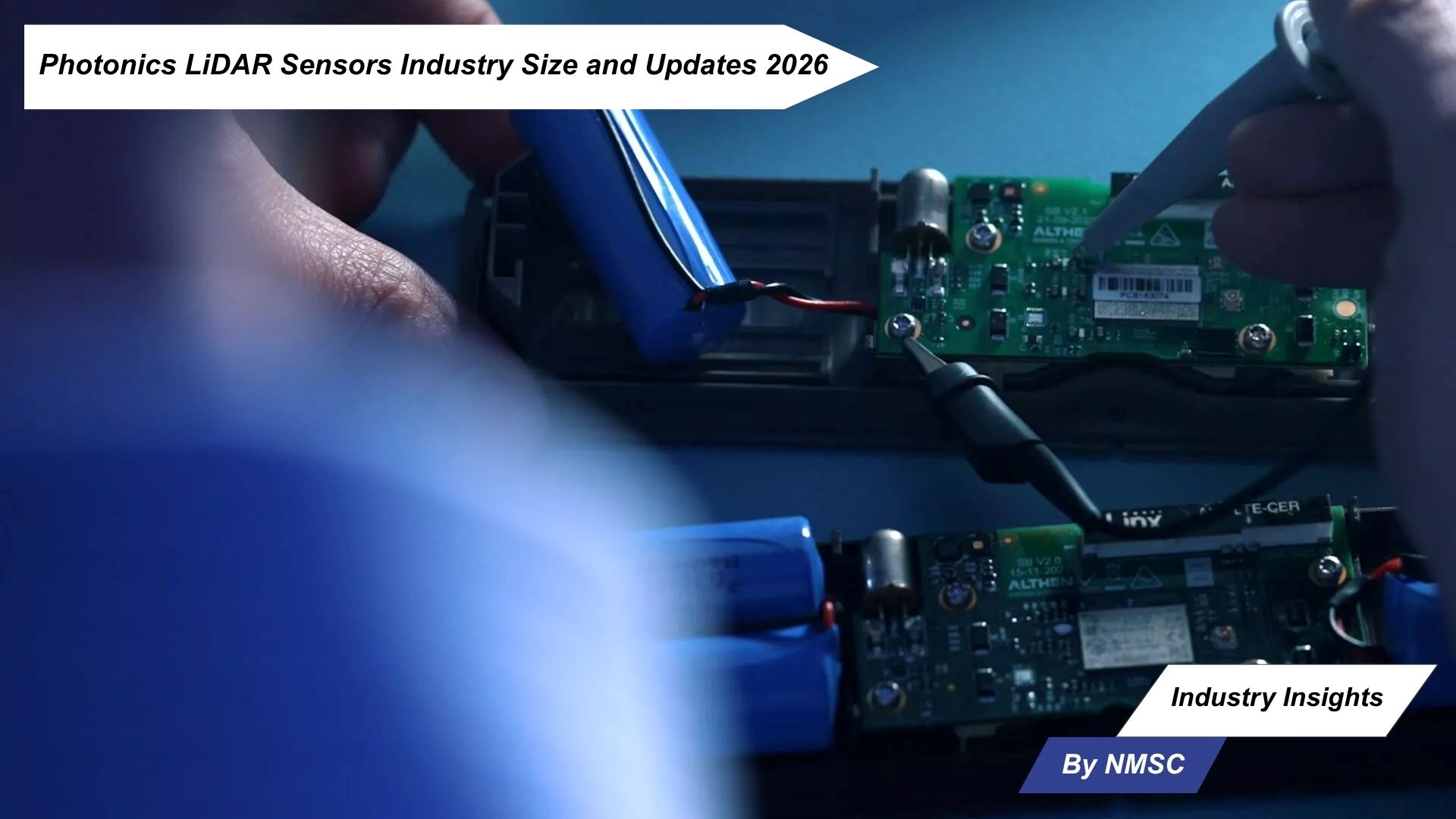
Photonics Breakthrough Accelerates Compact LiDAR Industry Update
CAMBRIDGE, United Kingdom — May 8, 2026 — A major photonics breakthrough unveiled by researchers could significantly accelerate the evolution of compact, high-performance lidar systems, potentially reshaping the future of autonomous vehicles, industrial robotics, and advanced sensing technologies.
The newly reported advancement, highlighted in recent findings published by Phys.org, demonstrates how innovative photonics engineering can improve lidar sensor efficiency while reducing device size and power consumption. The development addresses one of the industry’s biggest challenges: delivering high-resolution sensing in increasingly compact formats.
Advancing the Next Generation of LiDAR Systems
Lidar technology has become a foundational component in autonomous navigation, smart infrastructure, and industrial automation. However, traditional lidar systems often face limitations related to bulkiness, manufacturing complexity, and energy demands.
Researchers behind the new photonics approach believe the innovation could enable a new class of scalable lidar sensors with enhanced precision and integration capabilities.
Key highlights of the advancement include:
-
Miniaturized photonic architecture for compact sensor integration
-
Improved signal performance for long-range object detection
-
Lower power requirements supporting mobile and edge applications
-
Potential compatibility with semiconductor manufacturing processes
Industry analysts suggest the breakthrough arrives at a critical moment as global demand for intelligent sensing systems continues to surge across automotive, aerospace, and robotics sectors.
Market Momentum Builds Around Advanced Sensor Technologies
According to analysts at Next Move Strategy Consulting, innovations in integrated photonics are expected to become a key growth catalyst within the global lidar sensor ecosystem.
“Compact photonics-enabled lidar platforms are increasingly viewed as essential for scalable autonomous systems,” notes an analyst at Next Move Strategy Consulting. “The Sensor Market is witnessing a strategic shift toward lightweight, energy-efficient sensors capable of supporting real-time environmental intelligence.”
The advancement also reflects broader investment trends in silicon photonics and optical semiconductor technologies, where manufacturers are racing to improve performance while lowering deployment costs.
Strategic Implications for Automotive and Robotics Industries
Automotive manufacturers and robotics developers are expected to closely monitor the commercialization potential of the technology. Compact lidar systems could improve vehicle design flexibility, reduce hardware footprints, and enable more efficient deployment in drones, factory automation systems, and smart city infrastructure.
As global competition intensifies in autonomous mobility and intelligent machine development, photonics-based innovations are increasingly becoming central to next-generation sensor strategies.
The latest breakthrough reinforces the growing convergence between photonics research and commercial sensing applications, signaling a pivotal step toward smaller, faster, and more capable lidar solutions.
Source: Phys.org
Prepared By: Prakhyat Chowdhury
About the Author
 Sanyukta Deb
— Sanyukta Deb is Digital Marketing Team Lead at Next Move Strategy Consulting, where she has led content strategy and technical SEO for the firm's B2B market research publications for over 2 years. Her editorial process translates NextMSC's primary and secondary research — spanning technology, industrial, and consumer sectors — into commercial narratives, backed by search-intent, keyword, and competitive analysis. She brings 5 years of overall experience in digital marketing and content strategy.
Sanyukta Deb
— Sanyukta Deb is Digital Marketing Team Lead at Next Move Strategy Consulting, where she has led content strategy and technical SEO for the firm's B2B market research publications for over 2 years. Her editorial process translates NextMSC's primary and secondary research — spanning technology, industrial, and consumer sectors — into commercial narratives, backed by search-intent, keyword, and competitive analysis. She brings 5 years of overall experience in digital marketing and content strategy.
About the Reviewer
 Debashree Dey
— Debashree Dey is Assistant Manager at Next Move Strategy Consulting, where she supports cross-vertical market content and communications across diverse industries for 6 years. Her professional background includes senior content writing, communications, and published manuscript authorship, with experience developing audience-focused business narratives and maintaining clear, consistent messaging. Her role supports research-led content development and editorial quality across NextMSC publications.
Debashree Dey
— Debashree Dey is Assistant Manager at Next Move Strategy Consulting, where she supports cross-vertical market content and communications across diverse industries for 6 years. Her professional background includes senior content writing, communications, and published manuscript authorship, with experience developing audience-focused business narratives and maintaining clear, consistent messaging. Her role supports research-led content development and editorial quality across NextMSC publications.
















Add Comment