Rebellions Strengthens Role in the Global AI Chip Race
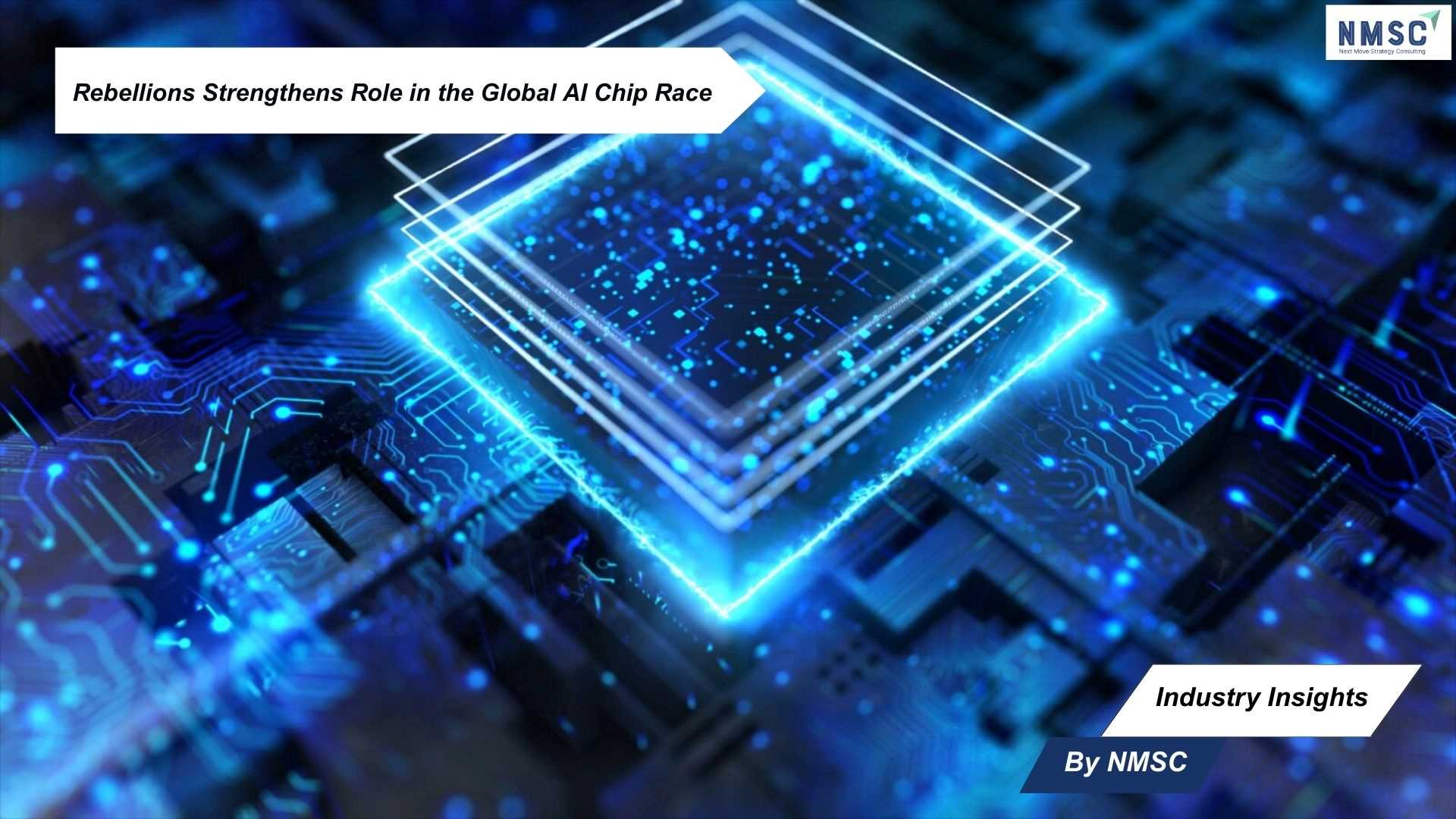
Industry Insights from Next Move Strategy Consulting
As global demand for artificial intelligence infrastructure accelerates, South Korean AI semiconductor startup Rebellions is emerging as a credible alternative to Nvidia-centric ecosystems. At a media day celebrating its fifth anniversary, the company outlined its vision for a more diversified AI chip market, signaling a shift away from reliance on a single dominant supplier.
Held on December 16 at Rebellions’ R-Tower headquarters in Seongnam, the event showcased the company’s rapid evolution, expanding international presence, and next-generation AI chip roadmap centered on chiplet-based architecture.
Moving Beyond a Single-Supplier AI Era
Rebellions’ leadership emphasized that the AI infrastructure market is entering a new phase where multiple specialized players will coexist. CEO Park Sung-hyun stated that decisions shaping future AI NPU partnerships are already underway, and Rebellions has positioned itself as a selected contender in this transition.
The company presented its progress as evidence that the global AI hardware ecosystem is broadening, with room for high-performance alternatives designed outside traditional GPU-centric frameworks.
From Startup to Unicorn in Five Years
Founded in 2020, Rebellions has progressed rapidly from early development to commercial-scale deployment. Key achievements highlighted include the mass production of its first-generation NPU, Atom, and the commercialization of AI services built on its chips.
A major turning point came through its merger with SK Telecom’s AI chip subsidiary, Sapeon Korea. This consolidation elevated Rebellions into the ranks of South Korea’s AI semiconductor unicorns, strengthening both its technological depth and market credibility.
The company also underscored the development of RebelQuad, a large-scale AI chip engineered to deliver performance comparable to leading flagship GPUs, reinforcing its ambition to compete at the highest tier of AI computing.
Growing Global Investor Confidence
Rebellions’ expansion has been supported by a steadily diversifying investor base. After securing Series A funding from KT in 2022, the company attracted strategic backers such as Saudi Aramco and Pavilion Capital in its Series B round.
In 2025, Rebellions completed a Series C round led by ARM, marking the first strategic investment by the chip designer in an Asian startup. This move was widely viewed as validation of Rebellions’ architecture and long-term technology roadmap.
Chiplet Architecture Driving Scale and Flexibility
At the core of Rebellions’ strategy is its commitment to chiplet-based development. By adopting modular chip design, the company aims to enable scalable performance, faster innovation cycles, and adaptable deployment across varied AI workloads.
Building on this foundation, Rebellions has established overseas subsidiaries in Japan, Saudi Arabia, and the United States, targeting global AI infrastructure providers seeking flexible and production-ready solutions.
According to company leadership, chiplets form the backbone of sustainable scaling and ecosystem-driven growth, allowing partners and customers to evolve alongside Rebellions’ technology.
Positioning as a Practical Non-Nvidia Alternative
Rebellions’ business leadership highlighted increasing interest from customers across the U.S., Japan, the Middle East, and Southeast Asia who are actively seeking alternatives to Nvidia. Rather than positioning itself as an experimental entrant, the company is emphasizing proven performance, manufacturing readiness, and global support capabilities.
As governments and enterprises reassess supply chain concentration risks, Rebellions is presenting itself as a viable and scalable choice for next-generation AI infrastructure.
Next Move Strategy Consulting’s View
According to Next Move Strategy Consulting, the AI Chip Market is entering a diversification phase, driven by rising AI workloads, geopolitical considerations, and the need for flexible, energy-efficient architectures. Chiplet-based designs are expected to gain strategic importance as they enable faster customization and reduce development bottlenecks.
Companies like Rebellions, with integrated design capabilities, global partnerships, and production-ready NPUs, are well-positioned to benefit from this shift. As demand grows for non-Nvidia AI solutions, the market is likely to see increased competition, innovation, and regional specialization in AI semiconductor development.
Redefining Competition in AI Hardware
With its chiplet-driven roadmap, expanding global footprint, and strong investor backing, Rebellions is signaling that the next chapter of AI hardware competition is already unfolding. As the AI chip market evolves beyond single-supplier dominance, the company aims to play a central role in shaping a more balanced and resilient global AI infrastructure ecosystem.
Source: KMJ
Prepared by: Next Move Strategy Consulting
About the Author
 Sanyukta Deb
— Sanyukta Deb is Digital Marketing Team Lead at Next Move Strategy Consulting, where she has led content strategy and technical SEO for the firm's B2B market research publications for over 2 years. Her editorial process translates NextMSC's primary and secondary research — spanning technology, industrial, and consumer sectors — into commercial narratives, backed by search-intent, keyword, and competitive analysis. She brings 5 years of overall experience in digital marketing and content strategy.
Sanyukta Deb
— Sanyukta Deb is Digital Marketing Team Lead at Next Move Strategy Consulting, where she has led content strategy and technical SEO for the firm's B2B market research publications for over 2 years. Her editorial process translates NextMSC's primary and secondary research — spanning technology, industrial, and consumer sectors — into commercial narratives, backed by search-intent, keyword, and competitive analysis. She brings 5 years of overall experience in digital marketing and content strategy.
About the Reviewer
 Debashree Dey
— Debashree Dey is Assistant Manager at Next Move Strategy Consulting, where she supports cross-vertical market content and communications across diverse industries for 6 years. Her professional background includes senior content writing, communications, and published manuscript authorship, with experience developing audience-focused business narratives and maintaining clear, consistent messaging. Her role supports research-led content development and editorial quality across NextMSC publications.
Debashree Dey
— Debashree Dey is Assistant Manager at Next Move Strategy Consulting, where she supports cross-vertical market content and communications across diverse industries for 6 years. Her professional background includes senior content writing, communications, and published manuscript authorship, with experience developing audience-focused business narratives and maintaining clear, consistent messaging. Her role supports research-led content development and editorial quality across NextMSC publications.

















Add Comment