Rice University Advances Light-Driven Green Chemistry Method
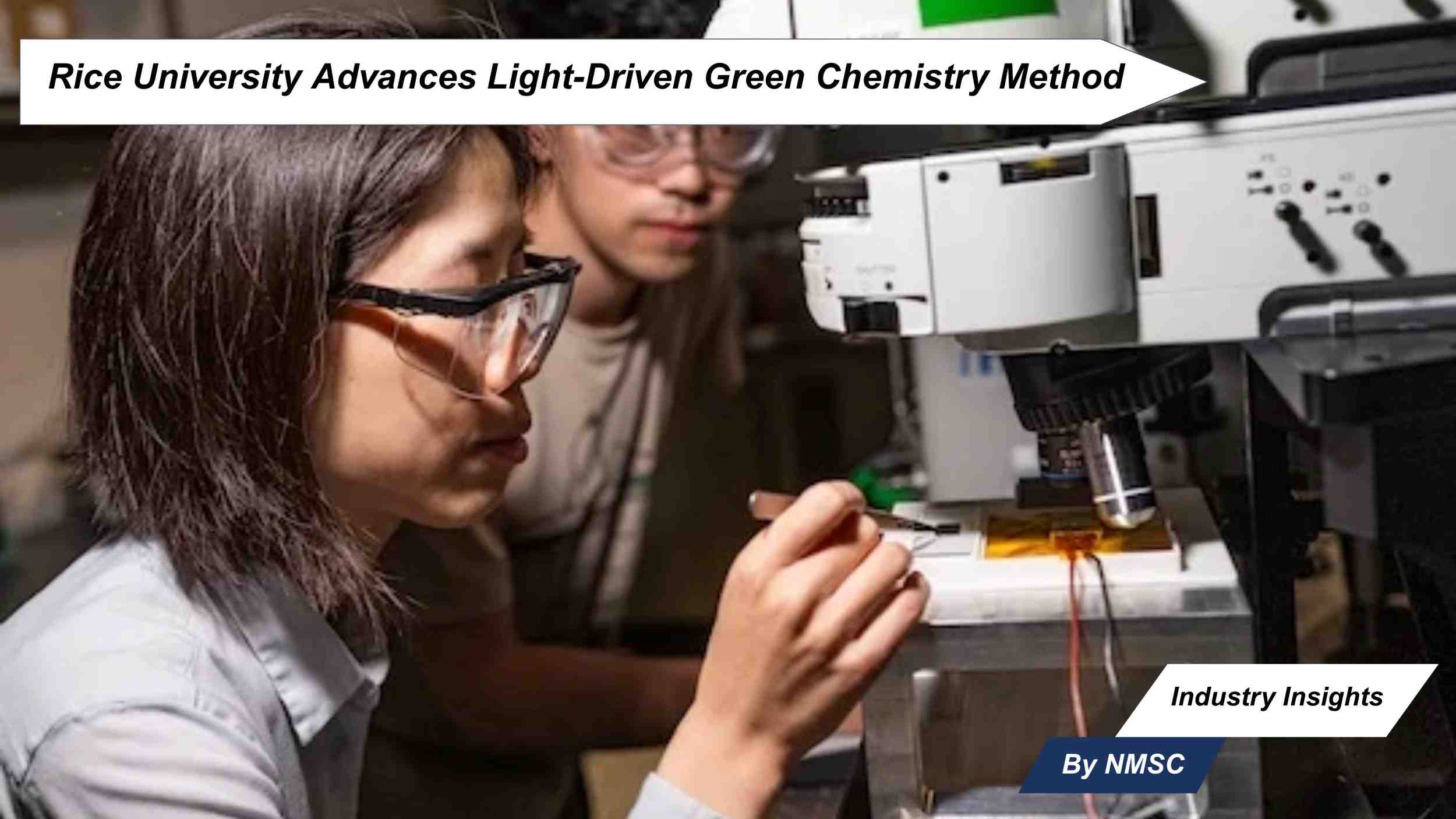
Rice University Unveils Iron Photocatalysis Breakthrough for Greener Organic Synthesis
HOUSTON, United States September 17, 2026, the Researchers at Rice University have developed a new visible-light-driven photocatalytic method for carbon-carbon bond formation that eliminates the need for expensive rare Earth metals, marking a significant development for the global sun-powered chemistry market and the broader transition toward sustainable chemical manufacturing.
The breakthrough, published in the journal Nature Catalysis, was led by Assistant Professor Julian West and his team at Rice University's Department of Chemistry. The method uses iron, sulfur, and purple visible light activated by a 390 nm LED to catalyze the addition of carbon groups to carbon-carbon double bonds, a fundamental reaction in organic chemistry that has historically depended on costly palladium and other rare Earth metals.
The team introduced a mechanistic strategy termed "traceless radical polarity reversal" (TRPR), which employs malonic acids inexpensive, commercially available compounds as carbon sources. By temporarily inducing a polarity shift in the carbon radical, the researchers overcame a long-standing chemical challenge that had constrained the generality of light-driven hydroalkylation reactions. The process generates only trace amounts of carbon dioxide as a by-product, which is easily managed under standard laboratory conditions.
The method demonstrated broad applicability across a wide range of substrates, including pharmaceutical intermediates and natural product derivatives. Late-stage functionalization of drug-derived compounds including derivatives of loxoprofen, naproxen, ibuprofen, and the herbicide 2,4-dichlorophenoxyacetic acid was achieved under the same reaction conditions, underscoring the method's versatility for medicinal chemistry applications.
Key Highlights:
-
Earth-abundant catalysis: The photocatalytic system uses iron and thiol co-catalysts activated by purple visible light (390 nm), directly replacing expensive palladium-based systems in carbon-carbon bond formation a core reaction across pharmaceutical and specialty chemical manufacturing.
-
Low-cost reagents: The method employs malonic acids the class of compounds that includes common vinegar derivatives as inexpensive, widely available carbon sources, generating only trace CO₂ as waste and requiring no stoichiometric activating reagents.
-
Pharmaceutical relevance: The approach enables direct synthesis of bioactive targets, including a GPR119 agonist, and supports late-stage functionalization of complex drug molecules, positioning it as a practical tool for accelerating drug discovery pipelines.
-
Institutional backing: The research was funded by the Cancer Prevention and Research Institute of Texas (CPRIT), the National Institutes of Health, the Welch Foundation, and Eli Lilly reflecting strong public and private sector confidence in light-driven green chemistry.
Analyst Insight:
According to analysts at Next Move Strategy Consulting, the Rice University breakthrough represents a meaningful inflection point for the sun-powered chemistry sector. By demonstrating that visible-light-driven iron photocatalysis can replace rare and expensive metals in core organic synthesis reactions, the research validates a key commercial pathway for the broader adoption of light-driven chemical manufacturing. The use of earth-abundant, low-cost catalysts and widely available reagents directly addresses one of the sector's most persistent barriers to scale-up: high initial capital and material costs.
NMSC analysts further note that as photocatalytic methods become more cost-competitive and operationally scalable, demand for sun-powered chemistry platforms across pharmaceutical, specialty chemical, and industrial applications is expected to accelerate. The convergence of visible-light photocatalysis with AI-driven process optimization a trend already underway across the sector is likely to further compress the timeline from laboratory discovery to commercial deployment.
Industry Outlook:
The development of cost-effective, light-driven chemical synthesis methods is increasingly central to the global push for sustainable industrial chemistry. As regulatory frameworks tighten around carbon emissions and the cost of rare Earth metals remains subject to supply chain volatility, photocatalytic approaches using earth-abundant elements such as iron are positioned to gain significant commercial traction across multiple end-use industries.
The Rice University method with its demonstrated applicability to pharmaceutical synthesis, its reliance on widely available reagents, and its minimal waste profile signals a broader structural shift in how the chemical industry may approach green synthesis in the years ahead. For market participants in the sun-powered chemistry space, the research underscores the growing viability of visible-light-driven platforms as commercially deployable alternatives to conventional fossil-fuel-intensive chemical production.
Source: Phys.org
For More Information: Download FREE Sample on Sun-Powered Chemistry Market Report
Prepared By: Sanyukta Deb
About the Author
 Sanyukta Deb
— Sanyukta Deb is Digital Marketing Team Lead at Next Move Strategy Consulting, where she has led content strategy and technical SEO for the firm's B2B market research publications for over 2 years. Her editorial process translates NextMSC's primary and secondary research — spanning technology, industrial, and consumer sectors — into commercial narratives, backed by search-intent, keyword, and competitive analysis. She brings 5 years of overall experience in digital marketing and content strategy.
Sanyukta Deb
— Sanyukta Deb is Digital Marketing Team Lead at Next Move Strategy Consulting, where she has led content strategy and technical SEO for the firm's B2B market research publications for over 2 years. Her editorial process translates NextMSC's primary and secondary research — spanning technology, industrial, and consumer sectors — into commercial narratives, backed by search-intent, keyword, and competitive analysis. She brings 5 years of overall experience in digital marketing and content strategy.
About the Reviewer
 Debashree Dey
— Debashree Dey is Assistant Manager at Next Move Strategy Consulting, where she supports cross-vertical market content and communications across diverse industries for 6 years. Her professional background includes senior content writing, communications, and published manuscript authorship, with experience developing audience-focused business narratives and maintaining clear, consistent messaging. Her role supports research-led content development and editorial quality across NextMSC publications.
Debashree Dey
— Debashree Dey is Assistant Manager at Next Move Strategy Consulting, where she supports cross-vertical market content and communications across diverse industries for 6 years. Her professional background includes senior content writing, communications, and published manuscript authorship, with experience developing audience-focused business narratives and maintaining clear, consistent messaging. Her role supports research-led content development and editorial quality across NextMSC publications.

















Add Comment