Rodent Control Pesticide Market Faces New Era

WHO's Multi-Country Hantavirus Outbreak and FAO's Record Pesticide Use Data Converge to Reshape the Global Rodent Control Pesticide Sector's Strategic Trajectory
On May 4, 2026, the World Health Organization issued a Disease Outbreak Notice documenting a multi-country hantavirus cluster linked to cruise ship travel — a development that placed rodent-borne disease transmission at the center of global public health discourse for the first time since the COVID-19 pandemic reshaped institutional awareness of zoonotic risk. The outbreak, involving seven cases including three deaths among passengers and crew representing 23 nationalities aboard a Dutch-flagged expedition vessel, was traced to exposure to infected rodent excreta during stops across the South Atlantic, including mainland Antarctica, South Georgia, Nightingale Island, Tristan da Cunha, Saint Helena, and Ascension Island.
The WHO confirmed that human hantavirus infection is primarily acquired through contact with the urine, faeces, or saliva of infected rodents, and that hantavirus cardiopulmonary syndrome carries a case fatality rate of up to 50% in the Americas — a statistic that underscores the lethal potential of inadequate rodent population management across both urban and rural environments. In 2025, eight countries in the Americas reported 229 hantavirus cases and 59 deaths, representing a case fatality rate of 25.7%, according to PAHO/WHO epidemiological surveillance data.
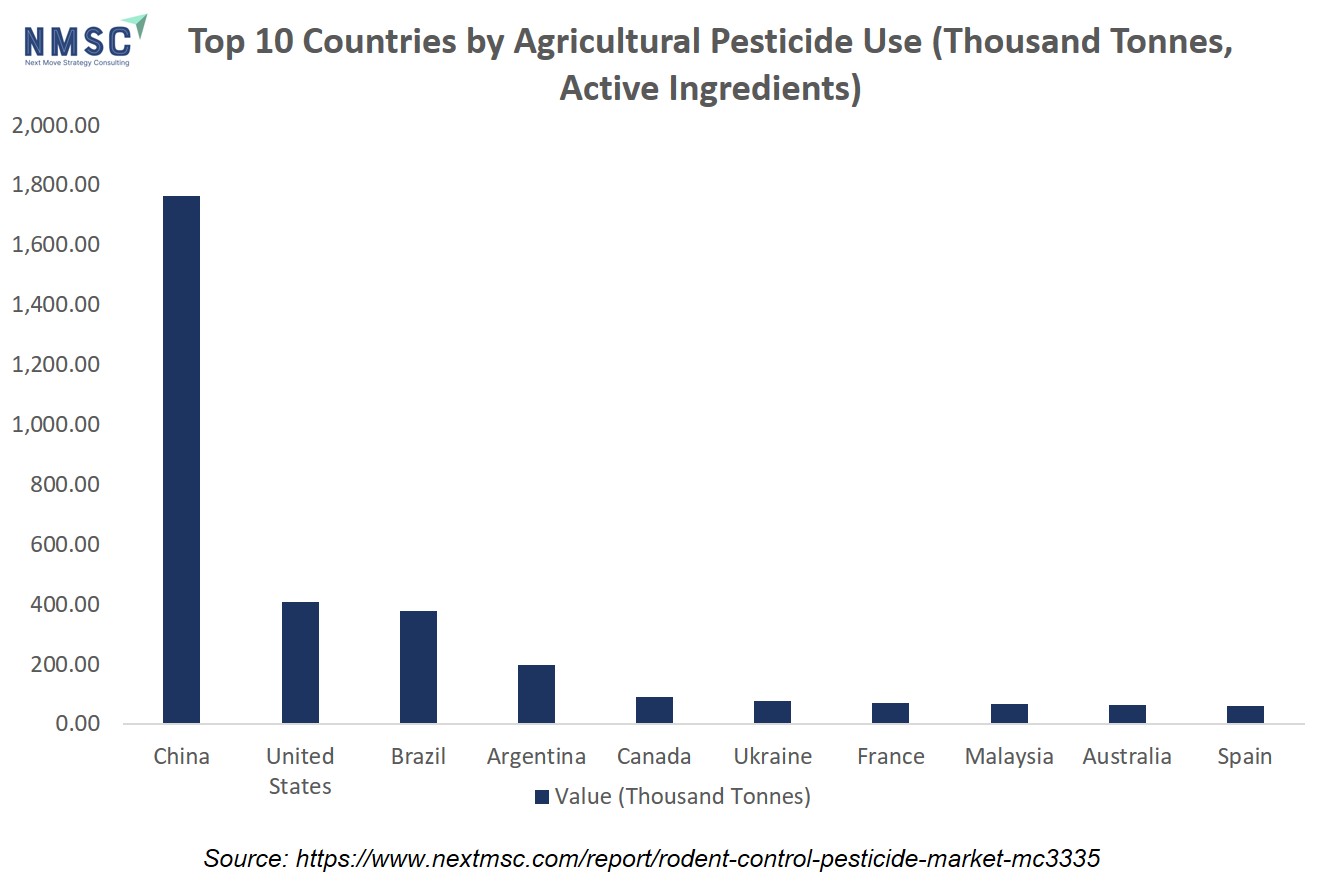
The outbreak's timing coincides with a landmark data release from the Food and Agriculture Organization of the United Nations. On July 30, 2026, FAO published its updated FAOSTAT Pesticides Use domain covering the period 1990–2024, revealing that total pesticides use in agriculture reached 3.92 million tonnes of active ingredients in 2024 — a 5% increase from 2023, an 18% increase over the decade, and more than a doubling since 1990. These twin developments — a WHO-confirmed rodent-borne disease emergency and a record-setting global pesticide consumption figure — define the structural demand environment within which the global Rodent Control Pesticide Market operates.
The market is projected to reach USD 8.44 billion by 2030, expanding at a compound annual growth rate of 5.5% over the forecast period, according to analysis published by Next Move Strategy Consulting.
For More Information – Download FREE Sample on Rodent Control Pesticide Market Report
Rodents as a Global Public Health and Food Security Threat
The strategic case for rodent control investment extends well beyond the immediate hantavirus emergency. Rodents are associated with approximately 60 different diseases worldwide, including plague, typhus, leptospirosis, and hantavirus — a disease burden that has historically driven sustained institutional and commercial investment in rodenticide products and integrated pest management programs.
The food security dimension of rodent infestation is equally consequential. More than 20% of the world's food supply is estimated to be damaged or contaminated by rodents annually, with contamination losses frequently exceeding the volume of food actually consumed by the pests. In India alone, the Ministry of Consumer Affairs documented that 57,676 metric tonnes of food grains stored in Food Corporation of India godowns were spoiled due to rodent and pest attacks, godown leakage, and exposure to rain and floods — a figure that illustrates the scale of post-harvest losses attributable to inadequate rodent management in emerging economies.
The FAO's July 2026 data release further contextualizes the agricultural pesticide landscape. The Americas imported the highest volume of pesticides in 2024 at 2.31 million tonnes of formulated products, corresponding to a value of USD 14.0 billion, while Africa contributed only 6% to the global pesticide total between 2015 and 2024 — a disparity that reflects both the continent's agricultural development gap and its significant unmet rodent control needs.
California's Regulatory Overhaul: A Bellwether for Global Rodenticide Policy
The regulatory environment governing rodenticide use is undergoing its most significant transformation in decades, with California serving as the global policy bellwether. Assembly Bill 2552, known as the Poison-Free Wildlife Act, which took effect in 2025, further restricted public access to toxic baits for managing rats, mice, gophers, voles, and ground squirrels across the state — prohibiting residents and unlicensed professionals from using seven active ingredients including brodifacoum, bromadiolone, chlorophacinone, difethialone, diphacinone, strychnine, and warfarin.
The permitted active ingredients for residential use are now limited to bromethalin, cholecalciferol, and zinc phosphide — a narrowing of the product palette that is accelerating demand for professional pest control services and driving innovation in non-anticoagulant formulations. On May 15, 2026, California's Department of Pesticide Regulation officially released proposed regulations to define pesticide-treated seeds and specify conditions for their use — the first significant update to the state's pesticide regulatory framework in years, signaling a continued tightening of the regulatory environment that is reshaping product development priorities across the industry.
The European Union is pursuing a parallel trajectory. The NMSC report notes that the EU is actively reforming its Common Agricultural Policy to support the European Green Deal, with direct implications for pesticide usage across member states. European regulators are increasingly restricting second-generation anticoagulant rodenticides (SGARs) due to their tissue persistence and secondary poisoning risks to non-target wildlife — a regulatory pressure that is compelling manufacturers to accelerate investment in third-generation and bio-based formulations.
Market Segmentation: Anticoagulants Dominate, Non-Anticoagulants Accelerate
By product type, anticoagulant rodenticides retain dominant market share, accounting for 65.8% of the global rodenticides market in 2025, according to Precedence Research. Their mechanism — disrupting blood coagulation to produce gradual, painless mortality without bait aversion — has made them the preferred tool for large-scale agricultural and urban pest eradication programs. Second-generation anticoagulant rodenticides (SGARs), including bromadiolone, brodifacoum, and difethialone, are particularly valued for their efficacy against warfarin-resistant rodent populations.
Non-anticoagulant rodenticides, however, are the fastest-growing product category, driven by ecological awareness, resistance concerns, and the regulatory restrictions on SGARs in California and the EU. Their modes of action — ranging from hypercalcemia induction (cholecalciferol) to neurotoxicity (bromethalin) — offer a strategic alternative for processors seeking swift action, reduced environmental persistence, and lower secondary toxicity risks. The NMSC report identifies the development of third-generation anticoagulants and bio-based formulations as a primary opportunity for manufacturers seeking to navigate the evolving regulatory landscape while maintaining efficacy.
Regional Dynamics: North America Leads, Asia-Pacific Accelerates
North America holds the dominant position in the global rodenticides market, accounting for 33.95% of global market share in 2025, according to Fortune Business Insights. Precedence Research places North America's share at 37% for the same year, with the U.S. rodenticides market valued at USD 1.71 billion in 2025 and projected to reach USD 3.06 billion by 2035, growing at a CAGR of 5.99%. The region's leadership is underpinned by advanced pest control infrastructure, strict sanitation mandates, rising residential construction activity, and the deepening penetration of smart monitoring technologies across commercial and industrial facilities.
The NMSC report identifies Asia-Pacific as the fastest-growing regional market, driven by agricultural modernization, rapid urbanization, and the critical role of pest control in food security across China and India. India's pest control market reached USD 1.7 billion in 2023 and is projected to reach USD 3.03 billion by 2032, with companies including BASF and Syngenta launching highly targeted products calibrated to local crop structures, pest species, and climatic conditions. China's emphasis on biotechnological solutions and digital pest monitoring is setting the tone for a distinctly localized yet globally competitive rodent management industry.
Europe presents a more complex picture, shaped by the tension between regulatory restriction and innovation imperative. The UK is actively transitioning toward environmentally friendly rodent control systems, with smart monitoring devices, electronic compliance systems, and resistance-aware management practices gaining commercial traction. Germany was the largest rodenticide exporter in 2024, shipping USD 440.19 million worth of products at a volume of 115.32 million kilograms, according to World Bank WITS trade data as cited by Precedence Research.
Global Agricultural Pesticide Use Trend, 1990–2024
|
Year |
Total Pesticide Use (Million Tonnes, Active Ingredients) |
Change vs. Prior Period |
Key Context |
|
1990 |
~1.96 |
Baseline |
Pre-Green Revolution consolidation |
|
2014 |
~3.32 |
+69% vs. 1990 |
Decade of agricultural intensification |
|
2022 |
3.70 |
+4% vs. 2021 |
Post-pandemic agricultural recovery |
|
2023 |
3.73 |
+1% vs. 2022 |
Slight deceleration; trade volumes declined |
|
2024 |
3.92 |
+5% vs. 2023 |
Record high; 18% increase over decade |
Technology and Innovation: Smart Traps, AI Analytics, and Bio-Based Formulations
The NMSC report identifies technological advancement as the most significant opportunity for market expansion over the forecast period. The integration of AI-driven pest detection, IoT-enabled smart traps, drone-assisted application, and predictive infestation modeling is fundamentally redefining the operational parameters of professional rodent management.
Rentokil Initial's PestConnect platform — enabling real-time rodent activity tracking through digital trap networks — exemplifies the direction of product development, reducing poison use while enhancing safety, traceability, and sustainability across industrial and commercial environments. SenesTech's ContraPest fertility control rodenticide, which targets rodent reproduction rather than mortality, represents a paradigm shift toward humane and sustainable alternatives to traditional anticoagulant baits. BASF's Selontra, which uses cholecalciferol as its active ingredient, delivers faster control with lower environmental risk compared with second-generation anticoagulants — a formulation profile that aligns directly with the regulatory direction in California and the EU.
The NMSC report further notes that the Global Health Security Index's finding that the global average score for prevention against the emergence or release of pathogens remains low at 28.4 out of 100 — indicating that most countries remain underprepared for future health threats — creates a structural imperative for investment in professional rodent management infrastructure, particularly in emerging economies where the intersection of urbanization, food storage vulnerability, and limited regulatory enforcement creates acute infestation risk.
Global Rodenticides Market — Key Regional and Segmentation Data (2025)
|
Parameter |
Value |
|
North America market share (2025) |
33.95% |
|
North America market share (2025) |
37.0% |
|
U.S. market size (2025) |
USD 1.71 billion |
|
Anticoagulants segment share (2025) |
65.8% |
|
Agriculture end-user share (2025) |
33.5% |
|
Pellets form — dominant segment |
Largest share (2025) |
|
Asia-Pacific growth trajectory |
Fastest-growing region |
|
Germany rodenticide exports (2024) |
USD 440.19M / 115.32M kg |
Key Players and Competitive Strategy
The NMSC report profiles 15 key players across the global rodent control pesticide market, including BASF SE, Bayer Aktiengesellschaft, Syngenta Corporation, Rentokil Initial Plc, Neogen Corporation, Liphatech Inc., JT Eaton & Co. Inc., PelGar International, Bell Laboratories Inc., Anticimex, UPL Limited, SenesTech Inc., Impex Europa S.L., Orcal Inc., and Kalyani Industries Limited.
The competitive landscape is characterized by three converging strategic imperatives: the development of eco-friendly and third-generation formulations to navigate tightening regulatory frameworks; the integration of digital monitoring and AI-driven analytics to differentiate service offerings; and geographic expansion into high-growth emerging markets in Asia-Pacific and Latin America where urbanization and food security pressures are generating sustained demand for professional rodent management solutions.
The market structure remains highly fragmented, with large multinational agrochemical companies competing alongside regional specialists and an emerging cohort of technology-driven startups offering subscription-based smart rodent management platforms. Giant market players are making continuous efforts to increase global share through merger and acquisition activity, new product launches, and collaboration with government agencies to expand awareness of available product categories and their benefits.
Bottom Line
The global rodent control pesticide market is entering a period of accelerated structural change, driven by the convergence of a WHO-confirmed multi-country hantavirus outbreak, record-setting global pesticide consumption data from FAO, and a wave of regulatory restrictions that are simultaneously constraining traditional product categories and creating demand for next-generation formulations. The sector's 5.5% CAGR trajectory to 2030 reflects durable demand fundamentals anchored by food security imperatives, public health vigilance, and the structural expansion of professional pest control services across both developed and emerging economies.
For institutional investors and strategic buyers, the market's fragmented competitive landscape — with only a fraction of global pest control capacity currently consolidated within large corporate platforms — presents significant roll-up opportunity, particularly in Asia-Pacific where agricultural modernization and urban expansion are generating sustained demand growth. The regulatory tightening in California and the EU, while constraining for manufacturers of traditional anticoagulant products, is creating a structural tailwind for companies with established pipelines in cholecalciferol-based, bromethalin-based, and bio-derived formulations.
Key risks include the capital intensity of regulatory compliance for new product registrations, secondary poisoning liability exposure for manufacturers of second-generation anticoagulants, and the potential for accelerated regulatory restriction in additional jurisdictions following the WHO's May 2026 hantavirus outbreak advisory. Companies that successfully integrate digital monitoring capability, sustainable chemistry, and professional service delivery into scalable platforms are best positioned to capture disproportionate share in an increasingly regulation-driven and technology-differentiated competitive environment.
About Next Move Strategy Consulting
Next Move Strategy Consulting is a premier market research and management consulting firm that has been committed to provide strategically analysed well documented latest research reports to its clients. The research industry is flooded with many firms to choose from, what makes NMSC different from the rest is its top-quality research and the obsession of turning data into knowledge by dissecting every bit of it and providing fact-based research recommendation that is supported by information collected from over 500 million websites, paid databases, industry journals and one on one consultations with industry experts across a diverse range of industry sectors. The high-quality customized research reports with actionable insights and excellent end-to-end customer service help our clients to take critical business decisions that enables them to move beyond time and have competitive edge in the industry.
We have been servicing over 1000 customers globally that includes 90% of the Fortune 500 companies over a decade. Our analysts are constantly tracking various high growth markets and identifying hidden opportunities in each sector or the industry. We provide one of the industry's best quality syndicate as well as custom research reports across 10 different industry verticals. We are committed to deliver high quality research solutions in accordance to your business needs. Our industry standard delivery solutions that ranges from the pre consultation to after-sales services, provide an excellent client experience and ensure right strategic decision making for businesses.
For more information, please contact:
Next Move Strategy Consulting
5th Floor 867
Boylston St, STE 500,
Boston, MA 02116, U.S.
E-Mail: [email protected]
Direct: +1-217-650-7991
Website: www.nextmsc.com
About the Author
 Sanyukta Deb
— Sanyukta Deb is Digital Marketing Team Lead at Next Move Strategy Consulting, where she has led content strategy and technical SEO for the firm's B2B market research publications for over 2 years. Her editorial process translates NextMSC's primary and secondary research — spanning technology, industrial, and consumer sectors — into commercial narratives, backed by search-intent, keyword, and competitive analysis. She brings 5 years of overall experience in digital marketing and content strategy.
Sanyukta Deb
— Sanyukta Deb is Digital Marketing Team Lead at Next Move Strategy Consulting, where she has led content strategy and technical SEO for the firm's B2B market research publications for over 2 years. Her editorial process translates NextMSC's primary and secondary research — spanning technology, industrial, and consumer sectors — into commercial narratives, backed by search-intent, keyword, and competitive analysis. She brings 5 years of overall experience in digital marketing and content strategy.
About the Reviewer
 Debashree Dey
— Debashree Dey is Assistant Manager at Next Move Strategy Consulting, where she supports cross-vertical market content and communications across diverse industries for 6 years. Her professional background includes senior content writing, communications, and published manuscript authorship, with experience developing audience-focused business narratives and maintaining clear, consistent messaging. Her role supports research-led content development and editorial quality across NextMSC publications.
Debashree Dey
— Debashree Dey is Assistant Manager at Next Move Strategy Consulting, where she supports cross-vertical market content and communications across diverse industries for 6 years. Her professional background includes senior content writing, communications, and published manuscript authorship, with experience developing audience-focused business narratives and maintaining clear, consistent messaging. Her role supports research-led content development and editorial quality across NextMSC publications.


















Add Comment