Sawdust-Derived Innovation Signals New Path for the Polymer Market
Industry Insights from Next Move Strategy Consulting
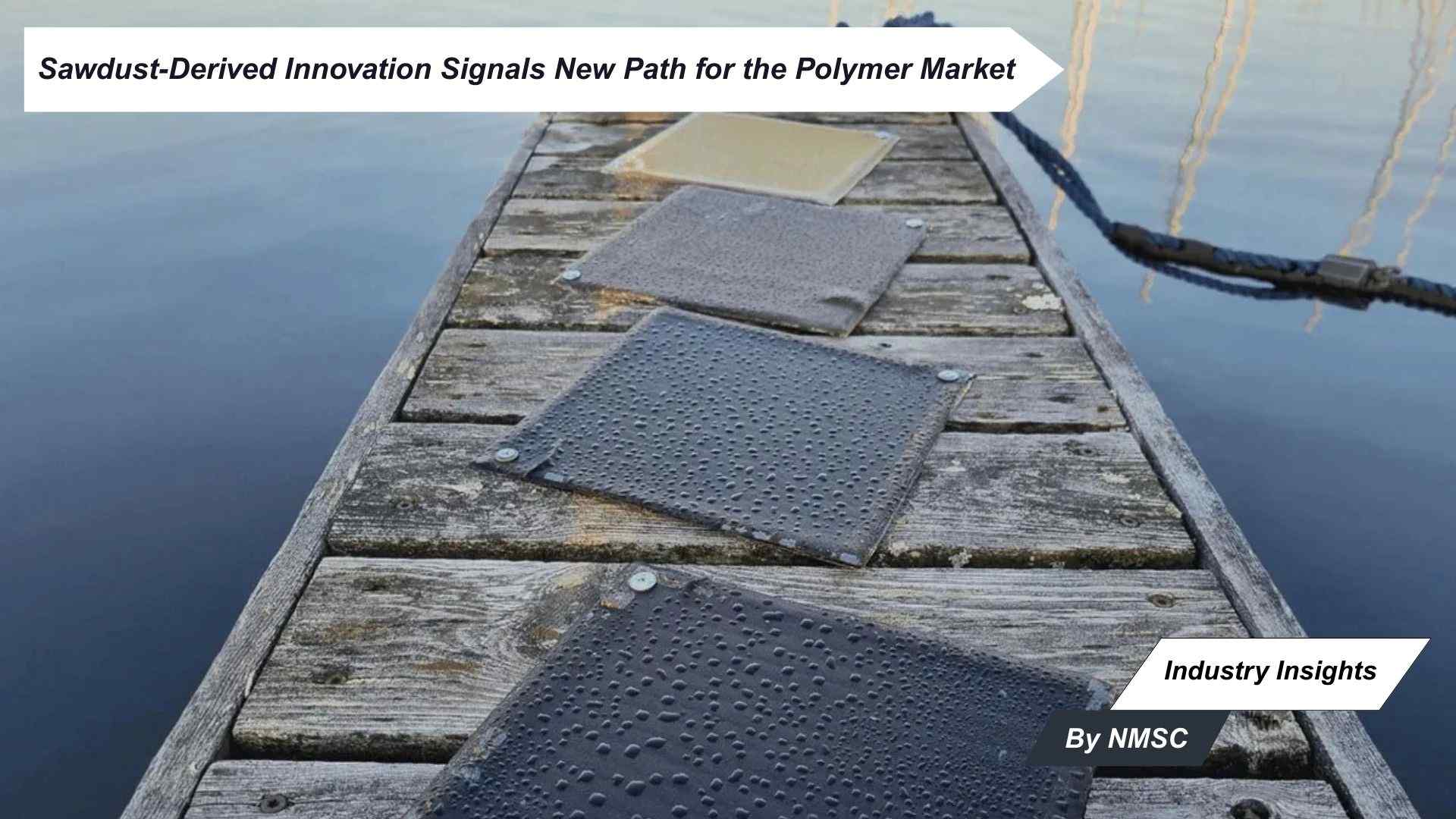
As industries increasingly search for sustainable alternatives to petroleum-derived materials, a recent scientific breakthrough using sawdust-derived lignin is opening new possibilities in the polymer landscape. Researchers have demonstrated that plant-based materials extracted from pine can partially replace fossil fuel–based chemicals used in polyurethane foams an advancement that could influence how polymers are produced and utilized across multiple industries.
Transforming Biomass into Polymer Feedstock
Polyurethane foams are widely used in everyday products such as kitchen sponges, foam cushions, coatings, adhesives, packaging, and insulation. Traditionally, these materials rely heavily on chemicals derived from fossil fuels. The new research introduces an environmentally friendly method to extract high-quality lignin from pine biomass and use it as a substitute for a portion of these petroleum-based inputs.
In the study, researchers successfully replaced around 20% of the fossil fuel–based chemicals in polyurethane foam with lignin derived from plant material. The resulting bio-based foam demonstrated comparable strength and flexibility to conventional polyurethane products, highlighting the feasibility of integrating renewable components into polymer manufacturing.
Enhancing Material Performance Through Sustainable Chemistry
A key aspect of the research involved using a mild and environmentally friendly solvent to separate lignin from pine. Unlike conventional extraction techniques, which often alter the chemical properties of lignin, this approach preserved its structural integrity and thermal stability. The homogenous structure of the extracted lignin allows it to function effectively in high-value polymer applications.
Traditionally, lignin obtained from papermaking and biorefining processes is often burned as fuel or used in low-value applications due to contamination during extraction. By improving the extraction process, the research demonstrates how lignin can instead be repurposed into advanced materials for polymer production.
Toward Scalable Bio-Based Polymer Solutions
The findings have also attracted interest from industrial partners, who are working with the research team to optimize and scale up the production of lignin-based polyurethane foams. The ability to integrate renewable feedstocks into polymer manufacturing may support efforts to reduce reliance on petroleum-derived chemicals while maintaining performance standards for industrial materials.
As global industries push toward more sustainable materials, innovations that convert biomass into polymer feedstocks could play a significant role in shaping next-generation manufacturing processes.
According to Next Move Strategy Consulting
According to Next Move Strategy Consulting, developments such as lignin-derived polymer components could influence the evolution of the Polymer Market by encouraging greater adoption of renewable raw materials in polymer manufacturing. As industries explore alternatives to petroleum-based chemicals, advancements in biomass-based materials may support new product development, improve sustainability initiatives, and create opportunities for bio-based polymer technologies across packaging, construction, and consumer goods sectors.
Source: Logo Press MD
Prepared by: Next Move Strategy Consulting
About the Author
 Sanyukta Deb
— Sanyukta Deb is Digital Marketing Team Lead at Next Move Strategy Consulting, where she has led content strategy and technical SEO for the firm's B2B market research publications for over 2 years. Her editorial process translates NextMSC's primary and secondary research — spanning technology, industrial, and consumer sectors — into commercial narratives, backed by search-intent, keyword, and competitive analysis. She brings 5 years of overall experience in digital marketing and content strategy.
Sanyukta Deb
— Sanyukta Deb is Digital Marketing Team Lead at Next Move Strategy Consulting, where she has led content strategy and technical SEO for the firm's B2B market research publications for over 2 years. Her editorial process translates NextMSC's primary and secondary research — spanning technology, industrial, and consumer sectors — into commercial narratives, backed by search-intent, keyword, and competitive analysis. She brings 5 years of overall experience in digital marketing and content strategy.
About the Reviewer
 Debashree Dey
— Debashree Dey is Assistant Manager at Next Move Strategy Consulting, where she supports cross-vertical market content and communications across diverse industries for 6 years. Her professional background includes senior content writing, communications, and published manuscript authorship, with experience developing audience-focused business narratives and maintaining clear, consistent messaging. Her role supports research-led content development and editorial quality across NextMSC publications.
Debashree Dey
— Debashree Dey is Assistant Manager at Next Move Strategy Consulting, where she supports cross-vertical market content and communications across diverse industries for 6 years. Her professional background includes senior content writing, communications, and published manuscript authorship, with experience developing audience-focused business narratives and maintaining clear, consistent messaging. Her role supports research-led content development and editorial quality across NextMSC publications.
















Add Comment