Seeds Market: Leaf Wax Research Targets Crop Disease
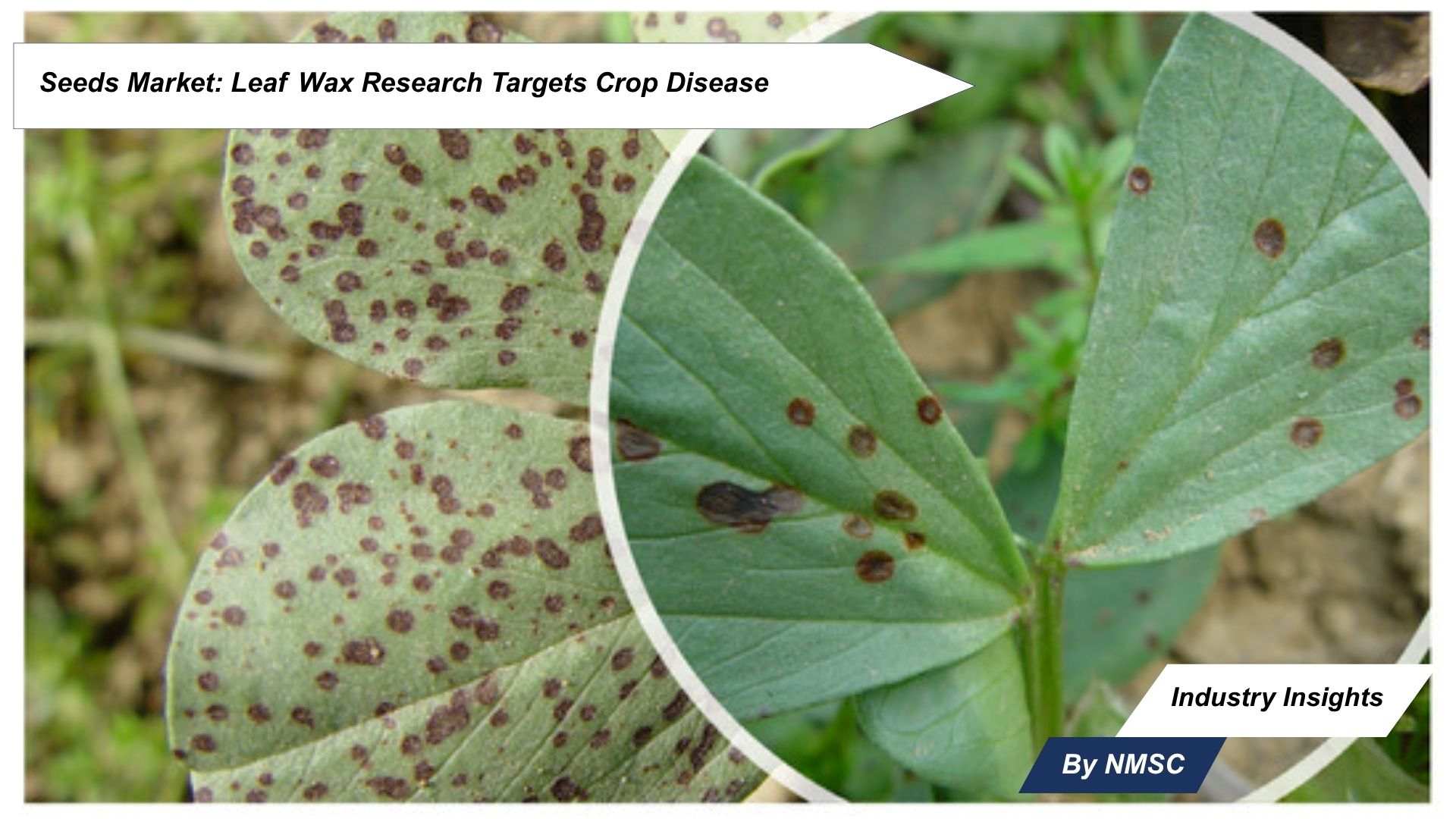
Adelaide Researchers Find Leaf Wax Signals Key to Blocking Fungal Crop Disease
ADELAIDE, Australia — August 19, 2026 — Scientists at Adelaide University have identified that chemical signals in the waxy surface layer of crop leaves play a direct role in enabling fungal pathogens to recognise and infect host plants, opening a new avenue for pre-infection crop-protection strategies that could reduce dependence on conventional fungicides. The findings carry significant implications for the global Seeds Market, where disease-resistant variety development and biological seed treatment integration are among the most consequential innovation priorities shaping the industry's trajectory through 2035.
The peer-reviewed study, published in Biointerphases, an AVS journal by AIP Publishing, demonstrated that two species of powdery mildew were capable of germinating on artificial surfaces coated with leaf-cuticle wax — even in the complete absence of the underlying leaf structure. The result confirms that the chemical composition of the wax itself, rather than the physical geometry of the leaf, is sufficient to trigger fungal spore germination and host recognition.
Fungal diseases represent a persistent and economically significant threat to grain crop production globally. Fungicides remain the primary line of defence, but their long-term effectiveness is under increasing pressure as pathogen populations develop greater resilience. The Adelaide research team, led by study author Bryan Coad, applied biomaterials surface-analysis techniques to plant pathology for the first time, enabling a level of experimental control that had not previously been achievable in this field.
Key Highlights:
-
Surface Signal Isolation: By depositing leaf-cuticle wax onto non-biological surfaces, researchers separated the chemical effects of the wax from the physical structure of the leaf, confirming that wax chemistry alone can initiate fungal germination in powdery mildew species.
-
Pre-Infection Disruption Potential: The research points toward crop-protection strategies designed to mask, alter, or block the surface signals that fungal pathogens use to identify host plants — intervening before infection is established rather than after contact occurs.
-
Reduced Fungicide Dependency: A fuller understanding of host-recognition signals could support the development of targeted treatments that lower reliance on broad-spectrum fungicide applications, aligning with the seeds industry's broader shift toward biological and precision crop-protection solutions.
-
Cross-Disciplinary Collaboration Required: Translating these findings into commercial crop-protection applications will require coordinated input from chemists, crop scientists, fungal pathologists, and materials scientists, reflecting the increasingly interdisciplinary nature of advanced seed and crop innovation.
Analyst Insight:
According to analysts at Next Move Strategy Consulting, the Adelaide University findings represent a scientifically significant step toward next-generation crop-protection strategies that complement, rather than replace, existing seed treatment and breeding pipelines. NMSC analysts note that as the global seeds market expands toward USD 156.40 billion by 2035 at an 8.00% CAGR, innovation in disease-resistance mechanisms — whether through gene-edited variety development, biological seed treatment bundling, or pre-infection surface-signal disruption — is becoming a primary competitive differentiator among leading seed producers. Research of this nature, if successfully translated into commercial applications, could accelerate the adoption of biological seed treatment coatings and reduce input costs for commercial grain growers across key producing regions in North America, Europe, and Asia-Pacific.
Industry Outlook:
The global seeds market, valued at USD 72.80 billion in 2025 and estimated at USD 78.10 billion in 2026, is advancing on multiple innovation fronts simultaneously — from AI-assisted genomic selection and gene-editing platforms to biological seed treatment integration and climate-resilient variety development. The Adelaide University research on leaf wax signals adds a further dimension to this landscape: the possibility of disrupting fungal infection at the point of host recognition, before disease becomes established in the field. Should this mechanism be validated through further trials and translated into practical crop-protection products, it could meaningfully reduce yield losses attributable to fungal disease in cereal and oilseed crops — segments that collectively accounted for the largest share of global seed revenue in 2025. The convergence of materials science, plant pathology, and precision crop protection is likely to attract growing research investment from both public institutions and diversified multinational seed producers through the forecast period to 2035.
Source: Seed World Europe
For More Information: Download FREE Sample on Seeds Market Report
Prepared By: Sanyukta Deb
About the Author
 Sanyukta Deb
— Sanyukta Deb is Digital Marketing Team Lead at Next Move Strategy Consulting, where she has led content strategy and technical SEO for the firm's B2B market research publications for over 2 years. Her editorial process translates NextMSC's primary and secondary research — spanning technology, industrial, and consumer sectors — into commercial narratives, backed by search-intent, keyword, and competitive analysis. She brings 5 years of overall experience in digital marketing and content strategy.
Sanyukta Deb
— Sanyukta Deb is Digital Marketing Team Lead at Next Move Strategy Consulting, where she has led content strategy and technical SEO for the firm's B2B market research publications for over 2 years. Her editorial process translates NextMSC's primary and secondary research — spanning technology, industrial, and consumer sectors — into commercial narratives, backed by search-intent, keyword, and competitive analysis. She brings 5 years of overall experience in digital marketing and content strategy.
About the Reviewer
 Debashree Dey
— Debashree Dey is Assistant Manager at Next Move Strategy Consulting, where she supports cross-vertical market content and communications across diverse industries for 6 years. Her professional background includes senior content writing, communications, and published manuscript authorship, with experience developing audience-focused business narratives and maintaining clear, consistent messaging. Her role supports research-led content development and editorial quality across NextMSC publications.
Debashree Dey
— Debashree Dey is Assistant Manager at Next Move Strategy Consulting, where she supports cross-vertical market content and communications across diverse industries for 6 years. Her professional background includes senior content writing, communications, and published manuscript authorship, with experience developing audience-focused business narratives and maintaining clear, consistent messaging. Her role supports research-led content development and editorial quality across NextMSC publications.

















Add Comment