Smart Food Market: HHS Launches $32.5M DEPEND Initiative
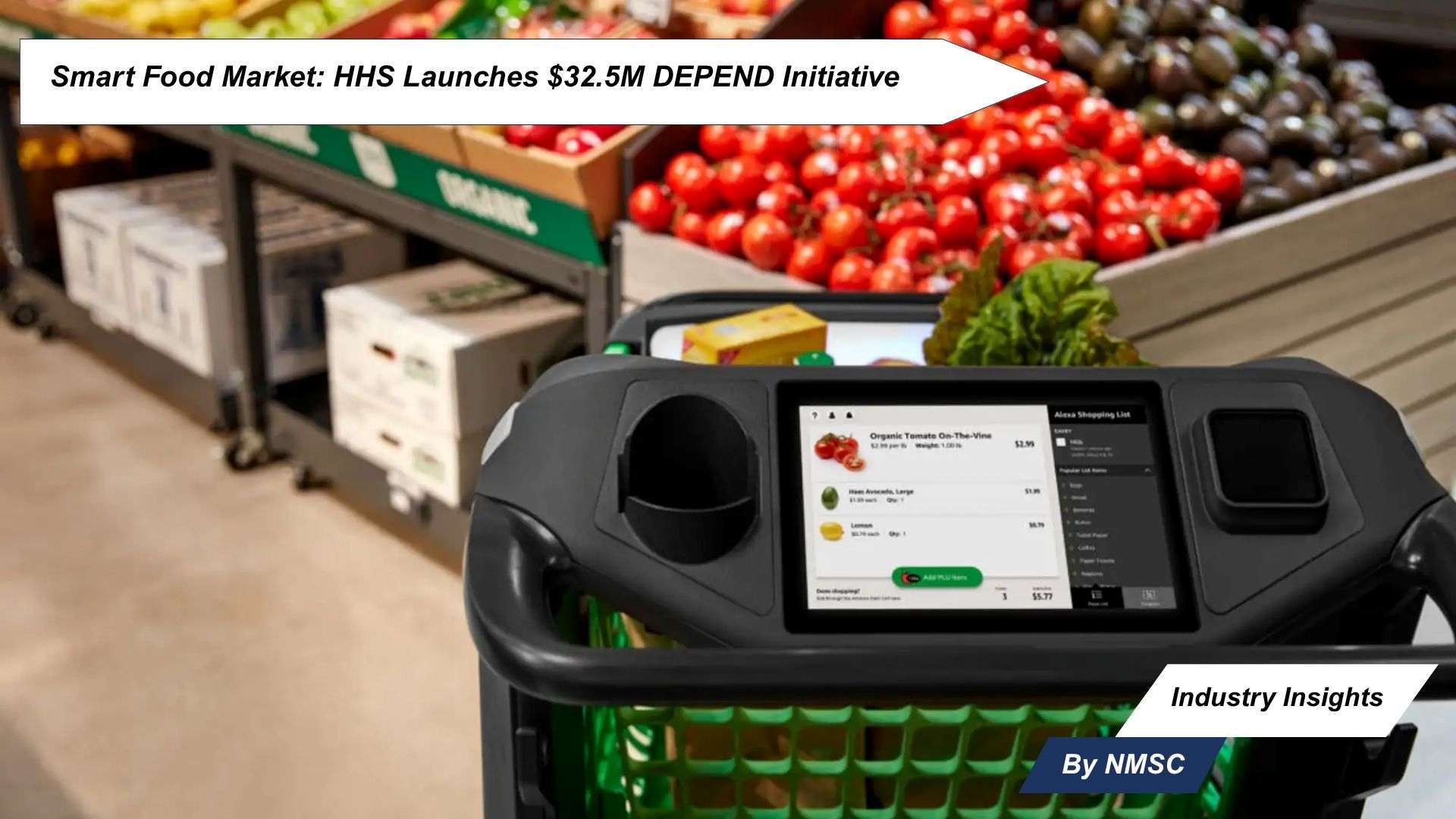
HHS Launches $32.5M DEPEND Initiative to Replace Processed Foods in U.S. Schools
TAMPA, Florida, United States — August 26, 2026 — The U.S. Department of Health and Human Services (HHS) has announced a $32.5 million federal initiative to replace highly processed foods with nutrient-dense, real food in American schools, delivering a significant policy catalyst for the global Smart Food Market, which was valued at USD 557.7 billion in 2023 and is projected to reach USD 1,203.6 billion by 2030, at a compound annual growth rate (CAGR) of 11.6% from 2024 to 2030.
The initiative, formally titled Developing Evidence for Programs to Ensure Nutrition for Development (DEPEND), will be led jointly by the Agency for Healthcare Research and Quality (AHRQ) and the National Institutes of Health (NIH). DEPEND will make funding available to schools and school districts to test innovative approaches to delivering nutritious foods to school-aged children, while simultaneously strengthening the scientific evidence base for school nutrition interventions.
HHS Secretary Robert F. Kennedy, Jr. stated that the initiative is designed to give schools the tools to replace highly processed foods with real, nutrient-dense food and to use rigorous science to prove what works. Awards under the program are expected to range from $75,000 to $2.5 million per recipient, depending on the scope of the proposal, with the first round of funding anticipated in October 2026. Should the initiative demonstrate measurable success, HHS has indicated its intent to provide additional funding in fiscal year 2027.
Key Highlights:
-
HHS has committed $32.5 million to the DEPEND initiative, led by AHRQ and NIH, to fund schools and districts in replacing highly processed foods with nutrient-dense, real food alternatives at institutional scale.
-
The program targets four strategic intervention areas: Food Purchasing & Supply, Workforce & Food Production, Student Demand & Meal Economics, and Transforming Operations & Infrastructure.
-
Individual awards will range from $75,000 to $2.5 million per recipient, with the application cycle opening shortly and the first funding round expected in October 2026.
-
DEPEND will partner with the NIH All of Us Research Program to ensure findings are broadly available to the public, enabling schools nationwide to replicate successful nutrition models.
Analyst Insight:
According to analysts at Next Move Strategy Consulting, the DEPEND initiative represents a structural demand signal for the smart food sector, as federal investment in nutrient-dense school food programs directly expands the institutional procurement channel for functional and clean-label food products. NMSC analysts note that government-backed nutrition programs of this scale have historically accelerated supplier innovation and supply chain development within the functional food segment, creating measurable downstream growth opportunities for smart food manufacturers positioned to meet institutional-grade nutritional standards. The initiative further reinforces a broader regulatory and policy environment that is increasingly aligned with the core value proposition of the smart food category.
Industry Outlook:
The DEPEND initiative arrives at a pivotal moment for the smart food sector, as federal nutrition policy increasingly converges with the market's foundational premise of nutrient-dense, purpose-built food formats. With the global Smart Food Market projected to reach USD 1,203.6 billion by 2030, government-led demand creation through school nutrition programs is expected to serve as a meaningful accelerant for the mainstream adoption of functional and real-food products. As HHS signals intent to expand DEPEND funding into fiscal year 2027 contingent on program success, the initiative is likely to generate sustained institutional procurement opportunities for smart food suppliers capable of meeting scale and nutritional benchmarks. The convergence of federal policy, institutional demand, and accelerating consumer preference for clean-label nutrition positions the smart food sector for a period of structurally supported growth through the end of the decade.
Source: HHS.gov
For More Information: Download FREE Sample on Smart Food Market Report
Prepared By: Sanyukta Deb
About the Author
 Sanyukta Deb
— Sanyukta Deb is Digital Marketing Team Lead at Next Move Strategy Consulting, where she has led content strategy and technical SEO for the firm's B2B market research publications for over 2 years. Her editorial process translates NextMSC's primary and secondary research — spanning technology, industrial, and consumer sectors — into commercial narratives, backed by search-intent, keyword, and competitive analysis. She brings 5 years of overall experience in digital marketing and content strategy.
Sanyukta Deb
— Sanyukta Deb is Digital Marketing Team Lead at Next Move Strategy Consulting, where she has led content strategy and technical SEO for the firm's B2B market research publications for over 2 years. Her editorial process translates NextMSC's primary and secondary research — spanning technology, industrial, and consumer sectors — into commercial narratives, backed by search-intent, keyword, and competitive analysis. She brings 5 years of overall experience in digital marketing and content strategy.
About the Reviewer
 Debashree Dey
— Debashree Dey is Assistant Manager at Next Move Strategy Consulting, where she supports cross-vertical market content and communications across diverse industries for 6 years. Her professional background includes senior content writing, communications, and published manuscript authorship, with experience developing audience-focused business narratives and maintaining clear, consistent messaging. Her role supports research-led content development and editorial quality across NextMSC publications.
Debashree Dey
— Debashree Dey is Assistant Manager at Next Move Strategy Consulting, where she supports cross-vertical market content and communications across diverse industries for 6 years. Her professional background includes senior content writing, communications, and published manuscript authorship, with experience developing audience-focused business narratives and maintaining clear, consistent messaging. Her role supports research-led content development and editorial quality across NextMSC publications.















Add Comment