Smartwatch Market Surges as Apple, China Fuel Growth
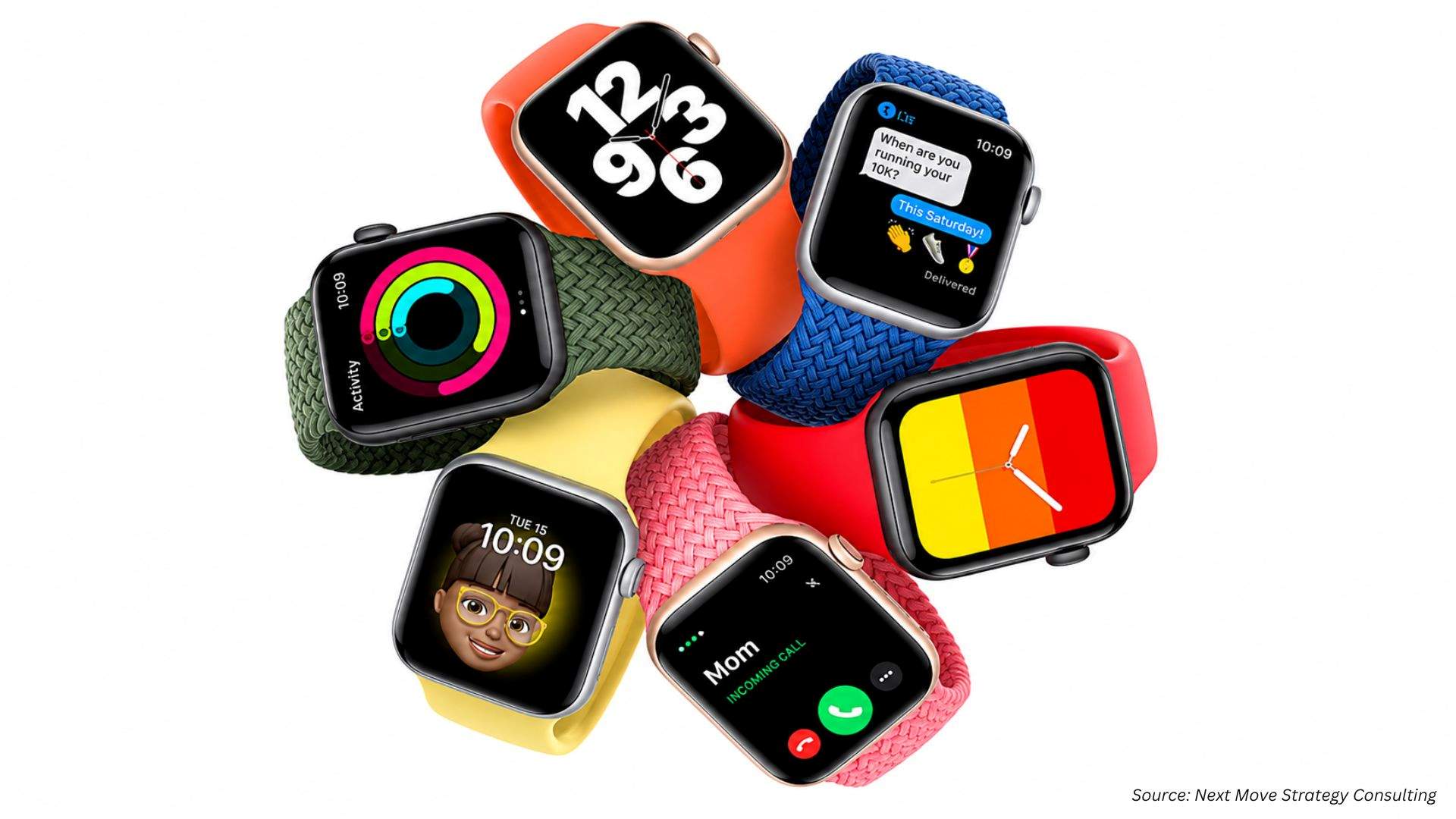
Global Smartwatch Shipments Rise 4% in Q1 2026 as Apple and China's Recovery Offset Tariff and Memory-Cost Pressures
Global smartwatch shipments grew 4% year-over-year in the first quarter of 2026, with Apple emerging as the fastest-growing brand among the top ten vendors, expanding shipments by 21% and capturing a 23% global shipment share, according to Counterpoint Research's Global Smartwatch Shipments Tracker. The recovery was reinforced by China, where shipments climbed 15% year-over-year, driven by Huawei's ecosystem expansion, government electronics subsidies, and rising consumer demand for advanced health-tracking features such as sleep monitoring, arrhythmia analysis, and emotional wellbeing scans. Average selling prices for smartwatches also rose 6% year-over-year during the quarter, reflecting the integration of advanced sensors, AI capabilities, and a broader consumer shift toward premium devices in emerging markets, including India.
This resurgence follows a turbulent 2025, in which the industry contended with slowing replacement cycles and regional divergence, and it now intersects with a shifting U.S. trade policy landscape that is reshaping cost structures across the consumer electronics supply chain.
The renewed momentum places fresh scrutiny on the global Smart Watch Market, which encompasses fully-featured smartwatches, hybrid devices, and fitness-focused wearables sold across North America, Europe, Asia-Pacific, and the Rest of World. According to Next Move Strategy Consulting (NMSC), the market is projected to reach USD 103.82 billion by 2030, expanding at a compound annual growth rate (CAGR) of 15.9% between 2025 and 2030, driven by continuous product launches, growing wearable technology adoption, and rising demand for fitness tracking.
For More Information – Download FREE Sample on Smart Watch Market Report
Regulatory Headwinds Reshape the Cost Equation
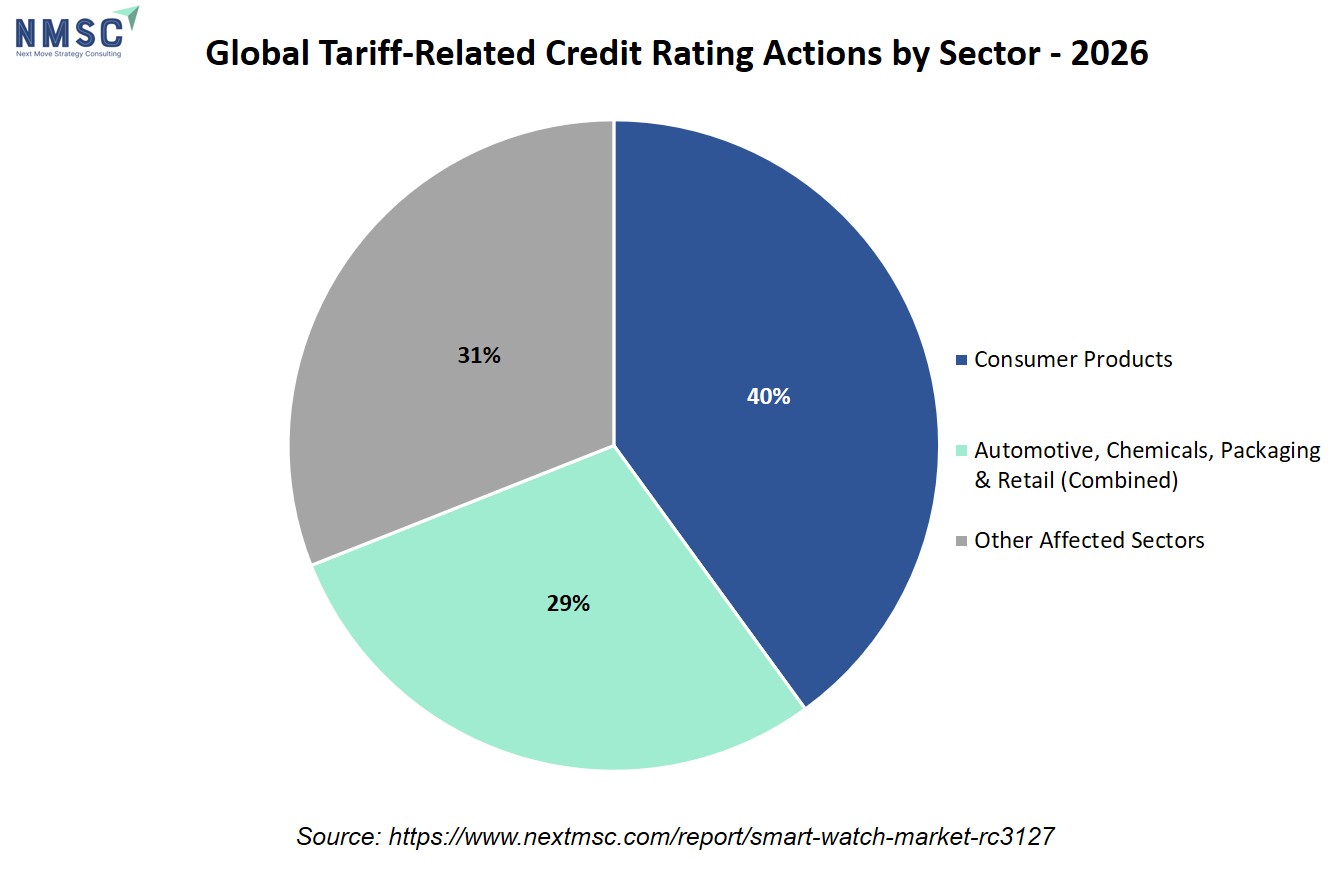
The growth narrative is unfolding against a backdrop of significant U.S. trade policy realignment. Following the U.S. Supreme Court's February 2026 ruling that invalidated tariffs imposed under the International Emergency Economic Powers Act (IEEPA), the administration implemented a 10% global import surcharge under Section 122 of the Trade Act of 1974, which is scheduled to expire on July 24, 2026. In its place, the Office of the U.S. Trade Representative has proposed a two-tier duty structure under a forced-labor import investigation, applying a 10% duty to 14 economies with partial compliance measures and a 12.5% duty to 46 other economies, including China, Japan, and South Korea — jurisdictions central to smartwatch component manufacturing and final assembly. S&P Global Ratings noted that the average trade-weighted effective U.S. tariff rate stood at approximately 12.6% as of June 2026, with consumer products accounting for 40% of all tariff-driven corporate rating actions recorded since the current tariff cycle began.
Separately, on July 1, 2026, the United States announced it would not renew the U.S.-Mexico-Canada Agreement (USMCA) in its current form, triggering a decade-long joint review process that introduces fresh uncertainty for cross-border electronics supply chains, even though the pact remains legally in force through 2036. Counterpoint Research noted that smartwatches are expected to be comparatively insulated from rising global memory prices given their lower bill-of-materials costs relative to smartphones and other consumer electronics, an advantage that could support margin resilience through the remainder of 2026.
Regional and Category Divergence
While China and North America anchored global growth, performance across other key markets remained mixed. In India, the wearables market — which includes smartwatches and smart bands — contracted 4.0% to 114 million units in 2025, with overall smartwatch shipments falling 17.6% year-over-year, according to IDC data. Notably, advanced smartwatch shipments in India declined 8.7% year-over-year in 2025, yet their share of the overall wearables category rose from 2.9% in 2024 to 3.2% in 2025, indicating a structural shift toward premium devices even as overall volumes softened.
India Wearables and Smartwatch Market Snapshot, 2024–2025
|
Metric |
2024 |
2025 |
YoY Change |
|
Total Wearables Shipments (Million Units) |
Not disclosed |
114.0 |
-4.0% |
|
Advanced Smartwatch Shipment Growth |
Baseline |
Declined |
-8.7% |
|
Advanced Smartwatch Share of Wearables Category |
2.9% |
3.2% |
+0.3 pp |
Corporate Strategy and Product Innovation
Leading manufacturers continued to differentiate through health-focused innovation and ecosystem integration. Apple's expanded lineup, including the SE 3 model, has drawn new buyers with meaningful health upgrades, while North America continued to contribute more than half of Apple's total smartwatch shipments even as China and Europe posted the brand's fastest regional growth. According to NMSC's report, Samsung Electronics launched its Galaxy Watch 8 series in July 2025, introducing slimmer designs and first-time integration of Google's Gemini AI, alongside dual GPS and brighter display technology. Huawei Device Co. released the Huawei Watch 5 in May 2025, featuring an X-Tap sensor for heart rate, ECG, and respiratory health scans, while Apple re-enabled blood oxygen measurement via software update for its Series 9, Series 10, and Ultra 2 models in August 2025 following regulatory clearance in the United States.
Market Outlook and Strategic Insights
NMSC's segmentation analysis indicates that the smart watch industry spans product type, operating system, connectivity, price band, display technology, dial shape, RAM, application, end-user segment, and distribution channel, with coverage across 28 countries. North America continues to hold the dominant regional position, supported by a robust fitness industry — the U.S. fitness sector alone contributed USD 22.4 billion, according to the Health and Fitness Association, as cited in the NMSC report. Asia-Pacific is registering steady expansion, aided by rising e-commerce penetration; China's e-commerce market generated nearly 50% of global transactions, reaching USD 3.56 trillion in 2024, per the International Trade Administration, as referenced in NMSC's regional analysis.
Privacy and data-security concerns tied to sensitive biometric data collection remain a persistent restraint on broader adoption, particularly for Android-based wearables that continuously track heart rate, sleep patterns, and location data. Conversely, the anticipated integration of augmented reality into smartwatch interfaces — enabling real-time navigation and immersive fitness experiences — is identified by NMSC as a significant future growth opportunity.
Bottom Line
The global smartwatch industry is entering a phase of measured but resilient expansion, with Q1 2026 shipment growth of 4% underscoring renewed consumer demand for health-centric, premium-tier devices. Apple's 21% shipment growth and China's 15% resurgence signal that innovation in biometric sensing and ecosystem integration remains the primary growth lever, even as India's market contraction highlights uneven regional demand. The evolving U.S. tariff landscape — including the looming expiry of the Section 122 surcharge and unresolved Section 301 forced-labor duty proposals — introduces near-term cost uncertainty for manufacturers reliant on Asian supply chains. Comparatively lower bill-of-materials costs may cushion smartwatches against memory-price inflation affecting broader consumer electronics. With NMSC projecting the market to more than double from USD 43.51 billion in 2024 to USD 103.82 billion by 2030, investors and manufacturers should monitor regulatory developments, premiumization trends, and augmented reality integration as key determinants of long-term competitive positioning.
About Next Move Strategy Consulting
Next Move Strategy Consulting is a premier market research and management consulting firm that has been committed to provide strategically analysed well documented latest research reports to its clients. The research industry is flooded with many firms to choose from, what makes NMSC different from the rest is its top-quality research and the obsession of turning data into knowledge by dissecting every bit of it and providing fact-based research recommendation that is supported by information collected from over 500 million websites, paid databases, industry journals and one on one consultations with industry experts across a diverse range of industry sectors. The high-quality customized research reports with actionable insights and excellent end-to-end customer service help our clients to take critical business decisions that enables them to move beyond time and have competitive edge in the industry.
We have been servicing over 1000 customers globally that includes 90% of the Fortune 500 companies over a decade. Our analysts are constantly tracking various high growth markets and identifying hidden opportunities in each sector or the industry. We provide one of the industry's best quality syndicate as well as custom research reports across 10 different industry verticals. We are committed to deliver high quality research solutions in accordance to your business needs. Our industry standard delivery solutions that ranges from the pre consultation to after-sales services, provide an excellent client experience and ensure right strategic decision making for businesses.
For more information, please contact:
Next Move Strategy Consulting
5th Floor 867
Boylston St, STE 500,
Boston, MA 02116, U.S.
E-Mail: [email protected]
Direct: +1-217-650-7991
Website: www.nextmsc.com
About the Author
 Sanyukta Deb
— Sanyukta Deb is Digital Marketing Team Lead at Next Move Strategy Consulting, where she has led content strategy and technical SEO for the firm's B2B market research publications for over 2 years. Her editorial process translates NextMSC's primary and secondary research — spanning technology, industrial, and consumer sectors — into commercial narratives, backed by search-intent, keyword, and competitive analysis. She brings 5 years of overall experience in digital marketing and content strategy.
Sanyukta Deb
— Sanyukta Deb is Digital Marketing Team Lead at Next Move Strategy Consulting, where she has led content strategy and technical SEO for the firm's B2B market research publications for over 2 years. Her editorial process translates NextMSC's primary and secondary research — spanning technology, industrial, and consumer sectors — into commercial narratives, backed by search-intent, keyword, and competitive analysis. She brings 5 years of overall experience in digital marketing and content strategy.
About the Reviewer
 Debashree Dey
— Debashree Dey is Assistant Manager at Next Move Strategy Consulting, where she supports cross-vertical market content and communications across diverse industries for 6 years. Her professional background includes senior content writing, communications, and published manuscript authorship, with experience developing audience-focused business narratives and maintaining clear, consistent messaging. Her role supports research-led content development and editorial quality across NextMSC publications.
Debashree Dey
— Debashree Dey is Assistant Manager at Next Move Strategy Consulting, where she supports cross-vertical market content and communications across diverse industries for 6 years. Her professional background includes senior content writing, communications, and published manuscript authorship, with experience developing audience-focused business narratives and maintaining clear, consistent messaging. Her role supports research-led content development and editorial quality across NextMSC publications.
















Add Comment