Songshan One ID Launch Boosts Smart Airport Market
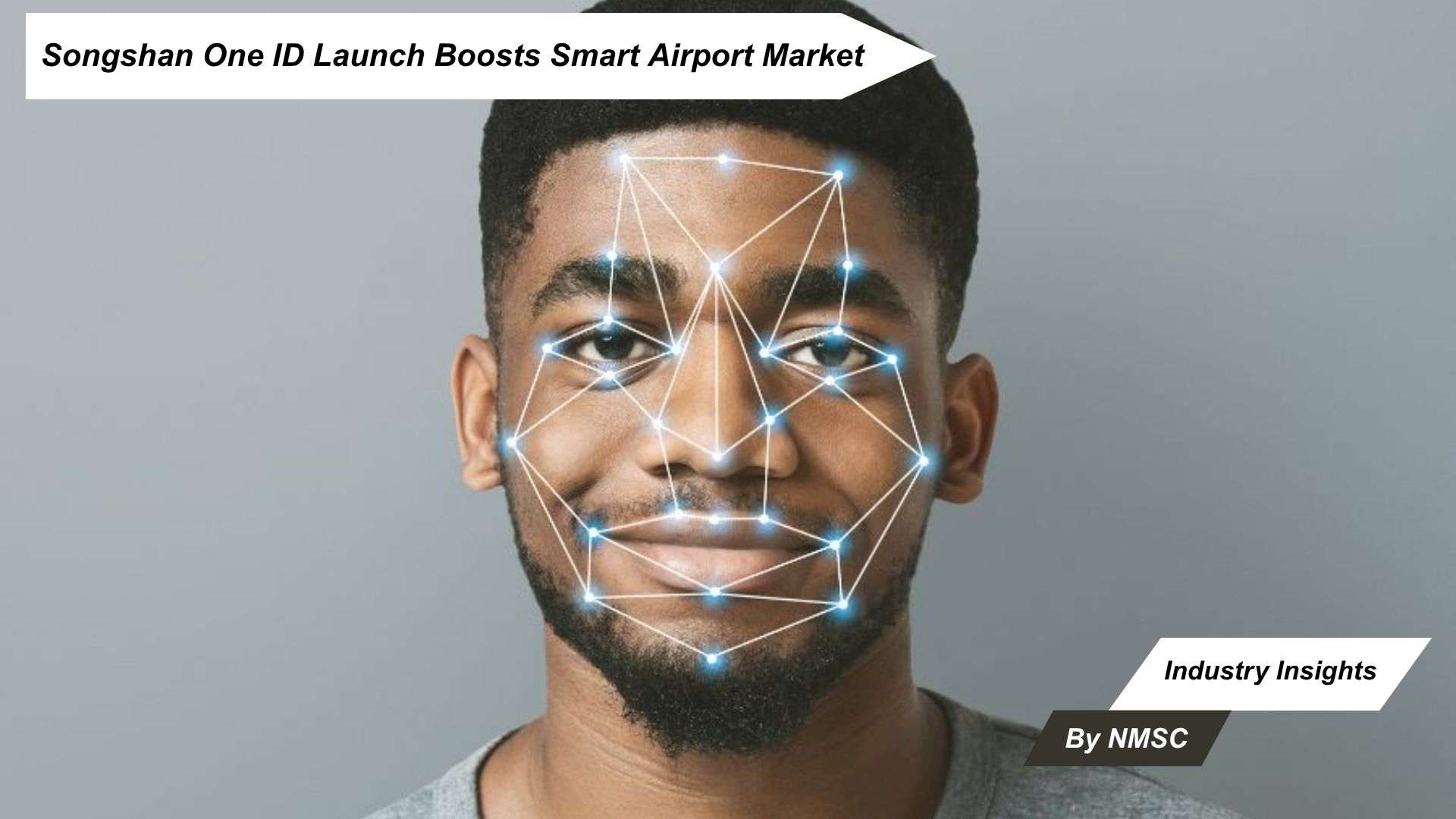
Songshan Airport’s One ID Facial Recognition Rollout Sparks Smart Airport Industry Update Across Asia
TAIPEI, Taiwan — April 30, 2026 — Taipei Songshan Airport’s full-scale deployment of its new “One ID” facial recognition passenger clearance platform is emerging as a significant operational benchmark in Asia’s fast-evolving smart aviation ecosystem, as airports worldwide race to digitize check-in, baggage handling, and boarding with biometric automation. Taiwan authorities confirmed the service entered active rollout this month, enabling international passengers to move through most departure checkpoints with a single facial scan after one-time registration.
The move positions Songshan as Taiwan’s first airport to implement a unified biometric passenger token across multiple airport touchpoints—an increasingly critical strategy as global hubs seek to reduce terminal congestion, lower staffing dependency, and improve traveler throughput without costly physical expansion.
A Defining Shift from Manual Clearance to Biometric Passenger Flow
Traditional airport boarding processes remain heavily fragmented, forcing travelers to repeatedly present passports, boarding passes, and identity documents at multiple counters. Songshan Airport’s One ID platform directly addresses this inefficiency by linking passenger identity, flight information, and facial biometrics into a single digital authentication layer.
Once enrolled through passport-chip verification at self-service kiosks or check-in desks, passengers can proceed through:
-
Self check-in terminals
-
Self baggage drop counters
-
Restricted-area e-Gates
-
Lounge entry checkpoints
-
Boarding gates via face scan
Airport officials state the integrated model can reduce passenger processing time by nearly 30% while lowering manpower requirements during peak periods by approximately 20%, a notable productivity gain for compact international terminals managing high passenger density.
Infrastructure Deployment Signals Broader Smart Airport Investment Pattern
Unlike limited biometric pilot programs seen in many regional airports, Songshan has introduced a broad hardware ecosystem to operationalize the model at scale, including:
-
18 One ID self-check-in kiosks
-
12 self baggage-drop units
-
6 immigration e-Gate integrations
-
Facial recognition readers installed across all 6 international departure gates
This indicates that airport authorities are not merely digitizing one passenger step, but engineering a continuous biometric travel corridor from airport entry to aircraft boarding.
According to Jayanta Das, Senior Research Analyst at Next Move Strategy Consulting, this rollout reflects a much deeper capital trend than a standalone airport technology upgrade.
“Airports are moving beyond kiosk automation into identity-led operational orchestration. One biometric credential now has the potential to synchronize baggage, gate access, security validation, and boarding analytics simultaneously. That fundamentally changes airport efficiency economics.”
Next Move Strategy Consulting analysts note that airports in Asia-Pacific are becoming early adopters of biometric-first passenger processing because land constraints, rising regional tourism, and post-pandemic demand for contactless travel are forcing infrastructure operators to extract more throughput from existing terminals rather than relying solely on expansion projects.
Why Songshan’s Launch Matters Beyond Taiwan
The significance of this deployment lies not only in passenger convenience, but in its replicability.
Songshan Airport currently handles nearly 2.8 million international travelers annually—large enough to provide meaningful biometric throughput data, yet compact enough to serve as a controlled smart-terminal testbed for future national airport deployment. Taiwan authorities have already indicated that implementation results may be reviewed for expansion into other international gateways if operational KPIs remain favorable.
The system also demonstrates several strategic assurances now required in next-generation biometric aviation systems:
-
Facial recognition success rate reported near 95%
-
Passenger data automatically deleted within 24 hours
-
Government cybersecurity validation completed
-
Standard passport immigration review retained as fallback layer
This dual emphasis on speed and data protection is becoming essential as airports seek public trust while scaling AI-driven passenger surveillance tools.
Competitive Pressure Building Across the Smart Airport Market
Industry observers note that Songshan’s One ID implementation follows a broader regional pattern in which airports are increasingly adopting passportless or low-friction clearance technologies to remain competitive with digitally advanced hubs in Singapore, South Korea, Japan, and the Middle East.
What makes Songshan notable is that it brings end-to-end biometric identity continuity into a mid-sized airport environment—proving that smart airport digitization is no longer limited to mega hubs.
According to proprietary aviation infrastructure tracking by Next Move Strategy Consulting, airports deploying integrated biometric passenger systems are demonstrating three consistent investment outcomes:
-
Higher passenger throughput per gate
-
Reduced staffing burden in document handling zones
-
Better queue predictability through AI-linked traveler movement data
Analysts believe these gains will accelerate procurement of:
-
AI facial recognition terminals
-
Smart e-Gates
-
Biometric baggage systems
-
Cloud-based passenger identity orchestration software
throughout the broader Smart Airport market over the next 24 months.
Smart Airports Enter the Identity Automation Era
Songshan Airport’s One ID facial recognition launch marks more than a local boarding convenience initiative—it represents a measurable transition toward identity-as-infrastructure inside aviation terminals.
As airport operators confront labor shortages, rising traveler volumes, and increasing expectations for frictionless mobility, biometric authentication is rapidly evolving from an experimental feature into a core operational backbone.
For the Smart Airport market, Songshan’s latest deployment offers a clear signal: the next phase of airport modernization will not be built solely on bigger terminals, but on faster digital identity movement inside them.
Source: Taiwan Immigration Global News Network
Prepared By: Joydeep Dey
About the Author
 Joydeep Dey
— Joydeep Dey is a content writer and analyst fueled by creativity, research, and continuous learning. He combines compelling storytelling with market insights to turn complex information into engaging, impactful content. Passionate about emerging trends, digital strategy, and innovation-driven communication, he believes curiosity and consistent growth are key to creating meaningful influence in every project.
Joydeep Dey
— Joydeep Dey is a content writer and analyst fueled by creativity, research, and continuous learning. He combines compelling storytelling with market insights to turn complex information into engaging, impactful content. Passionate about emerging trends, digital strategy, and innovation-driven communication, he believes curiosity and consistent growth are key to creating meaningful influence in every project.
About the Reviewer
 Debashree Dey
— Debashree Dey is Assistant Manager at Next Move Strategy Consulting, where she supports cross-vertical market content and communications across diverse industries for 6 years. Her professional background includes senior content writing, communications, and published manuscript authorship, with experience developing audience-focused business narratives and maintaining clear, consistent messaging. Her role supports research-led content development and editorial quality across NextMSC publications.
Debashree Dey
— Debashree Dey is Assistant Manager at Next Move Strategy Consulting, where she supports cross-vertical market content and communications across diverse industries for 6 years. Her professional background includes senior content writing, communications, and published manuscript authorship, with experience developing audience-focused business narratives and maintaining clear, consistent messaging. Her role supports research-led content development and editorial quality across NextMSC publications.

















Add Comment