Switzerland's New Packaging Ordinance: Industry Update
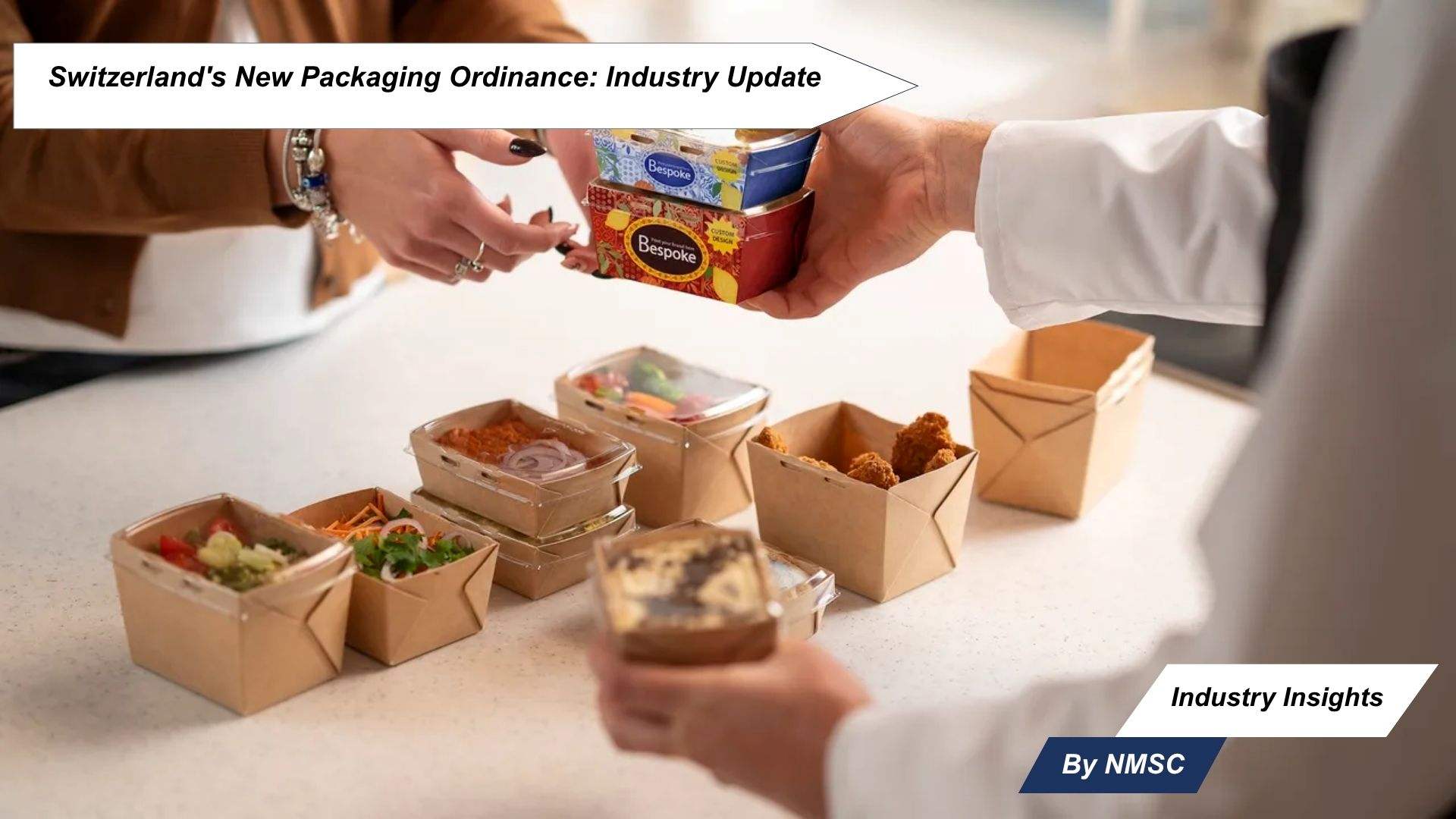
Switzerland Enacts New Packaging Ordinance With Recycling Targets, Chemical Safety Gaps Remain
BERN, Switzerland — August 18, 2026 — The Swiss Federal Council has formally adopted a comprehensive new Packaging Ordinance covering all packaging materials, introducing mandatory recycling targets and take-back requirements for plastic packaging and beverage cartons. The regulation, which replaces a prior framework focused primarily on beverage containers, carries significant implications for the global Food Packaging Market — valued at USD 392.93 billion in 2023 and projected to reach USD 565.13 billion by 2030, growing at a CAGR of 5.3%, according to Next Move Strategy Consulting.
The ordinance was formally adopted on June 24, 2026, with its provisions set to enter into force in phases between 2027 and 2032. Under the new rules, packaging must be limited to the volume and mass necessary to protect the packaged product, be suitable for collection and recycling, and incorporate the highest possible share of recycled material. A provision added following a public consultation period further stipulates that packaging must not contain substances of very high concern (SVHCs) as listed under the Swiss Chemicals Ordinance.
The Swiss government stated that the changes are intended to "promote the circular economy, strengthen recycling, and implement uniform fines for littering throughout Switzerland." However, the Food Packaging Forum (FPF), a Zurich-based scientific organization, noted that the final ordinance did not adequately address several critical concerns raised during the 2025 public consultation — including the need for binding packaging reduction and reuse targets, and broader chemical safety provisions beyond the SVHC restriction.
The FPF specifically highlighted that the ordinance's SVHC provision, while a step forward, does not account for the more than 1,200 known priority hazardous substances that can be present in food packaging, as identified in the organization's FCCprio List. Additionally, the SVHC requirement under Article 3 does not come into force until 2030, leaving a multi-year implementation gap. The ordinance also lacks enforceable definitions for key terms such as compostable, biodegradable, and novel bio-based packaging — a gap that experts warn could hinder effective enforcement.
Key Highlights:
-
Recycling Targets Introduced: The ordinance sets a 55% recycling target for plastic packaging and a 70% recycling target for beverage cartons, establishing binding benchmarks for the first time under Swiss packaging law.
-
SVHC Ban Added Post-Consultation: A ban on substances of very high concern in packaging was incorporated following the public comment period, though it applies only to SVHCs listed under the Swiss Chemicals Ordinance and does not take effect until 2030.
-
Waste Hierarchy Concerns: The FPF noted that the ordinance prioritizes recycling over waste prevention and reuse — contrary to the well-established waste hierarchy — and does not include binding packaging reduction targets.
-
Definitional Gaps Persist: Key terms including "compostable," "biodegradable," and "novel bio-based packaging" remain undefined in the adopted text, potentially weakening implementation and enforcement across the packaging supply chain.
Analyst Insight:
According to analysts at Next Move Strategy Consulting, Switzerland's new Packaging Ordinance reflects a broader regulatory trend across Europe toward circular economy frameworks in the food packaging sector. The introduction of mandatory recycling targets and SVHC restrictions signals a tightening compliance environment that packaging manufacturers and food producers operating in or exporting to Switzerland will need to navigate carefully. NMSC analysts note that while the ordinance represents meaningful regulatory progress, the absence of comprehensive chemical safety criteria and binding reuse targets may limit its long-term effectiveness in reducing the environmental and public health footprint of food-contact packaging materials — particularly as recycled plastics and paper continue to gain market share.
Industry Outlook:
Switzerland's adoption of this Packaging Ordinance adds to a growing body of national and regional regulations reshaping the food packaging landscape, following the EU's Packaging and Packaging Waste Regulation (PPWR), which began applying from August 12, 2026. As regulatory frameworks tighten across key markets, food packaging manufacturers face mounting pressure to accelerate the transition toward safer materials, improved recyclability, and reduced chemical complexity in their product portfolios.
The phased implementation timeline — with provisions entering into force between 2027 and 2032 — provides industry stakeholders a defined window to align operations with the new requirements. However, the unresolved definitional and chemical safety gaps identified by civil society organizations suggest that further regulatory refinement is likely before the ordinance reaches its full intended scope. Market participants are advised to monitor forthcoming guidance from the Federal Office for the Environment (BAFU) and engage proactively with evolving compliance standards.
Source: Food Packaging Forum
For More Information: Download FREE Sample on Food Packaging Market Report
Prepared By: Sanyukta Deb
About the Author
 Sanyukta Deb
— Sanyukta Deb is Digital Marketing Team Lead at Next Move Strategy Consulting, where she has led content strategy and technical SEO for the firm's B2B market research publications for over 2 years. Her editorial process translates NextMSC's primary and secondary research — spanning technology, industrial, and consumer sectors — into commercial narratives, backed by search-intent, keyword, and competitive analysis. She brings 5 years of overall experience in digital marketing and content strategy.
Sanyukta Deb
— Sanyukta Deb is Digital Marketing Team Lead at Next Move Strategy Consulting, where she has led content strategy and technical SEO for the firm's B2B market research publications for over 2 years. Her editorial process translates NextMSC's primary and secondary research — spanning technology, industrial, and consumer sectors — into commercial narratives, backed by search-intent, keyword, and competitive analysis. She brings 5 years of overall experience in digital marketing and content strategy.
About the Reviewer
 Debashree Dey
— Debashree Dey is Assistant Manager at Next Move Strategy Consulting, where she supports cross-vertical market content and communications across diverse industries for 6 years. Her professional background includes senior content writing, communications, and published manuscript authorship, with experience developing audience-focused business narratives and maintaining clear, consistent messaging. Her role supports research-led content development and editorial quality across NextMSC publications.
Debashree Dey
— Debashree Dey is Assistant Manager at Next Move Strategy Consulting, where she supports cross-vertical market content and communications across diverse industries for 6 years. Her professional background includes senior content writing, communications, and published manuscript authorship, with experience developing audience-focused business narratives and maintaining clear, consistent messaging. Her role supports research-led content development and editorial quality across NextMSC publications.


















Add Comment