The New Farm Workforce: AI Robots and Wearable Tech
Lede
Three recent developments—the commercial rollout of AI-powered robotic “superheroes” for vegetable farming, the rise of startup-driven modular robots addressing specific labor shortages, and the introduction of wearable exoskeletons to augment human workers—together signal a fundamental shift in agricultural automation. These advances highlight a market moving beyond single-task machines toward integrated, scalable, and human-centric systems. The Agriculture Robots Market is no longer about mere mechanization but about intelligent, adaptable solutions that address labor crises, enhance productivity, and prioritize farmer well-being.
1. Small “Superhero” Robots Enter Commercial Horticulture
Researchers at North Carolina State University have developed a fleet of specialized AI-powered robots, each named after a superhero, designed to automate the most labor-intensive tasks in vegetable farming. Thor is a stake-driving robot that hammers supports into soil; SpiderBot weaves twine around crops; and Hawkeye is a vision system capturing thousands of images to train AI models for crop monitoring. These robots target operations like tomato and pepper farming, which remain heavily reliant on manual labor due to the delicate, variable nature of the work. Mounted on autonomous platforms, they use stereo cameras and LiDAR to navigate fields, making real-time decisions to handle crops without damage. This approach transforms repetitive, strenuous jobs, staking, tying, and selective harvesting—into automated processes, directly addressing acute farm labor shortages and improving consistency.
2. Startup-Driven Modular Robots Tackle Specific Pain Points
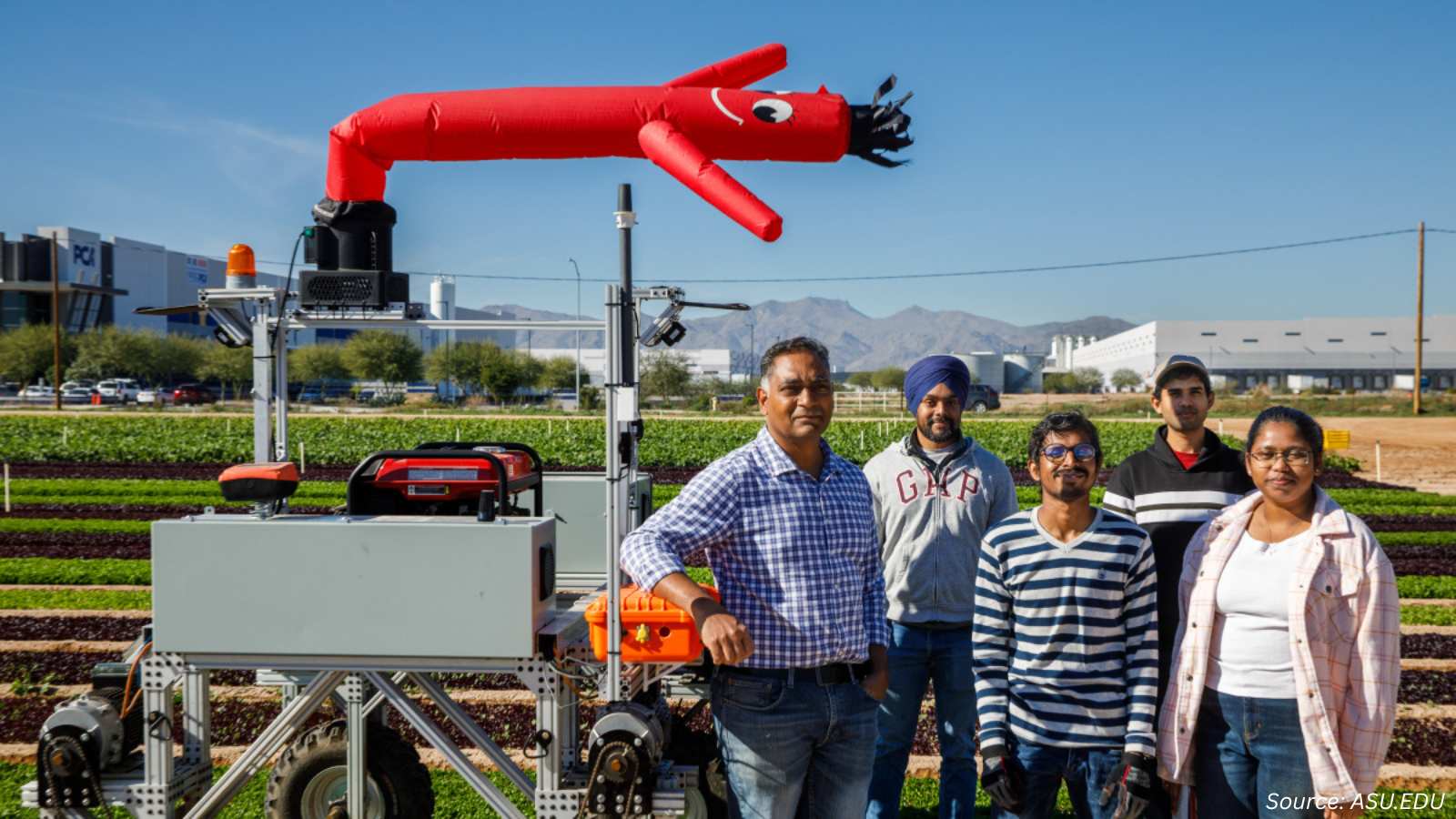
In parallel, entrepreneurial ventures like Padma AgRobotics are taking a customer-driven approach, building modular robots that solve discrete, high-cost problems for farmers. Starting with a weed-pulling robot inspired by a farmer’s direct request, the company has expanded to develop an autonomous cilantro harvester, a precision sprayer, and even an AI-powered “scarecrow” that uses unpredictable movements to deter birds. These solutions are born from direct engagement with farms, such as Blue Sky Organic Farms and Duncan Family Farms—where labor costs and physical demands are unsustainable. By focusing on specific tasks (weeding, harvesting, bird control), these modular systems offer farmers flexible, affordable entry points into automation, demonstrating how scalable robotics can be tailored to niche but critical needs.
3. Wearable Robots Augment, Rather Than Replace, Human Labor
A third, complementary trend emphasizes augmenting human workers’ capabilities and reducing injury. Hyundai Motor and Kia, in partnership with Korea’s Rural Development Administration, are deploying the X-ble Shoulder wearable exoskeleton in agricultural settings. Field tests show the device reduces shoulder muscle strain by approximately 22% during high-load tasks like lifting and trimming. Unlike full automation, this wearable technology enhances farmer endurance and safety, addressing the physical toll of farm work while integrating seamlessly into existing workflows. This approach highlights a blended future where robots and humans collaborate, wearables for protection and stamina, autonomous systems for repetitive chores.

4. Next Move Strategy Consulting – Opinion, Impact, and Near-Term Prospects
Next Move Strategy Consulting views these developments as evidence of the agriculture robots market entering a pragmatic growth phase, where success hinges on adaptability, integration, and measurable return on investment for farmers.
-
Task-specific modularity over monolithic systems: The trend toward modular, task-focused robots (weeding, harvesting, scaring) allows farms to adopt automation incrementally, reducing upfront risk and aligning with crop-specific needs.
-
Human-robot collaboration as a sustainable model: Wearables like the X-ble Shoulder represent a critical strand of innovation—enhancing human labor rather than replacing it—which may ease social and transitional barriers to automation.
-
AI and data as core differentiators: Robotics platforms leveraging real-time computer vision (like Hawkeye) are shifting from manual operation to adaptive, data-driven decision-making, enabling precision tasks like selective harvesting and disease detection.
-
Scalability challenges in varied environments: Commercial success will depend on hardening robots for diverse field conditions—from soil types to weather, and ensuring they are serviceable and cost-effective for mid-sized farms.
-
Sustainability and labor economics driving adoption: Regulatory and consumer pressures for sustainable farming, coupled with chronic labor shortages, will accelerate ROI calculations, making robotics indispensable for competitive resilience.
5. Practical Suggestions for Stakeholders
-
Farmers & Cooperatives: Start with a pain-point audit—identify one high-labor, high-cost task (e.g., weeding or staking) and pilot modular robots there; prioritize vendors offering trial leases and local service support.
-
Robot Manufacturers: Design for modularity and interoperability; develop AI platforms that can learn across crop types; invest in ruggedized testing for real-world farm conditions.
-
Investors: Look for companies blending robust hardware with scalable AI/vision systems, and business models offering Robotics-as-a-Service (RaaS) to lower adoption barriers.
-
Policymakers: Fund pilot programs that co-subsidize robotics adoption for small to mid-sized farms; support training programs in robotics maintenance and data analysis for farm workers.
-
Research Institutions: Focus on cross-disciplinary projects that combine agronomy, robotics, and ergonomics, such as optimizing crop varieties for easier robotic harvesting or refining human-wearable interfaces.
Conclusion
The agriculture robots market is evolving from experimental prototypes toward practical, multi-approach solutions. Whether through AI-powered “superhero” systems, modular task-specific robots, or wearable augmentations, innovation is increasingly defined by flexibility, human-centric design, and tangible farm-level impact. The next phase of growth will belong to platforms that seamlessly integrate into the working rhythms of farms, solving immediate labor crises while building a foundation for resilient, sustainable, and data-driven agriculture.
About Next Move Strategy Consulting:
Next Move Strategy Consulting is a premier market research and management consulting firm that has been committed to providing strategically analysed well documented latest research reports to its clients. The research industry is flooded with many firms to choose from, what makes Next Move different from the rest is its top-quality research and the obsession of turning data into knowledge by dissecting every bit of it and providing fact-based research recommendation that is supported by information collected from over 500 million websites, paid databases, industry journals and one on one consultations with industry experts across a diverse range of industry sectors. The high-quality customized research reports with actionable insights and excellent end-to-end customer service help our clients to take critical business decisions that enables them to move beyond time and have competitive edge in the industry.
We have been servicing over 1000 customers globally that includes 90% of the Fortune 500 companies over a decade. Our analysts are constantly tracking various high growth markets and identifying hidden opportunities in each sector or the industry. We provide one of the industry’s best quality syndicate as well as custom research reports across 10 different industry verticals. We are committed to deliver high quality research solutions in accordance to your business needs. Our industry standard delivery solutions that ranges from the pre consultation to after-sales services, provide an excellent client experience and ensure right strategic decision making for businesses.
For more information please contact:
Next Move Strategy Consulting
5th Floor 867
Boylston St, STE 500,
Boston, MA 02116, U.S.
E-Mail: [email protected]
Direct: +1-857-758-5017
Website: www.nextmsc.com
About the Author
 Joydeep Dey
— Joydeep Dey is a content writer and analyst fueled by creativity, research, and continuous learning. He combines compelling storytelling with market insights to turn complex information into engaging, impactful content. Passionate about emerging trends, digital strategy, and innovation-driven communication, he believes curiosity and consistent growth are key to creating meaningful influence in every project.
Joydeep Dey
— Joydeep Dey is a content writer and analyst fueled by creativity, research, and continuous learning. He combines compelling storytelling with market insights to turn complex information into engaging, impactful content. Passionate about emerging trends, digital strategy, and innovation-driven communication, he believes curiosity and consistent growth are key to creating meaningful influence in every project.
About the Reviewer
 Sanyukta Deb
— Sanyukta Deb is Digital Marketing Team Lead at Next Move Strategy Consulting, where she has led content strategy and technical SEO for the firm's B2B market research publications for over 2 years. Her editorial process translates NextMSC's primary and secondary research — spanning technology, industrial, and consumer sectors — into commercial narratives, backed by search-intent, keyword, and competitive analysis. She brings 5 years of overall experience in digital marketing and content strategy.
Sanyukta Deb
— Sanyukta Deb is Digital Marketing Team Lead at Next Move Strategy Consulting, where she has led content strategy and technical SEO for the firm's B2B market research publications for over 2 years. Her editorial process translates NextMSC's primary and secondary research — spanning technology, industrial, and consumer sectors — into commercial narratives, backed by search-intent, keyword, and competitive analysis. She brings 5 years of overall experience in digital marketing and content strategy.
















Add Comment