U.S. Food Labeling Overhaul Gains Pace as New Rules Pressure Food Makers
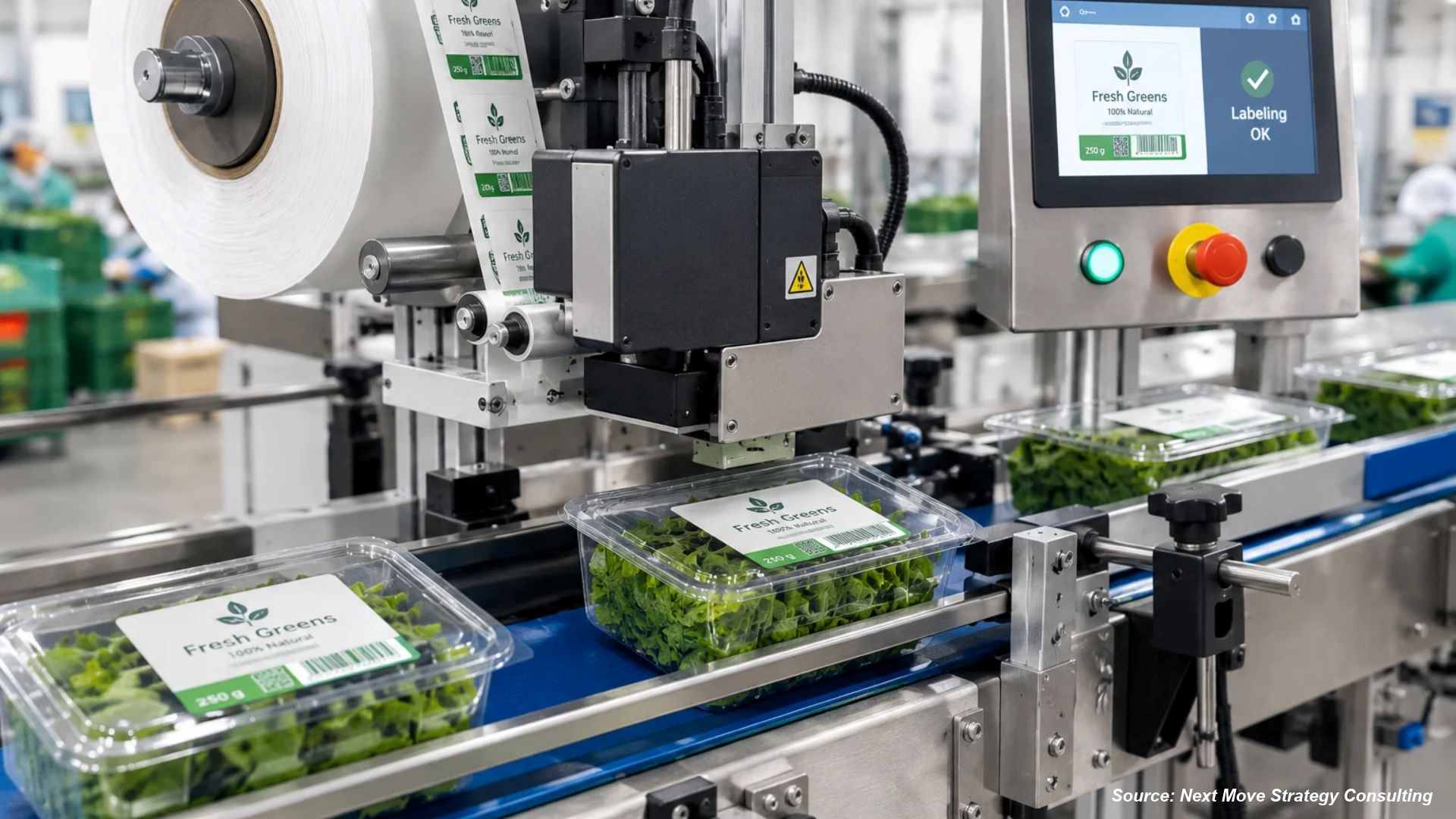
U.S. Congress Advances Two Simultaneous Food Labeling Bills as USDA's "Product of USA" Standard Takes Hold — Compliance Overhaul Reshapes Global Agriculture Food Labeling System Market
October 10, 2026 — In an unprecedented convergence of federal legislative activity, the U.S. Senate advanced two separate food labeling reform bills within the same week in late July 2026, while the USDA's strengthened "Product of USA" voluntary labeling standard — effective since January 1, 2026 — simultaneously entered its national public awareness phase. The dual legislative push, combined with California's AB 660 date-label mandate that took effect July 1, 2026, has placed food labeling compliance infrastructure at the center of a structural market shift that extends well beyond domestic borders.
According to Next Move Strategy Consulting's Agriculture Food Labeling System Market report, the global agriculture food labeling system market was valued at USD 77.6 million in 2021 and is projected to reach USD 116.7 million by 2030, growing at a CAGR of 4.5% from 2022 to 2030. The simultaneous activation of multiple mandatory and voluntary labeling frameworks across the United States — each requiring distinct label formats, ingredient disclosures, and front-of-package systems — is compressing the compliance timelines that food manufacturers, distributors, and labeling technology vendors must navigate, directly expanding the addressable demand for labeling system infrastructure.
For More Information: Download FREE Sample on Agriculture Food Labeling System Market Report
The Legislative Catalyst: Two Bills, One Week, One Market Inflection
On July 30, 2026, the Senate Health, Education, Labor and Pensions (HELP) Committee advanced a bill sponsored by Senator Bernie Sanders (I-Vermont) that would mandate front-of-package warning labels on ultra-processed foods and products high in added sugar, passing out of committee 12-10 with bipartisan support.
The following day, July 31, 2026, Senators Cory Booker (D-New Jersey) and Richard Blumenthal (D-Connecticut) introduced the Food Labeling Modernization Act (FLMA) of 2026, which would require warning labels for foods high in added sugar, sodium, and saturated fats, mandate a federal definition of "non-ultra-processed food" for labeling purposes, and require warning labels for products containing non-nutritive sweeteners.
A parallel House version — H.R.8385, the Food Labeling Modernization Act of 2026 — was introduced on April 20, 2026, by Representative Frank Pallone (D-NJ-6) and Representative Rosa DeLauro, and referred to the House Committee on Energy and Commerce. The bill proposes to amend the Federal Food, Drug, and Cosmetic Act to require standardized front-of-package interpretive nutrition symbols, mandatory caffeine content disclosure for products containing at least 10 milligrams of caffeine per serving, phosphorus declaration in ingredient lists, and expanded allergen labeling to include gluten-containing grains.
Calley Means, a senior advisor to the White House, confirmed the administration's commitment to the regulatory agenda when asked about the timeline for an official ultra-processed food definition: "It's a top MAHA priority. GRAS and UPF are announced priorities and we feel very comfortable with the speed we're moving at."
USDA's "Product of USA" Standard: A New Compliance Layer for Agricultural Producers
On March 24, 2026 — National Agriculture Day — USDA Secretary Brooke L. Rollins announced the launch of a national public awareness campaign for the "Product of USA" voluntary labeling standard, which had taken effect on January 1, 2026. Under the new standard, the "Product of USA" claim is reserved exclusively for meat, poultry, and egg products from animals that were born, raised, harvested, and processed entirely within the United States — ending the prior practice that allowed imported products to carry the claim after minimal domestic processing.
"Our great patriot ranchers and producers grow, raise, and harvest the world's safest, most affordable, and abundant food supply. American consumers want to support America by buying American and this label will strengthen our food supply chain through transparency, fairness, and trust," said USDA Secretary Rollins in the March 24, 2026 press release.
HHS Secretary Robert F. Kennedy Jr. added: "'Product of the USA' labeling puts American producers first, gives families clear, honest information, and empowers them to choose food raised right here at home."
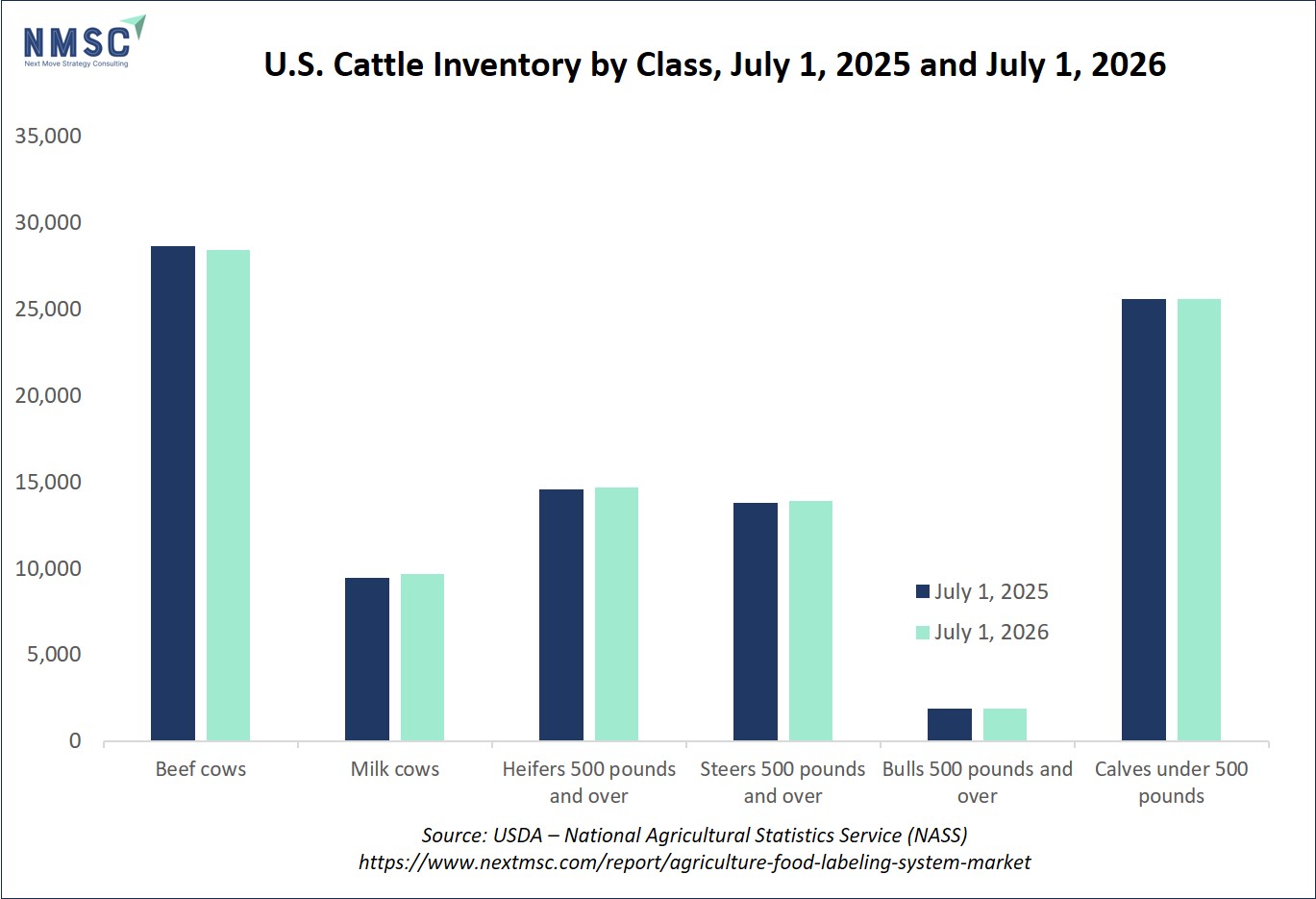
The USDA noted that since 2017, the United States has lost over 17% of its family farms — more than 100,000 operations over the past decade — while the national cattle herd has reached a 75-year low even as consumer demand for beef has grown 9% over the same period. The "Product of USA" label is positioned as a supply-chain transparency mechanism that directly addresses this structural imbalance.
California AB 660: State-Level Date Label Standardization Forces National Reformulation
Effective July 1, 2026, California Assembly Bill 660 (AB 660) requires all packaged food products sold in California to use only two standardized date label formats: "BEST if Used by" or "BEST if Used or Frozen by" for quality dates, and "USE by" or "USE by or Freeze by" for safety dates. The law imposes a blanket prohibition on "sell by" dates on consumer-facing packaging, with a narrow exception for coded inventory-management dates that are not easily readable by consumers.
Because California represents the largest single state food market in the United States, manufacturers distributing nationally have been compelled to reformulate packaging across entire product portfolios — a compliance burden that directly increases demand for labeling system software, label printing hardware, and compliance management platforms.
FDA's 2026 Regulatory Agenda: GRAS Reform, Front-of-Pack Labels, and Natural Color Additives
The U.S. Food and Drug Administration outlined its 2026 food regulation priorities, which include publishing a proposed regulation to require mandatory submission of GRAS (Generally Recognized as Safe) notices for all food substances — replacing the current voluntary notification system under which companies may introduce substances without FDA review. The FDA also confirmed it is continuing to evaluate front-of-package nutrition labeling through an ongoing public comment process and will re-examine a 2025 rule allowing voluntary use of the term "healthy" to ensure alignment with the updated Dietary Guidelines for Americans.
Additionally, the FDA plans to develop best practices for caffeine content labeling across packaged foods, beverages, restaurants, and retail settings, and to issue guidance on fruit- and vegetable-derived color additives as part of a broader shift away from petroleum-based food dyes toward natural alternatives.
Market Segmentation and Regional Dynamics
According to NextMSC primary research and analysis, the global agriculture food labeling system market is segmented by type (organic and inorganic) and by distribution channel (supermarkets, retail stores, and others), across four geographic regions: North America, Europe, Asia-Pacific, and Rest of the World.
North America currently holds the dominant share of the global market. The region's leadership is underpinned by the concentration of large-format supermarket operators — including Kroger Co. and Walmart — that sell extensive ranges of packaged and frozen agricultural products, each requiring compliant labeling across multiple regulatory frameworks. The simultaneous activation of the USDA "Product of USA" standard, California AB 660, and the pending federal FLMA legislation means that North American food manufacturers face the most complex multi-layer labeling compliance environment in the market's history.
The Asia-Pacific region is on a trajectory of steady growth, driven by the large-scale agricultural output of India and China, the demand-supply pressures of rapidly growing populations, and the increasing use of pesticides and chemical inputs in crop production — all of which intensify the regulatory imperative for accurate, verifiable food labeling. The Food Safety and Standards Authority of India (FSSAI) implemented a new labeling regime in December 2021 covering packaged food products and purchases from restaurants and e-commerce platforms, establishing a regulatory baseline that continues to evolve.
Key U.S. Food Labeling Regulatory Developments, 2026
|
Regulatory Event |
Issuing Authority |
Effective / Action Date |
Key Requirement |
|
"Product of USA" Voluntary Label Standard |
USDA |
January 1, 2026 (awareness campaign: March 24, 2026) |
Meat, poultry, and egg products must be born, raised, harvested, and processed in the U.S. to carry the claim |
|
California AB 660 Date Label Mandate |
California State Legislature |
July 1, 2026 |
Standardized "BEST if Used by" / "USE by" labels; "sell by" dates prohibited on consumer packaging |
|
Food Labeling Modernization Act of 2026 (Senate) |
U.S. Senate (Booker / Blumenthal) |
Introduced July 30–31, 2026 |
Front-of-pack warning labels for high added sugar, sodium, saturated fat; non-UPF federal definition |
|
H.R.8385 Food Labeling Modernization Act of 2026 (House) |
U.S. House (Pallone / DeLauro) |
Introduced April 20, 2026 |
Front-of-pack interpretive nutrition symbols; caffeine disclosure; phosphorus declaration; expanded allergen labeling |
|
GRAS Mandatory Notification Proposed Rule |
U.S. FDA |
Proposed regulation planned for 2026 |
All food substances claimed GRAS must be submitted to FDA for review |
|
Front-of-Package Nutrition Labeling Review |
U.S. FDA |
Ongoing public comment process, 2026 |
Re-evaluation of "healthy" term definition; potential red/yellow/green signal system |
Competitive Landscape
The global agriculture food labeling system market features a concentrated set of specialized players whose competitive positioning is increasingly determined by their ability to support multi-jurisdictional compliance updates at speed. Key players identified through NextMSC primary research and analysis include Hermes, Ecolab, Jolt, Day Merck, Brother UK, Prep Wizard, Paragon Labeling Systems, BarTender, World Pack Automation Systems, and Nutritics.
Notable competitive developments in the market include the July 2021 announcement by Cargill and Ecolab to merge their participation in the Techstars Farm to Fork Accelerator, targeting innovation in food retail, food safety, and workforce development. In January 2019, Brother UK partnered with Navitas to integrate its TD-2120N compact label printer with Navitas's digital food safety management system, directly addressing the laborious and potentially unsafe manual food labeling processes that remain prevalent in food service and retail environments.
The current regulatory wave — particularly the prospect of mandatory front-of-package interpretive nutrition symbols under the FLMA and the GRAS mandatory notification rule — will require labeling system vendors to deliver software platforms capable of real-time regulatory update integration, multi-format label generation, and audit-trail documentation for compliance verification.
NMSC Strategic Perspective: A Compliance-Driven Market Inflection
NextMSC primary research and analysis identifies the current U.S. regulatory environment as the most consequential structural catalyst for the agriculture food labeling system market since the implementation of the FDA's revised Nutrition Facts Label in 2016. The convergence of three simultaneous compliance mandates — the USDA "Product of USA" standard, California AB 660, and the pending federal FLMA — is not a coincidental clustering of policy activity. It reflects a durable shift in the political economy of food transparency, driven by the Make America Healthy Again (MAHA) movement's institutional influence across both the executive branch and Congress.
From a market structure perspective, this regulatory convergence has two distinct demand effects. First, it compresses the compliance window for food manufacturers, forcing accelerated investment in labeling system upgrades that can accommodate multiple simultaneous label format requirements — a dynamic that disproportionately benefits vendors offering integrated, software-driven labeling platforms over single-function hardware providers. Second, it raises the cost of non-compliance to a level that makes labeling system investment a risk-management imperative rather than an operational discretionary spend, particularly for manufacturers distributing across state lines where California AB 660 and potential federal FLMA requirements may impose conflicting or additive obligations.
The organic segment of the agriculture food labeling system market is particularly exposed to this dynamic. As the FDA moves toward mandatory GRAS notifications and a federal definition of ultra-processed foods, organic product manufacturers — who have historically relied on the "organic" certification as a sufficient consumer trust signal — will face pressure to layer additional front-of-package disclosures onto their existing label architecture. This creates a specific demand vector for labeling system vendors capable of managing multi-claim, multi-format label compliance simultaneously.
North America's dominant market position is structurally reinforced by this regulatory environment. However, NextMSC analysis indicates that Asia-Pacific represents the highest incremental growth opportunity over the forecast period, as India's FSSAI framework and China's expanding food safety regulatory infrastructure create analogous compliance pressures in markets where labeling system penetration remains significantly lower than in North America or Europe.
Bottom Line
The agriculture food labeling system market is undergoing a structural demand inflection driven by the simultaneous activation of multiple mandatory and voluntary labeling frameworks across the United States in 2026. The USDA's "Product of USA" standard, California AB 660's date-label mandate, the Senate's advancement of two food labeling reform bills in a single week, and the FDA's proposed GRAS mandatory notification rule collectively represent the most concentrated regulatory pressure on food labeling compliance infrastructure in over a decade. According to NextMSC primary research and analysis, the global market — valued at USD 77.6 million in 2021 — is projected to reach USD 116.7 million by 2030 at a 4.5% CAGR. North America retains its dominant position, anchored by the regulatory complexity that now requires labeling system vendors to deliver multi-format, multi-jurisdiction compliance capabilities. Asia-Pacific presents the highest incremental growth opportunity as India and China expand their food safety regulatory frameworks. Labeling system vendors that can integrate real-time regulatory updates, support front-of-package interpretive symbol generation, and provide audit-trail documentation for GRAS and allergen compliance will be best positioned to capture the compliance-driven demand surge now underway.
About Next Move Strategy Consulting
Next Move Strategy Consulting is a premier market research and management consulting firm that has been committed to provide strategically analysed well documented latest research reports to its clients. The research industry is flooded with many firms to choose from, what makes NMSC different from the rest is its top-quality research and the obsession of turning data into knowledge by dissecting every bit of it and providing fact-based research recommendation that is supported by information collected from over 500 million websites, paid databases, industry journals and one on one consultations with industry experts across a diverse range of industry sectors. The high-quality customized research reports with actionable insights and excellent end-to-end customer service help our clients to take critical business decisions that enables them to move beyond time and have competitive edge in the industry.
We have been servicing over 1000 customers globally that includes 90% of the Fortune 500 companies over a decade. Our analysts are constantly tracking various high growth markets and identifying hidden opportunities in each sector or the industry. We provide one of the industry's best quality syndicate as well as custom research reports across 10 different industry verticals. We are committed to deliver high quality research solutions in accordance to your business needs. Our industry standard delivery solutions that ranges from the pre consultation to after-sales services, provide an excellent client experience and ensure right strategic decision making for businesses.
For more information, please contact:
Next Move Strategy Consulting
5th Floor 867 Boylston St, STE 500,
Boston, MA 02116, U.S.
E-Mail: [email protected]
Direct: +1-217-650-7991
Website: www.nextmsc.com
About the Author
 Sanyukta Deb
— Sanyukta Deb is Digital Marketing Team Lead at Next Move Strategy Consulting, where she has led content strategy and technical SEO for the firm's B2B market research publications for over 2 years. Her editorial process translates NextMSC's primary and secondary research — spanning technology, industrial, and consumer sectors — into commercial narratives, backed by search-intent, keyword, and competitive analysis. She brings 5 years of overall experience in digital marketing and content strategy.
Sanyukta Deb
— Sanyukta Deb is Digital Marketing Team Lead at Next Move Strategy Consulting, where she has led content strategy and technical SEO for the firm's B2B market research publications for over 2 years. Her editorial process translates NextMSC's primary and secondary research — spanning technology, industrial, and consumer sectors — into commercial narratives, backed by search-intent, keyword, and competitive analysis. She brings 5 years of overall experience in digital marketing and content strategy.
About the Reviewer
 Debashree Dey
— Debashree Dey is Assistant Manager at Next Move Strategy Consulting, where she supports cross-vertical market content and communications across diverse industries for 6 years. Her professional background includes senior content writing, communications, and published manuscript authorship, with experience developing audience-focused business narratives and maintaining clear, consistent messaging. Her role supports research-led content development and editorial quality across NextMSC publications.
Debashree Dey
— Debashree Dey is Assistant Manager at Next Move Strategy Consulting, where she supports cross-vertical market content and communications across diverse industries for 6 years. Her professional background includes senior content writing, communications, and published manuscript authorship, with experience developing audience-focused business narratives and maintaining clear, consistent messaging. Her role supports research-led content development and editorial quality across NextMSC publications.

















Add Comment