Veterinary Market Update: Access Crisis and Rising Costs
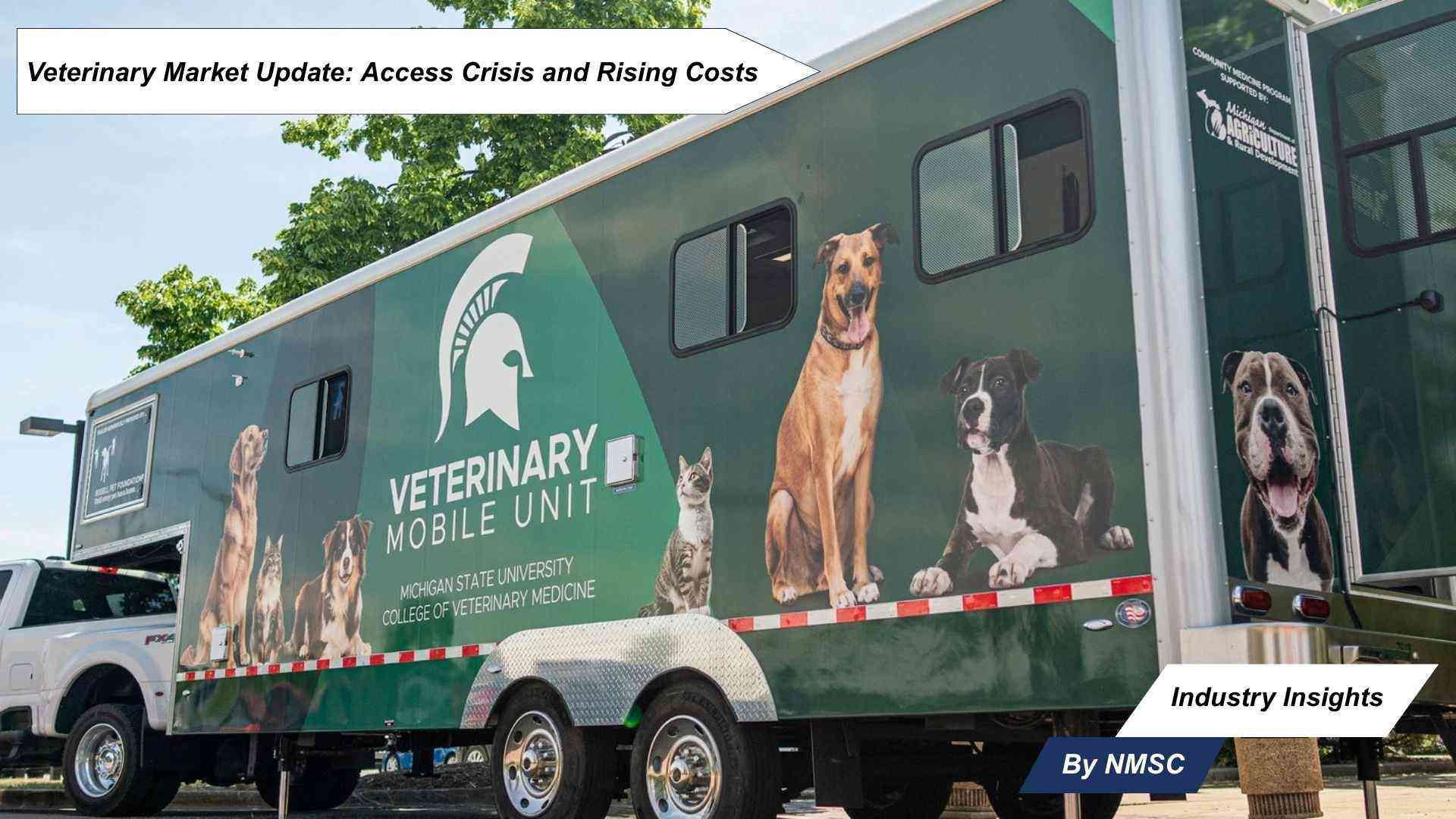
MSU Launches Mobile Vet Clinic as U.S. Veterinary Care Shortage and Cost Crisis Deepen
Michigan State University's College of Veterinary Medicine has launched a mobile surgical unit to address a widening veterinary care access gap across Michigan, as shelter operators report veterinary bills more than doubling over five years and private equity consolidation continues to reshape the U.S. animal healthcare landscape.
The MSU Community Medicine Program, which operates a 32-foot fully equipped mobile surgical unit, is now partnered with 14 animal shelters across Michigan, providing spay-and-neuter services to facilities that lack consistent access to veterinary professionals. The initiative, funded through grants from the Michigan Department of Agriculture and Rural Development (MDARD) and the BISSELL Pet Foundation, targets high-need communities within a two-hour radius of the MSU campus in East Lansing.
Dianne Reeves, executive director of I Heart Dogs — a nonprofit shelter in Warren, Michigan — said her organization spends approximately $275,000 annually on veterinary bills, the majority of which covers routine wellness procedures such as spaying and neutering. "Our vet bills have more than doubled in the past five years," Reeves stated, citing the growing influence of private equity ownership in veterinary practices as a primary driver of cost escalation. "There's a shortage of veterinary care across the United States, and then there is also an issue with investment firms buying the smaller, individually owned offices. And when that happens, their prices tend to increase."
The program pairs veterinary students' need for hands-on surgical experience with shelters' demand for affordable animal care. During the program's first three-week rotation, one student veterinarian completed 67 spays and neuters on cats and dogs — a volume of clinical experience that far exceeds what is typically available through standard academic rotations.
Dr. David Emery, assistant professor in the Community Medicine Program and the initiative's architect, said the mobile clinic employs specialized disinfection protocols to prevent the spread of infectious diseases including parvovirus, upper respiratory infections in cats, and canine respiratory infections. The unit is equipped with two heated surgical tables, two oxygen concentrators, anesthesia monitoring equipment, and a dedicated prep area.
The program currently operates on a six-week rotation cycle across its 14 partner shelters, with plans to expand services to Michigan's Upper Peninsula. Practice owners in the Grand Rapids area raised concerns about competitive impact, resulting in an agreement restricting the mobile clinic's services to unowned animals during its first three years of operation.
Key Highlights:
-
MSU's 32-foot mobile surgical unit serves 14 animal shelters within a two-hour radius of campus, equipped with dual heated surgical tables and full anesthesia monitoring capability.
-
Shelter operators report veterinary bills more than doubling over five years, with private equity acquisition of independent practices identified as a primary cost escalation driver.
-
The program is grant-funded by the Michigan Department of Agriculture and Rural Development (MDARD) and the BISSELL Pet Foundation, providing services at no direct cost to partner shelters.
-
During the first rotation alone, one student veterinarian completed 67 spays and neuters, addressing both the clinical training gap and the shelter medicine access deficit simultaneously.
Analyst Insight:
According to analysts at Next Move Strategy Consulting, the global Veterinary Market is projected to reach USD 172.76 billion by 2030, expanding at a compound annual growth rate (CAGR) of 6.5% during the forecast period. NMSC analysts note that while rising pet adoption rates and increasing consumer awareness of animal health are primary growth catalysts — with the World Animal Foundation reporting 4.8 million animal adoptions in 2023 alone — the shortage of veterinary professionals in underserved areas and escalating treatment costs represent significant structural challenges that could constrain market accessibility and long-term sector growth. According to a report cited by Health for Animals, the profession is projected to fall approximately 15,000 veterinarians short of the 41,000 required to meet pet care needs by 2030.
Industry Outlook:
The veterinary sector faces a dual challenge: robust demand growth driven by pet humanization and rising household disposable incomes on one hand, and systemic access barriers — including a projected veterinarian shortfall and accelerating private equity consolidation — on the other. Innovative delivery models such as mobile veterinary units are emerging as a critical bridge, particularly for shelter medicine and rural communities. As the industry scales toward a projected USD 172.76 billion market by 2030, stakeholders are increasingly focused on equitable access, workforce development, and sustainable pricing frameworks that can support both independent practitioners and institutional providers.
Source: The State News
For More Information – Download FREE Sample on Veterinary Market Report
Prepared By: Sanyukta Deb
About the Author
 Sanyukta Deb
— Sanyukta Deb is Digital Marketing Team Lead at Next Move Strategy Consulting, where she has led content strategy and technical SEO for the firm's B2B market research publications for over 2 years. Her editorial process translates NextMSC's primary and secondary research — spanning technology, industrial, and consumer sectors — into commercial narratives, backed by search-intent, keyword, and competitive analysis. She brings 5 years of overall experience in digital marketing and content strategy.
Sanyukta Deb
— Sanyukta Deb is Digital Marketing Team Lead at Next Move Strategy Consulting, where she has led content strategy and technical SEO for the firm's B2B market research publications for over 2 years. Her editorial process translates NextMSC's primary and secondary research — spanning technology, industrial, and consumer sectors — into commercial narratives, backed by search-intent, keyword, and competitive analysis. She brings 5 years of overall experience in digital marketing and content strategy.
About the Reviewer
 Debashree Dey
— Debashree Dey is Assistant Manager at Next Move Strategy Consulting, where she supports cross-vertical market content and communications across diverse industries for 6 years. Her professional background includes senior content writing, communications, and published manuscript authorship, with experience developing audience-focused business narratives and maintaining clear, consistent messaging. Her role supports research-led content development and editorial quality across NextMSC publications.
Debashree Dey
— Debashree Dey is Assistant Manager at Next Move Strategy Consulting, where she supports cross-vertical market content and communications across diverse industries for 6 years. Her professional background includes senior content writing, communications, and published manuscript authorship, with experience developing audience-focused business narratives and maintaining clear, consistent messaging. Her role supports research-led content development and editorial quality across NextMSC publications.

















Add Comment