WHO Panel Confirms Vaccines Do Not Cause Autism
Industry Insights from Next Move Strategy Consulting
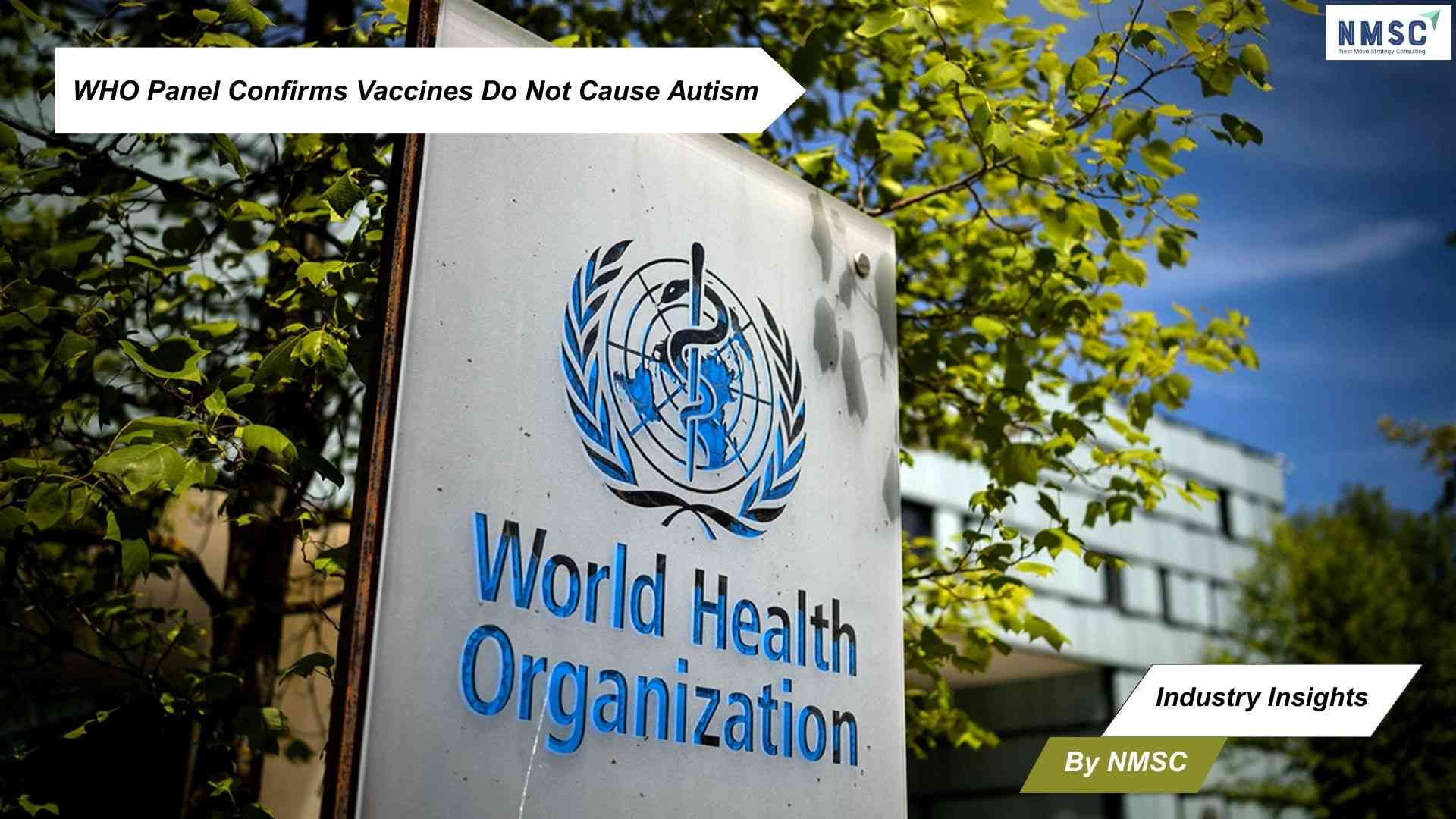
A comprehensive scientific analysis by a World Health Organisation (WHO) expert committee has delivered a definitive verdict, finding no evidence of any causal link between vaccines and autism spectrum disorders (ASD). This conclusion, based on a review of over 30 studies published between 2010 and 2025, provides a critical reaffirmation of vaccine safety and aims to counter persistent misinformation that has impacted public health initiatives globally.
A Scientific Reaffirmation Against Persistent Myths
The WHO's Global Advisory Committee on Vaccine Safety (GACVS) conducted the latest assessment, which focused on two specific areas: the relationship between thiomersal-containing vaccines and ASD, and the broader association between vaccines in general and ASD. The committee, comprising independent international experts, analyzed data from multiple countries to reach its conclusion.
“Evidence based on 31 primary research studies... strongly supports the positive safety profile of vaccines used during childhood and pregnancy, and confirms the absence of a causal link with ASD,” stated the WHO release. The analysis also specifically reviewed the safety of vaccines containing aluminum adjuvants, confirming no association between these trace amounts and autism.
Key Findings from the WHO Analysis:
-
The WHO also noted that autism spectrum disorders (ASD) are a group of neurodevelopmental conditions marked by challenges in social interaction and communication, along with atypical patterns of behaviour.
-
No Causal Link: A review of international studies from 2010-2025 confirms vaccines do not cause autism spectrum disorders.
-
Thiomersal Safety Reaffirmed: Evidence strongly supports the safety profile of thiomersal-containing vaccines.
-
Aluminum Adjuvant Safety: High-quality evidence shows no association between trace aluminum in some vaccines and ASD.
-
Historical Consistency: The finding reaffirms the GACVS's previous conclusions from 2002, 2004, and 2012.
-
Global Data Foundation: The conclusion is drawn from multi-country studies and large-scale national registry analyses.
Strengthening the Foundation of Global Immunization
The WHO's advisory underscores vaccination as one of the most effective public health interventions. The organization noted that essential vaccines have saved at least 154 million lives over the past 50 years and contributed significantly to reducing infant mortality. During the same period, vaccination has contributed to 40% of the drop in infant deaths. This latest safety analysis is positioned to bolster confidence in these lifesaving programs.
The WHO has advised all national health authorities to ground their vaccine policies in this strong scientific evidence, emphasizing that global immunization efforts are fundamental to improving societal health and prosperity.
Industry Response and Strategic Outlook
This authoritative pronouncement from the WHO is expected to have a stabilizing effect on public health policy and parental decision-making. For the pharmaceutical and healthcare sectors, it reinforces the scientific integrity underpinning vaccine development and public health communication strategies.
According to Next Move Strategy Consulting, the WHO's clear reaffirmation addresses a long-standing barrier to vaccine confidence. This strengthens the foundational environment for global immunization markets, potentially supporting more stable demand and providing a firm evidence base for public health campaigns. The analysis helps mitigate a persistent risk factor for vaccination programs, allowing stakeholders across the healthcare ecosystem to focus on improving access and addressing genuine, evidence-based safety monitoring.
Reinforcing Trust in Scientific Evidence
By systematically dismantling a widely circulated misconception with robust, multi-year data, the WHO expert panel provides a crucial tool for health authorities worldwide. This conclusion not only protects current immunization efforts but also helps secure the future of vaccine programs essential for preventing disease and saving lives on a global scale.
Source: The Hindu
Prepared By: Next Move Strategy Consulting
About the Author
 Sanyukta Deb
— Sanyukta Deb is Digital Marketing Team Lead at Next Move Strategy Consulting, where she has led content strategy and technical SEO for the firm's B2B market research publications for over 2 years. Her editorial process translates NextMSC's primary and secondary research — spanning technology, industrial, and consumer sectors — into commercial narratives, backed by search-intent, keyword, and competitive analysis. She brings 5 years of overall experience in digital marketing and content strategy.
Sanyukta Deb
— Sanyukta Deb is Digital Marketing Team Lead at Next Move Strategy Consulting, where she has led content strategy and technical SEO for the firm's B2B market research publications for over 2 years. Her editorial process translates NextMSC's primary and secondary research — spanning technology, industrial, and consumer sectors — into commercial narratives, backed by search-intent, keyword, and competitive analysis. She brings 5 years of overall experience in digital marketing and content strategy.
About the Reviewer
 Debashree Dey
— Debashree Dey is Assistant Manager at Next Move Strategy Consulting, where she supports cross-vertical market content and communications across diverse industries for 6 years. Her professional background includes senior content writing, communications, and published manuscript authorship, with experience developing audience-focused business narratives and maintaining clear, consistent messaging. Her role supports research-led content development and editorial quality across NextMSC publications.
Debashree Dey
— Debashree Dey is Assistant Manager at Next Move Strategy Consulting, where she supports cross-vertical market content and communications across diverse industries for 6 years. Her professional background includes senior content writing, communications, and published manuscript authorship, with experience developing audience-focused business narratives and maintaining clear, consistent messaging. Her role supports research-led content development and editorial quality across NextMSC publications.
















Add Comment