Active Implantable Medical Devices Market Size, Share, Growth & Forecast by Product Family (Cardiac Rhythm Management [Pacemakers, Defibrillators, Insertable Cardiac Monitors], Cardiac Modulation, Mechanical Circulatory Support, Neuromodulation, Hearing Implants, Drug Delivery Pumps, Other Active Implants), Implant Format (Fully Implantable, Partially Implantable), Buyer Type (Hospitals, Specialty Clinics, Ambulatory Surgery Centers, Others), and Sales Channel — Global Analysis 2025–2035
Industry: Healthcare | Publishing Date: June 5, 2026 | Last Updated: September 30, 2026 | No of Pages: N/A | No. of Tables: N/A | No. of Figures: N/A | Format: PDF | Report Code: HC4609
What Is the Active Implantable Medical Devices Market Size?
The global Active Implantable Medical Devices Market size was valued at USD 34.2 billion in 2025 and is expected to reach USD 36.8 billion in 2026. Advancing therapeutic innovation, an aging global population, rising prevalence of cardiovascular and neurological disorders, and expanding reimbursement coverage are projected to propel the market to USD 76.4 billion by 2035, advancing at a CAGR of 8.5% from 2026 to 2035. Key growth drivers include the rapid adoption of leadless pacing systems, miniaturized neuromodulation platforms, next-generation cochlear implants, and the expanding clinical acceptance of brain-computer interface technologies across developed and emerging markets.
|
Parameters |
Details |
|
Market Size in 2025 |
USD 34.2 Billion |
|
Market Size in 2026 |
USD 36.8 Billion |
|
Revenue Forecast in 2035 |
USD 76.4 Billion |
|
Growth Rate |
CAGR of 8.5% from 2026 to 2035 |
|
Analysis Period |
2025–2035 |
|
Base Year Considered |
2025 |
|
Forecast Period |
2026–2035 |
|
Market Size Estimation |
USD Billion |
|
Companies Profiled |
20 |
|
Countries Covered |
33 |
|
Market Share |
Top 10 |
Active Implantable Medical Devices Market Overview
What Are Active Implantable Medical Devices?
Active implantable medical devices are electronically powered therapeutic or diagnostic systems surgically placed inside the human body to monitor, regulate, or stimulate biological functions. Unlike passive implants, active devices incorporate internal or transcutaneous power sources, embedded microprocessors, and wireless telemetry capabilities. The active implantable medical devices market encompasses cardiac rhythm management systems, mechanical circulatory support, neuromodulation platforms, hearing implants, drug delivery pumps, and emerging implantable brain-computer interfaces that collectively deliver targeted, continuous, and programmable therapy across a broad spectrum of chronic and life-threatening conditions.
How Has the Active Implantable Medical Devices Market Evolved?
The active implantable medical devices market has progressed through distinct technological generations. Early development in the 1960s and 1970s focused on basic cardiac pacing and cochlear stimulation. Subsequent decades introduced programmability, remote monitoring, and miniaturization across pacemakers and defibrillators. The current phase of evolution centers on leadless and subcutaneous device architectures, rechargeable neurostimulation platforms, closed-loop responsive systems, and the early commercialization of implantable brain-computer interfaces, fundamentally expanding the therapeutic reach of active implantable technologies into previously intractable neurological and sensory conditions.
How Do Regulations Shape the Active Implantable Medical Devices Market?
The regulatory landscape for the active implantable medical devices market is defined by rigorous premarket approval frameworks across major geographies. In the United States, the FDA's Center for Devices and Radiological Health requires Premarket Approval (PMA) for high-risk active implantable devices, while the European Union's Medical Device Regulation (MDR 2017/745) mandates clinical evaluations, Notified Body conformity assessments, and post-market surveillance. Japan's Pharmaceuticals and Medical Devices Agency (PMDA) and China's National Medical Products Administration (NMPA) maintain parallel approval pathways that govern market entry timelines and reimbursement eligibility for active implantable technologies globally.
How Is Technology Adoption Advancing in the Active Implantable Medical Devices Market?
Technology adoption across the active implantable medical devices market is accelerating on multiple fronts. Remote patient monitoring integration, first enabled in cardiac devices and now expanding across neuromodulation and hearing implants, is reducing hospital readmission rates and enabling continuous therapy optimization. Rechargeable battery platforms are extending device longevity from years to decades for spinal cord stimulators and deep brain stimulators. MRI conditional design, biocompatible materials innovation, and Bluetooth Low Energy telemetry are becoming standard requirements across all major active implant categories, raising the baseline technological threshold for competitive market participation.
Key Takeaways
|
Key Insight |
|
By product family, Cardiac Rhythm Management (CRM) held the largest share of the active implantable medical devices market at USD 15.8 billion in 2025, anchored by the high procedural volumes of implantable cardioverter defibrillators and dual-chamber pacemakers across developed markets, and is projected to reach USD 31.2 billion by 2035 at a CAGR of 7.0%. |
|
Neuromodulation is the fastest-growing product family in the active implantable medical devices market, advancing from USD 8.4 billion in 2025 to USD 21.4 billion by 2035 at a CAGR of 9.8%, propelled by expanding indications for spinal cord stimulation, deep brain stimulation, and hypoglossal nerve stimulation for obstructive sleep apnea. |
|
By implant format, Fully Implantable devices dominate the active implantable medical devices market share at USD 26.4 billion in 2025, reflecting widespread clinical preference for devices that eliminate external components, reduce infection risk, and improve patient quality of life. |
|
Partially Implantable devices represent the fastest-growing format segment in the active implantable medical devices market at a CAGR of 9.2% from 2026 to 2035, driven by cochlear implants, auditory brainstem implants, and hybrid neuromodulation systems that combine internal stimulators with external processors. |
|
By buyer type, Hospitals account for the largest share of the active implantable medical devices market at USD 22.4 billion in 2025, supported by their comprehensive surgical infrastructure, reimbursement capabilities, and post-operative monitoring capacity for high-acuity active implant procedures. |
|
Ambulatory Surgery Centers represent the fastest-growing buyer segment in the active implantable medical devices market at a CAGR of 11.0% from 2026 to 2035, driven by procedural migration of less complex neuromodulation and cardiac monitor implants to cost-efficient outpatient settings. |
|
By sales channel, Direct Sales dominates the active implantable medical devices market at USD 18.6 billion in 2025, as major manufacturers maintain dedicated field sales and clinical specialist teams to support complex implant procedures and surgeon training requirements. |
|
Tender-based procurement is among the fastest-growing sales channels in the active implantable medical devices market at a CAGR of 10.1% from 2026 to 2035, reflecting growing public sector procurement volumes in Europe, Asia Pacific, and Middle East markets. |
|
North America holds the largest regional share of the active implantable medical devices market at USD 14.8 billion in 2025, projected to reach USD 31.4 billion by 2035 at a CAGR of 7.8%, underpinned by the highest procedural volume, favorable reimbursement frameworks, and concentration of leading device manufacturers. |
|
Asia Pacific is the fastest-growing region in the active implantable medical devices market at a CAGR of 10.0% from 2026 to 2035, advancing from USD 7.2 billion in 2025 to USD 18.6 billion by 2035, driven by rapidly expanding middle-class healthcare access in China, India, and Southeast Asia. |
|
The United States is the largest single-country market for Active Implantable Medical Devices, representing approximately 68% of North American revenue in 2025, supported by the highest per-capita procedural rates, robust FDA approval pathways, and the global headquarters of leading active implant manufacturers. |
|
China is the fastest-growing major national market for Active Implantable Medical Devices at a CAGR exceeding 12.0% from 2026 to 2035, propelled by the Healthy China 2030 initiative, expanded public healthcare insurance coverage, and rising domestic device manufacturing capabilities under local innovation programs. |
Key Emerging Trends in the Active Implantable Medical Devices Market
How Is the Transition to Leadless and Subcutaneous Architectures Reshaping the Active Implantable Medical Devices Market?
The migration from transvenous to leadless pacing and subcutaneous defibrillation platforms represents one of the most structurally significant shifts in the active implantable medical devices market expansion. From our research, we found that Medtronic's Micra transcatheter pacing system and Boston Scientific's EMPOWER leadless pacemaker have demonstrated non-inferiority to conventional systems with substantially lower lead-related complication rates. These devices eliminate transvenous leads, which historically accounted for the majority of pacemaker-related adverse events, fundamentally improving long-term reliability and enabling catheter-based implantation that extends eligibility to previously contraindicated patient populations.
How Is Closed-Loop Responsive Neurostimulation Advancing Therapeutic Precision in the Active Implantable Medical Devices Market?
Closed-loop neurostimulation systems that adapt stimulation parameters in real time based on biomarker sensing are redefining the clinical value proposition of active neuromodulation devices. Through our market assessment, we observed that NeuroPace's RNS System, cleared by the FDA for drug-resistant epilepsy, demonstrated a median 73% reduction in seizure frequency at three years in pivotal trials. Medtronic's Percept PC DBS system with BrainSense technology similarly captures local field potentials to guide programming optimization. This responsive approach is driving premium pricing adoption and accelerating uptake among neurological centers treating Parkinson's disease, essential tremor, and refractory epilepsy conditions.
How Is Remote Patient Monitoring Integration Transforming the Active Implantable Medical Devices Market?
Remote monitoring capabilities embedded within active implantable devices are transforming care pathways and creating new data-driven service revenue streams for manufacturers. Based on our market evaluation, we noticed that Medtronic's CareLink network, Abbott's Merlin.net, and BIOTRONIK's Home Monitoring platform collectively transmit millions of device interrogation reports annually, enabling physicians to identify arrhythmias, lead integrity alerts, and battery depletion proactively. The integration of active implantable device telemetry with electronic health records and artificial intelligence-powered diagnostic algorithms is further enabling predictive hospitalization prevention and population-level cardiac risk stratification at scale.
How Are Brain-Computer Interface Implants Emerging as the Next Frontier of the Active Implantable Medical Devices Market?
Implantable brain-computer interfaces represent the most transformative emerging sub-segment of the active implantable medical devices market, enabling direct communication between neural activity and external computing systems. Our findings suggest that Synchron's Stentrode endovascular BCI and Precision Neuroscience's Layer 7 cortical interface are advancing toward broader clinical deployment, complementing Neuralink's N1 chip implant studies. The FDA has granted Breakthrough Device Designations to multiple BCI systems targeting paralysis, severe aphasia, and treatment-resistant depression, establishing an accelerated regulatory pathway that is attracting substantial venture and corporate investment into this nascent but high-potential active implant category.
Ecosystem Analysis of the Active Implantable Medical Devices Market
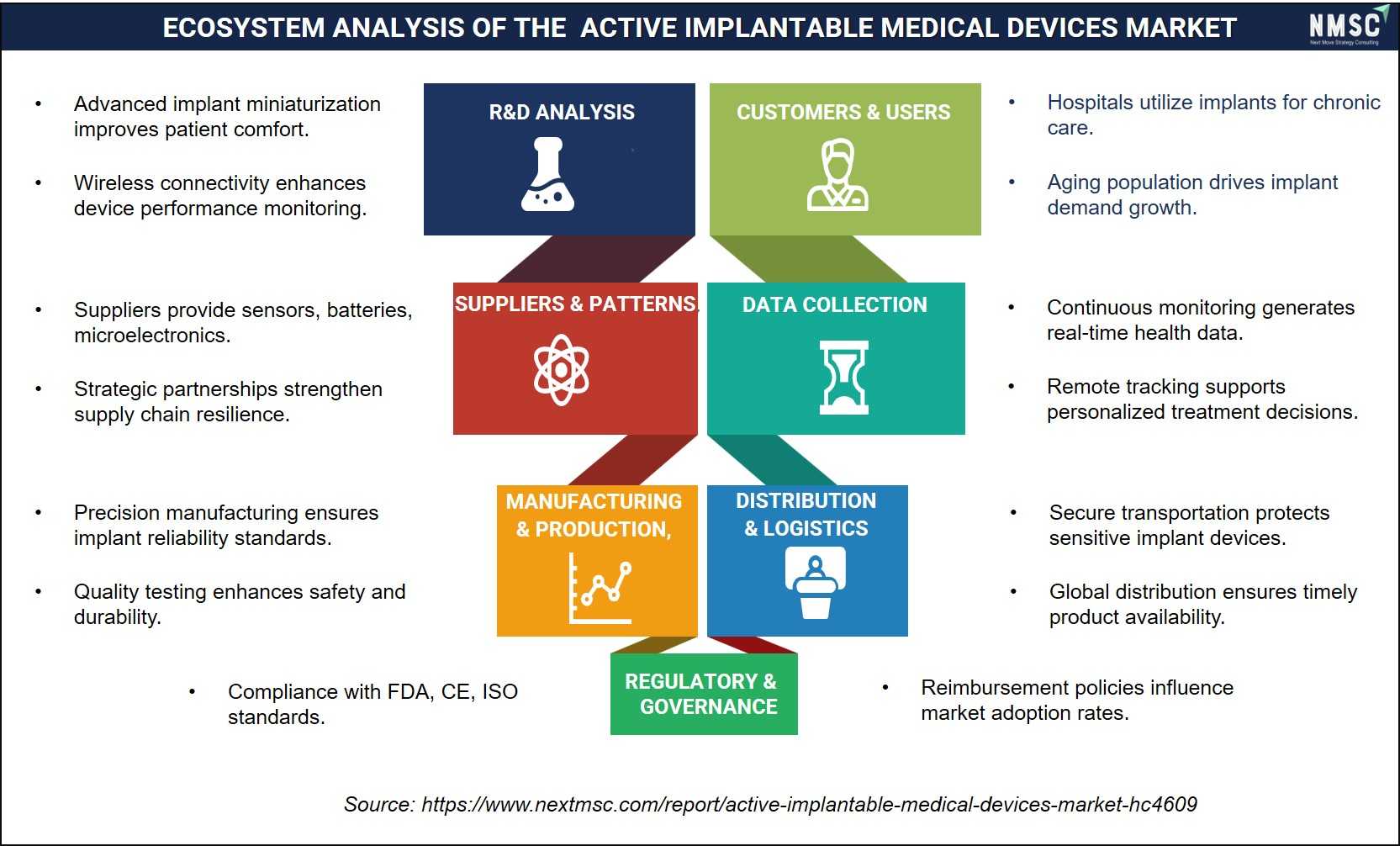
The above infographic maps the ecosystem of the active implantable medical devices market, highlighting R&D analysis, key customer segments including hospitals and the aging population driving implant demand, suppliers and partners, data collection, manufacturing and production, distribution and logistics, as well as regulatory and governance factors shaping the industry landscape.
What Are the Key Market Drivers, Breakthroughs, and Investment Opportunities That Will Shape the Active Implantable Medical Devices Industry in the Next Decade?
|
Drivers / Trends / Restraints |
(+/-) % Impact on CAGR Forecast |
Geographic Relevance |
Impact Timeline |
|
Aging Global Population and Rising Cardiovascular Disease Burden |
+1.8% |
Global (led by North America, Europe, APAC) |
2025–2035 |
|
Leadless and Subcutaneous Device Innovation |
+1.4% |
North America, Europe, Japan |
2025–2032 |
|
Expanding Neuromodulation Indications |
+1.6% |
North America, Europe, Australia |
2025–2035 |
|
Remote Monitoring and Digital Health Integration |
+1.0% |
Global |
2025–2030 |
|
Favorable Reimbursement Expansion in Emerging Markets |
+1.2% |
China, India, Southeast Asia, MEA |
2026–2035 |
|
MRI Conditional Device Adoption |
+0.6% |
Global (developed markets) |
2025–2030 |
|
High Device Cost and Reimbursement Limitations |
-1.4% |
Emerging markets globally |
Ongoing |
|
Lead-Related Complications and Device Recalls |
-0.8% |
All regions |
Ongoing |
|
Stringent Regulatory Approval Timelines |
-0.9% |
Europe (MDR), U.S. (PMA), China (NMPA) |
Ongoing |
|
Brain-Computer Interface Commercial Expansion |
+2.2% |
North America, Europe, Australia |
2027–2035 |
|
Ambulatory Surgery Center Procedure Migration |
+0.8% |
North America, Europe |
2025–2032 |
What Are the Growth Drivers of the Active Implantable Medical Devices Market?
How Is the Global Ageing Population and Rising Cardiovascular Disease Prevalence Driving the Active Implantable Medical Devices Market?
The demographic transition toward older populations globally is the most foundational structural driver of the active implantable medical devices market expansion. For more information, see our report on implantable defibrillators. According to the World Health Organization (WHO), cardiovascular diseases remain the leading cause of death worldwide, accounting for approximately 17.9 million deaths annually. The WHO further projects that the global population aged 60 and above will double from 1 billion to 2.1 billion between 2020 and 2050, directly expanding the addressable patient population for pacemakers, defibrillators, and cardiac monitoring devices. NMSC’s analysis indicates that this demographic-disease intersection is the primary long-cycle demand driver across all major active cardiac implant categories.
How Are Expanding Clinical Indications for Neuromodulation Accelerating Active Implantable Medical Devices Market Growth?
The broadening of approved indications for neuromodulation therapies is materially expanding the serviceable patient population and revenue opportunity within the active implantable medical devices market. The U.S. FDA has cleared or approved spinal cord stimulation systems for chronic pain, failed back surgery syndrome, and painful diabetic neuropathy, while deep brain stimulation is approved for Parkinson's disease, essential tremor, dystonia, and obsessive-compulsive disorder. The National Institutes of Health (NIH) BRAIN Initiative continues to fund mechanistic research that is generating new stimulation targets across neuropsychiatric conditions, creating a pipeline of potential future indications that will sustain neuromodulation market expansion through 2035 and beyond.
How Is Favorable Reimbursement Expansion in Emerging Markets Fueling Active Implantable Medical Devices Market Growth?
Reimbursement coverage expansion in major emerging markets is converting latent clinical demand into accessible market opportunity for active implantable device manufacturers. China's National Healthcare Security Administration (NHSA) has progressively incorporated implantable cardiac monitors, pacemakers, ICDs, and cochlear implants into national and provincial reimbursement catalogs, with coverage rates improving substantially under the Healthy China 2030 national health strategy. India’s Ayushman Bharat Pradhan Mantri Jan Arogya Yojana (PM-JAY) health insurance program has extended coverage to cardiac interventional procedures. Our analysis shows that these government-backed reimbursement programs are the primary catalysts enabling volume-driven market penetration in the Asia Pacific active implantable medical devices market.
What Are the Growth Inhibitors of the Active Implantable Medical Devices Market?
How Do High Device Costs and Reimbursement Limitations Constrain Active Implantable Medical Devices Market Penetration?
Device acquisition cost remains the most significant access barrier suppressing active implantable medical devices market penetration in price-sensitive geographies. Implantable cardioverter defibrillators, total artificial hearts, and ventricular assist devices carry procurement costs that place them beyond the budgetary reach of public health systems in lower-middle-income countries without subsidized access programs. The Centers for Medicare and Medicaid Services (CMS) in the United States has periodically revised reimbursement rates for active implants, creating pricing pressure on manufacturers and influencing negotiation leverage between payers and device companies. In our observation, uneven reimbursement coverage across international markets creates structural volume disparities that moderate the overall market growth trajectory.
How Do Regulatory Complexity and Extended Approval Timelines Inhibit the Active Implantable Medical Devices Market?
The transition from the EU's Medical Device Directive (MDD) to the Medical Device Regulation (MDR 2017/745) has substantially increased clinical evidence requirements, Notified Body audit intensity, and post-market clinical follow-up obligations for active implantable devices in the European market. The European Commission's MDR implementation timeline extensions reflect the complexity enterprises face in meeting new certification standards. Simultaneously, the FDA's evolving guidance on software as a medical device (SaMD) component embedded in active implants, such as AI-based arrhythmia detection algorithms, is adding regulatory layering that extends development cycles and increases compliance costs across the active implantable medical devices market.
What Are the Growth Opportunities in the Active Implantable Medical Devices Market?
How Does the Emergence of Brain-Computer Interface Implants Create a Multi-Billion Dollar Opportunity in the Active Implantable Medical Devices Market?
Brain-computer interface implants represent the most transformative long-horizon commercial opportunity within the active implantable medical devices market, with the potential to address neurological conditions that currently have no disease-modifying therapeutic options. The NIH's BRAIN Initiative has invested over USD 3 billion in neurotechnology research since its 2013 inception, creating foundational scientific knowledge that is now being translated into commercial implantable systems. Based on NMSC's research, we found that multiple BCI programs have received FDA Breakthrough Device Designation, enabling expedited review for devices addressing amyotrophic lateral sclerosis, spinal cord injury, and treatment-resistant depression, establishing near-term regulatory pathways for commercial launch.
How Is the Miniaturization of Hearing Implant Technologies Creating New Active Implantable Medical Devices Market Opportunities?
Technological advancements in fully implantable hearing implant technologies and active bone conduction implants are addressing the estimated 1.5 billion people globally affected by hearing loss, according to the WHO, of whom a substantial subset could benefit from active implantable hearing solutions. The development of fully implantable cochlear systems that eliminate external processors represents a significant quality-of-life improvement that broadens patient adoption. Based on our analysis, pediatric cochlear implant programs supported by national newborn hearing screening mandates across the United States, European Union, and Australia are establishing early intervention as standard of care, securing durable long-term demand growth within the hearing implant sub-segment of the active implantable medical devices market.
How Is the Convergence of Active Implants with Artificial Intelligence Creating a Strategic Opportunity in the Active Implantable Medical Devices Market?
The integration of artificial intelligence and machine learning algorithms with active implantable device platforms is creating differentiated clinical value that commands premium device pricing and strengthens physician loyalty. Medtronic's AdaptiveStim algorithm for spinal cord stimulation and Abbott's SenseSight technology for deep brain stimulation represent early commercial deployments of AI-enhanced closed-loop implant systems. Through NMSC's assessment, we found that the FDA's Digital Health Center of Excellence is actively developing adaptive regulatory pathways for AI-enabled implantable devices under the SaMD framework, enabling iterative over-the-air software updates to deployed devices, a capability that extends commercial device lifespan and generates recurring software revenue streams for active implant manufacturers.
How Is the Active Implantable Medical Devices Market Segmented in This Report, and What Are the Key Insights from the Segmentation Analysis?
How Does Implant Format Segmentation Reflect Clinical Preferences in the Active Implantable Medical Devices Market?
|
Implant Format Segment |
2025 (USD Bn) |
2035 (USD Bn) |
CAGR (%) |
|
Fully Implantable |
26.4 |
57.6 |
8.1% |
|
Partially Implantable |
7.8 |
18.8 |
9.2% |
Based on our analysis of clinical adoption patterns and patient outcome data, the active implantable medical devices market is segmented into fully implantable and partially implantable device formats. Fully implantable devices dominate the segment, encompassing cardiac pacemakers, implantable defibrillators, neurostimulators, drug pumps, and mechanical circulatory support systems that function entirely within the body. Partially implantable devices, including cochlear implant systems with external sound processors, hybrid neurostimulation platforms with external controllers, and transcutaneous charging neuromodulation systems, represent the faster-growing format sub-segment as patient preference increasingly favors reduced external device dependence alongside miniaturization in external components.
How Does Buyer Type Influence Procurement Dynamics in the Active Implantable Medical Devices Market?
|
Buyer Type Segment |
2025 (USD Bn) |
2035 (USD Bn) |
CAGR (%) |
|
Hospitals |
22.4 |
47.8 |
7.9% |
|
Specialty Clinics |
6.8 |
16.4 |
9.2% |
|
Ambulatory Surgery Centers |
3.4 |
9.6 |
11.0% |
|
Other Providers |
1.6 |
2.6 |
5.0% |
Through our market assessment, we observed that the active implantable medical devices market is segmented by buyer type into hospitals, specialty clinics, ambulatory surgery centers, and other providers. Hospitals dominate procurement by revenue, given that complex cardiac, neurosurgical, and cochlear implant procedures require intensive care backup, advanced imaging, and multidisciplinary perioperative teams. Specialty clinics, particularly dedicated cardiac electrophysiology and audiology centers, represent the second-largest buyer category with growing procedural independence. Ambulatory surgery centers are the fastest-growing buyer segment, as less complex procedures, including spinal cord stimulator trials and insertable cardiac monitor placements, are increasingly approved for outpatient implantation with favorable cost profiles.
How Do Sales Channels Shape Revenue Distribution in the Active Implantable Medical Devices Market?
|
Sales Channel Segment |
2025 (USD Bn) |
2035 (USD Bn) |
CAGR (%) |
|
Direct |
18.6 |
39.8 |
7.9% |
|
Distributor |
11.2 |
23.8 |
7.8% |
|
Tender |
3.8 |
10.0 |
10.1% |
|
Other |
0.6 |
2.8 |
16.7% |
NMSC's analysis indicates that the active implantable medical devices market is segmented by sales channel into direct, distributor, tender, and other procurement models. Direct sales dominate, with major manufacturers including Medtronic, Abbott, and Boston Scientific maintaining dedicated field clinical specialist organizations that provide intraoperative support, device programming, and physician education directly at implanting centers. Distributor channels are significant across Asia Pacific, Latin America, and Middle East markets where direct field force economics are less favorable. Tender-based procurement is the fastest-growing channel, reflecting government healthcare system consolidation and value-based purchasing initiatives across Europe and Asia Pacific that aggregate device purchases through competitive public contracting processes.
Regional Outlook
Geographic Performance Snapshot
|
Region |
2025 (USD Bn) |
2035 (USD Bn) |
CAGR (%) |
Key Driver |
|
North America |
14.8 |
31.4 |
7.8% |
High procedural volumes, favorable reimbursement, manufacturer concentration |
|
Europe |
9.6 |
20.2 |
7.7% |
Aging population, MDR compliance, established cardiac care infrastructure |
|
Asia Pacific |
7.2 |
18.6 |
10.0% |
Emerging market access, Healthy China 2030, expanding insurance coverage |
|
Middle East & Africa |
1.4 |
3.6 |
9.9% |
Healthcare infrastructure build-out, Gulf state healthcare modernization |
|
Latin America |
1.2 |
2.6 |
8.0% |
Public health system expansion, growing private hospital sector |
North America Active Implantable Medical Devices Market
North America is the global leader in the active implantable medical devices market, accounting for USD 14.8 billion in 2025 and projected to reach USD 31.4 billion by 2035 at a CAGR of 7.8%. The region benefits from the world's highest per-capita implantation rates for pacemakers, ICDs, and neuromodulation devices, supported by robust private and public insurance reimbursement. The FDA's well-established PMA and de novo regulatory pathways enable predictable market access timelines. The concentration of global active implant manufacturer headquarters, including Medtronic, Abbott, Boston Scientific, and Inspire Medical Systems, sustains the region's position as the primary innovation and commercialization hub for the market.
U.S. Active Implantable Medical Devices Market
Based on our engagements with industry participants, the United States represents approximately 68% of the North American active implantable medical devices market and is the world's single largest national market. CMS reimbursement coverage for pacemakers, ICDs, CRT devices, cochlear implants, and neuromodulation systems provides the financial foundation for the highest global implantation volumes. The FDA Center for Devices and Radiological Health's Breakthrough Device Designation program has accelerated review timelines for innovative active implants including leadless pacemakers, hypoglossal nerve stimulators, and implantable BCIs. Competitive intensity is high, with all major global manufacturers maintaining large U.S. sales and clinical specialist organizations supporting electrophysiology and neurosurgery implanting centers across the country.
Canada Active Implantable Medical Devices Market
Through our analysis, Canada represents approximately 18% of North American revenue in the active implantable medical devices market, characterized by a universal publicly funded healthcare system that governs device procurement through provincial health technology assessment bodies. Health Canada's Medical Device Bureau regulates active implantable devices under the Medical Devices Regulations, requiring premarket authorization and clinical evidence standards aligned with international frameworks. Canadian provincial health authorities emphasize value-based procurement, with hospitals and regional health networks managing implant budgets under device-specific reimbursement structures. The Canadian cardiovascular device market benefits from strong procedural infrastructure in major centers including Toronto General, Montreal Heart Institute, and the University of Alberta Hospital.
Mexico Active Implantable Medical Devices Market
According to evaluation of available market data, Mexico is the fastest-growing national market within North America for Active Implantable Medical Devices, driven by expanding private hospital sector investment and growing public health system coverage for cardiac and neuromodulation procedures. COFEPRIS, now operating under COFEMRIS, regulates medical device market authorization in Mexico, requiring registration aligned with international standards. The national Social Security Institute (IMSS) and the Secretariat of Health (SSA) manage public sector device procurement, while a growing private insurance base supports premium active implant adoption. Distributor-based sales channels dominate market access given the geographic diversity of Mexico's healthcare infrastructure.
Europe Active Implantable Medical Devices Market
Europe is the second-largest region in the active implantable medical devices market, contributing USD 9.6 billion in 2025 and forecast to reach USD 20.2 billion by 2035 at a CAGR of 7.7%. The European market is shaped by the transition to EU MDR 2017/745, which has imposed elevated clinical evidence and Notified Body certification requirements on all active implantable devices. Despite these regulatory headwinds, Europe benefits from a dense network of high-volume cardiac and neurosurgical centers, universal health coverage across major economies, and strong academic-industry collaboration that drives early-access clinical programs. BIOTRONIK, headquartered in Berlin, and LivaNova, operating across Europe, maintain strong regional market positions alongside global manufacturer branches.
United Kingdom Active Implantable Medical Devices Market
Based on our engagements with market participants, the United Kingdom represents one of Europe's largest active implantable device markets, governed by the Medicines and Healthcare products Regulatory Agency (MHRA), which now operates independently from EU MDR post-Brexit while maintaining equivalent clinical evidence standards. NHS England provides centralized reimbursement for active implants including pacemakers, ICD systems, cochlear implants, and DBS devices through national clinical commissioning policies and NICE technology appraisals. NHS Scotland and Wales operate parallel commissioning frameworks. The UK Biobank and NHS Digital infrastructure support post-market surveillance for active implant registries, contributing to evidence generation that influences global device regulatory submissions.
Germany Active Implantable Medical Devices Market
Through our analysis, Germany is one of Europe's most significant national markets for Active Implantable Medical Devices, supported by the world-class cardiology and neurosurgery infrastructure concentrated in major university hospital centers including Charité Berlin, Klinikum der Universität München, and Universitätsklinikum Hamburg-Eppendorf. The statutory health insurance (GKV) system provides comprehensive coverage for active cardiac and neuromodulation implants, supported by the German Institute for Medical Documentation and Information (DIMDI, now BfArM) and the Federal Joint Committee (G-BA) benefit assessment process. BIOTRONIK's headquarters in Berlin and strong local distributor networks provide German hospitals with rapid device access and technical support infrastructure.
France Active Implantable Medical Devices Market
From our assessment, France represents a substantial active implantable medical devices market underpinned by universal Assurance Maladie health coverage that reimburses cardiac implants, cochlear implants, and neuromodulation devices through the LPPR (formerly TIPS) reimbursement list managed by the Haute Autorité de Santé (HAS). LivaNova, with significant French operational presence, and major global manufacturers maintain strong market positions across cardiac and neuromodulation device categories. France's national cochlear implant program, coordinated through reference centers and supported by HAS guidance, has established early intervention as the standard of care for pediatric profound sensorineural hearing loss. French regulatory oversight is conducted through the Agence Nationale de Sécurité du Médicament (ANSM), which manages post-market surveillance and active implant device alerts.
Italy Active Implantable Medical Devices Market
Based on our market evaluation, Italy has a well-developed active implantable medical devices market within the European context, anchored by Servizio Sanitario Nazionale (SSN) universal healthcare coverage for cardiac rhythm management, neuromodulation, and cochlear implant procedures. Italian cardiology centers of excellence, including Policlinico di Milano and Ospedale San Raffaele, perform high volumes of cardiac device implantations. The Italian Medicines Agency (AIFA) oversees medical device market authorisation post-MDR transition. Regional health system variations across Northern, Central, and Southern Italy create procurement fragmentation that active implant manufacturers must navigate through both direct and distributor channel strategies to achieve national coverage.
Spain Active Implantable Medical Devices Market
In our observation, Spain represents a mid-sized European active implantable medical devices market with strong cardiac electrophysiology capabilities concentrated in major centers including Hospital Clínic de Barcelona, Hospital Gregorio Marañón, and Hospital Universitario La Paz Madrid. The Sistema Nacional de Salud (SNS) provides universal coverage for standard active implant procedures through the cartera de servicios comunes. The Spanish Agency for Medicines and Medical Devices (AEMPS) regulate active implantable device market access and post-market vigilance. Tender-based regional procurement through autonomous community purchasing bodies shapes pricing dynamics, with regional variation in reimbursement for newer active implant technologies including leadless pacemakers and hypoglossal nerve stimulators.
Sweden Active Implantable Medical Devices Market
Through NMSC's assessment, we found that Sweden maintains an advanced active implantable medical devices market characterised by high-quality national implant registries, universal Försäkringskassan-backed healthcare coverage, and early adoption of innovative device technologies. The Swedish Pacemaker and ICD Registry (SWEBPACE and SWEBDEV), managed by the Swedish Heart and Lung Foundation in collaboration with the National Board of Health and Welfare (Socialstyrelsen), provides prospective outcome data that informs procurement decisions across all implanting centers. Medtech Europe and leading European medical societies frequently cite Swedish registry data in guidance development. Sweden's compact geography and centralized healthcare structure enable rapid technology diffusion once national coverage decisions are reached.
Denmark Active Implantable Medical Devices Market
From our assessment, Denmark is a technologically advanced active implantable medical devices market within the Nordic context, supported by the Danish Heart Foundation's patient advocacy programs and the National Patient Register's comprehensive procedural outcome tracking. Regions Denmark's five administrative regions manage hospital device procurement through coordinated supply agreements. Rigshospitalet in Copenhagen operates as the national reference center for complex cardiac implant procedures, DBS for movement disorders, and cochlear implantation. Denmark's Lægemiddelstyrelsen (DKMA) coordinates MDR implementation and active device vigilance reporting. The Danish healthcare system's strong health technology assessment culture, led by the Danish Health Authority (Sundhedsstyrelsen), governs access decisions for novel active implant technologies.
Finland Active Implantable Medical Devices Market
Based on our engagements, Finland represents a smaller but technologically progressive active implantable medical devices market within Northern Europe, characterized by a centralized universal healthcare system administered through hospital districts and supported by KELA (Kansaneläkelaitos) national insurance coverage. The Finnish Medicines Agency (Fimea) oversees active implantable device regulation under MDR compliance frameworks. Helsinki University Central Hospital (HUCH) serves as Finland's primary center for complex cardiac device implantation, cochlear implantation, and DBS procedures. Finland's strong digital health infrastructure, including the Kanta national health data service, supports comprehensive device outcome tracking and provides post-market evidence generation for active implant manufacturers operating in the Nordic market.
Netherlands Active Implantable Medical Devices Market
According to evaluation of regional market dynamics, the Netherlands represents an established active implantable medical devices market supported by the Zorgverzekeringswet (ZVW) mandatory health insurance system and Zorginstituut Nederland's national coverage assessments for active implantable technologies. The Dutch Institute for Clinical Audiology and the Netherlands Heart Institute support national competency in cochlear implantation and cardiac electrophysiology, respectively. Medtech regulation is overseen by the Inspectie Gezondheidszorg en Jeugd (IGJ) under EU MDR frameworks. The concentration of innovative medical centers including AMC Amsterdam and Erasmus MC Rotterdam positions the Netherlands as an important early-access market for novel active implant technologies seeking European clinical evidence.
Rest of Europe Active Implantable Medical Devices Market
From our analysis, the Rest of Europe segment within the active implantable medical devices market encompasses emerging markets including Poland, Czech Republic, Austria, Belgium, Switzerland, Portugal, and smaller EU and non-EU states. These markets are characterized by growing procedural volumes for cardiac devices as healthcare infrastructure investment expands under EU cohesion funds, and improving reimbursement coverage for neuromodulation and hearing implants. Distributor-led sales channels dominate in smaller national markets where direct manufacturer field coverage is limited. Public tender procurement is widespread, with price sensitivity higher than in Western European markets, creating demand for cost-effective active implant solutions alongside premium innovation platforms.
Asia Pacific Active Implantable Medical Devices Market
Asia Pacific is the fastest-growing region in the active implantable medical devices market, advancing from USD 7.2 billion in 2025 to USD 18.6 billion by 2035 at a CAGR of 10.0%. The region's growth is propelled by China's national healthcare expansion under the Healthy China 2030 strategy, India's growing private hospital sector and public health insurance programs, Japan's aging population with high cardiovascular disease prevalence, and rapidly expanding healthcare infrastructure investment across Southeast Asia. Domestic device manufacturers in China, including MicroPort Scientific and Nurotron, are increasingly competing with global leaders, driving pricing competition that is expanding overall market penetration.
China Active Implantable Medical Devices Market
Based on our engagements with market participants, China is the largest and fastest-growing national market in Asia Pacific for Active Implantable Medical Devices, advancing at a CAGR exceeding 12.0% from 2026 to 2035. The National Medical Products Administration (NMPA) governs active implantable device registration through a Class III medical device approval process that has accelerated under the Healthy China 2030 initiative's healthcare innovation objectives. The National Healthcare Security Administration (NHSA) has progressively expanded national reimbursement catalog coverage for pacemakers, ICDs, cochlear implants, and neurostimulation devices. Domestic manufacturers MicroPort CRM and Nurotron Biotechnology are gaining market share in cardiac and cochlear segments respectively, intensifying competitive dynamics and accelerating price-based procurement across public hospital tender channels.
India Active Implantable Medical Devices Market
Through our analysis, India represents the second-largest Asia Pacific market for Active Implantable Medical Devices, with growth driven by the expansion of the Ayushman Bharat Pradhan Mantri Jan Arogya Yojana (PM-JAY) health insurance program covering cardiac interventional procedures and cochlear implantation for pediatric patients. The Central Drugs Standard Control Organisation (CDSCO) regulates active implantable devices under the Medical Devices Rules 2017. India's National Programme for Prevention and Control of Cancer, Diabetes, Cardiovascular Disease and Stroke (NPCDCS) is increasing awareness and referral rates for cardiac device implantation. Distributor-led market access dominates given the geographic dispersion of implanting hospitals across urban and semi-urban centers in India's diverse healthcare landscape.
Japan Active Implantable Medical Devices Market
From our assessment, Japan is one of the most mature active implantable medical devices markets in Asia, characterized by the world's most rapidly aging population where individuals aged 65 and above represent nearly 30% of the national population, according to the Statistics Bureau of Japan. The Pharmaceuticals and Medical Devices Agency (PMDA) regulates active implant market authorization through robust clinical evaluation processes, while the Ministry of Health, Labour and Welfare (MHLW) governs reimbursement inclusion under the National Health Insurance (NHI) drug tariff framework. Japan's universal NHI system provides comprehensive coverage for cardiac rhythm devices, cochlear implants, and approved neuromodulation systems. Medtronic Japan, Abbott Japan, and BIOTRONIK Japan maintain strong market positions with dedicated local clinical support teams.
South Korea Active Implantable Medical Devices Market
According to evaluation of regional industry data, South Korea has a well-developed active implantable medical devices market supported by the National Health Insurance Service (NHIS) universal coverage system and the Ministry of Food and Drug Safety (MFDS) device regulatory framework. Korea's major academic medical centers, including Samsung Medical Center, Asan Medical Center, and Seoul National University Hospital, perform high-volume cardiac electrophysiology and cochlear implant procedures. The Korean government's Bio-Health Industry Innovation Strategy is supporting domestic medtech company development, while Korea's advanced semiconductor and electronics manufacturing capabilities are being leveraged by global active implant manufacturers for device miniaturization components. South Korea also serves as an important early-access clinical trial site for global active implant device studies in the Asia Pacific region.
Taiwan Active Implantable Medical Devices Market
Based on our market evaluation, Taiwan operates an active implantable medical devices market supported by its National Health Insurance (NHI) single-payer system, which provides comprehensive coverage for cardiac rhythm devices, cochlear implants, and neurostimulation systems through centralized reimbursement determinations by the National Health Insurance Administration (NHIA). The Taiwan Food and Drug Administration (TFDA) oversees active device regulatory approval under Medical Devices Act frameworks. Major academic centers including National Taiwan University Hospital and Chang Gung Memorial Hospital operate high-volume implant programs. Taiwan's advanced semiconductor and electronics industry provides strategic supply chain integration advantages for active implant device component manufacturing supporting regional distribution.
Indonesia Active Implantable Medical Devices Market
In our observation, Indonesia represents an emerging active implantable medical devices market within Southeast Asia, driven by the ongoing expansion of the Jaminan Kesehatan Nasional (JKN) national health insurance program administered by BPJS Kesehatan, which is progressively incorporating cardiac device procedures. The National Agency of Drug and Food Control (BPOM) and the Ministry of Health (Kemenkes) regulate active implantable device market access. Indonesia's large and young population, urbanization trends, and rising cardiovascular disease prevalence are creating structural long-term demand growth. Market penetration remains constrained by healthcare infrastructure concentration in Java and Bali, with rural and outer island populations having limited access to specialist implanting centers.
Vietnam Active Implantable Medical Devices Market
Through our analysis, Vietnam is an early-stage but growing active implantable medical devices market within Southeast Asia, characterized by rapid healthcare infrastructure investment and improving access to cardiac and neuromodulation procedures in major urban centers including Ho Chi Minh City and Hanoi. The Ministry of Health's Drug Administration of Vietnam (DAV) regulates medical device market authorization. Vietnam Social Security's health insurance (BHYT) provides partial reimbursement for active implant procedures at registered facilities, though benefit levels for premium devices remain limited relative to developed market standards. Global manufacturers primarily access the Vietnamese market through authorized distributors, with direct field representation concentrated in major metropolitan centers.
Australia Active Implantable Medical Devices Market
Based on our engagements, Australia maintains a sophisticated active implantable medical devices market supported by the Therapeutic Goods Administration (TGA) regulatory framework under the Therapeutic Goods Act, and the Medical Benefits Schedule (MBS) and Prostheses List managed by the Department of Health and Aged Care. The Prostheses List governs private health insurance reimbursement for active implants including pacemakers, ICDs, cochlear implants, and DBS systems, making Australia one of the few markets where private insurance covers a comprehensive range of active implantable technologies. Australian clinical centers including the Royal Melbourne Hospital, St Vincent's Sydney, and Prince Charles Hospital Brisbane maintain high-volume cardiac and cochlear implant programs with active participation in international device registries and clinical trials.
Philippines Active Implantable Medical Devices Market
From our assessment, the Philippines represents a developing active implantable medical devices market in Southeast Asia, where the Food and Drug Administration (FDA Philippines) governs device registration and the Philippine Health Insurance Corporation (PhilHealth) provides partial procedural coverage for select active implant categories. Market growth is constrained by healthcare infrastructure concentration in Metro Manila and major regional cities, out-of-pocket payment predominance for premium device categories, and price sensitivity among hospital procurement administrators. Distributor-led market access dominates, with major global manufacturers accessing the market through authorized local distributors. Growing private hospital network investment and expanding PhilHealth benefit packages are expected to progressively increase procedural access for active implantable devices through 2035.
Malaysia Active Implantable Medical Devices Market
According to evaluation of market conditions, Malaysia represents a mid-tier active implantable medical devices market within Southeast Asia, supported by a dual public-private healthcare structure where the Ministry of Health's government hospital network and growing private hospital sector both contribute to active implant procedural volumes. The Medical Device Authority (MDA) under the Ministry of Health Malaysia regulates active implantable device registration under the Medical Device Act 2012. National Heart Institute (IJN) in Kuala Lumpur is the primary high-volume cardiac device implanting center in the public sector. Malaysia's relatively high healthcare spending as a percentage of GDP, urbanization trends, and a growing middle-class patient population with private insurance coverage are supporting steady market expansion across cardiac rhythm and neuromodulation device categories.
Rest of Asia Pacific Active Implantable Medical Devices Market
From our analysis, the Rest of Asia Pacific segment in the active implantable medical devices market encompasses Thailand, Singapore, Bangladesh, Sri Lanka, Pakistan, New Zealand, and other regional markets. Singapore operates as a significant regional healthcare hub with the Health Sciences Authority (HSA) providing internationally recognized device approval, and Tan Tock Seng and National University Hospital serving as leading implant centers. Thailand's Social Health Insurance and universal coverage programs are expanding procedural access for cardiac devices. New Zealand's Accident Compensation Corporation and Pharmac pharmaceutical and device management body collectively govern active implant coverage. This sub-region collectively represents a strategically important growth area as healthcare infrastructure investment accelerates across Southeast and South Asia.
Middle East & Africa (MEA) Active Implantable Medical Devices Market
The Middle East & Africa region represents USD 1.4 billion in the active implantable medical devices market in 2025, advancing to USD 3.6 billion by 2035 at a CAGR of 9.9%. Saudi Arabia's Vision 2030 healthcare modernization, UAE's medical tourism and healthcare infrastructure investment, and South Africa's private hospital sector expansion are the primary growth anchors. Gulf Cooperation Council (GCC) governments are investing substantially in tier-one hospital infrastructure with comprehensive cardiac and cochlear implant capabilities. Africa represents an early-stage but structurally important future market as universal health coverage programs progressively expand procedural access beyond current major urban center concentrations.
Saudi Arabia Active Implantable Medical Devices Market
Based on our engagements, Saudi Arabia is the largest active implantable medical devices market within the MEA region, driven by Vision 2030's healthcare transformation agenda, government healthcare spending, and the Saudi Food and Drug Authority (SFDA)'s progressive regulatory framework for medical device market authorization. The Ministry of Health hospital network and major private hospital chains including King Faisal Specialist Hospital & Research Centre conduct high-volume cardiac device implantations and cochlear implant procedures. Government-backed health insurance expansion under the Council of Cooperative Health Insurance (CCHI) is broadening reimbursement coverage for active implant procedures. Saudi Arabia's healthcare infrastructure investment programs are attracting global active implant manufacturers to establish direct operational presences including field clinical support and training centers.
UAE Active Implantable Medical Devices Market
Through our analysis, the UAE operates a dynamic active implantable medical devices market characterized by world-class hospital infrastructure, mandatory health insurance coverage enforced across Abu Dhabi and Dubai, and a large medical tourism sector that attracts regional patients seeking advanced implantable therapies. The Emirates Authority for Standardization and Metrology (ESMA) and Dubai Health Authority (DHA) regulate active device market authorization. Cleveland Clinic Abu Dhabi and Mediclinic hospitals conduct complex cardiac and neuromodulation implant procedures. The UAE's investment in digital health infrastructure and AI-enabled clinical diagnostics is creating demand for remote monitoring integration with active implants. Major manufacturers including Medtronic, Abbott, and Cochlear maintain direct UAE operations supporting the GCC regional market.
Egypt Active Implantable Medical Devices Market
From our assessment, Egypt is an emerging active implantable medical devices market within North Africa, characterized by a large population with high cardiovascular disease burden and growing healthcare infrastructure investment under the Universal Health Insurance (UHI) law enacted in 2018. The Egyptian Drug Authority (EDA) regulates medical device market authorization, while the national UHI rollout, currently being implemented across governorates, is progressively covering cardiac implant procedures. Major university hospitals including Cairo University Hospitals and Ain Shams University Medical Center perform cardiac device implantations. Price sensitivity is high given economic constraints, driving demand for cost-effective device options and creating opportunity for domestically distributed or regionally manufactured active implants within the Egyptian healthcare system.
Israel Active Implantable Medical Devices Market
According to evaluation of available data, Israel maintains a sophisticated active implantable medical devices market with universal health coverage through the National Health Insurance Law and the four statutory Kupot Holim health funds. The Ministry of Health regulates active implant device authorization through the Medical Equipment Department. Israel's world-class academic-clinical centers including Sheba Medical Center and Tel Aviv Sourasky Medical Center (Ichilov) perform high-complexity cardiac and neuromodulation procedures. Israel's strong medtech innovation ecosystem, home to companies including InVivo Therapeutics, Mazor Robotics (now Medtronic), and Medigus, positions the country as both a market and development hub for active implantable device innovation within the broader MEA market.
Turkey Active Implantable Medical Devices Market
In our observation, Turkey represents a significant active implantable medical devices market bridging Europe and the Middle East, supported by the Sosyal Güvenlik Kurumu (SGK) general health insurance system that provides reimbursement for cardiac rhythm devices and cochlear implants through the Health Implementation Communiqué (SUT). The Turkish Medicines and Medical Devices Agency (TMMDA/TİTCK) regulates active implantable device market authorization. Istanbul and Ankara concentrate the majority of high-volume implanting centers. Turkey's market is notable for its relatively high neuromodulation procedure volumes driven by advanced DBS programs for Parkinson's disease at major university hospitals. Local distribution networks serve both public hospital tender and private hospital direct procurement channels effectively.
Nigeria Active Implantable Medical Devices Market
Based on our market evaluation, Nigeria represents the largest Sub-Saharan African market for Active Implantable Medical Devices by population size and economic weight, though market penetration remains very limited due to healthcare infrastructure constraints, low insurance coverage rates, and high out-of-pocket payment burden. The National Agency for Food and Drug Administration and Control (NAFDAC) oversees medical device registration. Cardiac device procedures are concentrated in Lagos University Teaching Hospital, National Hospital Abuja, and a small number of private cardiac centers. Nigeria's National Health Insurance Scheme (NHIS) expansion and increasing private hospital investment are creating early-stage growth opportunities, primarily for the most clinically critical active implant categories including pacemakers and cochlear implants for pediatric patients.
South Africa Active Implantable Medical Devices Market
Through our analysis, South Africa is the most developed active implantable medical devices market in Sub-Saharan Africa, supported by a well-established private hospital sector including Netcare, Life Healthcare, and Mediclinic that performs the majority of active implant procedures. The South African Health Products Regulatory Authority (SAHPRA) governs active device market authorization under the Medicines and Related Substances Act. Private medical aid schemes including Discovery Health and Bonitas provide coverage for cardiac rhythm devices and cochlear implants within their benefits structures. Major cardiac and cochlear implant programs operate at Groote Schuur Hospital Cape Town, Steve Biko Academic Hospital Pretoria, and private centers in Johannesburg. The National Health Insurance (NHI) Bill implementation is expected to progressively expand public sector active implant access over the forecast period.
Rest of MEA Active Implantable Medical Devices Market
From our assessment, the Rest of MEA segment in the active implantable medical devices market encompasses Kuwait, Qatar, Bahrain, Oman, Jordan, Morocco, Algeria, Tunisia, Kenya, Ethiopia, and other regional markets. GCC member states Kuwait, Qatar, Bahrain, and Oman maintain government-funded universal healthcare systems with active implant coverage supported by Ministry of Health procurement programs. North African markets including Morocco and Algeria are growing as healthcare infrastructure investment expands. Kenya's National Hospital Insurance Fund (NHIF) and Ethiopia's public health expansion represent emerging Sub-Saharan African opportunities where cardiac and cochlear implant access remains nascent but is supported by progressive regional healthcare development investments and NGO-supported programs.
Latin America Active Implantable Medical Devices Market
Latin America accounts for USD 1.2 billion in the active implantable medical devices market in 2025, projected to reach USD 2.6 billion by 2035 at a CAGR of 8.0%. Brazil and Argentina constitute the majority of regional revenue, supported by public health system coverage for select active implant categories. Brazil's Sistema Único de Saúde (SUS) and supplementary private health insurance sector collectively drive the region's highest device volume. Colombia and Chile represent growing markets with improving reimbursement and healthcare infrastructure investment. Distributor-led sales channels predominate across the region, with major global manufacturers maintaining direct representation primarily in Brazil and key Andean markets.
Brazil Active Implantable Medical Devices Market
Based on our engagements, Brazil is the largest active implantable medical devices market in Latin America, supported by the dual public Sistema Único de Saúde (SUS) system and supplementary private health insurance (planos de saúde) sector. The Agência Nacional de Vigilância Sanitária (ANVISA) regulates active implantable device market authorization through the IMED (Innovative Medical Devices) and standard ANVISA registration pathways. The Ministry of Health's Technology Incorporation Commission (CONITEC) evaluates active implant technologies for SUS incorporation. Major cardiac device implanting centers operate across São Paulo, Rio de Janeiro, and Belo Horizonte. Brazil's large patient population, growing cardiovascular disease prevalence, and expanding private health insurance coverage are creating progressive market expansion for active implantable devices across cardiac, neuromodulation, and hearing implant categories.
Argentina Active Implantable Medical Devices Market
Through our analysis, Argentina is the second-largest active implantable medical devices market in Latin America, characterized by the Administración Nacional de Medicamentos, Alimentos y Tecnología Médica (ANMAT) regulatory framework for device authorization and a mixed public-private healthcare system. The Obras Sociales and prepaga private insurance sector collectively provide coverage for cardiac rhythm devices and cochlear implants for covered beneficiaries. Economic volatility has historically created pricing and supply chain challenges for international active implant manufacturers operating in Argentina, driving some procurement toward cost-effective device options. Argentine cardiology centers maintain technically strong capabilities for complex cardiac implant procedures, supported by the Argentine Society of Cardiology (SAC)'s training and quality programs.
Chile Active Implantable Medical Devices Market
From our assessment, Chile maintains a well-structured active implantable medical devices market supported by the Fondo Nacional de Salud (FONASA) and ISAPRE private insurance system, with the Instituto de Salud Pública de Chile (ISP) and the Agencia Nacional de Medicamentos (ANAMED) governing medical device regulation. Chile's Explicit Health Guarantees (GES/AUGE) program mandates access and financial protection for select health conditions including cardiac arrhythmia management and cochlear implantation for children with congenital hearing loss, creating guaranteed procedural access funded by the state. Chile's stable economic environment and well-developed private healthcare sector support adoption of innovative active implant technologies alongside public sector volume provision.
Colombia Active Implantable Medical Devices Market
According to evaluation of regional market dynamics, Colombia has a growing active implantable medical devices market supported by the Régimen Contributivo and Régimen Subsidiado health insurance architecture managed by the Ministerio de Salud y Protección Social, with the Instituto Nacional de Vigilancia de Medicamentos y Alimentos (INVIMA) governing device regulatory authorization. Colombia's Petro Básico Plan Obligatorio de Salud (POS) provides coverage for pacemaker and basic cardiac device implantation within the mandatory benefits package. Leading cardiac centers in Bogotá, Medellín, and Cali perform active implant procedures across cardiac rhythm and cochlear implant categories. Growing healthcare infrastructure investment and private hospital network expansion are creating progressive market opportunities for premium active implant technologies.
Rest of Latin America Active Implantable Medical Devices Market
From our analysis, the Rest of Latin America segment in the active implantable medical devices market encompasses Peru, Ecuador, Uruguay, Paraguay, Bolivia, Venezuela, Central American nations, and Caribbean markets. Peru's public Seguro Integral de Salud (SIS) and the EsSalud social health insurance provide partial active implant coverage. Uruguay operates a well-funded mutual healthcare system with relatively good device access for a small population. Central American markets including Costa Rica (Caja Costarricense de Seguro Social) and Panama provide pacemaker coverage within their public insurance systems. This diverse sub-regional cluster collectively presents emerging growth opportunities as healthcare spending increases and distributor networks expand coverage to secondary city hospital centers across the Rest of Latin America.
Regulatory Framework Impacting the Active Implantable Medical Devices Market
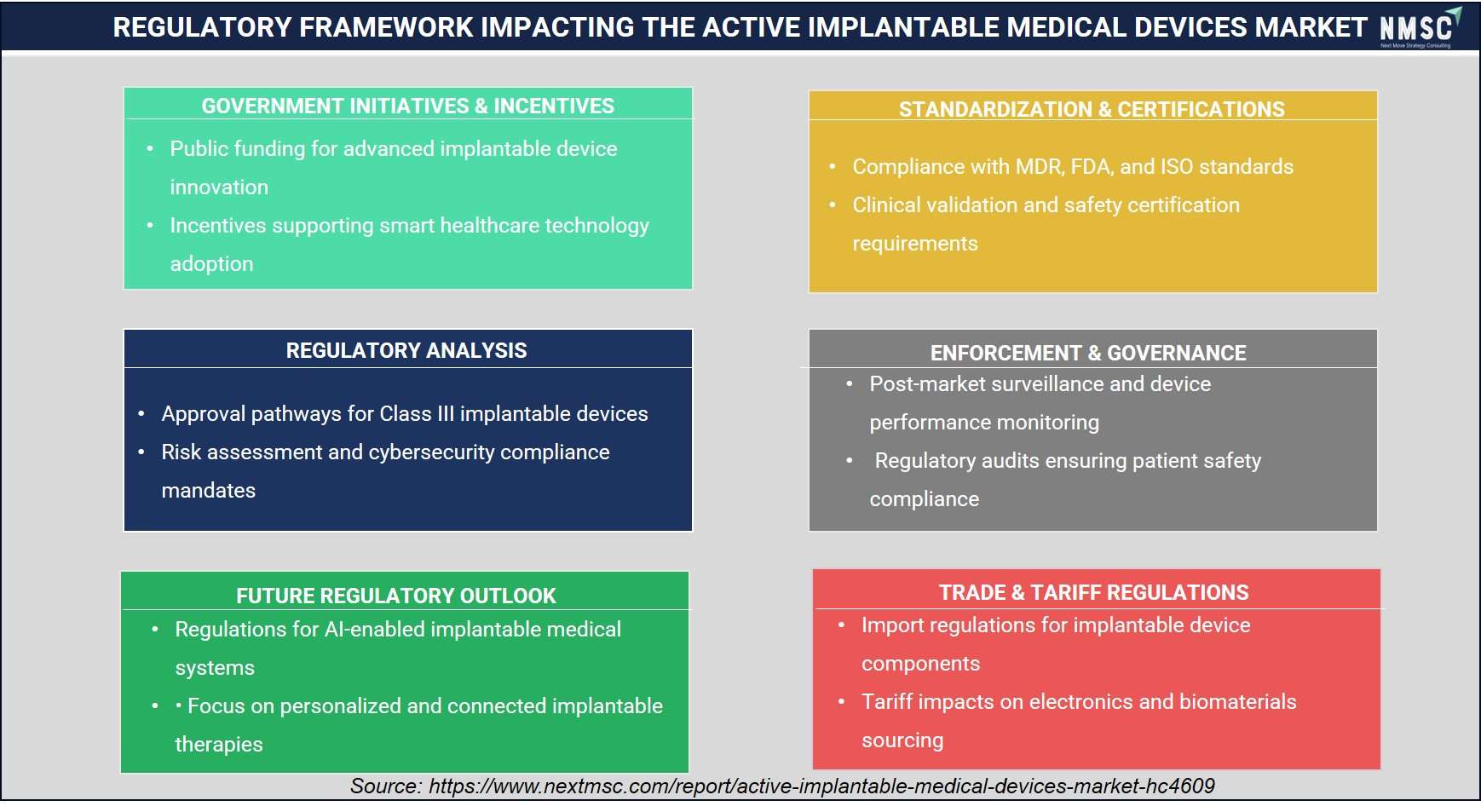
The above infographic outlines the regulatory framework impacting the active implantable medical devices market, covering government funding and incentives for innovation, compliance with MDR, FDA, and ISO standards, and approval pathways for Class III devices. It also highlights post-market surveillance and enforcement, future regulations for AI-enabled and connected implantable therapies, plus trade and tariff implications on electronics and biomaterials sourcing.
Competitive Landscape
Competitive Dynamics and M&A Landscape
|
Key Takeaways |
Details |
|
Market Structure |
The Active Implantable Medical Devices Market is dominated by a concentrated group of large medical technology conglomerates, primarily Medtronic, Abbott, Boston Scientific, and BIOTRONIK, across cardiac segments, alongside specialist leaders including Cochlear Limited in hearing implants, Inspire Medical Systems in hypoglossal nerve stimulation, and NeuroPace in responsive neurostimulation, creating tiered competitive dynamics across product families. |
|
Innovation Focus |
Innovation is centred on leadless and subcutaneous device architectures, closed-loop adaptive stimulation algorithms, MRI-conditional full-body imaging compatibility, rechargeable energy systems extending device longevity, and Bluetooth Low Energy remote monitoring integration across all major active implant categories, with emerging investment in AI-enhanced diagnostics and implantable BCI platforms. |
|
M&A Activity |
Medtronic acquired Affera in 2022 for its pulsed field ablation platform, while Abbott's Aveir DR system reflects significant internal R&D investment in leadless dual-chamber pacing. Inspire Medical Systems' organic growth trajectory continues, with peer acquisition of Nyxoah under evaluation by market participants. MicroPort has pursued international cardiac CRM acquisitions to strengthen its global distribution capabilities. PE-backed consolidation is accelerating in neuromodulation sub-segments. |
How Do Companies Compete in the Active Implantable Medical Devices Market?
The active implantable medical devices market features highly differentiated competition built around clinical evidence, physician relationships, and technical device performance across multiple distinct product verticals. Medtronic, Abbott, and Boston Scientific compete across the broadest product portfolios, maintaining dominance in cardiac rhythm management through comprehensive pacemaker, ICD, CRT, and cardiac monitor product lines with integrated remote monitoring platforms. BIOTRONIK differentiates through Home Monitoring telemetry leadership and a strong European physician loyalty base. Cochlear Limited and MED-EL compete on hearing implant electrode and sound processing performance, while specialist companies including Inspire Medical Systems and NeuroPace compete on clinical evidence depth within their specific therapeutic niches.
Which Kind of Companies Dominate the Active Implantable Medical Devices Market?
Three distinct company categories dominate the active implantable medical devices market. First, large diversified medical device conglomerates including Medtronic plc, Abbott Laboratories, and Boston Scientific Corporation command the largest revenue shares through multi-segment portfolios, global direct sales forces, and integrated remote monitoring ecosystems that create high hospital system switching costs. Second, specialty pure-play leaders including Cochlear Limited, LivaNova, Inspire Medical Systems, and NeuroPace command dominant positions within their focused therapeutic niches through superior clinical evidence and physician training infrastructure. Third, emerging technology companies including CVRx, Impulse Dynamics, Nyxoah, Nalu Medical, and Saluda Medical are challenging incumbents with novel mechanisms of action and closed-loop adaptive therapy platforms.
AI-Native Differentiation and Open Standards Drive Market Success in the Active Implantable Medical Devices Market
Innovation focus across the active implantable medical devices market is converging on AI-enabled closed-loop therapy systems that adaptively adjust stimulation in response to real-time physiological sensing. Medtronic's Percept PC with BrainSense, Abbott's SenseSight DBS technology, and Saluda Medical's Evoke SCS system with Evoked Compound Action Potential (ECAP) sensing represent commercially deployed examples of this closed-loop paradigm. Manufacturers investing in proprietary sensing algorithms and large longitudinal device datasets are creating defensible intellectual property moats. Open standard compatibility for remote monitoring data interoperability with EHR systems is emerging as a procurement evaluation criterion among large integrated delivery networks and national health systems.
Market Players to Opt for Merger and Acquisition Strategies to Expand Their Presence in the Active Implantable Medical Devices Market
Mergers and acquisitions are actively reshaping the competitive landscape of the active implantable medical devices market. Medtronic's acquisition strategy has focused on pulsed field ablation (Affera), robotic-assisted surgery (Mazor Robotics), and AI diagnostics, while the company has selectively divested slower-growth business units. Abbott's acquisition of St. Jude Medical in 2017 remains the defining transaction establishing its current active implant portfolio breadth. Private equity investment in neuromodulation specialist companies, including Nalu Medical and Mainstay Medical, reflects institutional confidence in the high-growth potential of next-generation neurostimulation platforms. Consolidation of the emerging hypoglossal nerve stimulation segment between Inspire Medical Systems and Nyxoah is anticipated by market analysts as the competitive dynamics between the two dominant OSA neurostimulation platforms intensify.
Who Are the Key Market Players in the Active Implantable Medical Devices Market?
-
Boston Scientific Corporation
-
Cochlear Limited
-
BIOTRONIK SE & Co. KG
-
LivaNova PLC
-
Sonova Holding AG
-
MED-EL Elektromedizinische Geräte Gesellschaft m.b.H.
-
MicroPort Scientific Corporation
-
Inspire Medical Systems, Inc.
-
NeuroPace, Inc.
-
CVRx, Inc.
-
Impulse Dynamics N.V.
-
Nurotron Biotechnology Co., Ltd.
-
Saluda Medical Pty Ltd
-
Mainstay Medical Holdings plc
-
Nyxoah SA
-
Nalu Medical, Inc.
-
Flowonix Medical, Inc.
-
SynCardia Systems, LLC
What Are the Latest Developments in the Active Implantable Medical Devices Industry?
|
Date |
Event |
|
October 2025 |
Nyxoah announced the first U.S. commercial implantations of its Genio neurostimulation system for obstructive sleep apnea following FDA approval |
|
July 2025 |
Cochlear received FDA approval for the Cochlear Nucleus Nexa System, described as the first smart cochlear implant platform with upgradeable implant firmware |
|
February 2025 |
Medtronic received FDA approval for the first adaptive deep brain stimulation system that automatically adjusts therapy for Parkinson’s disease patients in real time |
Expert Insights
 “A new era for spinal cord stimulation technology is beginning, and with Inceptiv SCS, Medtronic is at the forefront. For patients dealing with chronic pain, every day is a struggle. They deserve personalized and effective relief, without compromising future access to MRI. They deserve the comfort that the smallest and thinnest device on the market can provide. We are proud to offer the most cutting-edge solution available today with Inceptiv SCS.”
- David Carr, Vice President and General Manager, Pain Interventions within the Neuromodulation business
Statement made during Medtronic’s announcement of FDA approval for its Inceptiv closed-loop spinal cord stimulator for chronic pain treatment.
Market Interpretation
The statement reflects the growing shift within the active implantable medical devices market toward intelligent, adaptive neuromodulation systems capable of real-time physiological sensing and automated therapy adjustment. The introduction of closed-loop spinal cord stimulation technology highlights increasing industry focus on personalized treatment, improved patient outcomes, and enhanced long-term therapy effectiveness. As chronic pain prevalence rises globally and healthcare providers seek alternatives to long-term opioid use, demand for advanced implantable neurostimulation devices is expected to accelerate. The development also indicates a broader market trend toward integrating sensing algorithms, data-driven therapy optimization, and MRI-compatible implant platforms, supporting innovation and competitive differentiation across the neuromodulation segment.
What Are the Investment Opportunities in the Active Implantable Medical Devices Market?
Capital Inflows and Venture Activity
The active implantable medical devices market continues to attract substantial venture capital and growth equity investment, particularly in neuromodulation, BCI, and novel cardiac therapy sub-segments. Inspire Medical Systems' IPO trajectory and subsequent growth to over USD 800 million in annual revenue demonstrates the commercial scale achievable by focused specialty active implant companies. Saluda Medical has attracted significant Series D funding for its closed-loop SCS platform from healthcare-focused investors. The National Venture Capital Association (NVCA) reported that medical device companies attracted over USD 8 billion in U.S. venture capital in 2024, with neuromodulation and cardiac electrophysiology sub-sectors among the most active recipient categories within the medtech investment universe.
Infrastructure Investment
Manufacturing infrastructure investment is accelerating across the active implantable medical devices market as manufacturers respond to supply chain resilience requirements identified during the COVID-19 pandemic and ongoing geopolitical trade tensions. Medtronic's advanced manufacturing facilities in Dublin and Minnesota, Cochlear's production optimization programs in Sydney and Stockholm, and MicroPort's Suzhou manufacturing campus expansion collectively reflect billions of dollars of capital deployment into active implant production capacity. The U.S. CHIPS and Science Act's broader semiconductor investment ecosystem indirectly benefits active implant microelectronics supply chains through expanded domestic chip manufacturing capacity that reduces dependence on Asia-concentrated supply chains.
ESG and Sustainable Manufacturing Considerations
Environmental, Social, and Governance considerations are becoming increasingly relevant to institutional investment decisions within the active implantable medical devices market. Medtronic's FY2030 sustainability goals, which include greenhouse gas emission reduction targets and packaging waste minimization commitments, reflect industry-wide adoption of sustainability reporting frameworks. Device sterilization processes using ethylene oxide (EtO) are subject to EPA regulatory scrutiny in the United States, compelling manufacturers to invest in alternative sterilization methods and EtO emission reduction technologies. ESG-compliant supply chain practices, particularly around conflict minerals reporting under SEC Section 1502 requirements, are standard governance elements for publicly listed active implant manufacturers.
Digital Transformation and Connected Device Opportunities
The digital transformation of active implantable device platforms is creating new investment opportunities in connected health data management, AI-powered remote diagnostic services, and device cybersecurity solutions within the active implantable medical devices market. Medtronic's CareLink platform, Abbott's Merlin.net, and BIOTRONIK's Home Monitoring collectively generate vast longitudinal device datasets that are being leveraged for AI algorithm development and population health analytics. The FDA's Digital Health Center of Excellence is developing pre-determined change control plan pathways for AI/ML-based SaMD embedded in active implants, enabling manufacturers to update approved AI algorithms through post-market change protocols that protect commercial device lifespan and open recurring software revenue generation opportunities.
Private Equity and Strategic M&A Activity
Private equity firms are actively building portfolios within the active implantable medical devices market ecosystem, targeting neuromodulation specialist companies, active bone conduction hearing device manufacturers, and drug delivery pump platform companies. Strategic M&A by large medtech conglomerates is focused on acquiring closed-loop algorithm capabilities, novel stimulation mechanisms validated by clinical trial evidence, and geographic market access in Asia Pacific and MEA growth markets. Our assessment indicates that the next wave of consolidation within the market will be concentrated around the hypoglossal nerve stimulation, closed-loop SCS, and implantable BCI sub-segments, where clinical evidence is maturing and commercial-scale growth trajectories are becoming increasingly visible to strategic acquirers.
Key Benefits for Stakeholders
For Healthcare Providers and Implanting Centers
Healthcare providers and implanting centers gain comprehensive, vendor-neutral intelligence on the active implantable medical devices market encompassing clinical adoption trends, device performance benchmarking, and segment-level technology assessments across cardiac rhythm management, neuromodulation, hearing implants, and mechanical circulatory support. This market intelligence supports evidence-based procurement decisions, technology committee evaluations, and capital equipment planning for active implant program development and expansion. Competitive landscape analysis enables procurement teams to benchmark device pricing and negotiate supply agreements with a complete understanding of manufacturer positioning and competitive alternatives within each active implant category.
For Investors and Financial Analysts
Investors and financial analysts gain a structured, data-rich assessment of the active implantable medical devices market's growth trajectory, segment-level CAGR analysis, competitive dynamics, M&A landscape, and detailed geographic performance forecasts through 2035. The segmentation analysis across product family, implant format, buyer type, and sales channel enables precise portfolio construction and company valuation modeling for public and private active implant manufacturers. The identification of highest-growth sub-segments including neuromodulation, implantable BCIs, closed-loop neurostimulation, and ambulatory surgery center procurement channels provides actionable investment thesis building blocks for healthcare-focused investment strategies.
For Active Implant Manufacturers and Product Development Teams
Active implantable device manufacturers and their product development teams gain actionable intelligence on white-space technology opportunities, competitive positioning gaps, clinical adoption barriers, and fastest-growing therapeutic sub-segments within the active implantable medical devices market. The segment analysis identifies specific areas of unmet clinical need including closed-loop DBS for psychiatric disorders, fully implantable hearing systems, and next-generation cardiac contractility modulation platforms. Regional outlook analysis provides regulatory strategy guidance and geographic expansion prioritization across 32 covered markets. The buyer type and sales channel analysis enables manufacturers to optimize their go-to-market strategies and align channel investment with the procedural migration toward ambulatory and specialty clinic settings.
For Government Bodies and Health Technology Assessment Agencies
Government bodies, national health technology assessment agencies, and regulatory authorities gain structured evidence on how regulatory frameworks, reimbursement policy design, and national healthcare investment programs influence active implantable medical devices market structure, innovation incentives, and patient access across global markets. Country-level insights provide policymakers with benchmarking data on device adoption rates, reimbursement coverage scope, and emerging technology penetration relative to comparable markets. The regulatory landscape analysis provides context for MDR transition impacts in Europe, PMA reform initiatives in the United States, and market access pathway development in China and India that is directly relevant to health policy development decisions.
Active Implantable Medical Devices Market Key Segments
By Product Family
-
Cardiac Rhythm Management
-
Pacemakers
-
Single Chamber
-
Dual Chamber
-
Leadless
-
Cardiac Resynchronization Therapy Pacemakers
-
-
Defibrillators
-
Transvenous Implantable Cardioverter Defibrillators
-
Subcutaneous Implantable Cardioverter Defibrillators
-
Cardiac Resynchronization Therapy Defibrillators
-
-
Insertable Cardiac Monitors
-
-
Cardiac Modulation
-
Baroreflex Activation Therapy
-
Cardiac Contractility Modulation
-
-
Mechanical Circulatory Support
-
Left Ventricular Assist Devices
-
Right Ventricular Assist Devices
-
Biventricular Assist Devices
-
Total Artificial Hearts
-
-
Neuromodulation
-
Spinal Cord Stimulation
-
Deep Brain Stimulation
-
Sacral Neuromodulation
-
Vagus Nerve Stimulation
-
Hypoglossal Nerve Stimulation
-
Responsive Neurostimulation
-
Peripheral Nerve Stimulation
-
Gastric Electrical Stimulation
-
Phrenic Nerve Stimulation
-
-
Hearing Implants
-
Cochlear Implants
-
Middle Ear Implants
-
Auditory Brainstem Implants
-
Active Bone Conduction Implants
-
Fully Implantable Hearing Systems
-
-
Drug Delivery Pumps
-
Intrathecal Pumps
-
Other Implantable Pumps
-
-
Other Active Implants
-
Implantable Brain-Computer Interfaces
-
Retinal Implants
-
Active Bone Growth Stimulators
-
Other
-
By Implant Format
-
Fully Implantable
-
Partially Implantable
By Buyer Type
-
Hospitals
-
Specialty Clinics
-
Ambulatory Surgery Centers
-
Other Providers
By Sales Channel
-
Direct
-
Distributor
-
Tender
-
Other
By Region
-
North America: U.S., Canada, and Mexico.
-
Europe: UK, Germany, France, Italy, Spain, Sweden, Denmark, Finland, the Netherlands, and the rest of Europe.
-
Asia Pacific: China, India, Japan, South Korea, Taiwan, Indonesia, Vietnam, Australia, Philippines, Malaysia and the rest of APAC.
-
Middle East & Africa (MEA): Saudi Arabia, UAE, Egypt, Israel, Turkey, Nigeria, South Africa, and the rest of MEA.
-
Latin America: Brazil, Argentina, Chile, Colombia, and the rest of LATAM.
Conclusion and Recommendations
Long-Term Outlook
The active implantable medical devices market is positioned for sustained, decade-long expansion, advancing from USD 36.8 billion in 2026 to USD 76.4 billion by 2035 at a CAGR of 8.5%. This trajectory reflects the convergence of powerful structural demand forces including the global aging population, rising cardiovascular and neurological disease burden, expanding access in emerging markets, and transformative technology transitions toward closed-loop adaptive therapy, leadless architectures, and implantable brain-computer interfaces. Our analysis further confirms that the market's growth is supported by durable reimbursement expansion across Asia Pacific and MEA markets, which are progressively incorporating active implantable therapies into national health coverage frameworks, creating sustained volume-driven growth alongside innovation-driven premium tier expansion.
Strategic Positioning Recommendations
Active implant manufacturers should prioritize closed-loop adaptive therapy differentiation as the primary clinical value driver across neuromodulation and cardiac monitoring segments, given the mounting clinical evidence for patient outcome superiority versus open-loop approaches. Investment in leadless and subcutaneous device platforms is non-negotiable for cardiac rhythm management competitors seeking to capture the procedural migration away from transvenous systems among younger and broader patient populations. Manufacturers without compelling remote monitoring ecosystem capabilities face progressive clinical specialist and hospital system relationship disadvantage in competitive procurement processes for the active implantable medical devices market. Geographic expansion into China, India, and GCC health markets requires sustained regulatory investment and local clinical evidence generation to navigate distinct approval and reimbursement pathway requirements.
Investment Attractiveness
The active implantable medical devices market offers an attractive long-term investment profile, characterized by non-discretionary therapeutic demand, high clinical switching costs between device platforms, recurring revenue from remote monitoring services and device replacements, and a multi-decade secular growth runway driven by demographic and epidemiological trends. The highest-conviction investment themes are neuromodulation at a CAGR of 9.8%, other active implants including BCIs at 14.9%, cardiac modulation at 13.9%, and ambulatory surgery center buyer channel growth at 11.0%. Investors should monitor the competitive race in hypoglossal nerve stimulation between Inspire Medical Systems and Nyxoah, as well as the commercialization milestones of leading BCI developers including Synchron and Precision Neuroscience, which represent early-stage but transformative valuation opportunities.
Market Shifts and Key Risks
The most significant structural shift underway in the active implantable medical devices market is the transition from procedure-event revenue models toward platform-and-services models that generate recurring revenue from remote monitoring subscriptions, AI diagnostic services, and over-the-air software updates on implanted devices. This shift benefits manufacturers with proprietary cloud-connected monitoring ecosystems and scalable software development capabilities. Key risks include regulatory complexity escalation under MDR, NMPA, and evolving FDA SaMD guidance that could extend development timelines; reimbursement policy uncertainty in cost-constrained national health systems; cybersecurity vulnerabilities in wirelessly connected implantable devices that represent both regulatory liability and patient safety concerns; and the long-term clinical evidence requirements for emerging BCI and cardiac modulation technologies that could moderate near-term adoption curves.
Growth Pathways
Organizations seeking to maximize value from the active implantable medical devices market should pursue a three-horizon strategy. In the near term (2025–2027), focus on commercial acceleration of leadless pacing, subcutaneous ICD, hypoglossal nerve stimulation, and closed-loop SCS platforms in North America and Europe, where reimbursement is established and clinical adoption is accelerating. In the mid-term (2027–2031), prioritize geographic expansion into China and India through regulatory pathway investment, local clinical evidence generation, and distributor network development that can access the substantially growing Asia Pacific patient populations. In the long term (2031–2035), position for the commercialization phase of implantable BCIs, AI-integrated adaptive neurostimulation, and fully implantable hearing systems that will collectively define the next generation value frontier of the market.


About the Author
 Mayurima Roy
— Mayurima Roy is Research Analyst at Next Move Strategy Consulting, where she has spent 4 years working across the firm's full industry coverage rather than a single fixed vertical. Her work centers on structured research, ongoing trend tracking, competitive assessment, and insight-led content development, translating complex market data into clear, decision-ready narratives that support informed client decision-making across diverse global industries, market sectors, and world regions every day.
Mayurima Roy
— Mayurima Roy is Research Analyst at Next Move Strategy Consulting, where she has spent 4 years working across the firm's full industry coverage rather than a single fixed vertical. Her work centers on structured research, ongoing trend tracking, competitive assessment, and insight-led content development, translating complex market data into clear, decision-ready narratives that support informed client decision-making across diverse global industries, market sectors, and world regions every day.
About the Reviewer
 Supradip Baul
— Supradip Baul is an accomplished business consultant and strategist with over a decade of rich experience in market intelligence, strategy, technology, and business transformation. His work has included rigorous qualitative and quantitative analysis across multiple industries, helping clients shape investment decisions and long-term roadmaps. Earlier in his career, he was associated with Gartner, where he contributed to industry-leading reports and market share analyses. He has worked with leading global companies and holds an MBA with a dual specialization in Marketing and Finance.
Supradip Baul
— Supradip Baul is an accomplished business consultant and strategist with over a decade of rich experience in market intelligence, strategy, technology, and business transformation. His work has included rigorous qualitative and quantitative analysis across multiple industries, helping clients shape investment decisions and long-term roadmaps. Earlier in his career, he was associated with Gartner, where he contributed to industry-leading reports and market share analyses. He has worked with leading global companies and holds an MBA with a dual specialization in Marketing and Finance.
At Next Move Strategy Consulting, we understand that insightful market research is the cornerstone of successful business decisions. That's why we employ a robust and multifaceted approach, combining various methodologies to deliver the most accurate and actionable data for our clients.

Research Landscape
We navigate the world of research with two primary approaches:
Qualitative Approach
Our qualitative research methodologies involve immersive techniques such as in-depth interviews, focus groups, and observational studies. By engaging directly with individuals and stakeholders, we uncover valuable insights that quantitative data alone may overlook.

Quantitative Research
In tandem with qualitative methodologies, NMSC leverages the power of Quantitative Research to provide a robust foundation of numerical insights. Through systematic data collection and analysis, we quantify patterns, preferences, and market trends, offering a comprehensive view of the business landscape.
Our quantitative research approach employs diverse tools, including surveys, experiments, and statistical modelling. These methodologies enable us to gather data from a large and representative sample, ensuring the statistical significance of our findings. By employing structured questionnaires and standardized data collection methods, we guarantee the reliability and validity of the information we present to our clients.
Quantitative research is particularly effective in measuring the prevalence of trends, assessing market size, and gauging the impact of various factors on consumer behavior. The numerical precision attained through this approach equips our clients with actionable insights, facilitating data-driven decision-making and strategy formulation.


Our Specialized Toolbox for Industry-Specific Market Research
We deploy a specialized arsenal of techniques tailored to meet your unique requirements. Here's a glimpse into our comprehensive toolbox:

Information Procurement
The stage entails acquiring market data or relevant information through various sources and methodologies.


Market Research Approach
We utilize both top-down and bottom-up approaches in market research analysis to achieve a comprehensive understanding of the market dynamics, leveraging the broad perspective of industry trends and macroeconomic factors alongside detailed insights from specific segments and individual companies.

Porters Five Forces Analysis
We conduct Porter's Five Forces analysis to evaluate the competitive landscape of an industry, providing us with insights into factors that affect profitability and strategic positioning.

SWOT Analysis

Forecasting
We utilize a forecasting model to predict future consumption by considering parameters like population, economics, regulations, market competition, drivers, constraints, technology, and pricing. We also employ statistical techniques such as multilinear regression, exponential smoothing, moving average, ARIMA, and Monte Carlo simulations for accurate predictions. In econometric forecasting, we analyzed short-term and long-term event impacts, attributing values based on regulatory frameworks, economic factors, and market events.





 Speak to Our Analyst